Industries · 3 min read · Updated 2026-09-26
Ultrasonic cleaning in industrial manufacturing
Parts off the machining centre, the press, the grinder and the heat-treatment furnace, cleaned before inspection, coating, assembly or shipping. What a manufacturing shop asks of a cleaning tank, the cleanliness specifications that drive it, and the set-ups from a single ST tank to an MT multi-tank line.
Technical guide. Figures are taken from our own spec tables; for your process we confirm the settings with a cleaning trial.
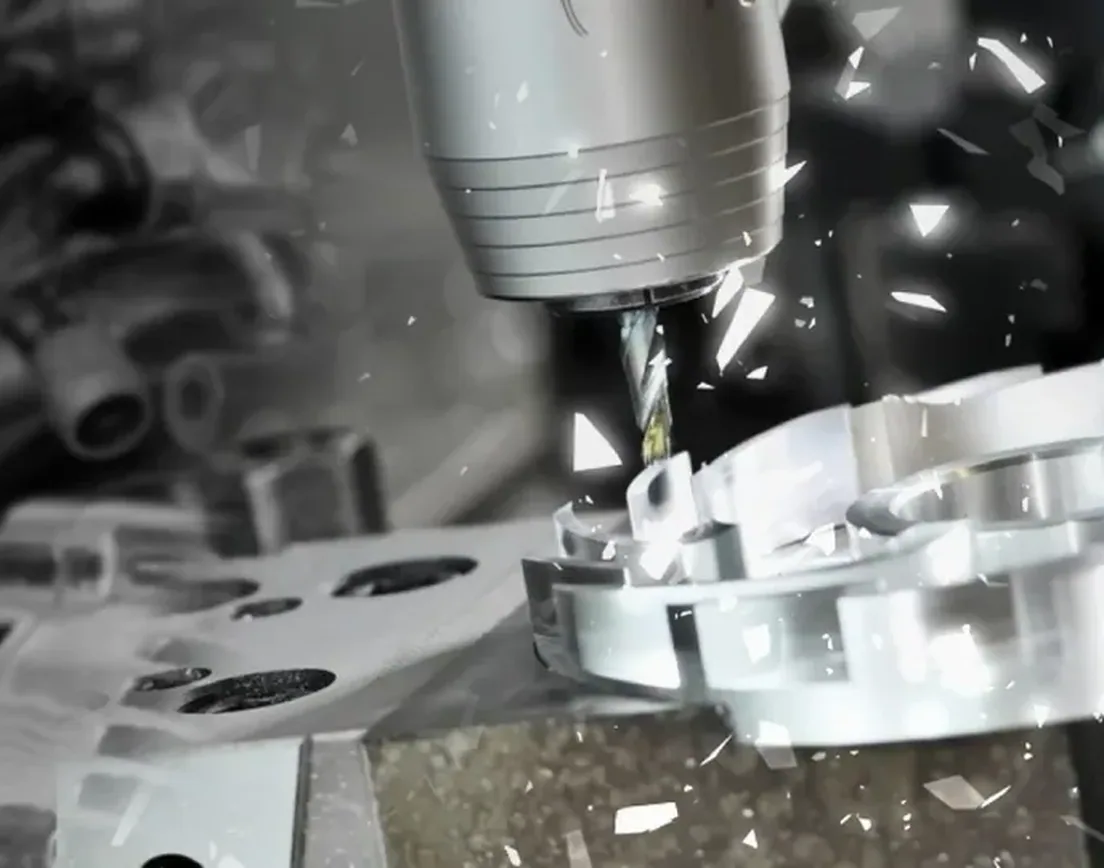
In a manufacturing plant, cleaning is a process step with a specification, a takt time and a cost per part, like any other. The cleaning tank is chosen the way a machine tool is: from the part, the volume and the result the next operation needs. Most of what we build for manufacturing is one of four things.
Four jobs
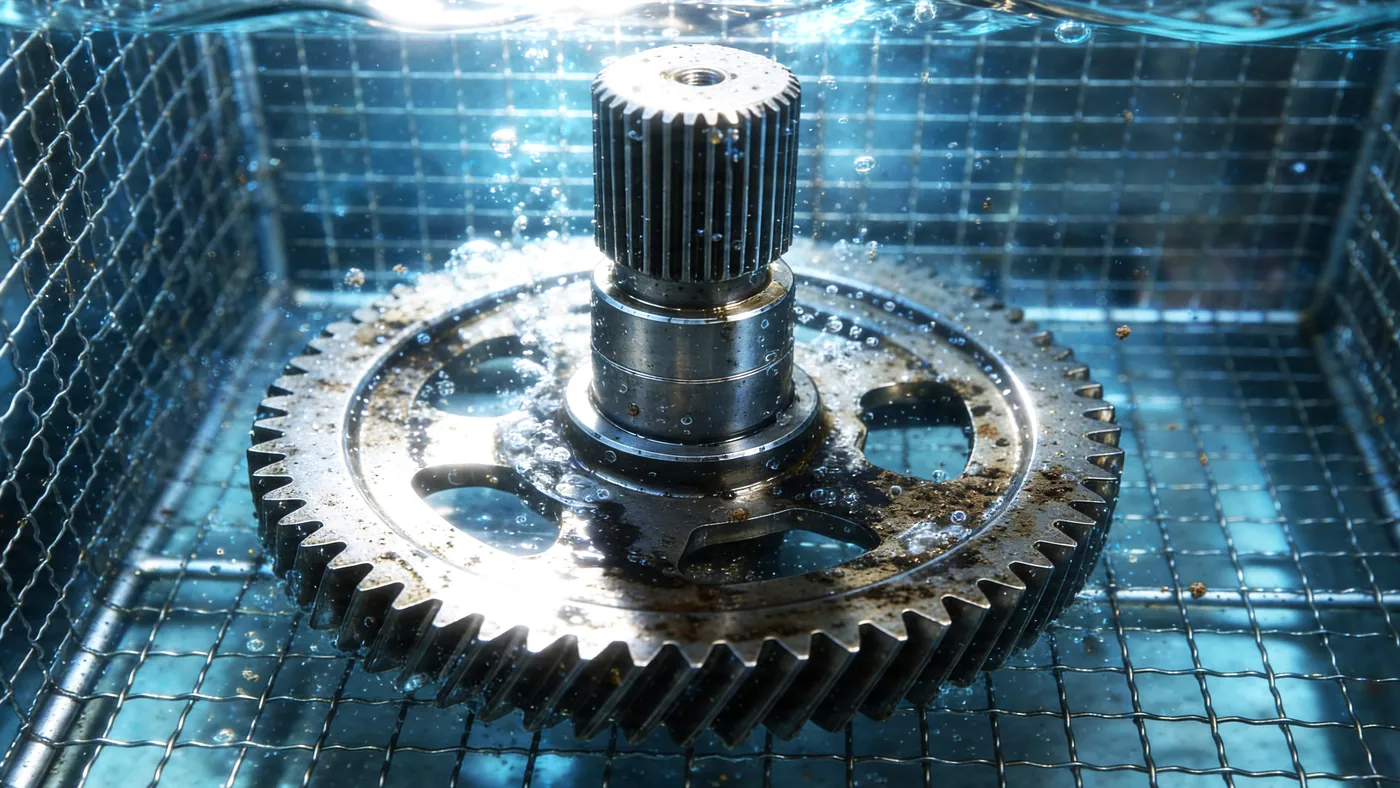
Cleaning after machining. Coolant and chips off turned, milled and drilled parts, out of blind holes and cross-drillings, before measurement, assembly or the next process. The commonest job and the one ultrasonic cleaning was made for; the machining residue article is the process, and CNC parts before assembly and threaded parts and blind holes follow it into assembly.
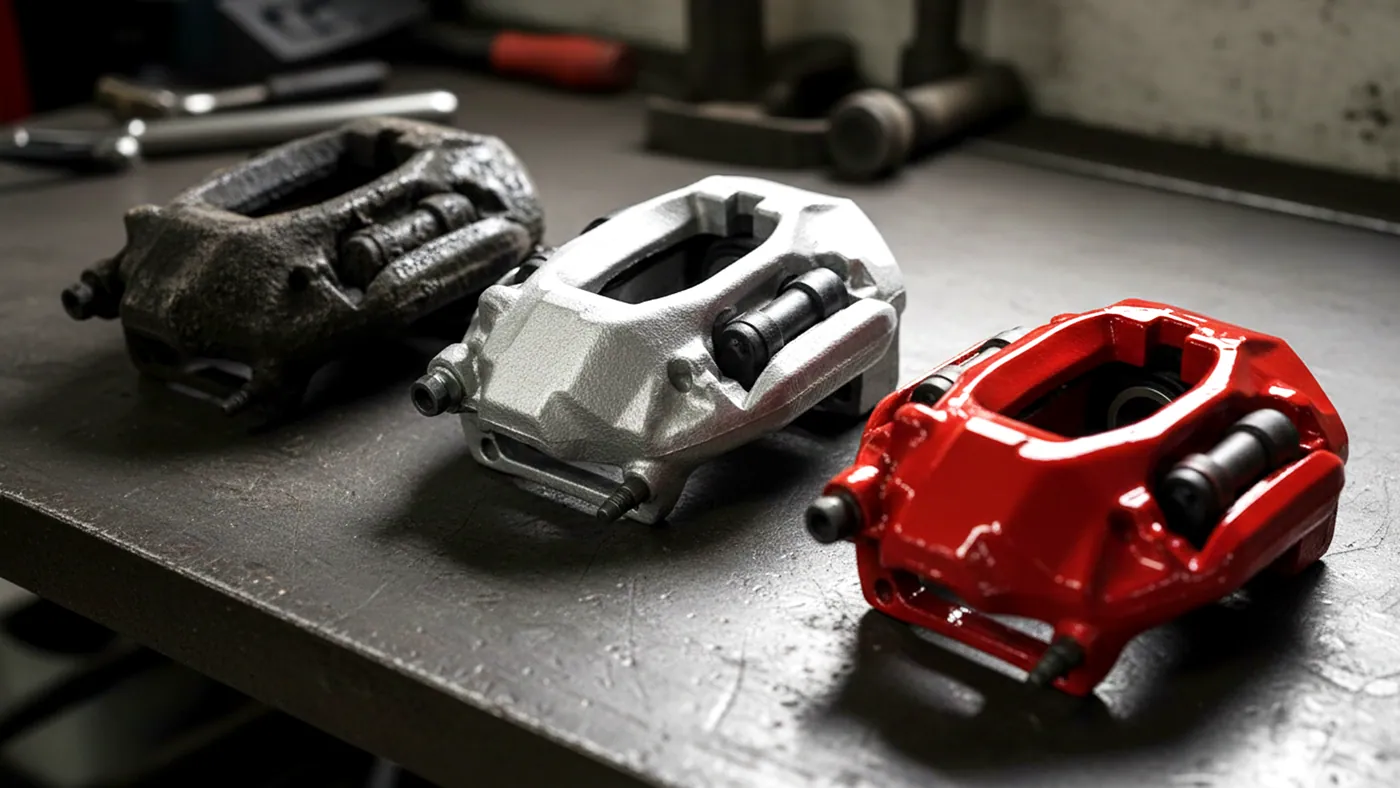
Cleaning before coating. Paint, powder, plating, anodising, PVD and bonding all fail on oil. A wash, a rinse, a demineralised rinse and a dry, with a water-break test at the end; see cleaning before coating, oil and grease and rinsing and drying.
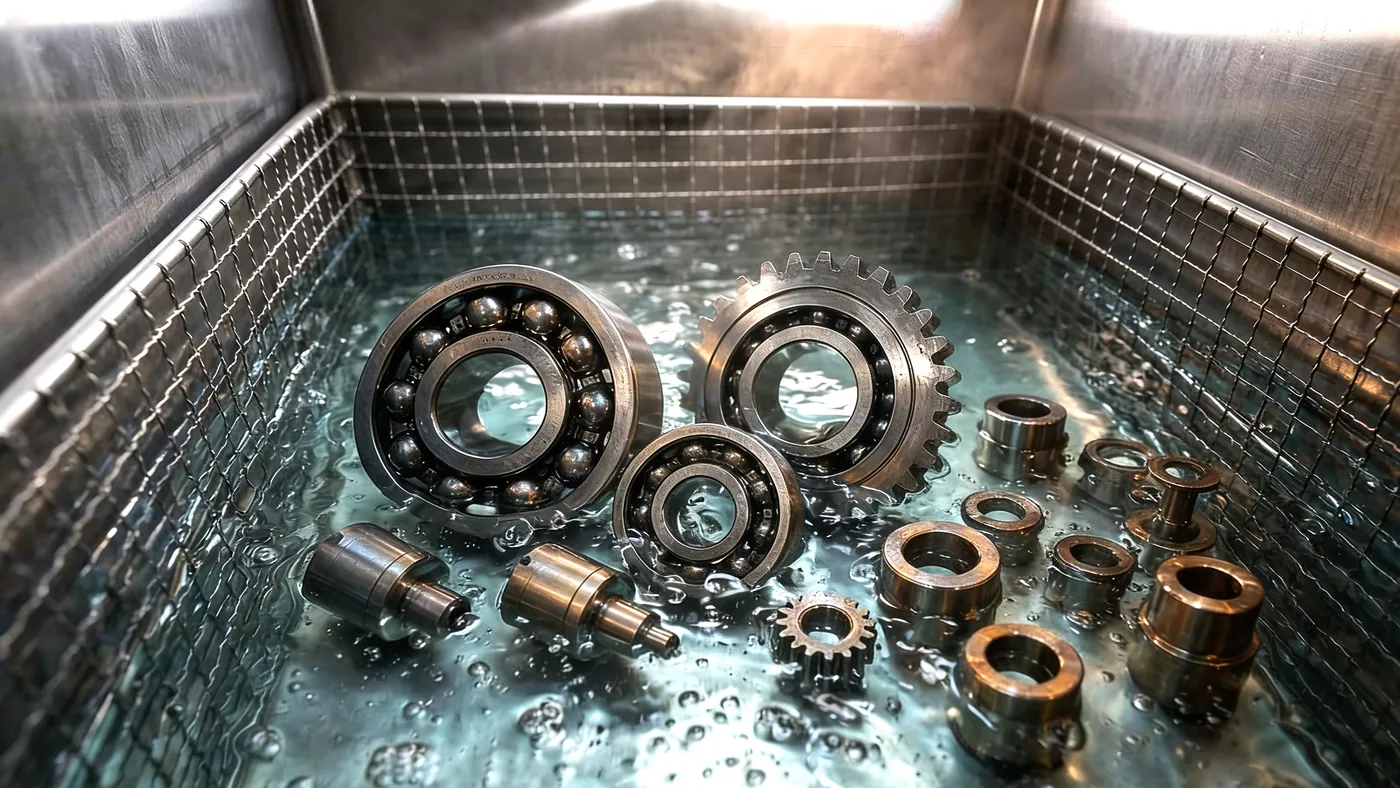
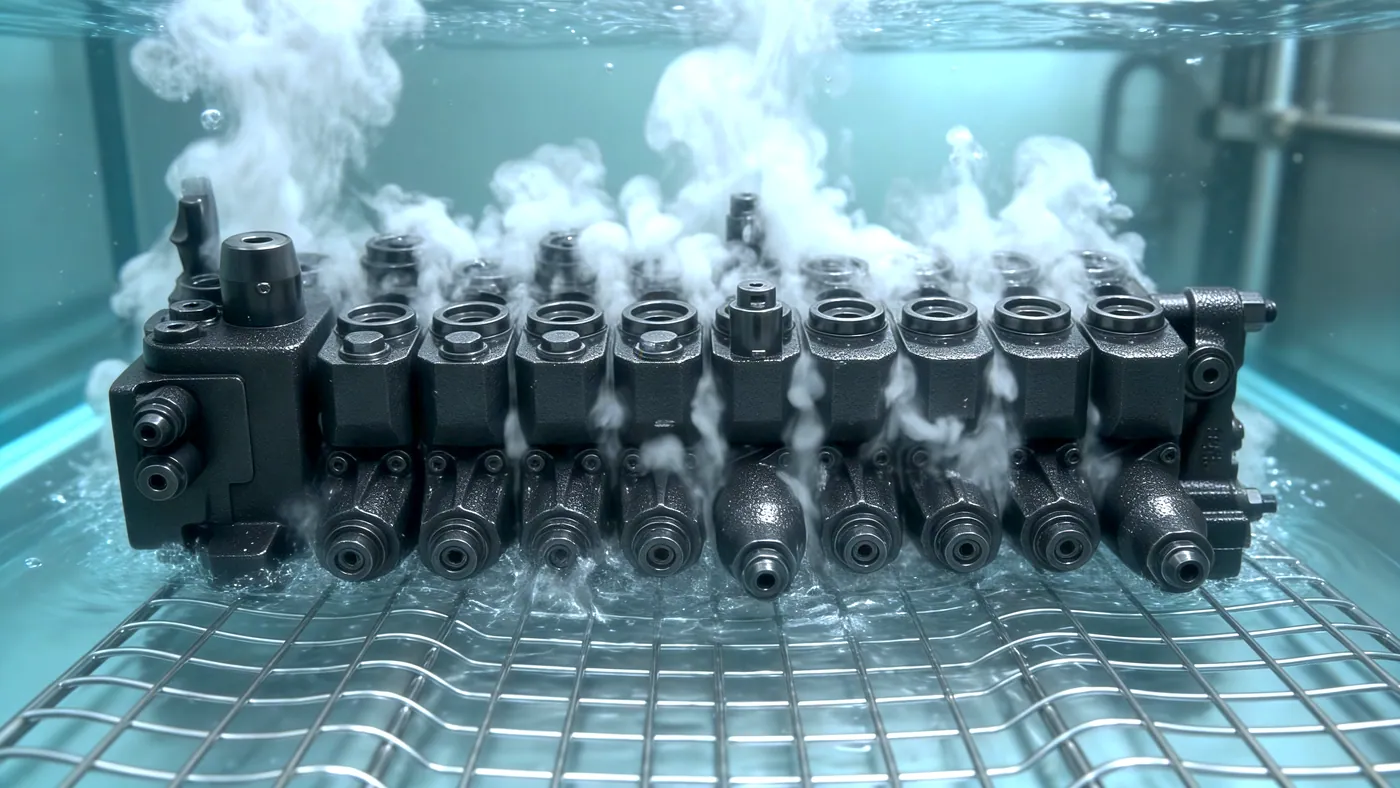
Cleaning to a cleanliness specification. Hydraulic blocks, fuel-system and brake components, bearings and transmission parts to VDA 19 / ISO 16232 particle limits. A filtered line with an ultrasonic rinse, and a bath-change schedule tied to the measured residue; see hydraulic valves and blocks, bearings and precision parts before inspection.
Cleaning between operations. Grinding fines before heat treatment, drawing compound before forming, polishing paste before inspection, scale after heat treatment; see rust and scale.
What the shop asks for
- Takt. Parts per hour decide tank count and heating power. One basket every ten minutes is a single tank; one every three is a line with two wash stations.
- Repeatability. A programme per part family, stored on the machine, so the result does not depend on the shift. The UMX Pro, AL and AU controllers hold them.
- Bath life. Coolant and chips kill a bath in days. Filtration and a skimmer stretch it to weeks; see filtration and bath life and ST or SF.
- Handling. Baskets above 100 kg go on a lift or a carriage. Integration with a conveyor, a robot or a crane is specified in the enquiry.
- Corrosion protection. Steel parts that wait between cleaning and the next step get an inhibitor in the rinse and a dry cycle.
- Documentation. Cycle logs from the PLC, a foil test at delivery, and the maintenance routine written into the shop's system.
Set-ups
| Volume | Set-up |
|---|---|
| A few baskets a day, small and medium parts | ST-96 to ST-206, 28/40 kHz, basket and hoist, rinse sink, drip rack |
| Daily cleaning, oily or chip-laden parts | SF-225 to SF-360 with filtration and skimmer, ST rinse, DT dryer |
| Heavy parts or dense loads | AL-300 to AL-1000 with lift, agitation and modular filtration; rinse and dry stations alongside |
| Line production, cleanliness specification | MT multi-tank line: spray or ultrasonic pre-wash, ultrasonic wash, ultrasonic rinse, demineralised rinse, hot-air dry, under one carriage |
| Small precision parts, inspection and assembly | UMX Pro 50L to 162L with programmes, demineralised rinse, dry |
Materials
Steel and cast iron at 28 kHz with alkaline cleaners at 55 to 65 °C. Aluminium and light alloys at 40 kHz with inhibited light-alloy cleaners at 50 to 60 °C, short cycles, or the machined faces etch. Brass and copper with neutral or mild cleaners. Titanium and stainless with almost anything. Plated and anodised parts at 40 kHz, low power, short time. Plastics below their softening point.
Plant maintenance
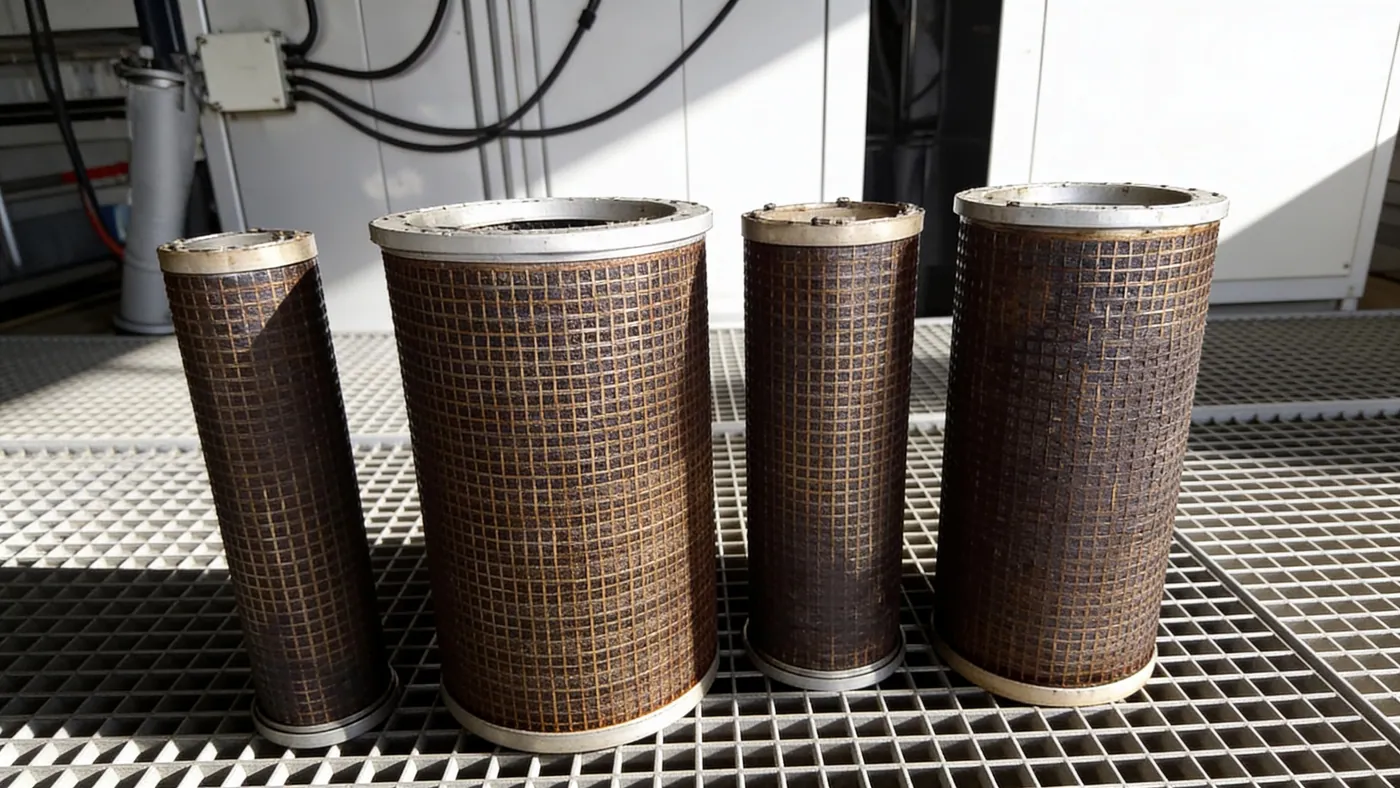
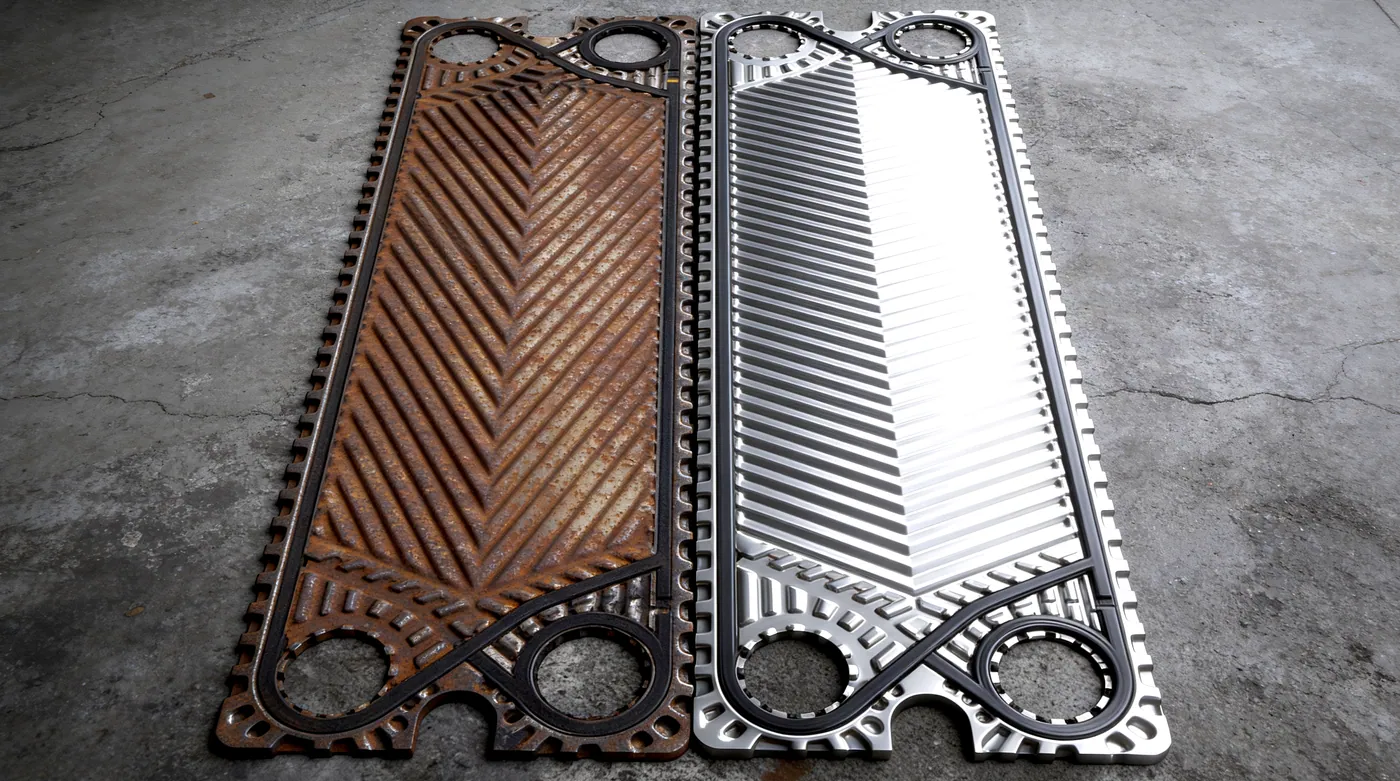
The same tanks serve the maintenance side of a plant: industrial filters cleaned for reuse, and heat exchanger plates and bundles descaled during a shutdown.
Related sectors
Mechanical engineering, tool and die, and automotive component manufacture each have their own page: mechanical engineering, automotive. The articles below cover individual parts and processes as they are written. The quote article lists what we need to lay out a cleaning station or a line.
Applications in this industry
Machining residue
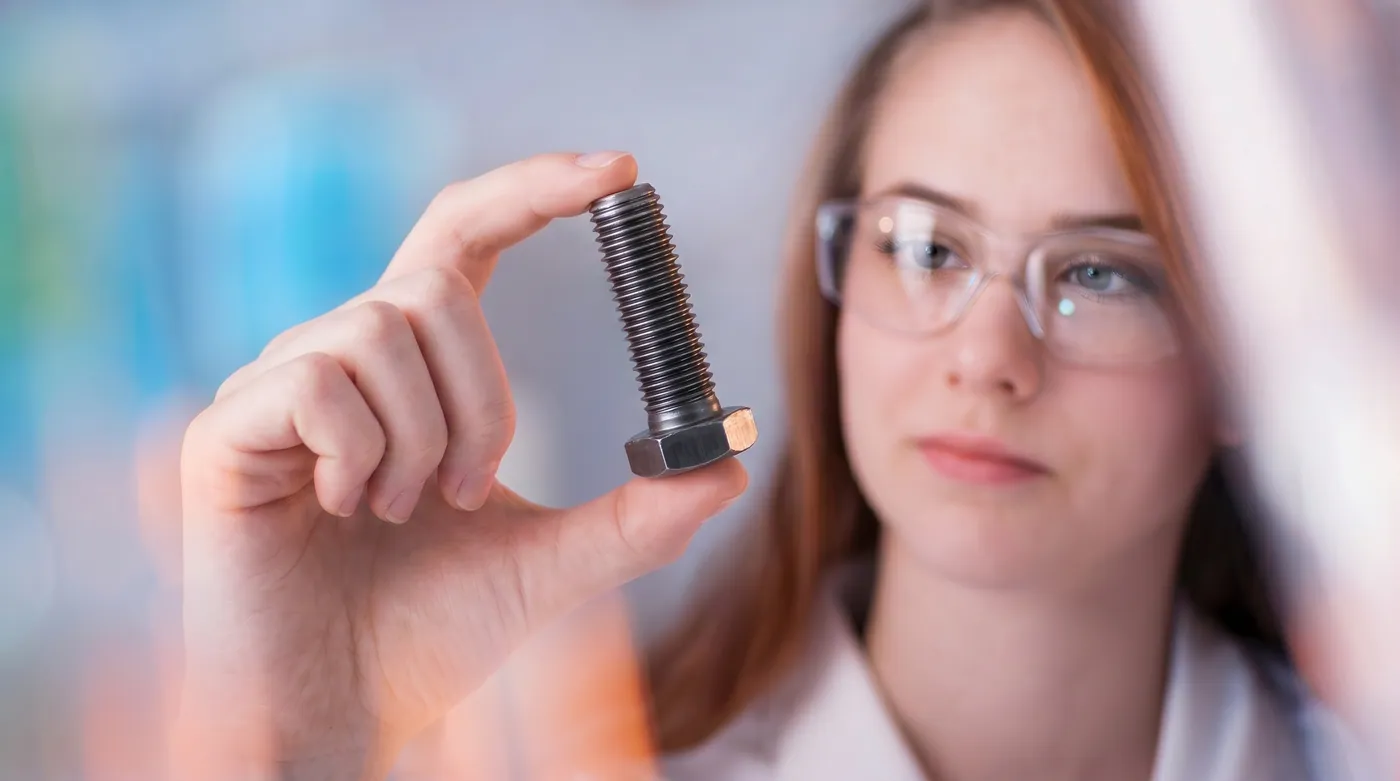
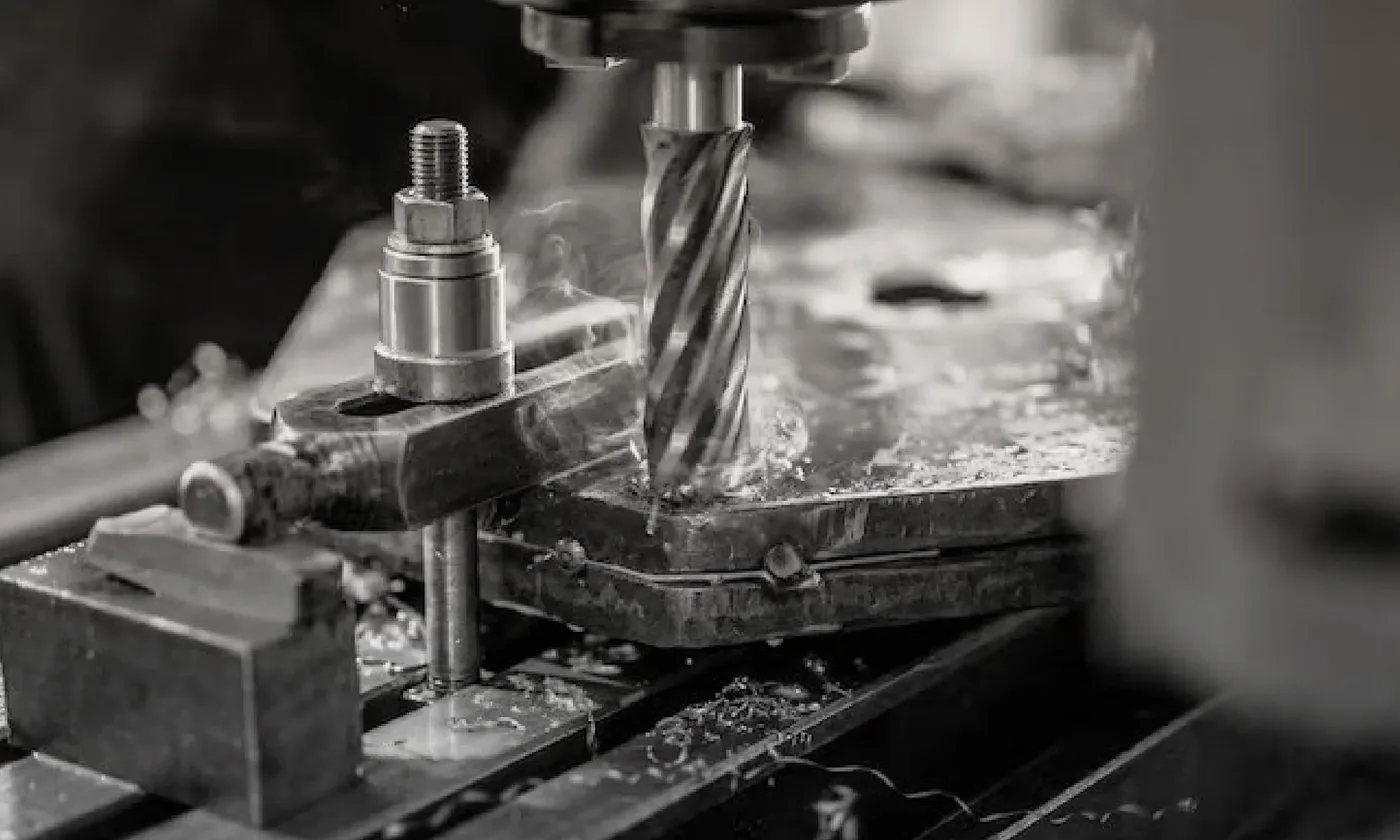 Parts and contaminants · 5 min readRemoving machining swarf, chips and coolantTurned and milled parts carry cutting fluid and fine chips in every pocket, bore, thread and cross-drilling. Ultrasonic cleaning flushes them in one cycle. The bath, what milled parts need in particular, the filtration that makes it last, and the cleanliness checks a machine shop uses.
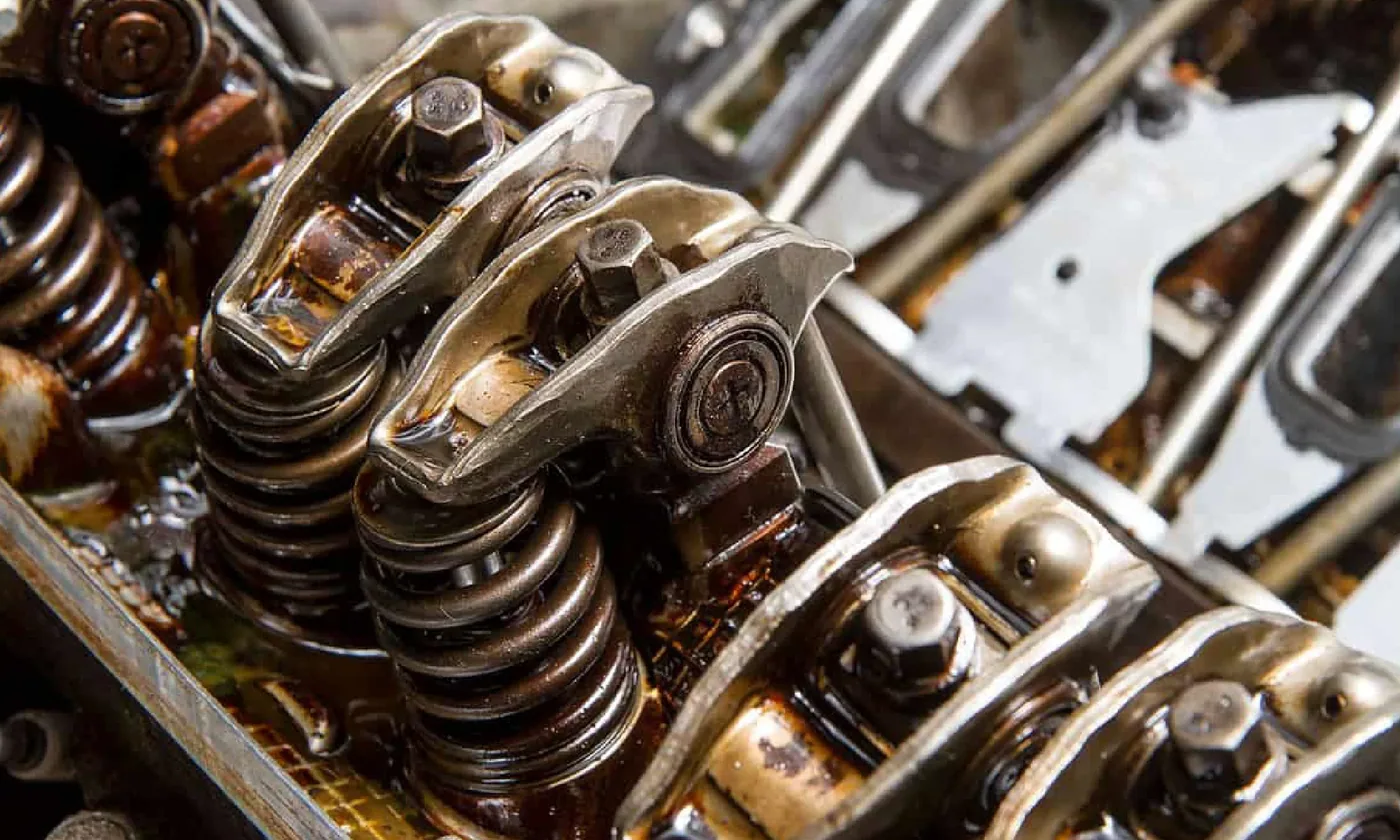
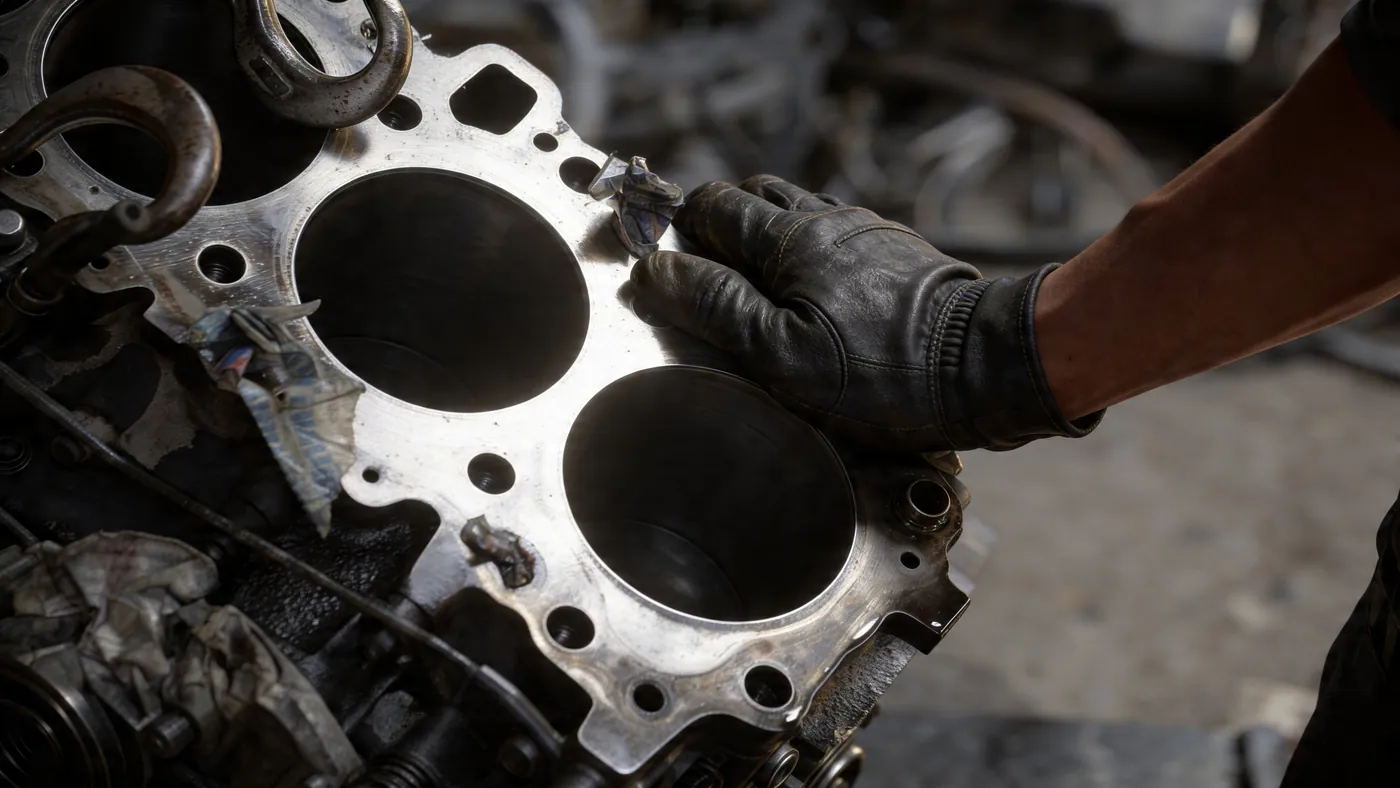 Parts and contaminants · 4 min readCleaning engine blocks after machiningBoring, honing and decking leave chips, abrasive grit and honing oil in bores, galleries and blind holes, and one grain in an oil gallery can wipe a new bearing. How rebuilders and remanufacturers clean a machined block, with the tank sizes and loads that fit car and truck blocks.