
Parts and contaminants · 5 min read · Updated 2026-09-26
Removing oil and grease
Oil is the easiest soil for an ultrasonic bath and the one that kills the bath fastest. Chemistry, temperature and time for light machine oil, chassis grease and waxy lubricants, and why the skimmer matters more than the transducers once the parts come out clean.
Technical guide. Figures are taken from our own spec tables; for your process we confirm the settings with a cleaning trial.
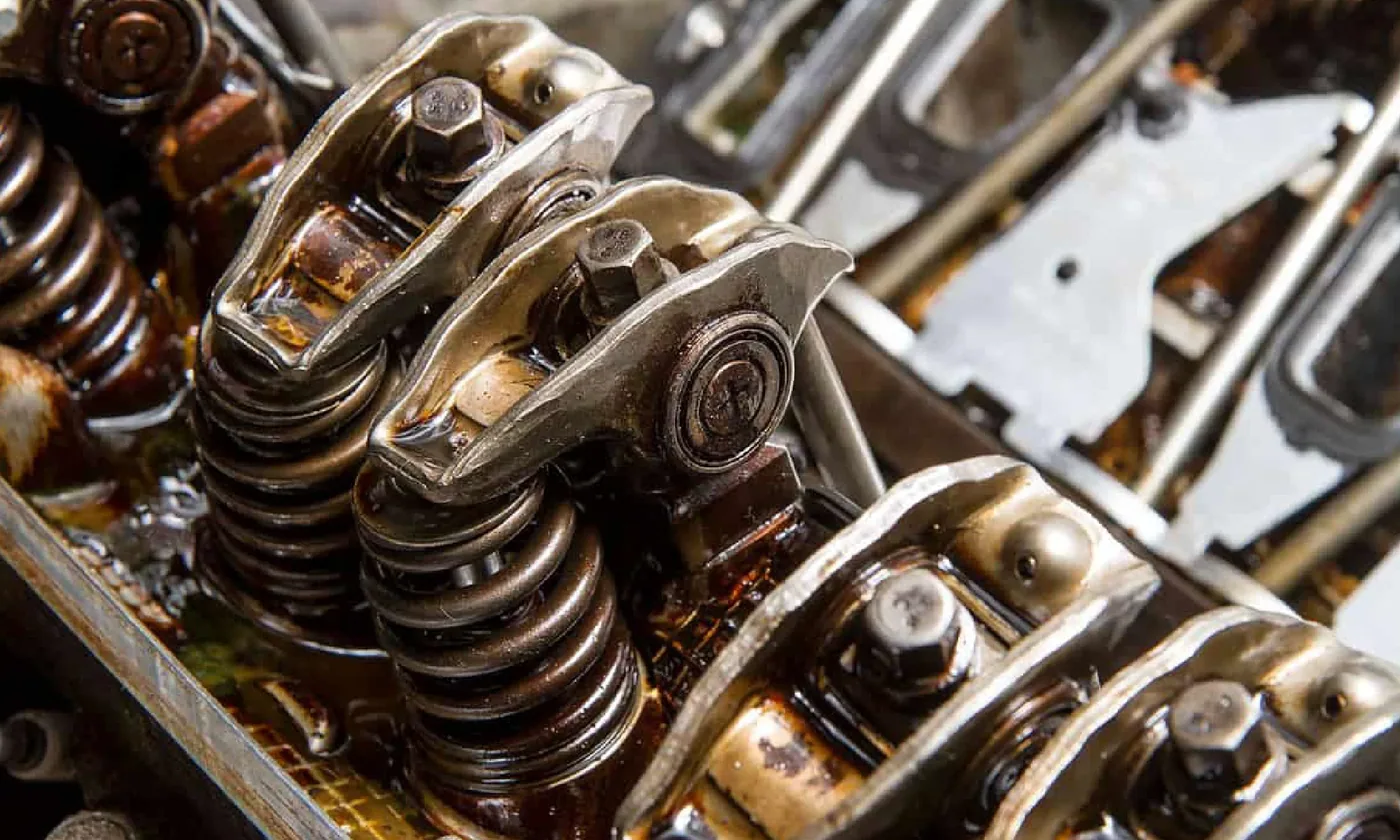
Oil does not bond to a surface; it wets it. Removing it is a matter of lifting the film, breaking it into droplets small enough to stay suspended, and keeping them from landing back on the part. Ultrasound does the first two very well. The bath chemistry and the filtration do the third, and that is where degreasing succeeds or fails.
What is on the part
- Light oils: machine oil, cutting oil, hydraulic fluid, corrosion-protection oil. Thin films, easily emulsified, but present on everything that has been machined or stored.
- Grease: bearing grease, chassis grease, assembly grease. A thickener holding oil; solid at room temperature, liquid above 40 to 60 °C.
- Waxes and heavy protective coatings: dewatering fluids, cosmoline-type protectives. Melt at 60 to 80 °C, and are the reason our tanks heat higher than the cleaning temperature.
- Aged, oxidised oil: on engine parts and old machinery, halfway to varnish. Needs the chemistry and temperature of the carbon article rather than a degreaser.
The process
Chemistry. An alkaline aqueous degreaser at 2 to 5 % is the standard; it saponifies fatty components and its surfactants emulsify the rest. For aluminium, zinc and brass, a cleaner formulated for light alloys, with inhibitors and a lower pH, or the parts come out etched grey. Neutral cleaners at pH 7 to 9 for parts that go straight to assembly without a rinse. Solvent is not needed and does not belong in an open heated tank.
Temperature. 55 to 65 °C for oils, 60 to 70 °C for grease and waxes. Below 50 °C grease stays solid and the ultrasound chips at it slowly. See choosing the temperature.
Frequency. 28 kHz for cast and heavy parts, 40 kHz for machined aluminium and anything with a finish that must not dull. Both do the job on oil; the choice is about the part.
Time. Light oil: 3 to 5 minutes. Grease: 8 to 15. Waxy protectives: 10 to 20, and a soak stage first if the bath can be heated to 80 °C for it.
Rinse. A degreased part carries an emulsion film out of the bath. A warm dip rinse takes it off; a demineralised rinse if the part is to be coated. Steel that will wait more than an hour before the next step gets an inhibitor in the rinse or it flash-rusts.
Keeping the bath alive
An alkaline bath emulsifies oil until it is saturated, a few grams per litre. On a run of oily gearbox parts a 100-litre bath is saturated in a day or two; after that it lays a film back on every part on the way out, and the parts look clean in the tank and greasy on the bench.
Two fittings extend that from days to weeks:
- An oil skimmer. When the bath stands, most emulsified oil separates and floats within an hour. A belt or weir skimmer takes it off the surface; the buffer tank on the SF series and the skimmers on the AU and SPR series are built for this. Overnight standing plus a morning skim keeps the bath's capacity free for the day's work.
- A demulsifying cleaner. Some degreasers are formulated to let the oil separate rather than hold it, so the skimmer can take it. The trade is that the parts must leave the tank through a clean surface, which is what laminar flow provides.
A particle filter alone does little for oil; it takes out the swarf and grit that ride with it. The filtration article covers the loop.
Oily parts in production: sizing for the oil load
In a plant, the question is not whether the bath removes the oil but how much oil arrives each day and where it goes. A rough balance decides the set-up before any machine is chosen:
| Example | |
|---|---|
| Parts per day | 400 |
| Oil carried in per part (weigh a few parts before and after cleaning) | 1.5 g |
| Oil into the bath per day | 600 g |
| What a 225-litre alkaline bath holds before it saturates, at a working figure of 3 g per litre | about 700 g |
Without oil removal that bath is spent in a little over a day. With a skimmer taking off the oil that separates overnight and during pauses, and a demulsifying cleaner that lets it separate, the same bath lasts weeks, and its life is then set by the cleaner consumed and the fines collected, not by the oil. The weighing takes ten minutes and is the most useful number to send with an enquiry.
Two more habits cut the load at the source: let parts drip over the machine or on a drip tray before they come to the cleaner, and do not feed parts that are dripping with neat oil straight into the ultrasonic tank. A pre-wash tank, or a spray pre-rinse, takes the bulk off first and leaves the ultrasonic tank for what is in the holes and on the surface.
Which machine
- Occasional degreasing of parts up to a shoebox: an STS benchtop unit at 40 kHz, bath changed weekly.
- Workshop degreasing of engine and gearbox parts: an ST-96 to ST-206 at 28 kHz with a skimmer, or a UMX Pro with the filtration module.
- Daily degreasing before assembly or coating: an SF-225 to SF-360 with its buffer tank, skimmer and laminar flow, followed by a rinse and a DT dryer.
- Heavy parts, many baskets a shift: an AL lift system with modular filtration, or an MT multi-tank line with wash, rinse and dry.
Judging the result
A water-break test: rinse the part in clean water and watch it drain. Water sheets evenly off a degreased surface and breaks into droplets on an oily one. It costs nothing and it is what a coating line uses; see cleaning before coating. Bearings and gearbox parts have their own steps after degreasing; see bearings and mechanical components.