
Operation and maintenance · 11 min read · Updated 2026-11-15
Laminar flow in an ultrasonic tank: what it does and which machines have it
Laminar flow carries floating oil and dirt across the bath surface to an overflow, so parts leave through clean liquid. How it works, upkeep, which ranges.
Technical guide. Figures are taken from our own spec tables; for your process we confirm the settings with a cleaning trial.
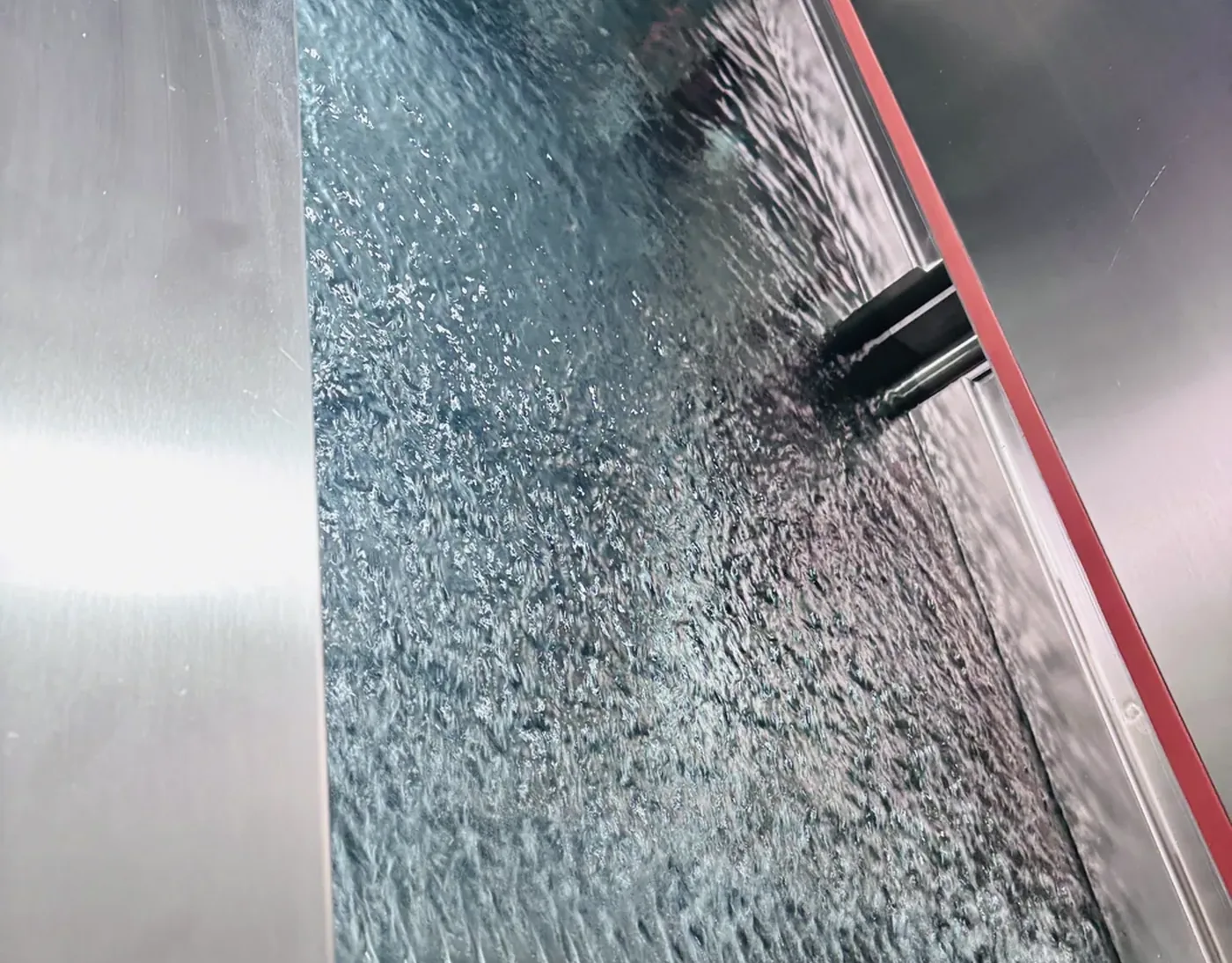
Oil and fine dirt that the ultrasound loosens do not all sink. Much of it floats, and a basket lifted out of the tank passes through whatever lies on the surface. A laminar flow keeps that surface moving towards an overflow, so the soil leaves the tank instead of going back onto the parts.
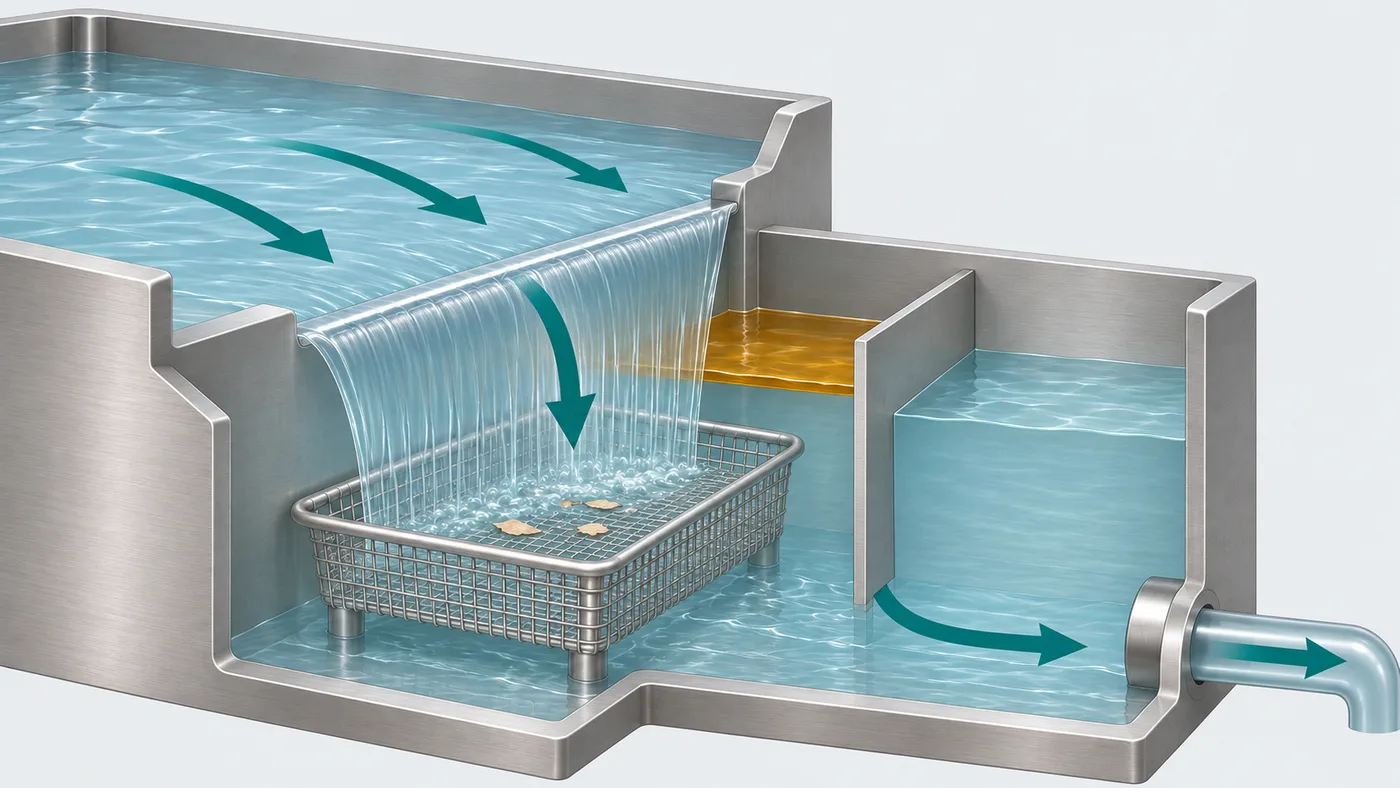
What is laminar flow in an ultrasonic cleaning tank? Laminar flow in an ultrasonic tank is a gentle, even sheet of filtered liquid that enters along one edge and moves across the bath surface to an overflow weir on the opposite edge. Floating oil, foam and fine particles go over the weir into a buffer tank, where they are separated and filtered out.
How does a laminar flow system in an ultrasonic tank work?
A laminar flow system in an ultrasonic tank is a closed loop of six parts: a pump, a filter, an inlet nozzle bar, the surface of the cleaning tank, an overflow weir and a buffer tank with oil separation. On the SF-225 filtration unit (225 L
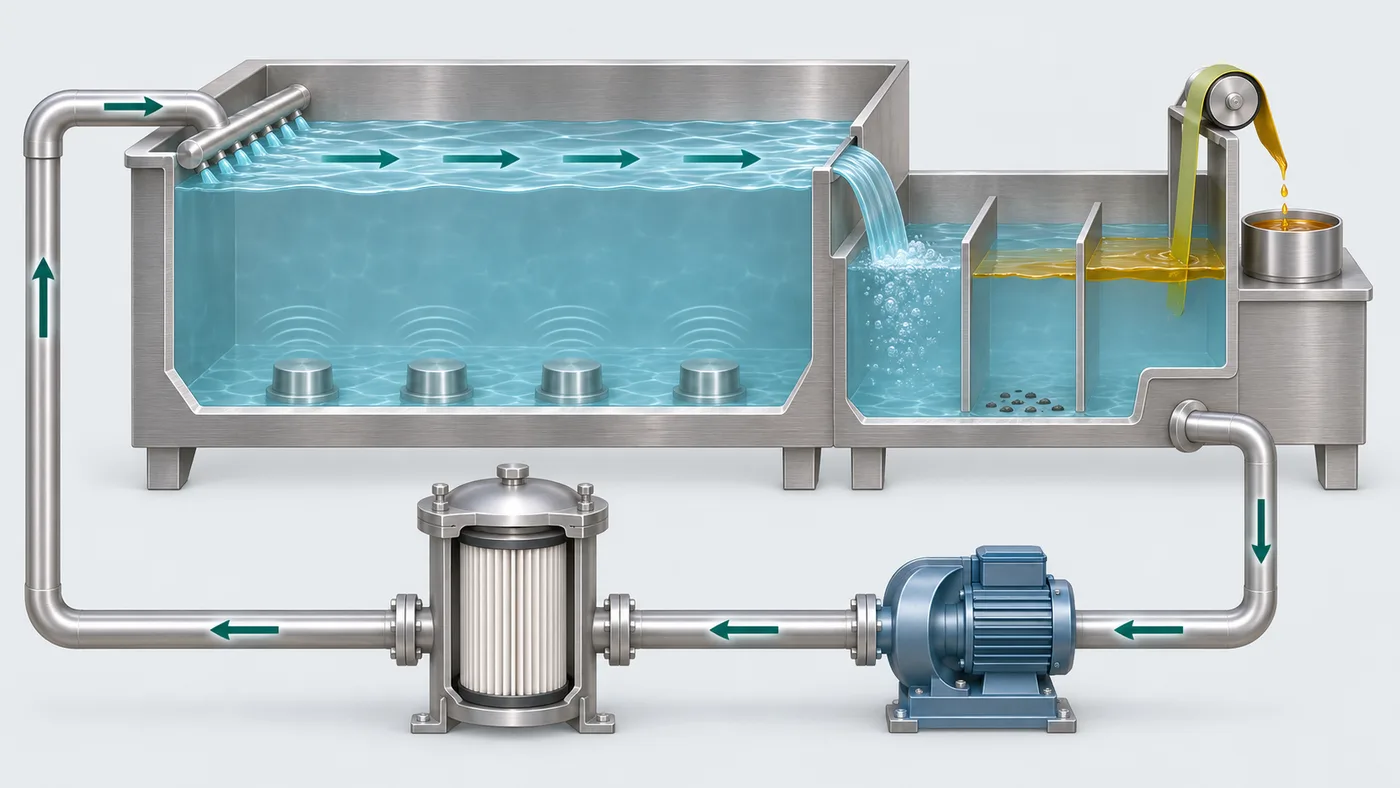
The path of the liquid, step by step:
- Inlet nozzle bar. Filtered liquid returns to the tank through a bar or row of nozzles along one edge, just at the surface, spread over the whole width.
- Surface flow. The liquid moves across the top of the bath as one even sheet. It carries floating oil, foam and fine particles with it.
- Overflow weir. On the opposite edge the liquid spills over a straight overflow edge into a channel or directly into the buffer tank.
- Buffer tank and oil separation. Separation plates guide the floating oil to one side, where an oil skimmer or separator takes it off; heavier dirt settles on the floor of the buffer tank.
- Pump and filter. The pump draws the pre-cleared liquid from the buffer tank and pushes it through the filter.
- Back to the nozzle bar. The filtered liquid returns to the cleaning tank, and the loop starts again.
The buffer tank has a second job: it takes up the liquid that a basket displaces, so the level in the cleaning tank stays steady when a load goes in.
Why does laminar flow matter when parts are lifted out?
Laminar flow matters because every basket leaves the tank through the surface. Without a surface flow, floating oil and fine particles lie as a film on the bath and settle back onto the cleaned parts on the way out. With laminar flow, the film is pushed to the overflow, and on SF, AL and AU machines the parts are lifted through clean liquid.
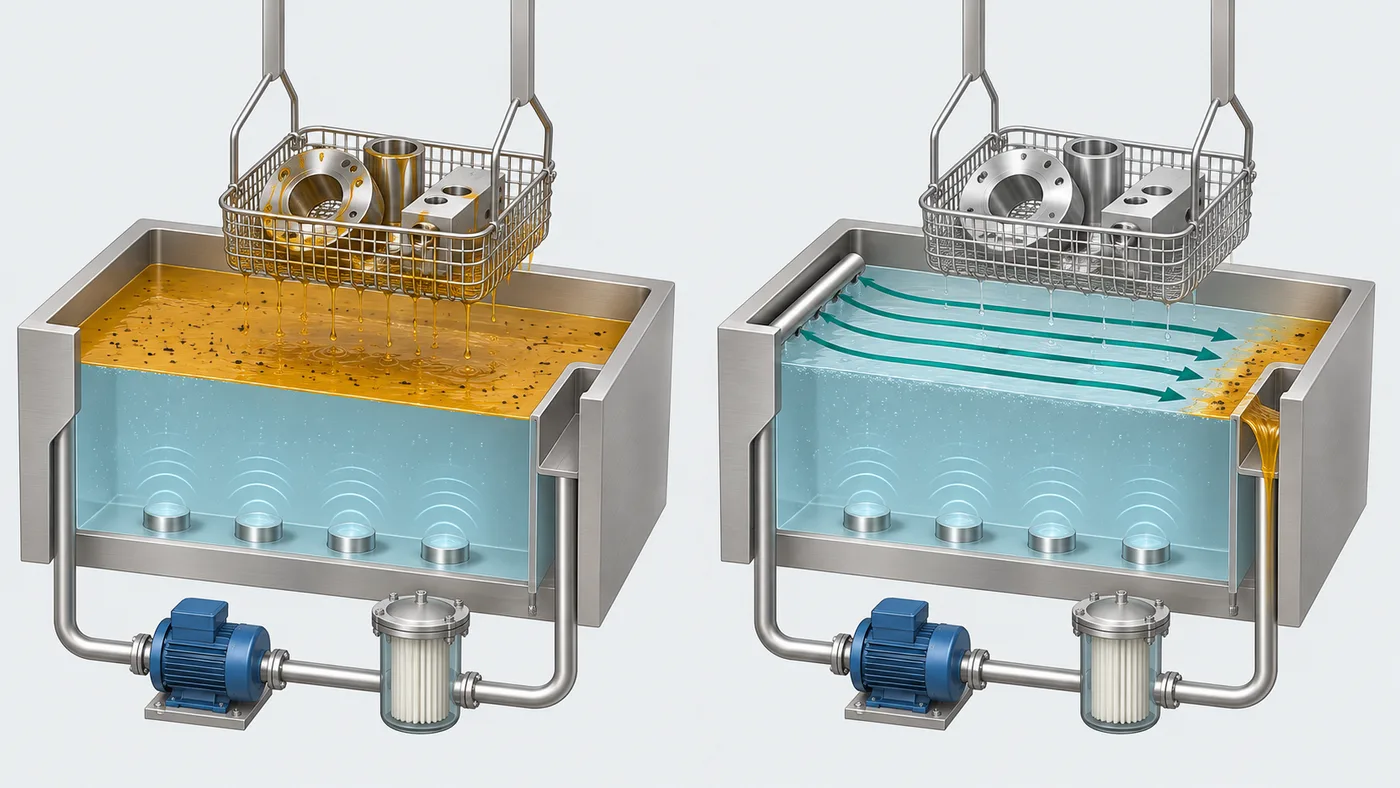
What the flow gives in daily work:
- Parts come out without a film. This counts most where the next step is coating, assembly or inspection, and where a rinse cannot be relied on to take an oil film off.
- Longer bath life. Oil that is skimmed off no longer loads the cleaner, so the bath keeps its capacity to emulsify and stays at working strength for longer. Our filtration and bath life guide gives the figures: on oily work, weeks between bath changes instead of days.
- Less downtime. Fewer bath changes mean fewer stops to drain, clean, refill and heat up a tank of 225 litres
(59.4 US gal) or more.
How is laminar flow different from filtration and from agitation?
Laminar flow is different from filtration because it moves the surface, while a filter only cleans the liquid that the pump draws through it. Agitation moves the basket to help the cleaning inside the part. A machine such as the AL-300 basket-lift system (300 L
| Function | What it acts on | What it removes or improves |
|---|---|---|
| Filtration loop | The liquid drawn through the filter | Particles in suspension: swarf, grit, carbon flakes |
| Oil skimmer or separator | The oil that has separated in the buffer tank | Free oil, before it saturates the bath |
| Laminar flow | The bath surface | Floating oil, foam and fine particles, carried to the overflow |
| Agitation (AL, AU) | The basket and the parts | Fresh liquid in blind holes, loosened soil carried away from the part |
Source: Sonixtek product data and product pages, 15 Nov 2026.
Plain filtration without a surface flow leaves the floating soil where it is: a filter can only take what reaches its suction. The agitation guide covers the lift and platform movement.
How should the laminar flow be set?
The laminar flow should be set as gently as the load allows: strong enough to keep the surface moving to the overflow, gentle enough to stay a smooth sheet. On SF filtration units the flow is adjustable; on AU automatic systems it is adjusted from the PLC and stored in each cleaning programme.
Practical rules:
- Oily work: a stronger flow. More oil arrives at the surface, so it has to be carried away faster.
- Light parts: a gentler flow. Small, light parts should stay in their place in the basket.
- A sheet, not a jet. A return that churns the bath or draws air in brings gas back into the liquid, and gas in the liquid damps the cavitation. That is why a fresh bath is degassed first; the sweep and degas guide explains it.
- During and between cycles. On the SF the oil skimmer runs during the cleaning cycles, and the filtration is switched from the control cabinet so the loop can keep cleaning the bath between batches. On the AL and AU, filtration and laminar flow are part of the stored cleaning programme.
- Keep the level at the weir. The flow only carries soil off while the liquid reaches the overflow edge. On the AU series an automatic fill keeps the level; on other machines, top up evaporation and carry-over by hand.
Which Sonixtek ranges have a laminar flow system?
Laminar flow is standard on three Sonixtek ranges and an option on one: built into the SF filtration units (225 to 360 L
MT multi-tank lines have it as well: the MT-75 lists it in its equipment, and on custom lines it is specified per tank.
- SF filtration units · Sizes (L): 225, 310, 360 · Laminar flow: Standard, adjustable · With it: Filtration pump, buffer tank with separation plates, belt oil skimmer, two 1" drain valves
- AL basket-lift systems · Sizes (L): 75 to 2000 · Laminar flow: Standard, set in the PLC programme · With it: Filtration and oil separation with a small built-in buffer tank; large external buffer tank and belt oil skimmer as options
- AU automatic systems · Sizes (L): 400 to 8000 · Laminar flow: Standard, adjustable from the PLC · With it: Large external buffer tank, double filtration (coarse and fine), oil separation with skimmer
- UMX Pro compact cleaners · Sizes (L): 50 to 255 · Laminar flow: Option (filtration module) · With it: Filtration pump with laminar flow, oil skimmer and oil separator; buffer tank can be added
- MT multi-tank lines · Sizes (L): 75 (MT-75), custom lines · Laminar flow: In the MT-75 equipment list; per tank on custom lines · With it: Multi-stage filtration per tank, overflow edges, oil skimmers
- ST industrial tanks, STS, STB and SX benchtop cleaners · Sizes (L): 2 to 400 · Laminar flow: No · With it: Batch bath, changed when spent
- SPR spray washers · Sizes (L): 250, 500, 780 · Laminar flow: No (spray washer, no ultrasonic bath) · With it: Closed heated water circuit with oil skimmer
Source: Sonixtek product data and product pages, 15 Nov 2026.
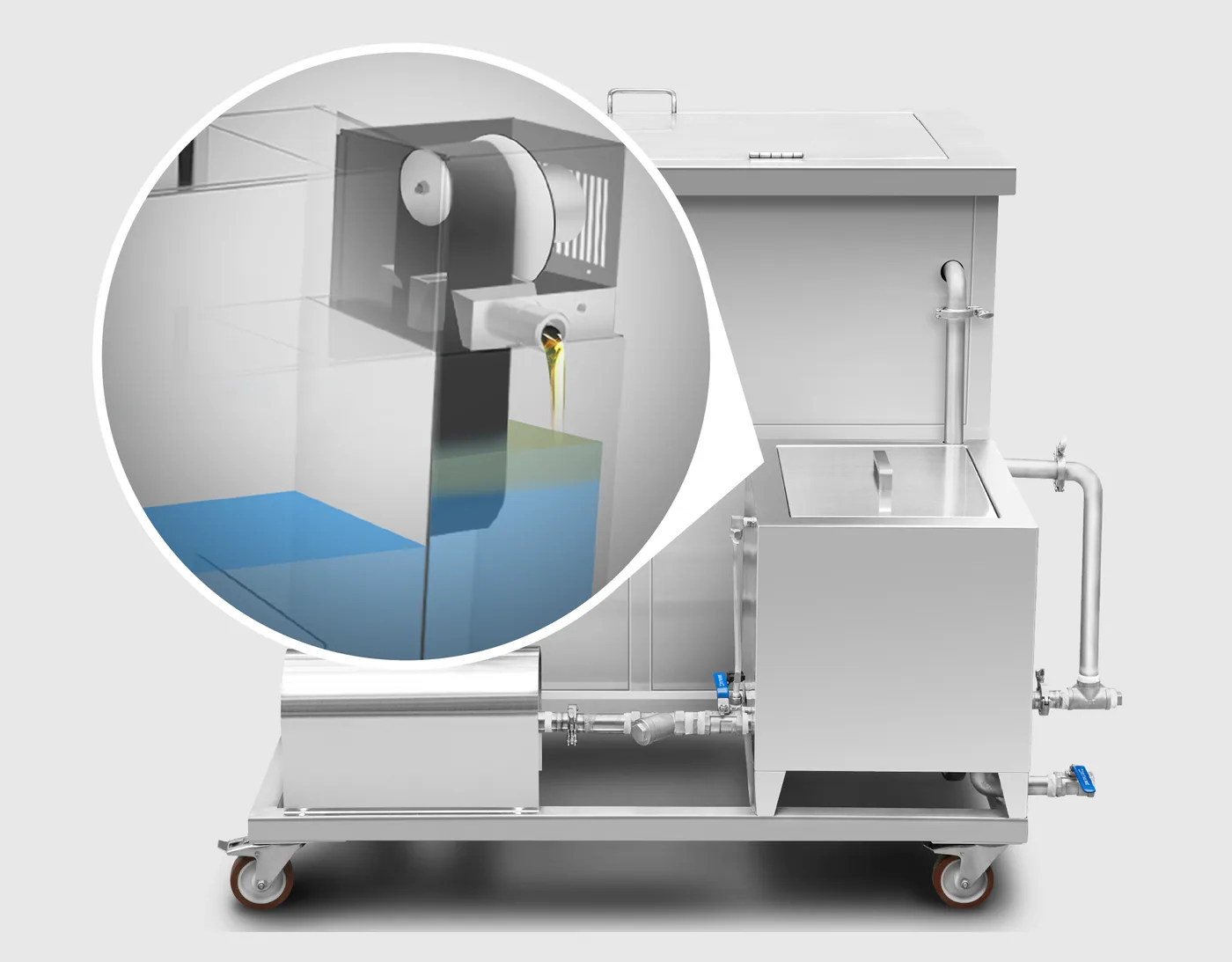
On the UMX Pro the module makes the machine deeper: the UMX Pro 50L from 470 to 670 mm
Between 200 and 400 litres
When do you need laminar flow, and when not?
Laminar flow is needed when oil or fine floating soil comes in with every batch and the parts must leave clean: machined parts with coolant, oily gearbox or engine parts, and several baskets an hour. Laminar flow is not needed for occasional, lightly soiled work in a benchtop unit or an ST tank, where changing the bath is cheaper.
| Situation | Laminar flow |
|---|---|
| Occasional cleaning, light or dry soil (dust, polishing compound) | Not needed; change the bath |
| Daily cleaning of machined parts with coolant or swarf | Recommended, with a particle filter |
| Daily degreasing of oily parts | Yes, with oil skimmer or separator |
| Continuous production, several baskets an hour | Yes, full loop with buffer tank |
| Parts going on to coating, assembly or inspection | Yes; plus a rinse and drying |
Source: Sonixtek filtration and bath life guide and product data, 15 Nov 2026.
For heavy oil and grease, the oil and grease removal guide covers the chemistry and temperature that go with the loop.
Maintenance: filter, skimmer, weir and buffer tank
A laminar flow only works while the loop is clear. A blocked filter weakens the flow, a full oil container stops the skimmer, and a fouled weir edge makes the flow uneven.
| Part | What to check | Sign that it needs attention |
|---|---|---|
| Filter (bag or cartridge) | Load on the element; bags are typically changed weekly, cartridges last longer | Weaker flow at the nozzle bar |
| Oil skimmer and oil container | Belt turns and picks up oil; container has room | Oil film building up in the buffer tank |
| Overflow weir | Edge clean and free of deposits | Liquid spills over one part of the edge only |
| Nozzle bar | All nozzles open | Uneven sheet, still corners on the surface |
| Buffer tank | Sludge on the floor, separation plates in place; drain it through its drain valve | Dirt reaching the filter faster than usual |
| Liquid level | Liquid reaches the weir | Surface flow stops at the edge without spilling over |
Source: Sonixtek filtration and bath life guide and the SF, AL and AU product pages, 15 Nov 2026. The intervals in the manual of your machine take precedence. In the guide, a monthly drain from the floor valve removes the sludge that no filter reaches.
The daily and weekly maintenance guide has the full routine for the tank itself.
After the bath: rinse and dry
Laminar flow keeps the cleaning bath from putting soil back on the parts; it does not replace the rinse and the drying. A clean process runs in three steps: clean, rinse, dry. The rinse takes off the detergent film, and a hot-air dryer such as the DT series takes the water off before spots or flash rust can form. The steps are explained in rinsing and drying after ultrasonic cleaning and dryer tanks after ultrasonic cleaning; the dryers are on the DT series page.
Frequently asked questions
Is laminar flow the same as filtration?
No. Filtration cleans the liquid that the pump draws through the filter. Laminar flow moves the bath surface towards the overflow weir, so floating oil and dirt reach the buffer tank and the filter at all. On SF, AL and AU machines both run together in one loop.
Can laminar flow be added to an ultrasonic tank that has none?
On the UMX Pro compact cleaners laminar flow is an option: the filtration module adds a pump with laminar flow, an oil skimmer and an oil separator, and the machine gets deeper. ST tanks have no laminar flow; for oily daily work the SF series is built around the loop.
Does the surface flow reduce the cleaning power?
Not when the flow is set as a smooth sheet. Floating soil that is carried away does not damp the ultrasound. A return that churns the bath or draws in air brings gas into the liquid, and gas damps cavitation, so the flow is kept gentle.
Should the laminar flow run when no basket is in the tank?
Yes, where oil keeps rising from the bath. On the SF the loop can run between batches, switched from the control cabinet, so separated oil reaches the skimmer before the next load goes in.
What to send us for a quote
To choose between a plain tank and one with laminar flow, send the parts, the soil (oil, coolant, swarf), the batches per day and the basket size through the quote form. We suggest the SF, AL, AU, UMX Pro or MT model that fits.
Sonixtek is the industrial ultrasonic cleaning brand of Cepimac BV, Belgium: benchtop units, heated industrial tanks, basket-lift and automatic systems, spray washers, dryers and filtration, with application advice and quotes in English, German, French and Dutch.