

Products

Ultrasonic generators

The generator turns mains power into the 28 or 40 kHz signal that drives the transducers. How it does that decides how evenly, how strongly and how repeatably a tank cleans.

Discuss your processAll options explained

Ultrasonic generators

What the generator does

The transducers on the tank or in its transducer boxes only vibrate when they receive a high-frequency signal at the right power. The generator produces that signal: 28 kHz for heavy soil on robust parts, 40 kHz for machined surfaces, threads and softer metals. Each transducer is rated 60 W, so a tank with 30 transducers needs about 1800 W of generator output.

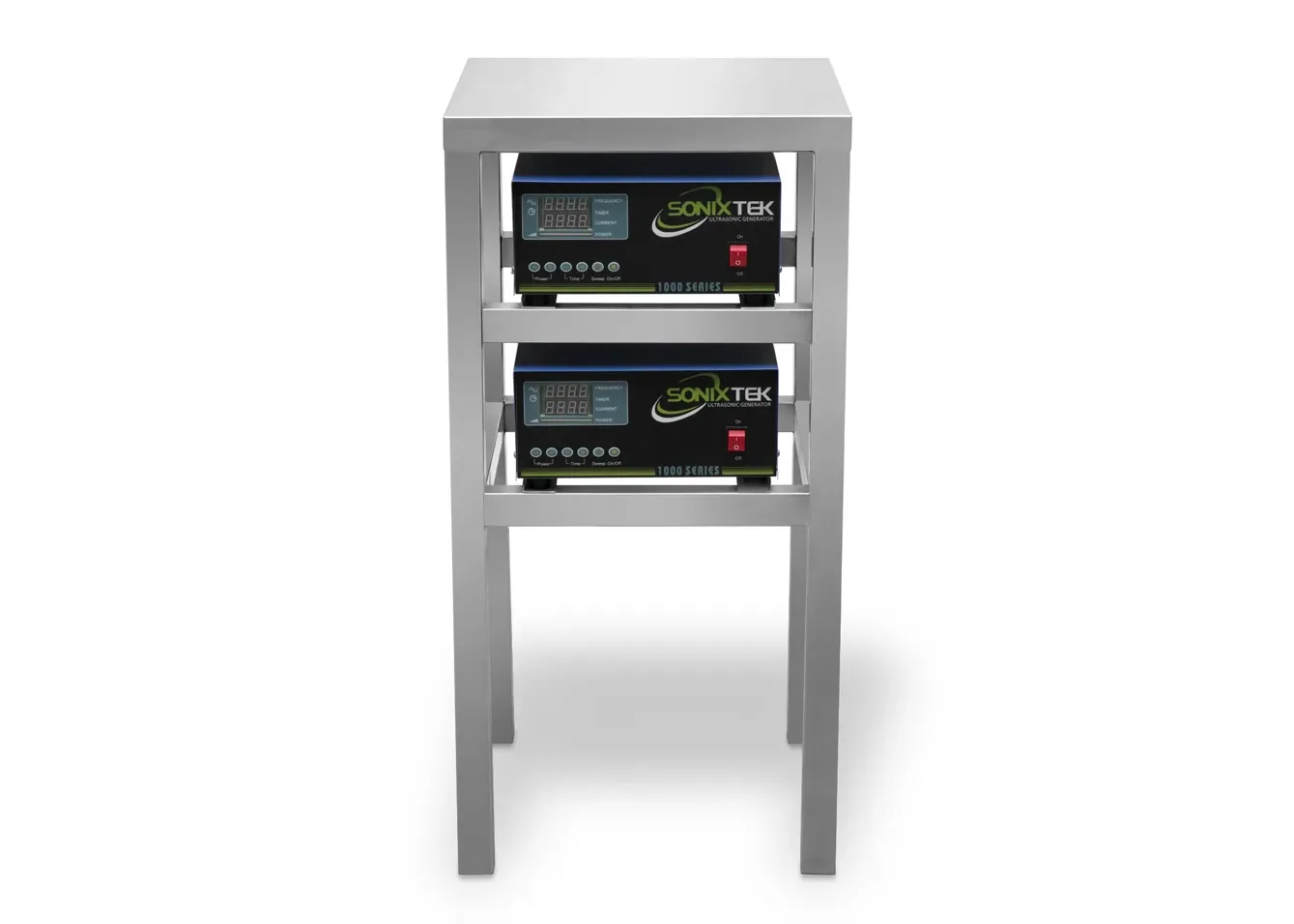
On every Sonixtek industrial machine the generator sits in its own housing outside the tank. It stays away from heat and splashes, can be reached for service, and can be exchanged without draining the bath. Large tanks share the load over several generators.

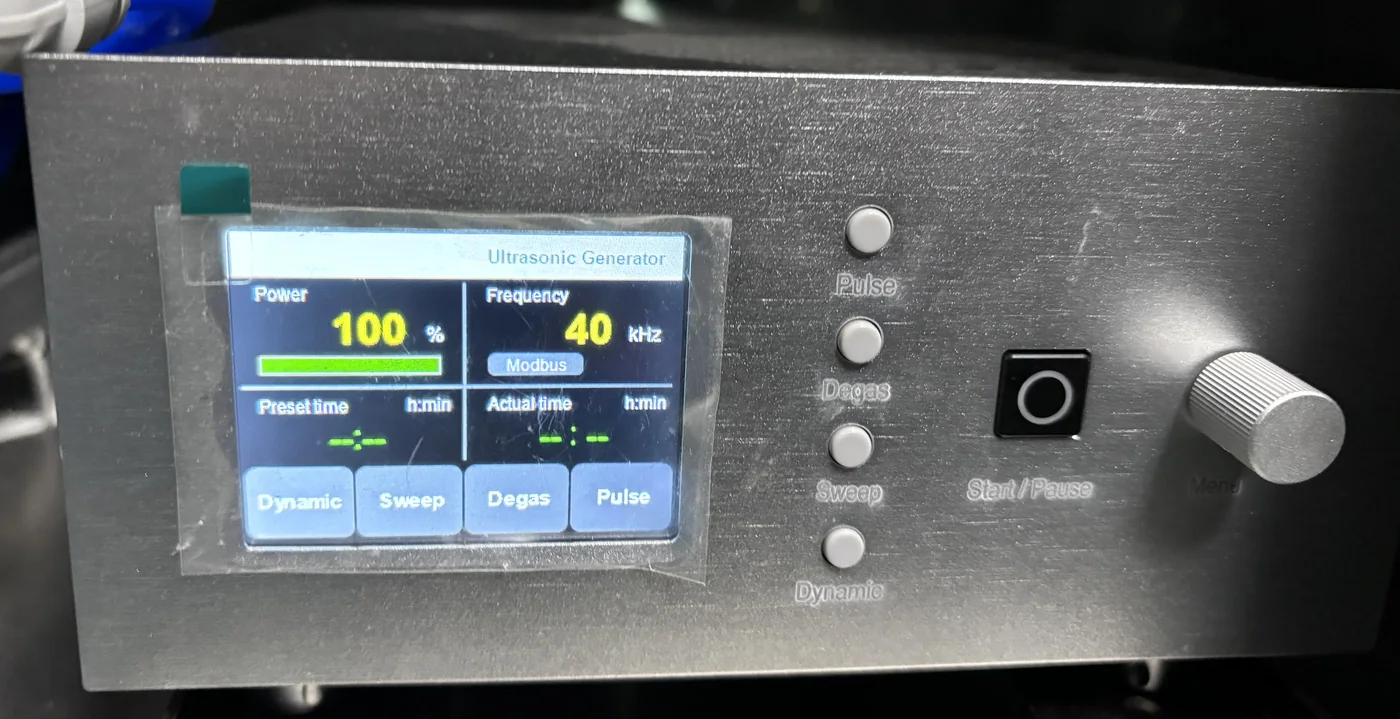
A digital generator on an industrial machine: power, frequency and the sweep, degas, pulse and dynamic modes on one panel.

Analog or digital

Analog generator

Analog generator

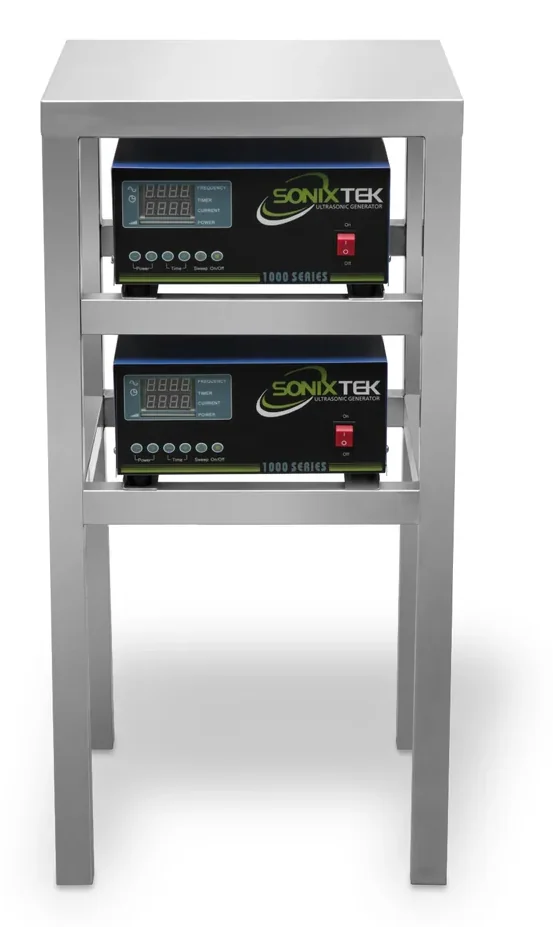
Tuned to the tank's resonance at the factory and set with a few keys or a dial. Few parts, tolerant of dust and heat, the most economical to buy and to repair. It cannot follow the resonance as the bath warms up and the load changes, so its output varies somewhat over a cycle.

When you need it: One part family, one soil, one process.

Digital generator

Digital generator

Controls power and frequency electronically and keeps the output steady as conditions change. Sweep, degas, pulse and dynamic modes are built in, power is set from 0 to 100 %, and the generator can be run from a PLC: that is what makes programmes, touchscreens and remote diagnosis possible on the AL and AU series.

When you need it: Varying loads, several recipes, repeatable and traceable processes.

The functions, explained

What each range has

RangeGeneratorFunctions
ST industrial ultrasonic tanksExternal; analog or digital, chosen with the orderPower 0–100 %, sweep on/off, digital timer
SF cleaners with filtrationExternalAdjustable power, sweep
UMX Pro compact industrial cleanersDigital controlPower 0–100 %, sweep, degas, five programmes
AL ultrasonic cleaners with liftExternal, digital, run by a Siemens PLCPower 0–100 %, sweep, degas, pulse, dynamic, programmable cycles
AU Advanced industrial cleanersExternal, digital, run by a Siemens PLCPower 0–100 %, sweep, degas, pulse, dynamic, eight programmes, remote diagnosis
STS benchtop cleanersBuilt into the benchtop unitDegas, sweep, digital timer
SX benchtop cleanersBuilt into the benchtop unitDegas, sweep, pulse

Generator power per model

Ultrasonic power and how it is split over the generators, from our specification sheets.

ModelUltrasonic powerGeneratorsTransducersFrequency

Which one to specify

One part, one soil, one operator: an analog generator does the job and costs less over its life. Loads that vary, several recipes, or a process that has to be repeatable and traceable: digital. If your plant requires documented electrical testing, ask for the digital version. Because the generator is external, the choice can be revisited later without changing the tank.

Let's find the right fit

Not sure which size you need?

Send us the part, the quantity per hour and the soil you are removing. We will size the tank and the frequency with you.

Discuss your process

Region

Choose your country or region

Sonixtek quotes and supplies directly through its regional companies. Your choice sets the contact details shown on the site and which Sonixtek company handles your enquiry.