
Industries · 8 min read · Updated 2026-11-16
Drying and documentation in audited plants
What an audited plant asks for about a drying station: manual, cleaning and maintenance plan, wiring diagram, spare parts list and the records behind them.
Technical guide. Figures are taken from our own spec tables; for your process we confirm the settings with a cleaning trial.
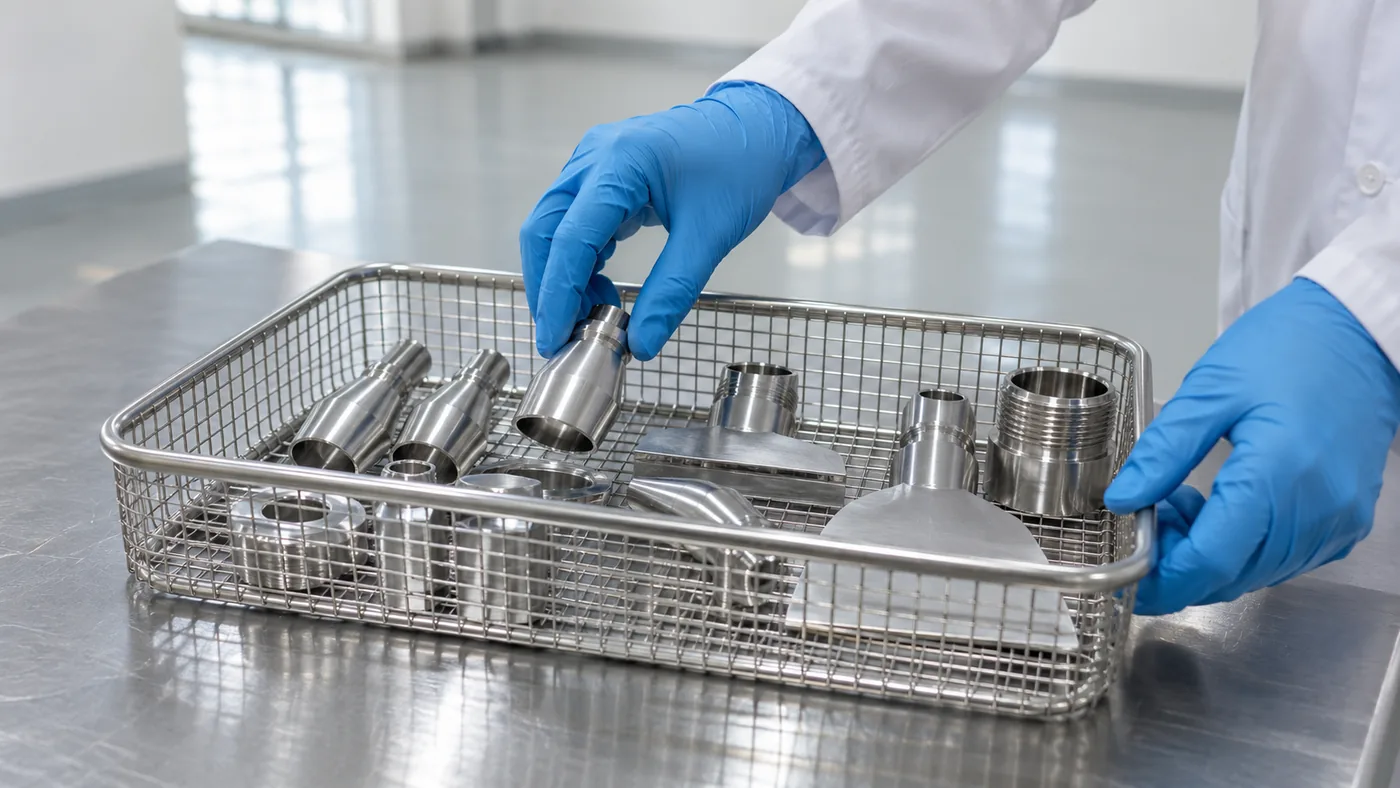
An audit discussion about a drying station rarely ends at the temperature display. The auditor wants to see which equipment is installed, how it is cleaned, who maintains it and how an operator decides that a basket may move to the next step.
One plant runs a DT-96 hot-air dryer after its own ultrasonic cleaner; the dryer's data are in the table below. The dryer replaced drying small and medium parts with a compressed-air gun, so the drying step was new to the plant's process description and had to be documented from scratch. This article uses the plant's request as a planning framework.
Which documents does an audited plant need for a drying station? For its DT-96, the plant asked us for four equipment documents: the instruction manual, a cleaning and maintenance plan, the wiring diagram and the spare parts list. It adds its own process instruction and completed records. The exact set and the acceptance criteria follow the plant's audit scope, not the machine.
What should the process description say about the drying station?
The process description for a drying station should name the parts dried, the wash and rinse stages before the dryer, the setpoint, up to 100 °C
Describe the required result in your own words; a model name on a nameplate is not a process approval. The rinse and drying guide explains what the dryer removes: the water left after rinsing. If rinse residues remain, heating leaves them on the part. Oil floating on the wash bath is one source of such residues; a laminar flow carries it to an overflow before the basket is lifted out. The control plan should therefore connect the drying record with the rinse condition before it, rather than documenting only a chamber setpoint.
Agree the acceptance method with the responsible process owner. It can include inspection of features that hold water, the surface condition after cooling and protected handling to the next station. Do not assume that a dry outside face stands for the whole component; blind holes, threads and internal channels dry last.
Which documents belong in the equipment file?
The equipment file for a DT hot-air dryer holds the instruction manual, the cleaning and maintenance plan, the wiring diagram and the spare parts list, each matching the installed configuration and revision. A diagram for a similar model, such as a DT-206 instead of the installed DT-96, creates doubt during maintenance.
An instruction manual should describe operation, permitted cleaning, isolation and service for the installed machine. A wiring diagram should match the supplied electrical configuration. A spare parts list should identify the fitted components well enough to order and replace the right item.
The plant's request shows which documents audited plants ask for. Ask us which documents come with your DT configuration and in which languages.
Keep model, machine identification, installed options and document revisions together in one file. When an option is added or changed, review the documents and local instructions that describe it.
| Document or record | Practical question it answers | Check before use |
|---|---|---|
| Instruction manual | How is this station operated and serviced? | Matches the installed machine and the language needed |
| Cleaning and maintenance plan | What is done, by whom and when? | Method, interval and responsibility defined |
| Wiring diagram | Which electrical arrangement is fitted? | Correct configuration and revision |
| Spare parts list | Which replacement component is required? | Actual fitted item and its identification |
| Process instruction | Which load and cycle may operators use? | Accepted trial and part limits recorded |
| Completed records | What happened for this load or service? | Traceable entry, any deviation resolved |
The equipment record can start with the published data of the model.
| Model | Volume (L) | Heating (kW) | Temperature (°C) | Basket (mm) | Supply (V) | Tank |
|---|---|---|---|---|---|---|
| DT-96 | 96 |
3 | 30–100 |
580 × |
400 | AISI 304, from 2 mm |
| DT-206 | 206 |
6 | 30–100 |
730 × |
400 | AISI 304, from 2 mm |
| DT-300 | 300 |
on request | up to 100 |
on request | 400 | AISI 304, from 2 mm |
Source: Sonixtek product data, Nov 2026.
What does a stainless steel tank change for the audit?
A stainless steel tank can be wiped down and inspected, which helps when an auditor asks how the drying chamber is kept clean. All DT tanks are AISI 304 stainless steel from 2 mm
Specify cleaning agents and a method compatible with the tank, fittings, filter arrangement and the residues involved. Look at the machine as installed: access around the basket supports, lid edges and drains decides whether staff can remove accumulated material and check the result.
Write a cleaning instruction for the accessible surfaces that states the stopped condition and the required cooling. A stainless enclosure does not mean water may be directed at controls, electrical equipment or air intakes. The machine documents and the site cleaning instruction should agree on those boundaries.
When does a hot-air dryer need filtered intake air?
A hot-air dryer needs filtered intake air when cleaned parts must not collect dust from the hall. One compressor maker dries washed filter cartridges in a DT-206 at about 50 °C
That compressor maker bought the DT-206 on its own for its existing washer. The cartridges have internal rods and lie horizontally, so the direction of the airflow through the basket matters as much as the temperature.
If your process needs filtered intake air, ask for the filter specification, its location, maintenance access and replacement instructions. Do not assume the module is fitted to every DT. Filtration deals with particles entering with the intake air. It does not clean a dirty basket, stop splashes at unloading or prove a particle result on the finished part by itself, so define the handling and cooling area as well.
Link filter care to the maintenance records. A damaged seal, a wrong element or a bypass matters even if the display still reaches its setpoint. Take the inspection method and the interval from the filter documentation rather than inventing one, and record every change.
Make the cleaning and maintenance plan usable
Assign each task to a role, with an interval or a condition that triggers it, the permitted method and a completion record. Include the chamber, lid, basket, intake path, the filter where fitted and the drains. Separate what an operator observes from work that needs qualified maintenance staff and isolation of the machine.
The general maintenance guide covers regular checks across a cleaning installation, and the basket loading guide helps fix a basket arrangement that operators can repeat.
Keep the controller configuration under change control. The DT-206 controller ships in ON/OFF mode. Switched to PID, it needs one auto-tune run at the working temperature with a typical load; allow about 2 hours including a check run. Do not reset the controller to factory defaults: that restores the controller maker's settings, not the machine setup. Record the authorised setting and the check run, so that values do not change unexplained between shifts.
What should a drying cycle record contain?
A drying cycle record should list part family, basket arrangement, rinse condition, setpoint (for example 50 °C
Temperature evidence at the part, where the plant needs it, comes from an agreed measurement method, not from the chamber display. Keep it separate from the dryness inspection.
Record what happens after a failed check: hold the basket, find the reason, apply the authorised correction and check again. A second drying run adds heat exposure and must stay inside the part's thermal limits. Keep the deviation with the process record, so the released result has a history anyone can follow.
Frequently asked questions
Is the HEPA-grade intake filter fitted to every DT dryer?
No. Filtered intake air is an option for DT hot-air dryers. Specify it in the equipment requirement and ask for the filter specification, its location, maintenance access and replacement instructions, so that the filter can be entered in the maintenance plan.
How long does the PID auto-tune of a DT-206 take?
Allow about 2 hours, including a check run. The DT-206 controller ships in ON/OFF mode; switched to PID, it needs one auto-tune run at the working temperature with a typical load. Record the authorised setting and do not reset the controller to factory defaults.
Can a DT dryer be added to a washer the plant already has?
Yes. Of five recent dryer buyers, three added the dryer alone to an existing washer. The washer documents stay as they are; the new drying station gets its own equipment record, cleaning and maintenance tasks, controller setting and hand-over point.
Does the chamber display prove the temperature at the part?
No. The DT chamber display shows the chamber temperature, not the temperature throughout the load. Where the plant needs temperature evidence at the part, agree a measurement method and the checks on the measuring equipment, and keep that evidence apart from the dryness inspection.
What to send us for a quote
The DT overview gives the equipment background, and the DT series page is the starting point for specifying a station. Send your part requirements, the options you need, the document language and the plant's record needs through the quote form. Our technical team then reviews the equipment and the document scope together before the station is selected.