
Parts and contaminants · 4 min read · Updated 2026-09-26
Cleaning parts before coating or painting with ultrasound
Paint, powder, plating and bonding fail on oil, fingerprints and residue. The cleaning sequence in front of a coating line, how to test that a surface is ready, the contaminants that cause craters and blisters, and how ultrasonic cleaning fits with conversion coatings and pretreatment.
Technical guide. Figures are taken from our own spec tables; for your process we confirm the settings with a cleaning trial.
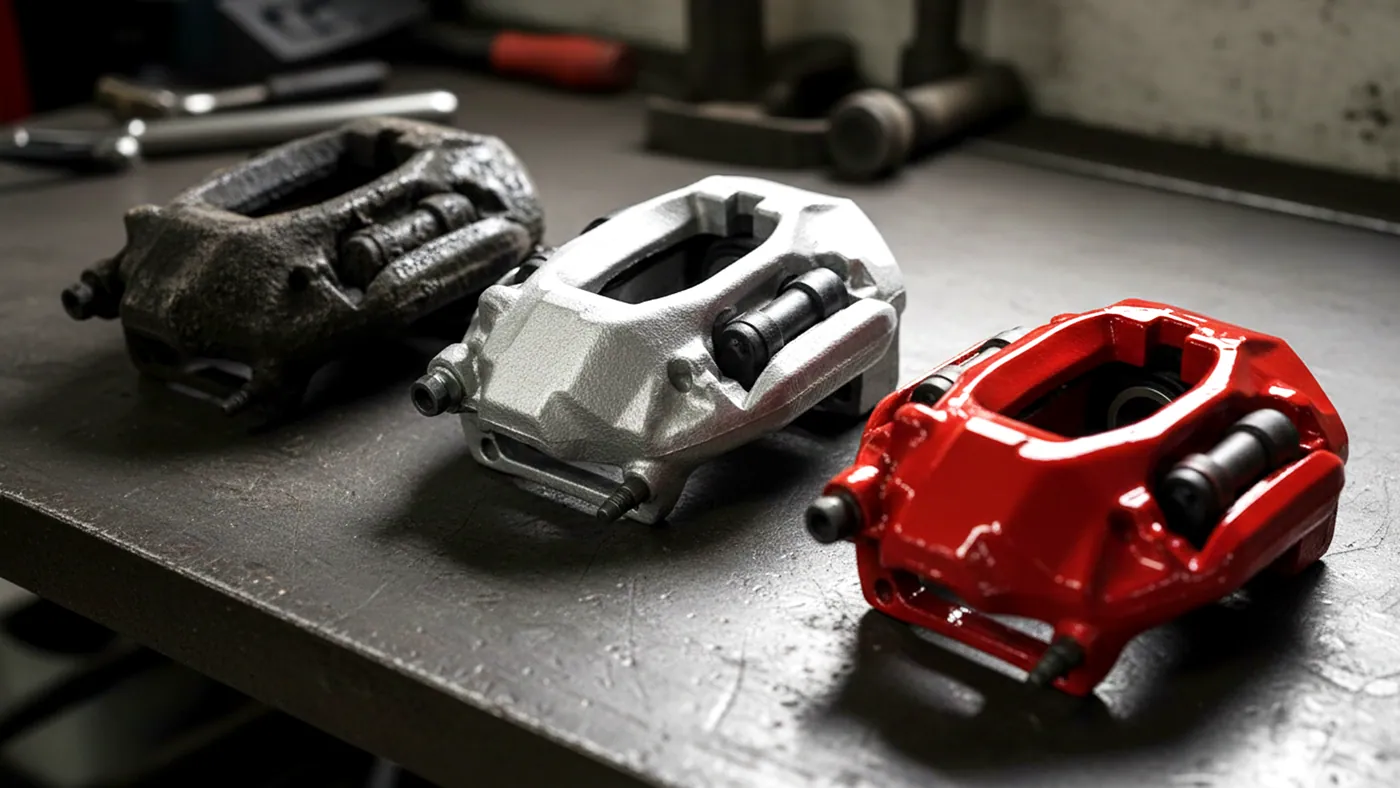
Most coating failures are cleaning failures. Paint that peels, powder with craters, plating that blisters and adhesive joints that let go usually have the same root cause: a film of oil, a fingerprint or a residue on the surface that the coating could not wet. The coating line cannot correct that. The surface has to arrive clean, rinsed and dry, and it has to stay that way until it is coated.
What the coating needs
A coating adheres by wetting the surface. Oil, grease, wax, silicone and dried cleaner residue lower the surface energy, so the coating pulls back from those spots instead of spreading. The results are familiar:
| Contaminant | Typical defect |
|---|---|
| Machining oil, drawing and stamping compound | Poor adhesion, peeling |
| Silicone (from sprays, release agents, some hand creams) | Craters, "fish eyes" in paint and powder |
| Fingerprints | Local adhesion loss, corrosion under the coating |
| Dried cleaner or hard-water residue | Blisters, poor adhesion, corrosion under the film |
| Polishing and buffing compound | Blotchy plating, poor adhesion |
| Fine particles, fines from machining | Inclusions, rough finish |
Silicone deserves a special warning. A trace from a spray can used near the line is enough to crater a whole batch. Keep silicone-containing products out of the cleaning and coating area altogether.
The cleaning sequence
| Station | Purpose | Typical setting |
|---|---|---|
| Ultrasonic wash | Oil, compound, particles | Alkaline cleaner 3 to 5 %, 55 to 65 °C (aluminium: light-alloy cleaner, 50 to 60 °C), 28 or 40 kHz, 5 to 15 min |
| Rinse 1 | Cleaner off the part | Clean water, warm, with overflow |
| Rinse 2 | Salts off the part | Demineralised water, conductivity monitored |
| Dry | No water spots, no flash rust | Hot air at 70 to 100 °C |
Two rinses are normal before coating. The first rinse removes the cleaner; the second, in demineralised water, removes the salts that the first leaves behind and that would otherwise dry into spots under the coating. Tap water in the last rinse is a common cause of blistering. See rinsing and drying and multi-tank lines.
Ultrasonic cleaning and pretreatment
Many coating lines add a chemical conversion step after cleaning: iron or zinc phosphating, zirconium or silane pretreatment, chromate-free passivation, or the activation step in a plating line. Ultrasonic cleaning does not replace these steps. It comes in front of them and makes them work, because a conversion coating only forms on a surface that is already free of oil. Where the parts have blind holes, threads or pockets, ultrasonic cleaning removes the oil there too, which a spray pretreatment line often cannot. For simple sheet parts without cavities, a spray line alone is often enough; see spray washer or ultrasonic bath.
Testing the surface
The cleaning is released by a test on the part, not by its appearance:
- Water-break test: rinse the part and hold it up. On a clean surface the water forms a continuous film for at least 30 seconds. Where it breaks into droplets or pulls back, there is still a hydrophobic film. It is fast, free and belongs at the end of every cleaning line.
- Test inks or dyne pens: a set of inks of known surface tension shows the surface energy of the part. The coating or adhesive supplier states the minimum value their product needs.
- Adhesion test on the coated part, such as cross-cut or pull-off, checks the whole chain of cleaning, pretreatment and coating.
From the dryer to the coating
- Coat soon. A clean surface picks up dust and airborne oil. Aim for hours, not days.
- Handle with clean gloves, and never touch the surfaces to be coated.
- Hang or rack parts for the coating line directly after drying, so they are not handled again.
- Keep the bath fresh. A bath loaded with oil puts oil back on the parts. A skimmer and filtration, and a concentration check every day, keep the result constant; see filtration and bath life.
Which machine
| Work | Set-up |
|---|---|
| Small batches for a paint or powder booth | ST-96 or ST-157 wash, two rinse tanks, DT dryer |
| Parts with cavities before plating or anodising | AL-150 to AL-400 with lift and filtration, rinse and demineralised rinse stations, dryer |
| Coating line feed, series production | MT multi-tank line: ultrasonic wash, rinse, demineralised rinse and dryer under one carriage, matched to the coating line takt |
For oily parts the chemistry side is covered in removing oil and grease, and for machined parts in removing swarf, chips and coolant.