
Parts and contaminants · 5 min read · Updated 2026-09-26
Removing machining swarf, chips and coolant
Turned and milled parts carry cutting fluid and fine chips in every pocket, bore, thread and cross-drilling. Ultrasonic cleaning flushes them in one cycle. The bath, what milled parts need in particular, the filtration that makes it last, and the cleanliness checks a machine shop uses.
Technical guide. Figures are taken from our own spec tables; for your process we confirm the settings with a cleaning trial.
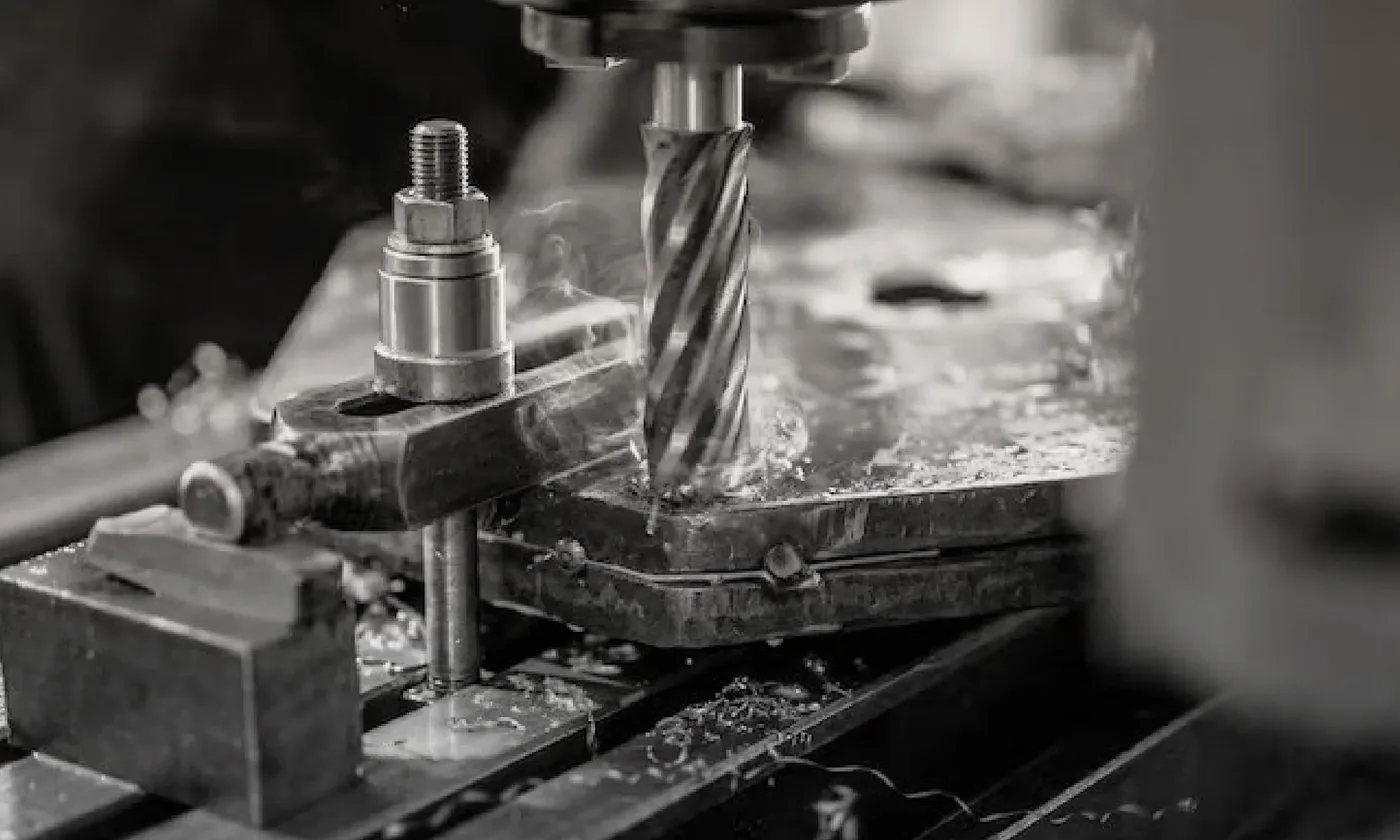
A machined part is dirty in a specific way. On the outside there is a film of coolant, water-miscible or neat oil, with fine chips stuck in it. On the inside, in cross-drillings, blind tapped holes and oil galleries, there are chips that the coolant washed in and could not wash out. A cleaning tank has to deal with both, and the second is why it is an ultrasonic tank and not a spray washer.
The bath
Chemistry. A mild to medium alkaline cleaner at 2 to 4 %, compatible with the coolant in use; the coolant supplier usually names one. For aluminium and its alloys, a light-alloy cleaner with inhibitors. Where the parts go straight to assembly, a neutral cleaner with a corrosion inhibitor, so the bath itself protects the part.
Temperature. 50 to 60 °C. Coolant emulsions split above about 60 °C and the oil phase then loads the bath faster; see filtration and bath life.
Frequency. 28 kHz for cast iron and steel with heavy chips; 40 kHz for aluminium, fine threads and finished surfaces.
Time. 3 to 8 minutes. Swarf removal is quick; what takes time is a thick coolant film on a part that has stood for a week.
Loading. Bores and blind holes tilted, openings angled upward about 30 to 45° or sideways, so the air rises out and the liquid reaches the bottom; a blind hole facing straight down holds an air pocket and is not cleaned. After lifting the basket, tip the parts so liquid and loosened chips drain; see loading the basket. Agitation on the AL series pumps liquid through the drillings each stroke and is the single biggest help on parts with internal passages.
Rinse and dry. A warm rinse to remove the cleaner film, a dry if the part is stored or measured. Steel parts that wait get an inhibitor. For parts to a cleanliness specification, a demineralised rinse and filtered air drying.
Milled parts
Milled parts are dirty differently from turned ones. A lathe leaves a film on round faces and chips in the bore; a milling centre leaves pockets, slots and flat faces, and it throws chips into every one of them.
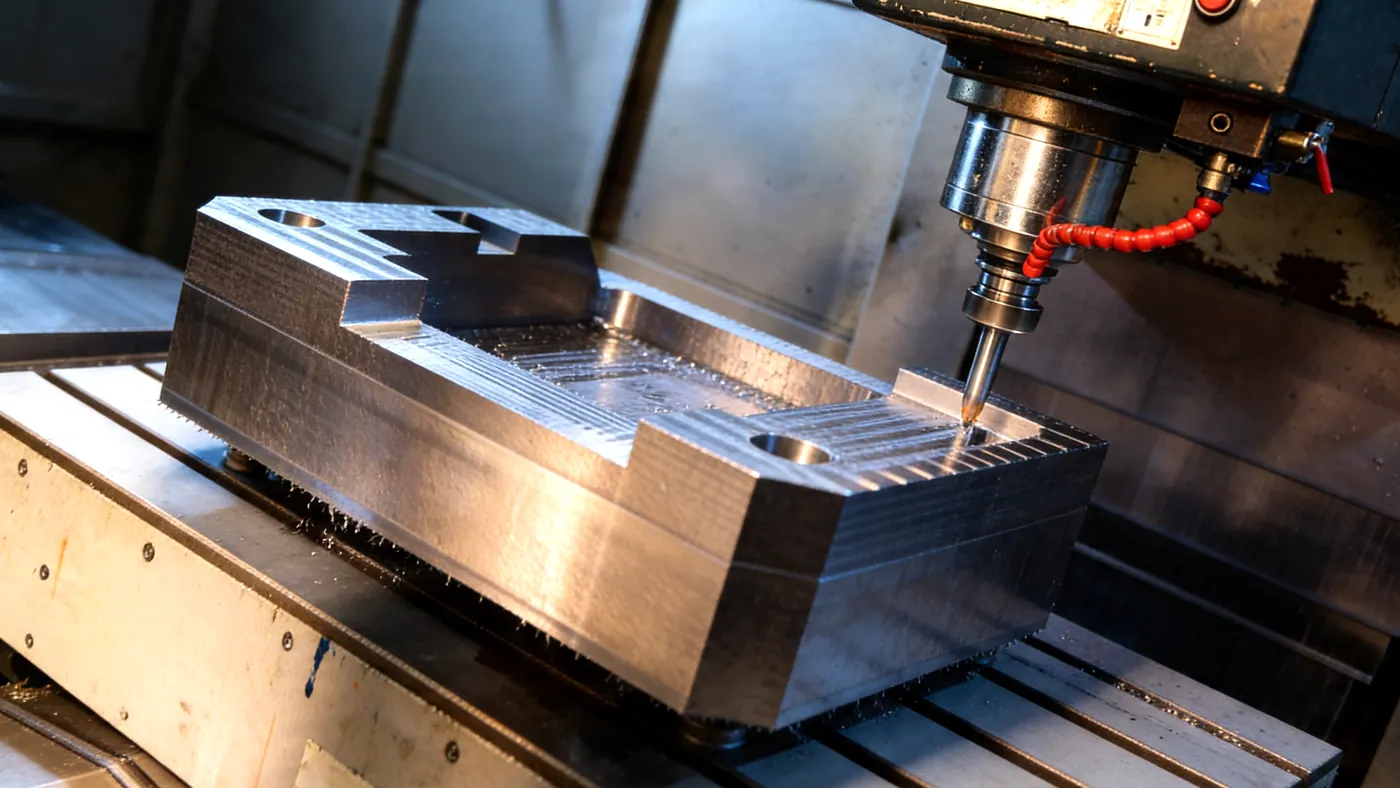
- Pockets and slots hold a bed of chips glued in by coolant. Load the part on edge, pockets facing sideways, so the chips fall out of the pocket as the cavitation loosens them and no air stays trapped. Straight down, a pocket holds an air layer; face up, the chips only rearrange themselves. Tip the part after lifting so the rest drains.
- Aluminium chips are light and stay in suspension. They need the filter loop more than steel chips, which settle.
- Large flat faces hold a coolant film that dries into a sticky varnish if the parts stand for days. Clean them within a shift, or allow a longer cycle and a hotter bath for parts that have waited.
- Minimum-quantity lubrication leaves a thin ester or oil film instead of an emulsion. It needs a cleaner that emulsifies oil, not only one that is compatible with water-miscible coolant.
- Dry-milled parts carry fine dust and hot-welded chips. The dust comes off easily; a chip welded to an edge is a deburring job.
For milled parts that go into an assembly, see CNC machined parts before assembly.
Filtration is the process
A machine shop's bath dies of particles. Fine chips of a few microns stay in suspension, scatter the sound, and land back on the part; larger chips collect on the floor above the transducers and damp them. A particle filter of 10 to 25 µm on a circulation loop keeps both under control, and a magnetic separator before the filter takes the ferrous fines out of the bag. The SF series has the loop built in; on ST and AL tanks it is an add-on. Turnover of three to five tank volumes an hour is a working figure; more on cast-iron work.
Coolant itself is the second load. Water-miscible coolant emulsifies into the bath and saturates it in the same way as oil; a skimmer and overnight settling handle the free oil, and the bath is changed on a schedule set by titration.
Cleanliness specifications
Automotive and hydraulic buyers increasingly specify technical cleanliness to VDA 19 / ISO 16232: the part is flushed with a test liquid, the liquid is filtered, and the residue is weighed (gravimetric, mg per part) or the particles counted and sized. The specification then reads, for example, "no particle above 400 µm, total residue below 3 mg". Meeting it is a process, not a machine: filtered wash, ultrasonic rinse, demineralised rinse, filtered drying, and a bath-change interval tied to the measured result. A line is laid out around the test method, so put the specification in the enquiry; the quote article lists what else to send.
Parts in practice
| Part | Issue | Bath | Machine |
|---|---|---|---|
| Turned and milled steel parts | coolant film, chips in threads | 28 kHz, 55 °C, 5 min | ST-96 to ST-206 with filter loop |
| Aluminium housings | coolant, chips in blind holes, finish must stay bright | 40 kHz, 50 °C, light-alloy cleaner, 5 min | UMX Pro or ST with filter |
| Hydraulic blocks | chips in cross-drillings, cleanliness spec | 28 kHz, agitation, 8 min, rinse, rinse, dry | AL with filtration, or MT multi-tank line |
| Engine blocks after machining | chips in galleries, heavy coolant | 28 kHz, 60 °C, agitation, 10 min | AL-600 to AL-1000 |
| Precision parts before inspection | fine particles, fingerprints | 40 kHz, 50 °C, 3 min, demineralised rinse | UMX Pro, STS for small parts |
| Threaded parts and fasteners in bulk | coolant, chips | 28 kHz, 55 °C, 5 min, shallow layer | ST-96 with fine basket |
What ultrasonic does not replace
Deburring. Cavitation lifts loose chips; it does not remove a burr that is still attached. Parts are deburred first, cleaned second. And chip-breaking on long stringy swarf: a part wrapped in a bird's nest of steel wire goes to the tank after the nest is pulled off, or the nest comes off in the bath and lands in the basket, where it shadows everything under it.