
Parts and contaminants · 4 min read · Updated 2026-09-26
Ultrasonic cleaning of industrial filters for reuse
Stainless mesh, sintered metal and wire-wound filters can be cleaned and reused many times; paper and felt cannot. Which filters are worth cleaning, how to get the dirt out of the depth of the medium rather than just its surface, and how to prove a cleaned filter is fit to go back into service.
Technical guide. Figures are taken from our own spec tables; for your process we confirm the settings with a cleaning trial.
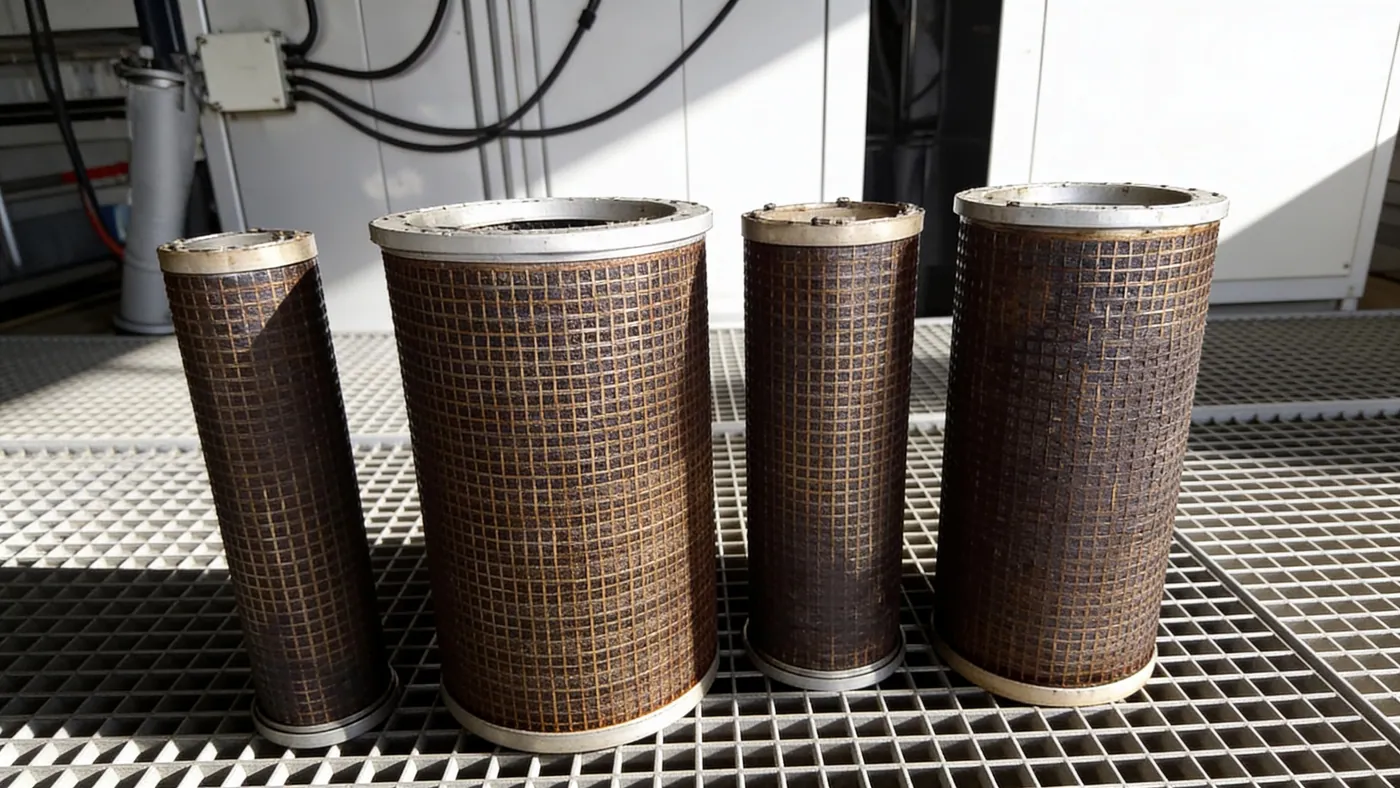
A metal filter element can cost as much as a small machine part, and a plant may have hundreds of them: strainers in hydraulic and lubrication circuits, candles in polymer lines, cartridges in process water and chemical lines, nozzle and screen filters in paint shops. Most are replaced when their differential pressure climbs. Many of them could be cleaned and put back instead. The difficulty is that the dirt is not only on the surface but in the depth of the medium, and a filter that is only surface-clean clogs again within days. Ultrasonic cleaning reaches into the pores, which is why it is the usual method for filter reuse.
Which filters can be cleaned
| Filter medium | Cleaned and reused? |
|---|---|
| Woven stainless mesh, single or multi-layer | Yes, the typical case |
| Sintered metal fibre and sintered metal powder | Yes, with care: fine pores need long, gentle cycles |
| Wire-wound and wedge-wire elements | Yes, easily |
| Perforated plate, baskets, strainers | Yes |
| Polymer melt filter candles and packs | Yes, after thermal removal of the polymer: ultrasonic cleaning removes the ash and residue that the furnace leaves |
| Ceramic filters | Often, depending on the maker |
| Paper, cellulose, glass fibre, felt, meltblown polymer cartridges | No. Wet cleaning destroys the structure; replace them |
If the filter maker does not state that an element may be cleaned, ask before cleaning it. Some elements are rated only as disposable, and their integrity after cleaning is not guaranteed.
The cleaning process
- Pre-rinse or soak to remove the loose cake. For oil-soaked elements, drain and wipe first; the bulk oil should not go into the ultrasonic bath.
- Ultrasonic wash with the chemistry that matches the dirt:
| Dirt | Liquid | Temperature | Time |
|---|---|---|---|
| Oil, hydraulic and lubrication fluid | alkaline cleaner with emulsifier | 55 to 65 °C | 15 to 30 min |
| Coolant and fine metal particles | alkaline cleaner | 50 to 60 °C | 10 to 20 min |
| Paint, lacquer | cleaner specified for the paint type | per supplier | 20 to 40 min |
| Polymer residue after the furnace (ash, oxides) | alkaline cleaner, then an acid step in a separate container if the maker specifies it | 50 to 60 °C | 20 to 40 min |
| Mineral scale | acidic descaler in an insert or a 316 tank, not directly in a 304 tank | 40 to 50 °C | 10 to 20 min |
- Flush from the inside out, against the normal flow direction, with clean water. Ultrasound loosens the particles in the pores; the reverse flush carries them out. Without it, loosened particles stay inside the medium.
- Repeat wash and flush for fine sintered media. Two short cycles with a flush between them clean better than one long one.
- Rinse in demineralised water, and dry with warm air or in an oven at the temperature the filter maker allows.
Frequency and care of the medium
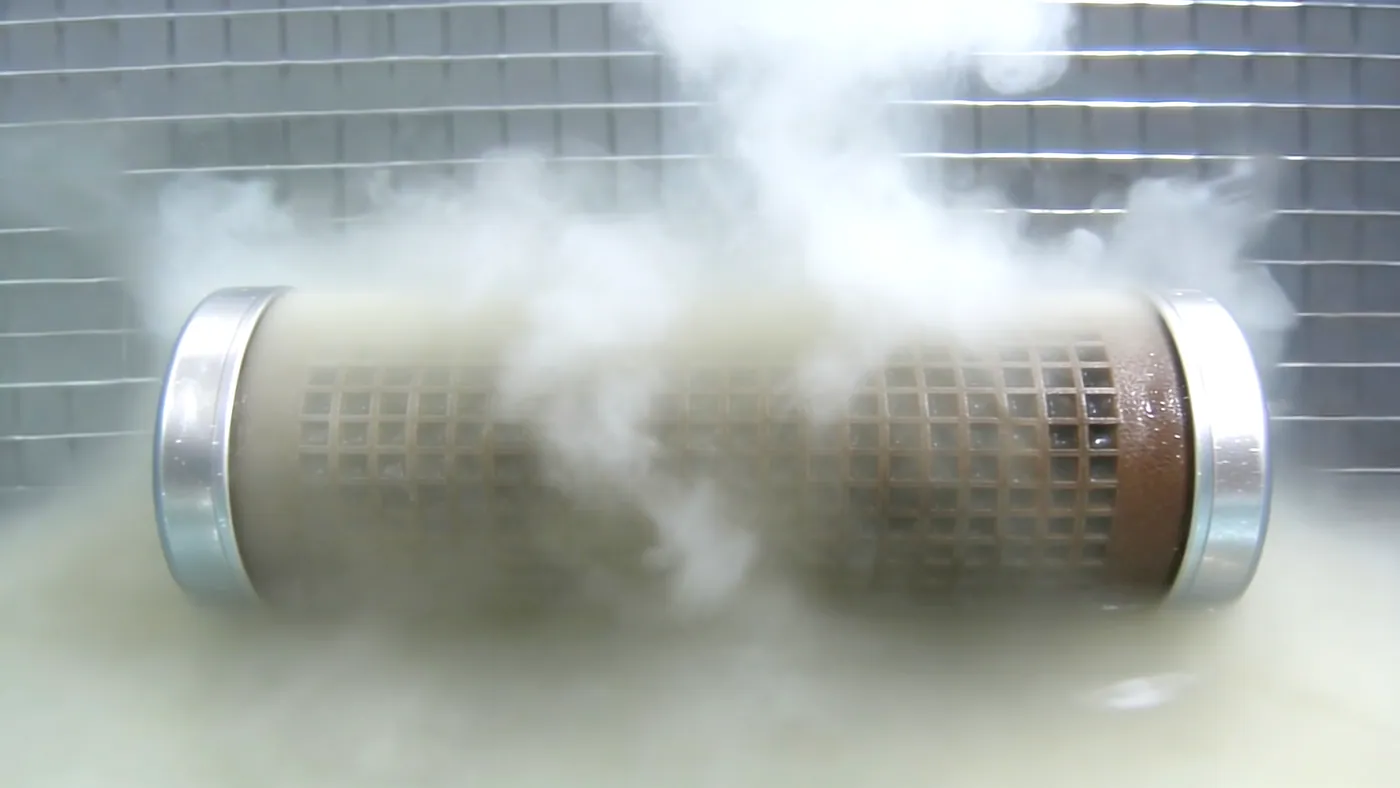
40 kHz is usually preferred for fine mesh and sintered media: the cavitation is finer and gentler on thin wires and pores. 28 kHz suits coarse strainers and wedge-wire with heavy cake. Very fine meshes should not be left in a strong bath much longer than needed; long exposure at high power can fatigue fine wires. Stand elements upright in the basket, not touching each other, so every side faces the liquid. See 28 kHz or 40 kHz.
Proving the filter is fit for reuse
A cleaned filter is judged by measurement, not by its colour:
- Differential pressure or flow test: the pressure drop at a set flow compared with a new element. This shows how much of the capacity came back.
- Bubble point test: the pressure at which the first air bubble passes through the wetted medium. It checks that the medium has no hole or damaged seam and that the pore size is unchanged; ISO 2942 describes it for hydraulic elements.
- Visual check of seams, welds, end caps and seals. Seals and O-rings are replaced.
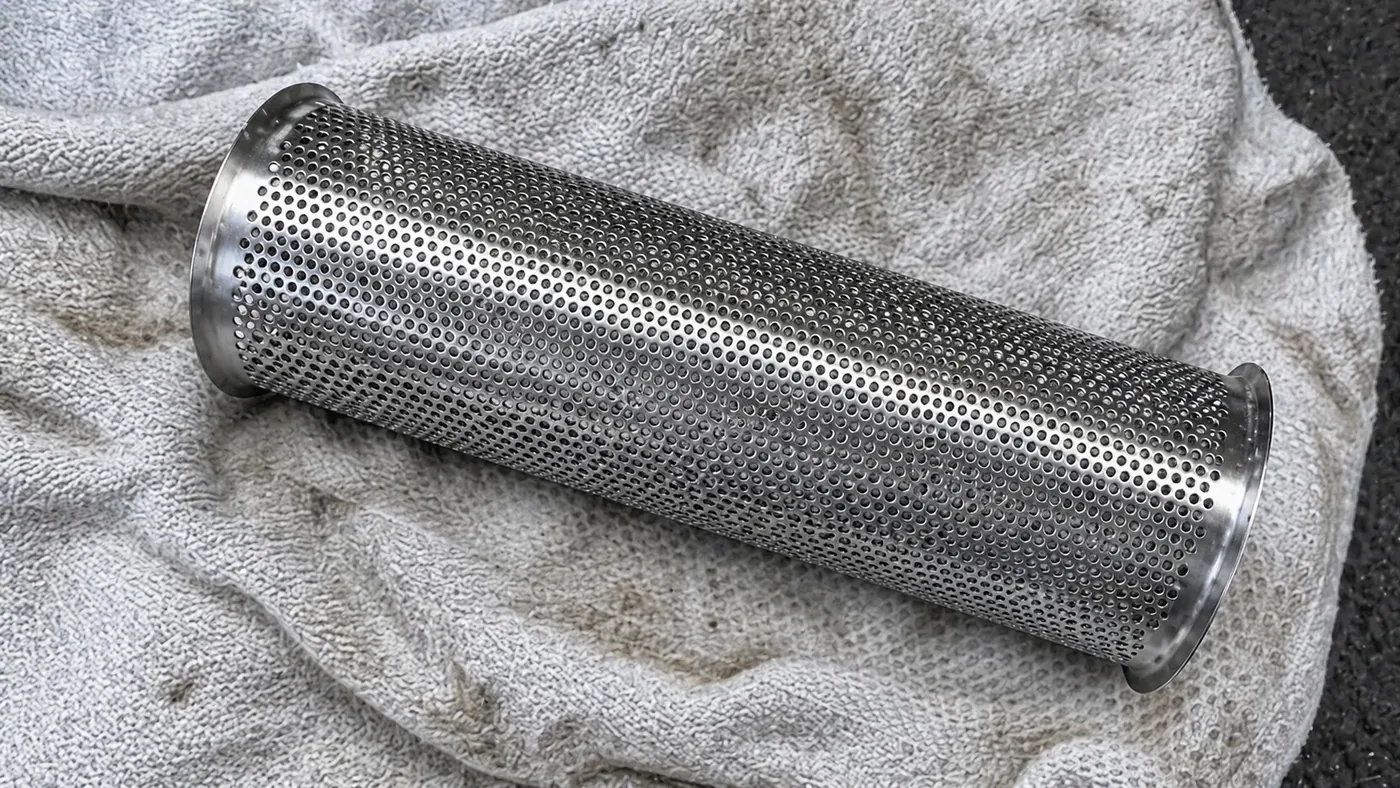
Record each element's cleaning cycles and test results. Once the clean pressure drop no longer returns close to the new value, the element has reached the end of its life.
Which machine
| Work | Set-up |
|---|---|
| Maintenance, a few elements a week | ST-40 or ST-65, or a UMX Pro 62L at 40 kHz, with a rinse and reverse-flush point |
| Filter cleaning as a service, daily | SF-225 or SF-310: the bath's own filtration keeps the particles washed out of the filters from building up in the tank |
| Large candles and packs from polymer lines | AL system with lift, or a custom tank sized to the candle length |
The bath of a filter cleaning tank collects everything the filters caught, so its own filtration and bath change decide whether cleaning stays effective; see filtration and bath life. Spent bath from oil and paint filters is industrial waste and is collected accordingly.