
Choosing a machine · 7 min read · Updated 2026-11-16
Ultrasonic tanks from 2 to 400 litres (1 to 106 US gal) : a sizing guide
Which ultrasonic tank from 2 to 400 litres
Technical guide. Figures are taken from our own spec tables; for your process we confirm the settings with a cleaning trial.
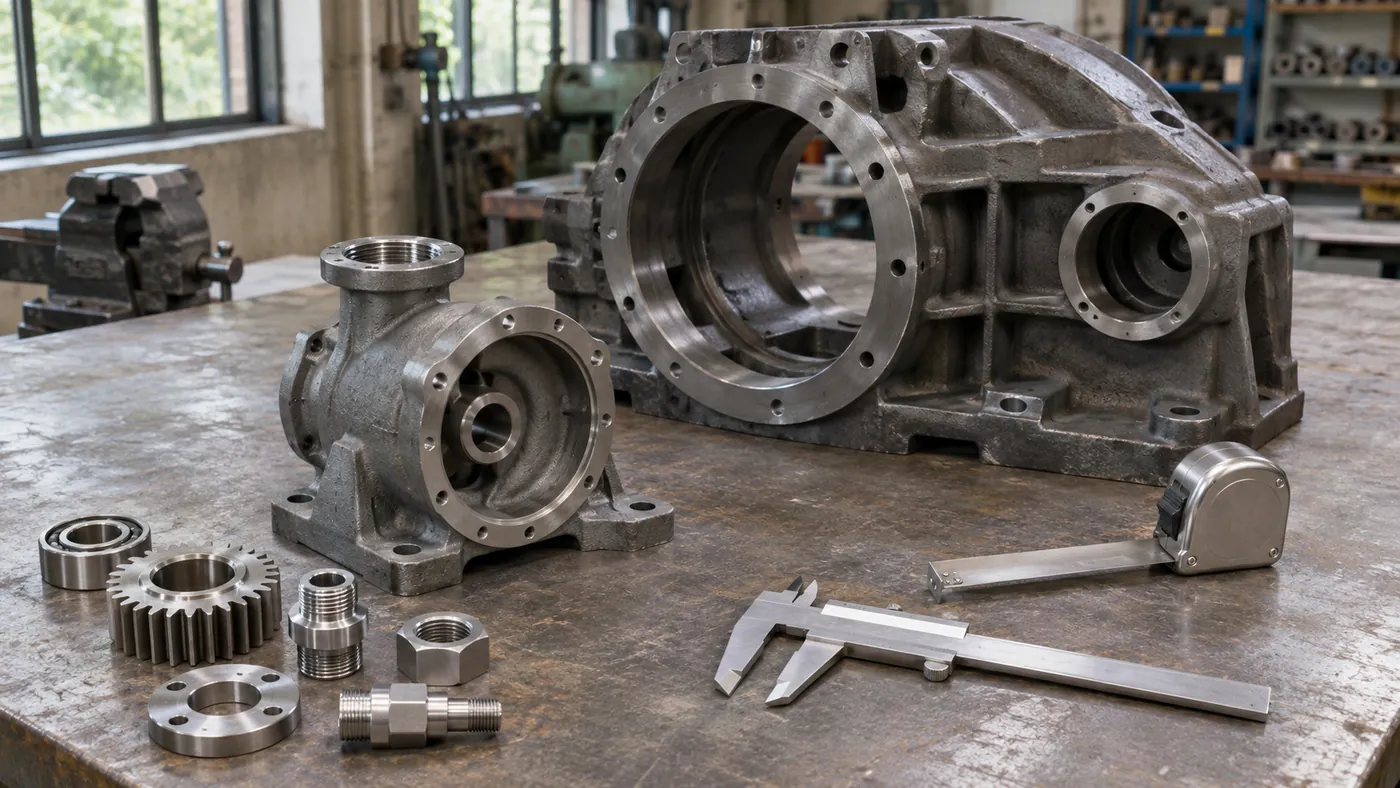
A search for an ultrasonic tank can start with small workshop parts and end among tanks holding hundreds of litres. The question stays the same: what space does your part need with its support, and how much weight can the basket carry? This guide puts the dimensions of the whole range, from 2 to 400 litres
Which ultrasonic tank should you choose from 2 to 400 litres
How can you tell whether the part fits?
Add 20 mm
Measure the bulkiest regular parts, not the sample that is easiest to carry. Add the space taken by supports. If you tilt the part to let air escape from cavities, measure it in that position: the envelope changes. The part must also stay fully below the liquid level.
Nominal volume is calculated from the inner tank dimensions. Rounded corners, the tank construction and the maximum fill line mean the liquid actually in use is lower. The tank-sizing guide explains the method in detail.
Which benchtop unit fits between 2 and 30 litres (0.5 and 7.9 US gal) ?
STS benchtop units run from 2 to 30 L
| Model | Nominal volume (L) | Inner tank L × W × H (mm) | Load (kg) |
|---|---|---|---|
| STS-020 | 2 |
150 × |
5 |
| STS-030 | 3 |
240 × |
10 |
| STS-060 | 6 |
300 × |
15 |
| STS-090 | 9 |
300 × |
20 |
| STS-150 | 15 |
330 × |
30 |
| STS-150-PRO | 15 |
330 × |
30 |
| STS-200 | 20 |
500 × |
40 |
| STS-300 | 30 |
500 × |
50 |
| SX-3L | 3 |
238 × |
not stated |
| SX-6L | 6 |
302 × |
not stated |
| SX-10L | 10 |
302 × |
not stated |
| SX-15L | 15 |
325 × |
not stated |
| SX-28L | 28 |
502 × |
not stated |
Source: Sonixtek products.json and the STS and SX product pages on sonixtek.com, read 16 Nov 2026; nominal volume calculated from the inner tank dimensions.
STS units work at 40 kHz, SX units at 37 kHz with power steps and a pulse function. No load is stated for the SX, so ask us to confirm the fit of your part. A drain valve is fitted on STS units from the STS-060 and on SX units from 10 L
Compare the STS benchtop units and the SX benchtop units using the same measured part.
When should you move from benchtop to industrial equipment?
Move to an industrial tank when the part and its support exceed the 500 ×
A larger volume therefore does not automatically take a longer part. For a long, flat part that fits a 500 mm
With loaded baskets of several tens of kilos, plan lifting and the floor layout during selection. The benchtop or industrial guide covers that transition.
Which industrial baskets should be compared?
ST heated ultrasonic tanks run from 40 to 400 L
| Model | Nominal volume (L) | Basket L × W × H (mm) | Basket load (kg) |
|---|---|---|---|
| ST-40 | 40 |
380 × |
75 |
| ST-65 | 65 |
480 × |
75 |
| ST-96 | 96 |
580 × |
100 |
| ST-117 | 117 |
630 × |
100 |
| ST-157 | 157 |
680 × |
100 |
| ST-206 | 206 |
730 × |
100 |
| ST-300 | 300 |
870 × |
125 |
| ST-400 | 400 |
1,070 × |
150 |
| SF-225 | 225 |
840 × |
200 |
| SF-310 | 310 |
690 × |
200 |
| SF-360 | 360 |
940 × |
200 |
Source: Sonixtek products.json and the ST and SF product pages on sonixtek.com, read 16 Nov 2026; volume, basket and load match.
Height often decides before length: the SF-225 offers 840 mm
A part that does not fit does not become suitable because the tank handles oil better. Compare the ST tanks and the SF cleaners with filtration using the same layout.
Should filtration, rinsing and drying be included?
Choose filtration from the incoming oil and particle load, and rinsing and drying from the next operation. SF cleaners from 225 to 360 L
The filtration and bath-life guide explains where contamination comes from. Ask the detergent supplier whether oil should stay emulsified or separate for skimming. A particle filter does not do the job of an oil separator.
After washing, allow for rinsing cavities and draining before drying. For coating work, read cleaning before painting. For plates, bundles and difficult passages, the heat-exchanger guide shows why geometry and liquid access matter more than litres.
Checking output and the installation layout
Time the whole route during a trial: loading, immersion, washing, draining, rinsing, drying and unloading. Wash time alone does not give output. Look at where baskets wait and whether the operator can move a batch without passing dirty parts over clean ones.
A larger basket can help output, but a denser layer can block liquid and slow drying. Count accepted parts at the end, not the mass placed in the tank. Also plan utilities, maintenance access, liquid handling and a clean area after drying. Related topics are collected under manufacturing.
Frequently asked questions
Does nominal volume equal working space?
No. Nominal volume is calculated from the inner tank dimensions. Rounded corners, the tank construction and the maximum fill line reduce the liquid in use, and the basket reduces the space for the part further.
Can filtration remove the need for rinsing?
Filtration manages contamination in the wash. Rinsing removes carried-over solution and dissolved material from the part. A filtered tank can still need a rinse and drying stage suited to the following assembly or coating operation.
How should the output of two layouts be compared?
Compare accepted parts after the complete route, using the same representative loading and the same inspection. Include handling, rinsing and drying. A larger quantity in the bath does not show higher output if the centre stays dirty or wet.
What to send us for a quote
Send the dimensions and weights of your largest and smallest parts, material, soil, output per shift, basket arrangement and next operation. Include photographs or drawings, available utilities and the intended rinse and drying positions.
Use the quote form. Our technical team will compare the basket with your parts, then check load, handling and the following stages with you.