
28 or 40 kHz
What it is
The frequency sets the size of the cavitation bubbles. At 28 kHz the bubbles are larger and each implosion carries more energy; at 40 kHz they are smaller, more numerous and reach further into fine features.
When you need it
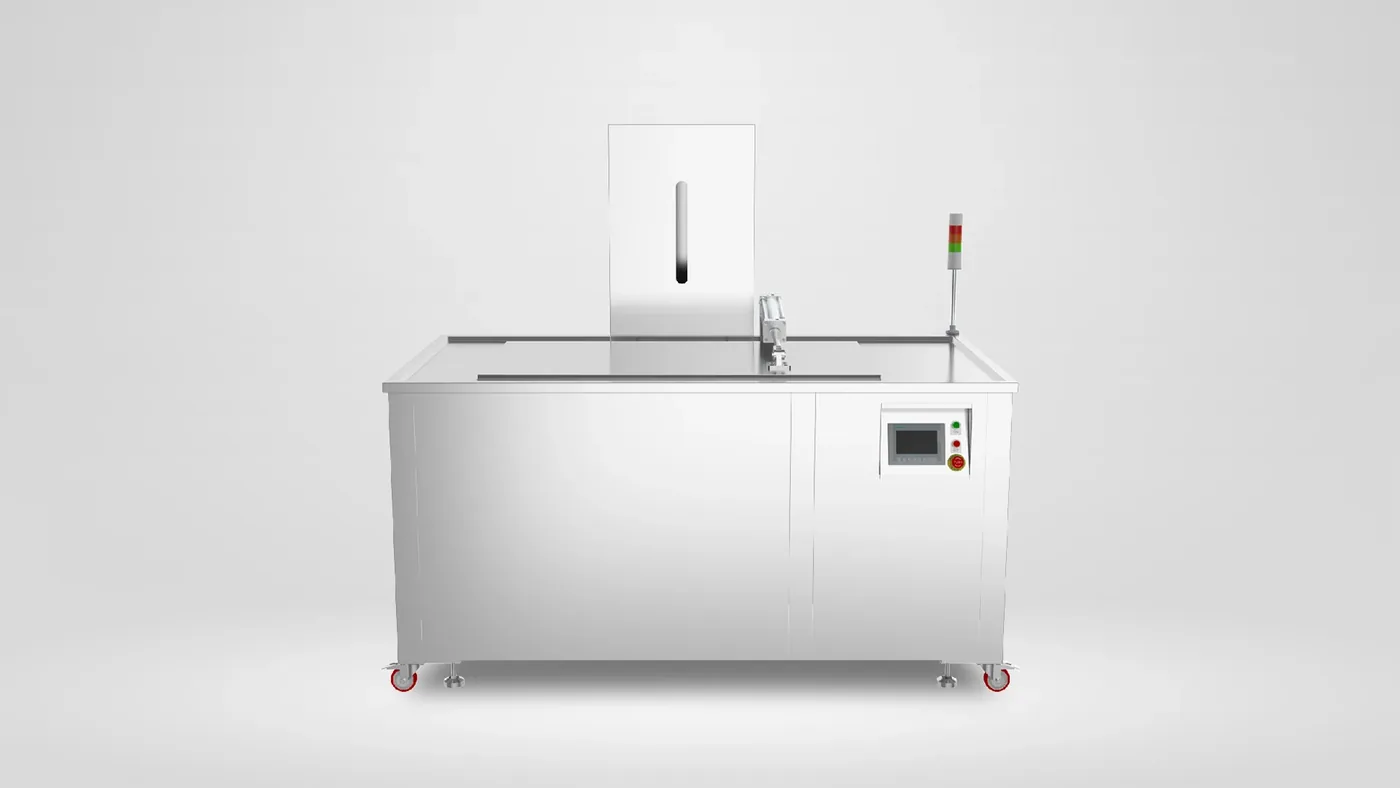
Choose 28 kHz for heavy soil on robust parts: castings, gearbox housings, carbonised engine parts. Choose 40 kHz for machined surfaces, threads, small bores and softer metals such as aluminium, where erosion must stay low. Most industrial tanks can be built for either; the UMX Pro switches between both.