

Topics
Articles about: Rinsing
31 articles
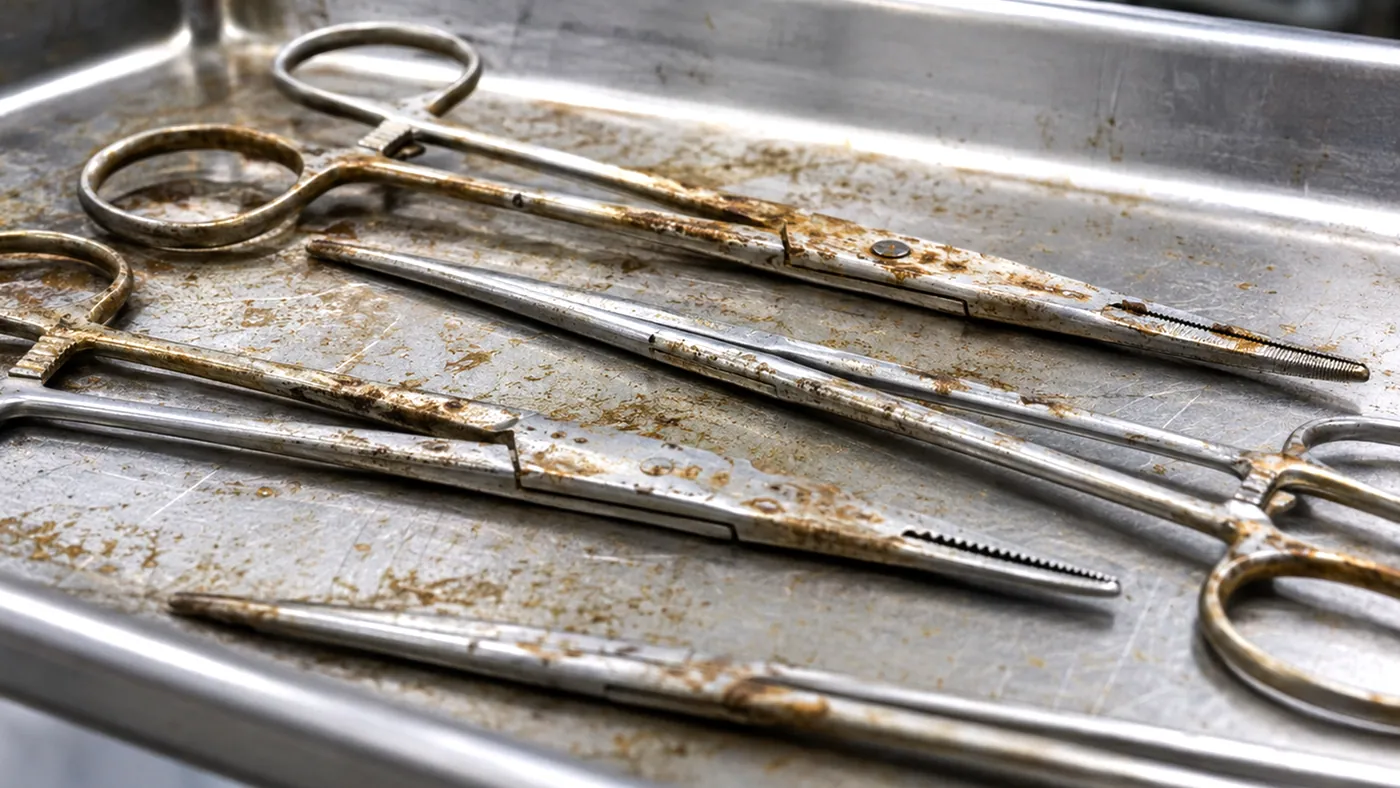 Parts and contaminants · 5 min readUltrasonic cleaning of surgical instruments before sterilisationA steriliser only works on a clean instrument. What the ultrasonic step in reprocessing removes, how instruments are loaded and how the result is checked.
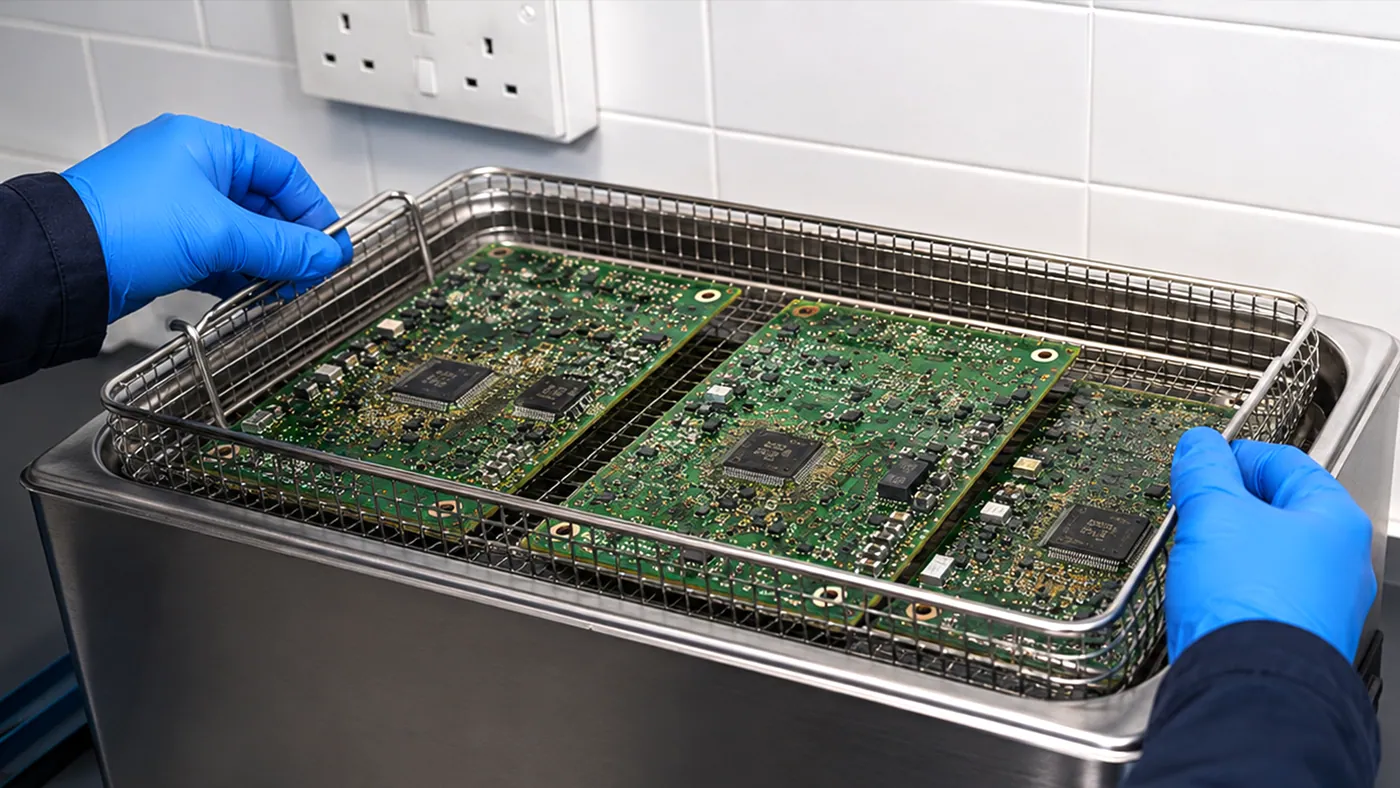 Parts and contaminants · 5 min readUltrasonic cleaning of circuit boards after solderingWash, deionised rinse, dry, test, coat: the full cleaning process for assembled boards after reflow, wave and hand soldering, and how to prove it worked.
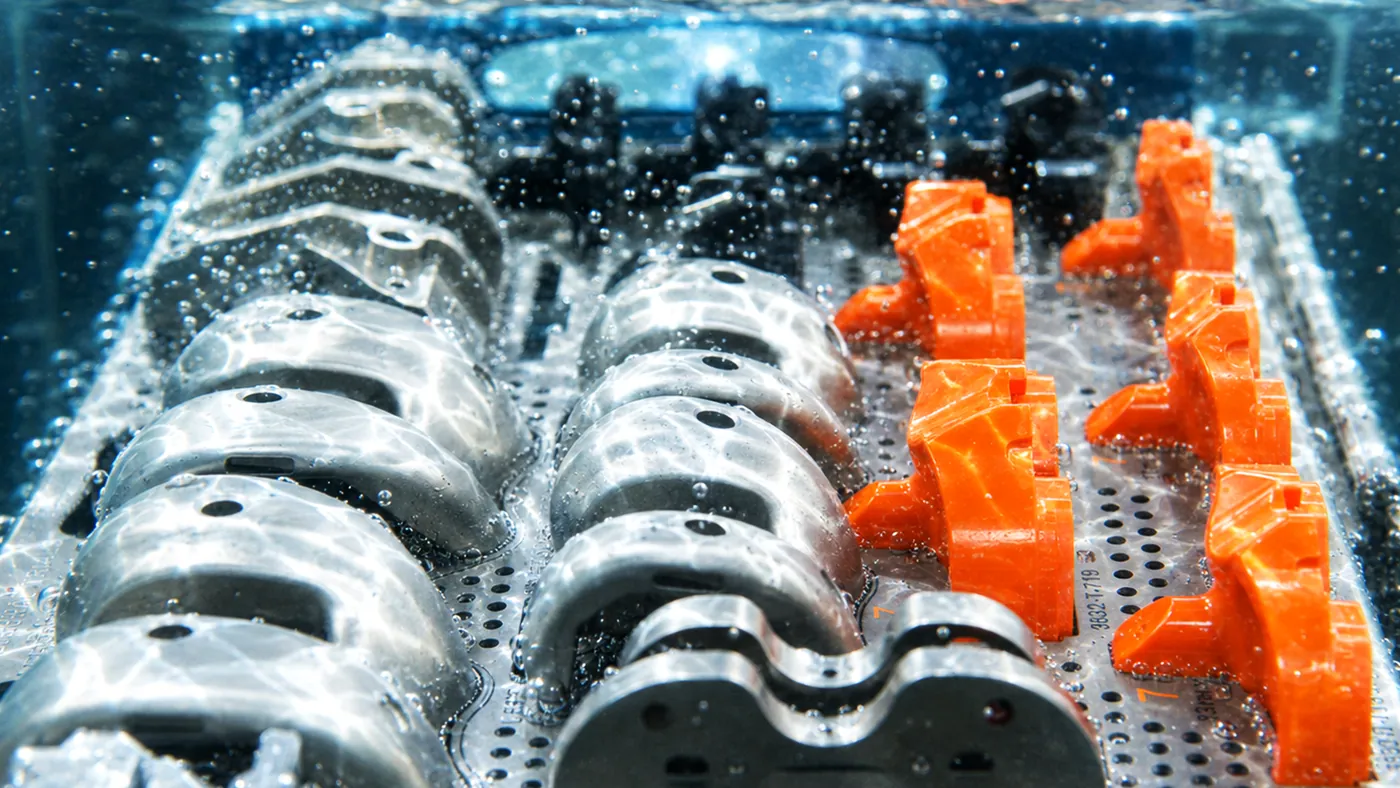 Parts and contaminants · 5 min readUltrasonic cleaning of orthopaedic implants in productionImplants carry coolant, polishing compound and particles on their way to packaging. The cleaning sequence, what ISO 19227 asks for, and the equipment.
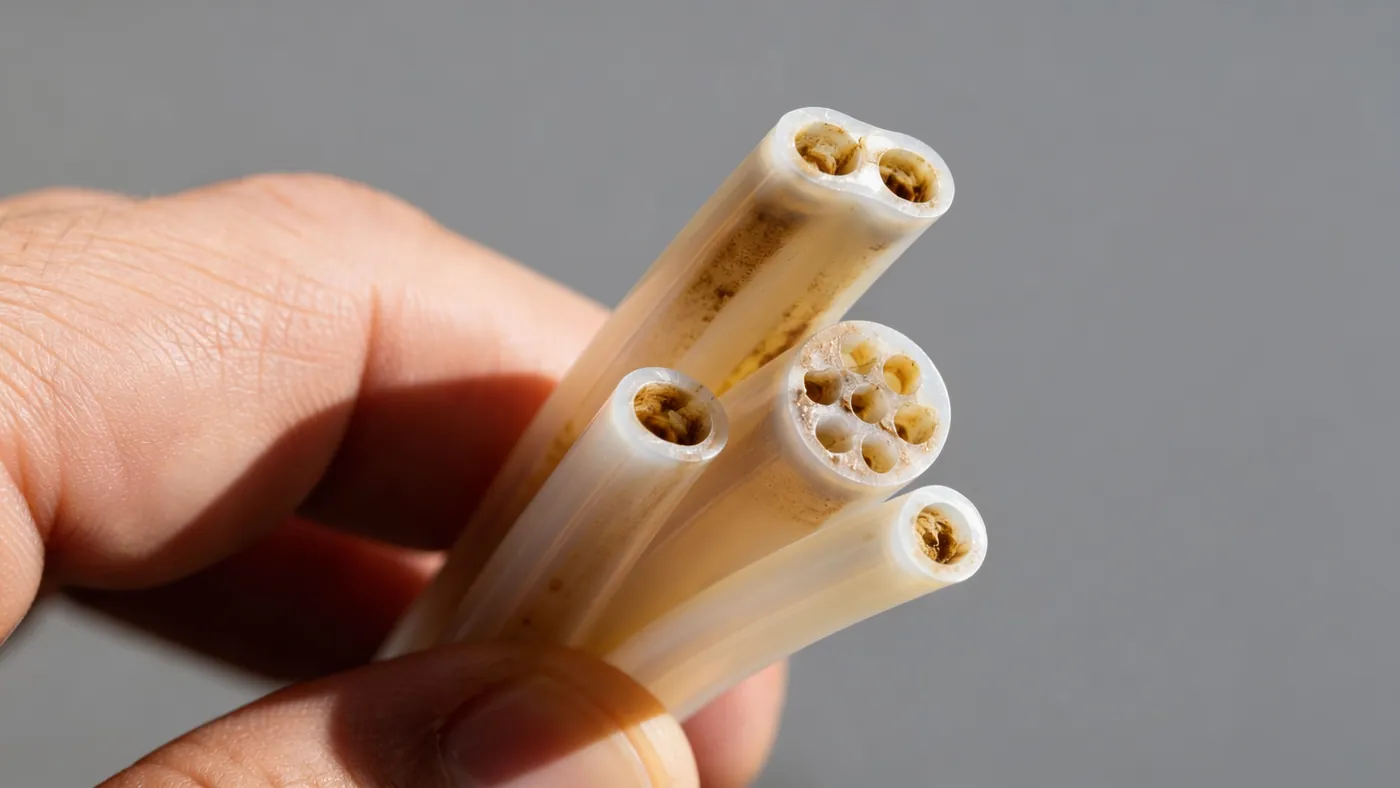 Parts and contaminants · 4 min readUltrasonic cleaning of medical tubing, cannulas and channelsInside a narrow lumen nothing flows unless something pumps it. How to clean cannulas, tubes and drilled channels in production, and prove the inside is clean.
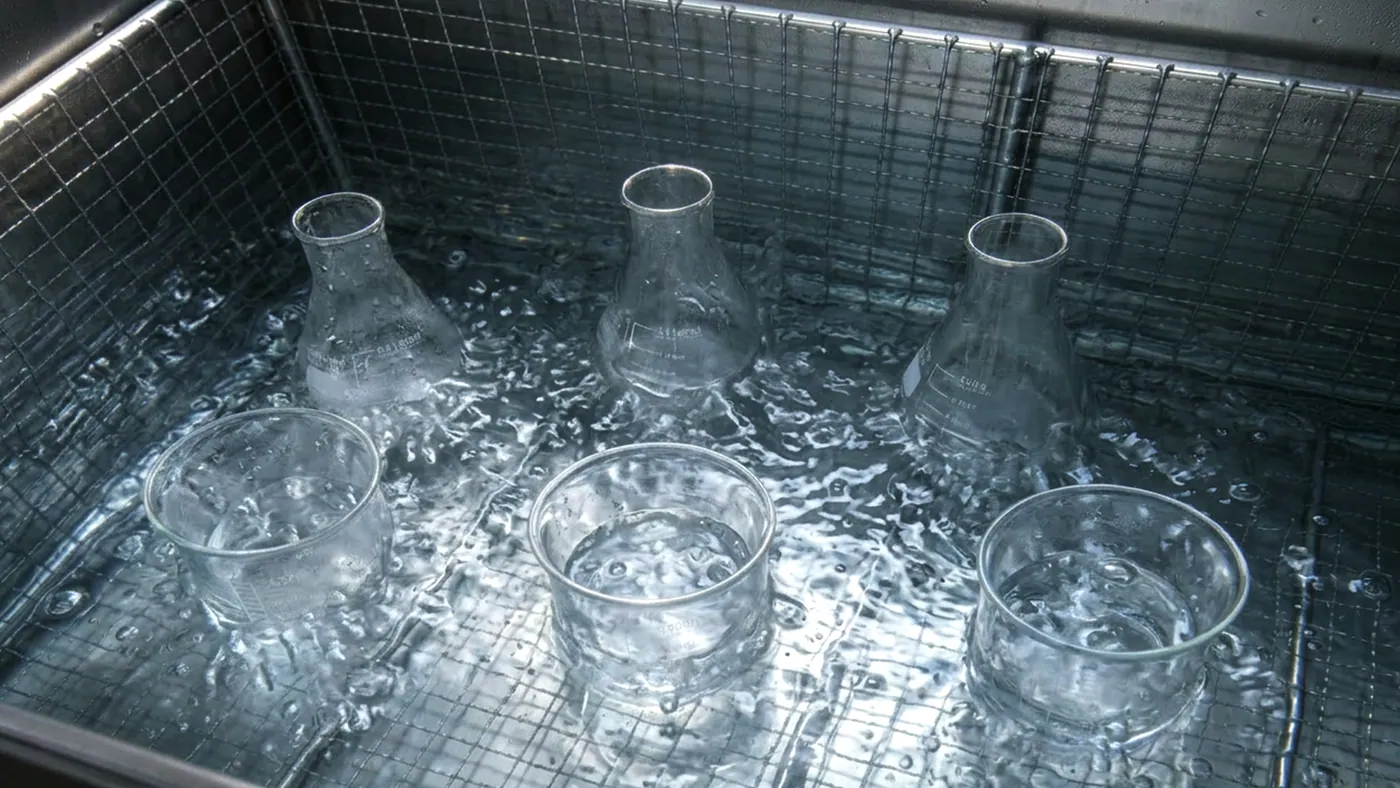 Parts and contaminants · 4 min readUltrasonic cleaning of laboratory glasswareThe detergents, temperatures and rinses that get beakers, flasks, pipettes and sieves clean enough for the next analysis, and the care volumetric glass needs.
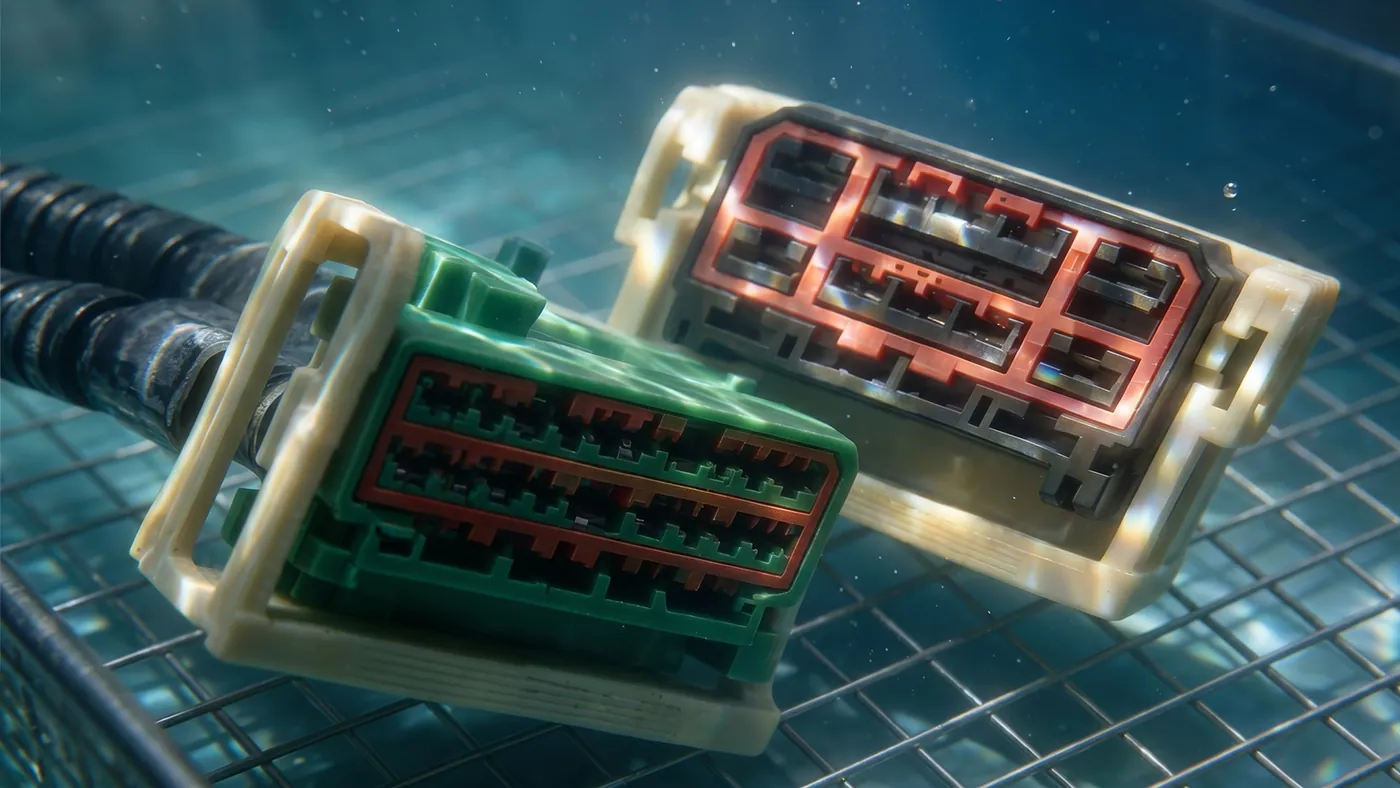 Parts and contaminants · 5 min readUltrasonic cleaning of electronic connectors for reliable contactOxide, flux, dust and old lubricant raise contact resistance. How to clean connectors, pins and charging ports without harming gold, silver or tin plating.
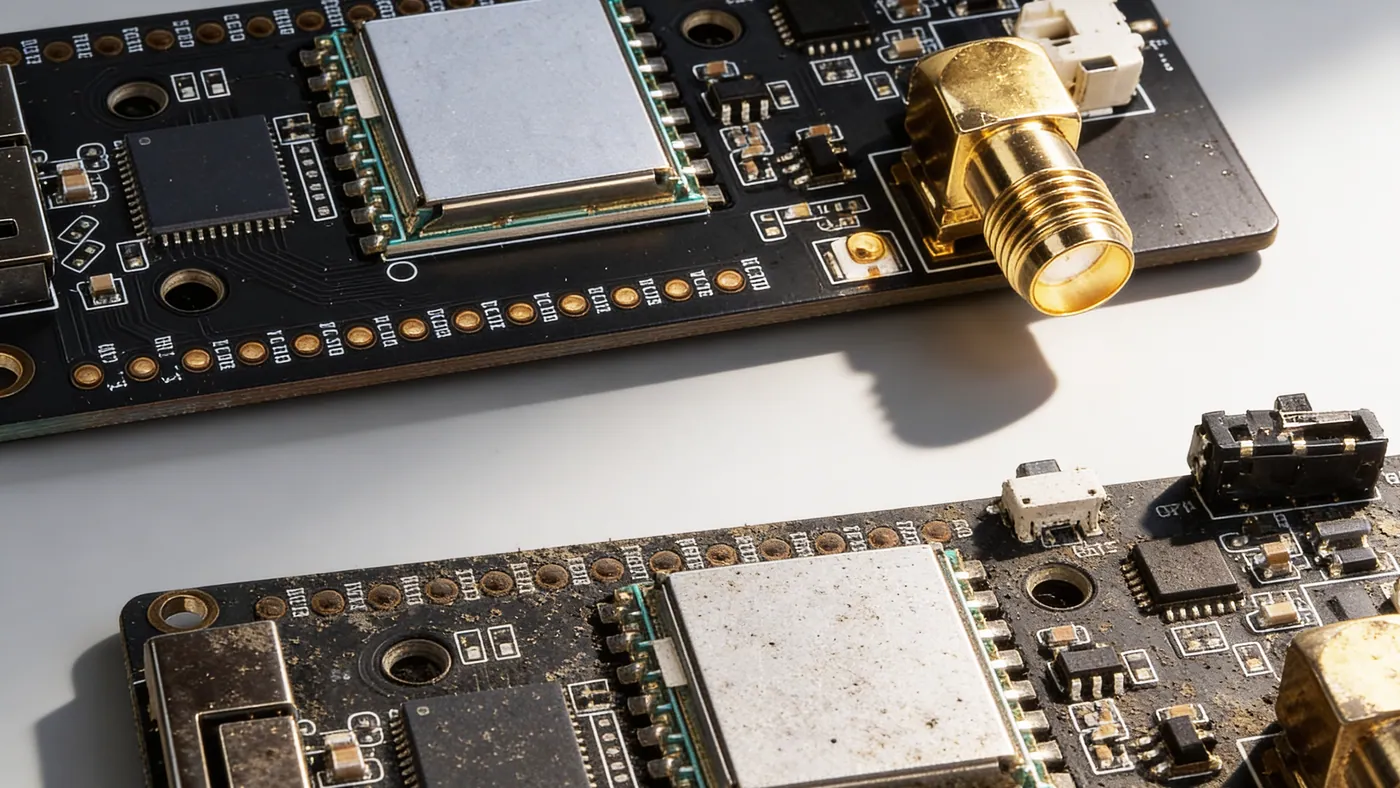 Parts and contaminants · 4 min readUltrasonic cleaning of communication equipment componentsRF housings, cavity filters, waveguides and antenna parts, often plated aluminium: gentle chemistry, no etching, no loose particles, and dry cavities.
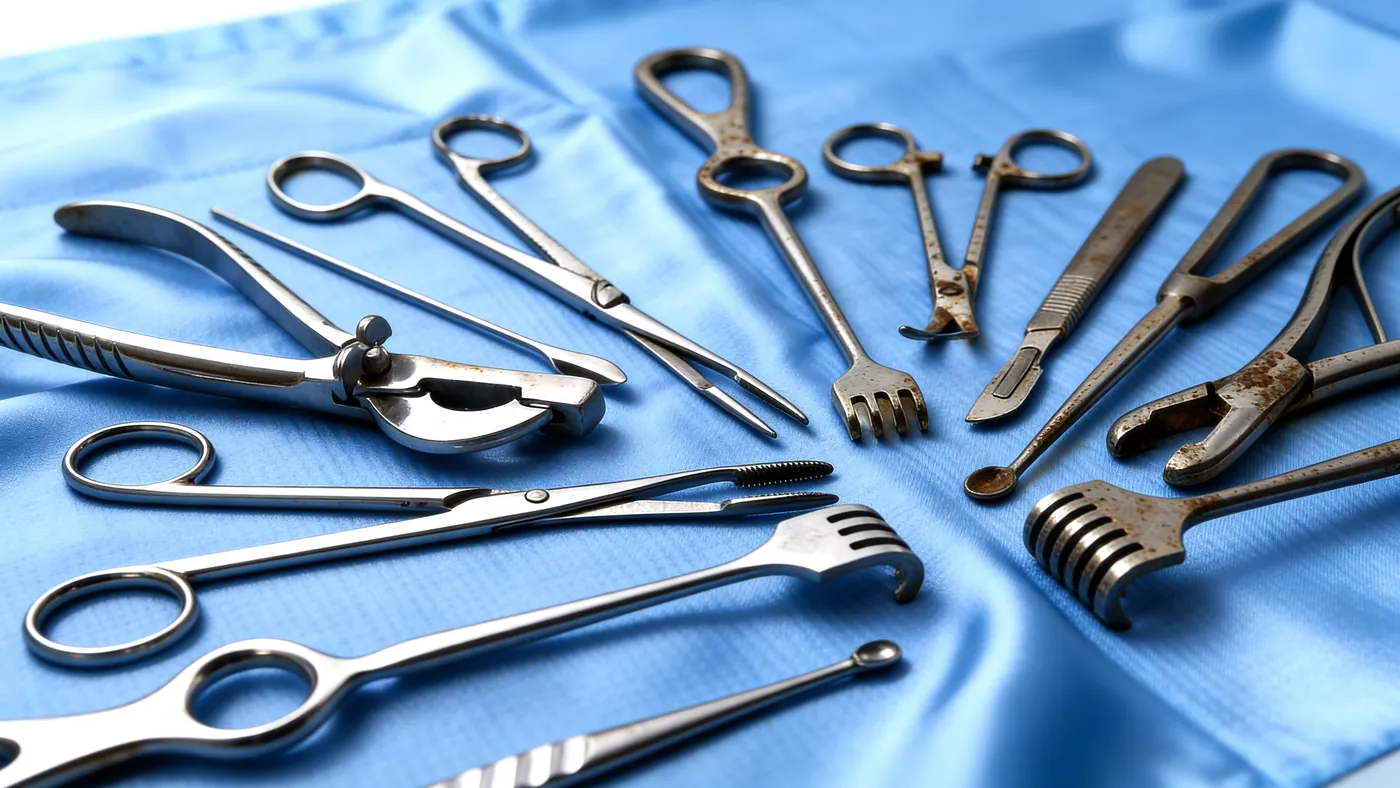 Parts and contaminants · 4 min readUltrasonic cleaning of veterinary surgical instrumentsBlood, hair and bone dust in box locks and serrations: how a veterinary practice cleans instruments before sterilisation, and the machines that fit.
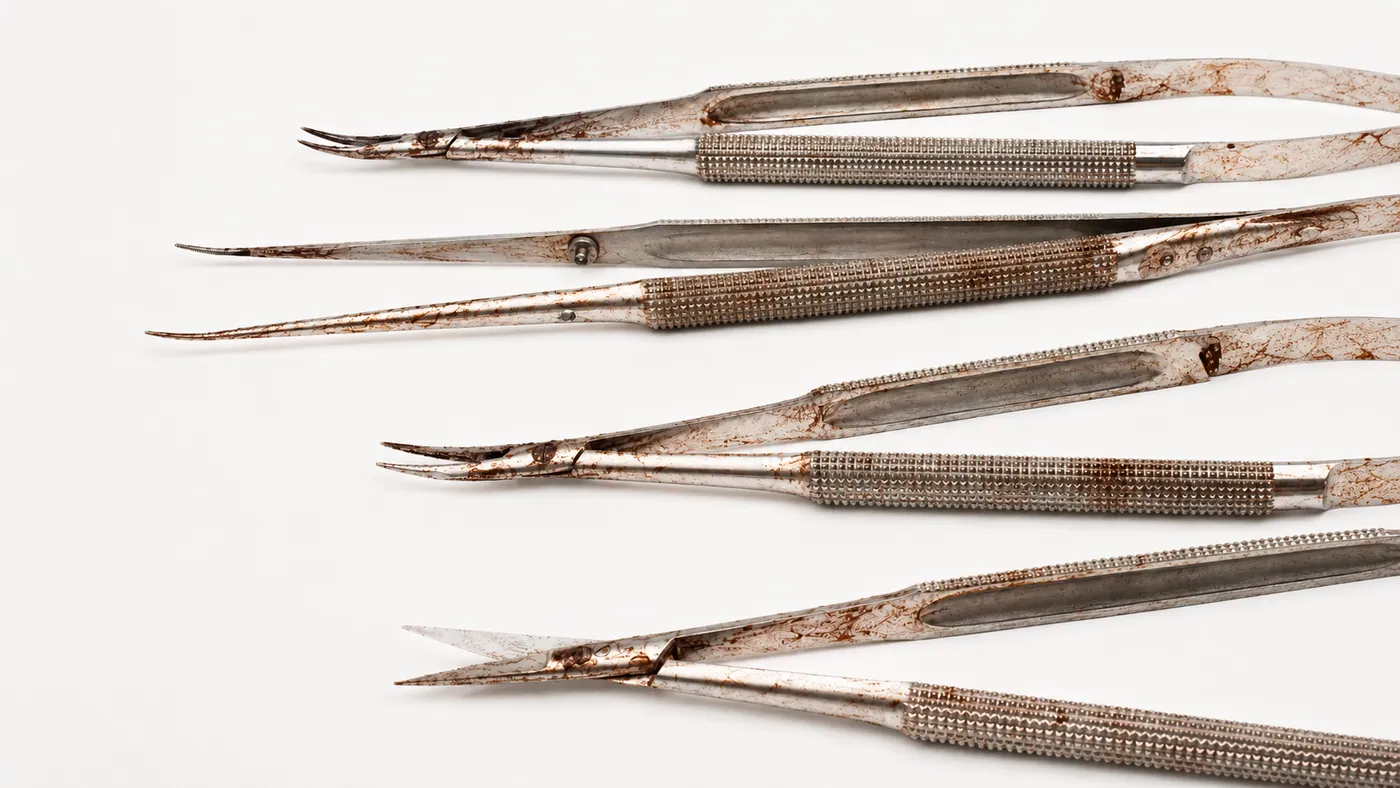 Parts and contaminants · 4 min readCleaning microsurgical instruments with ultrasoundMicrosurgical tips bend or break on contact. How fine instruments are held, cleaned and checked in hospitals, repair workshops and manufacturing.
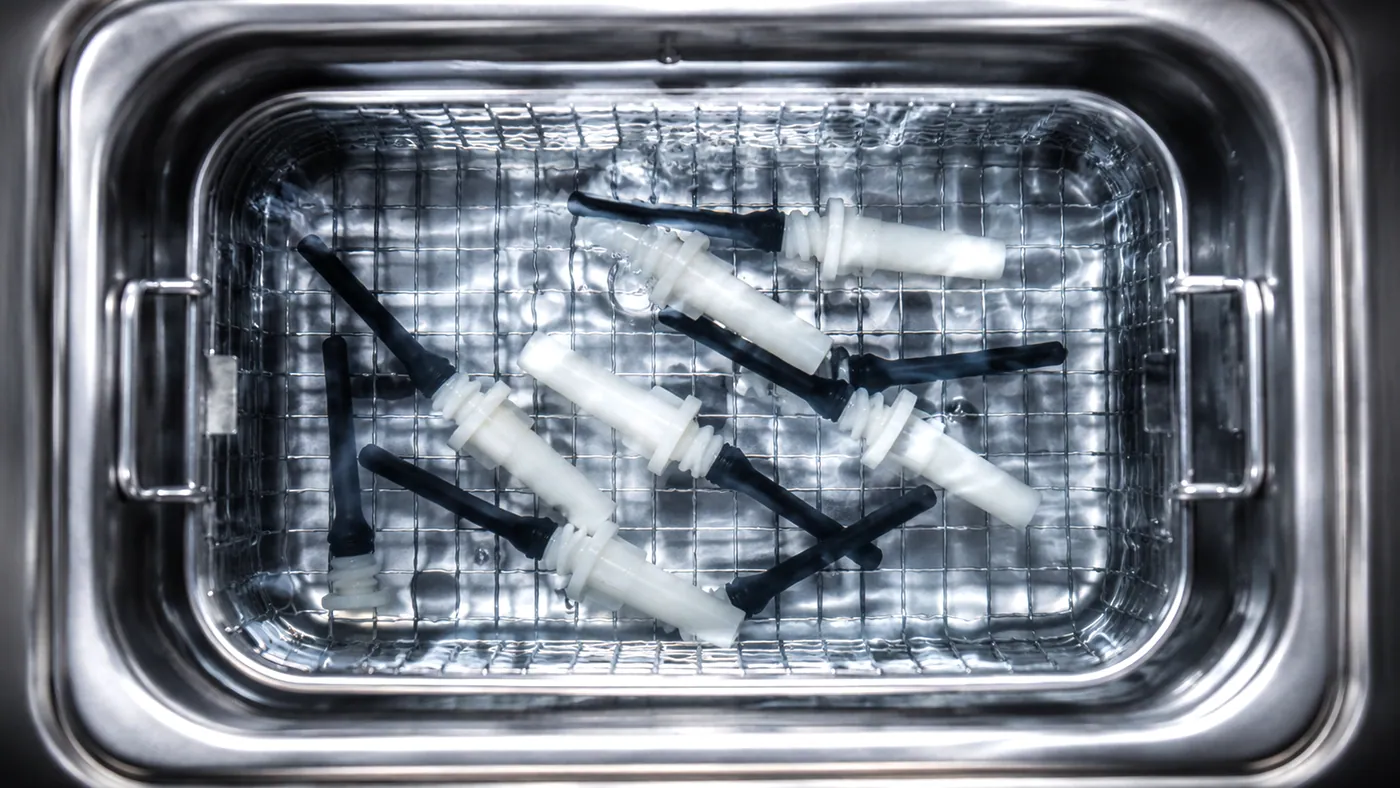 Parts and contaminants · 4 min readCleaning medical device components before assemblyMachined, moulded and stamped parts bring oil, mould release and particles into a device. How to set up the cleaning step and validate it under ISO 13485.
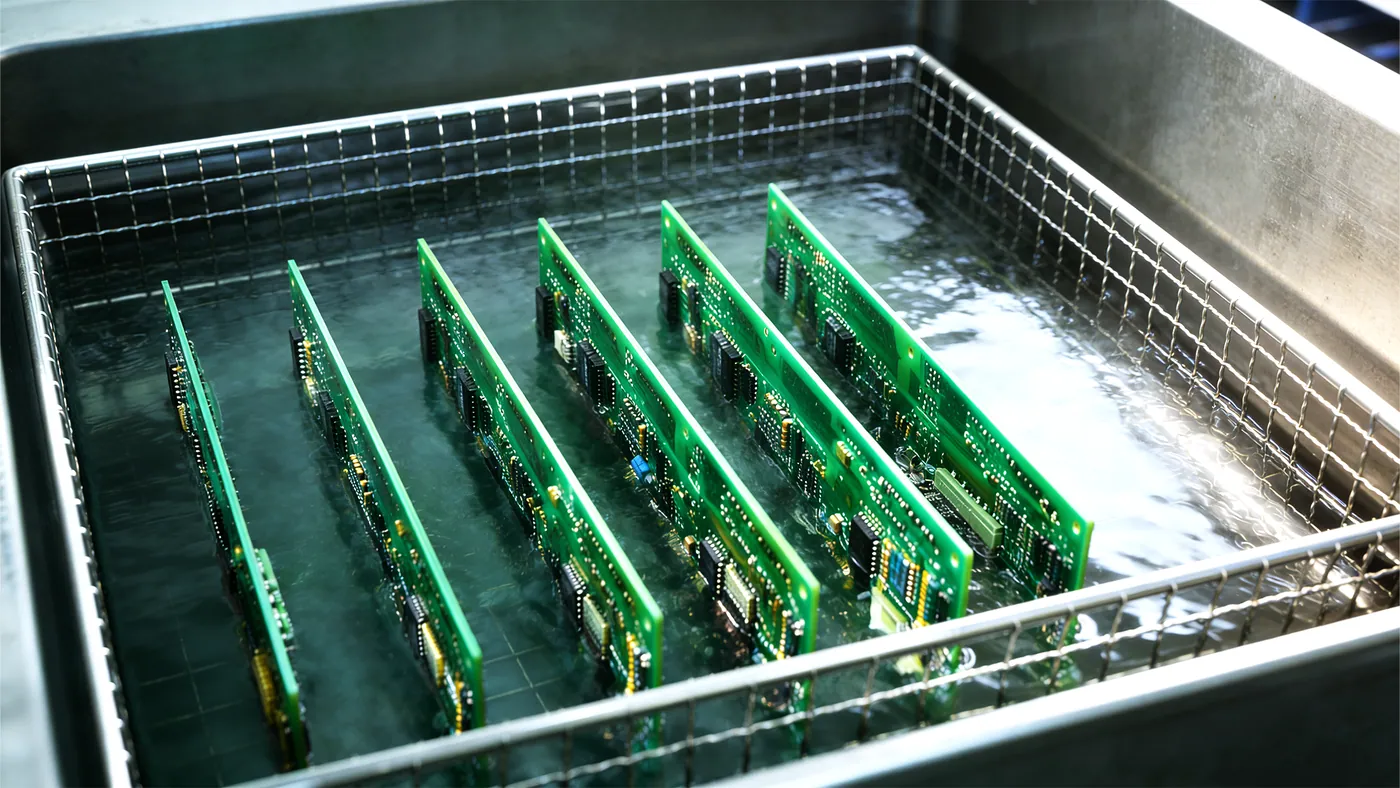 Parts and contaminants · 4 min readCleaning electronic parts before assembly with ultrasoundHousings, heat sinks, shields and frames carry oil, chips and fingerprints into the device. How to clean them first, and why conductive particles matter.
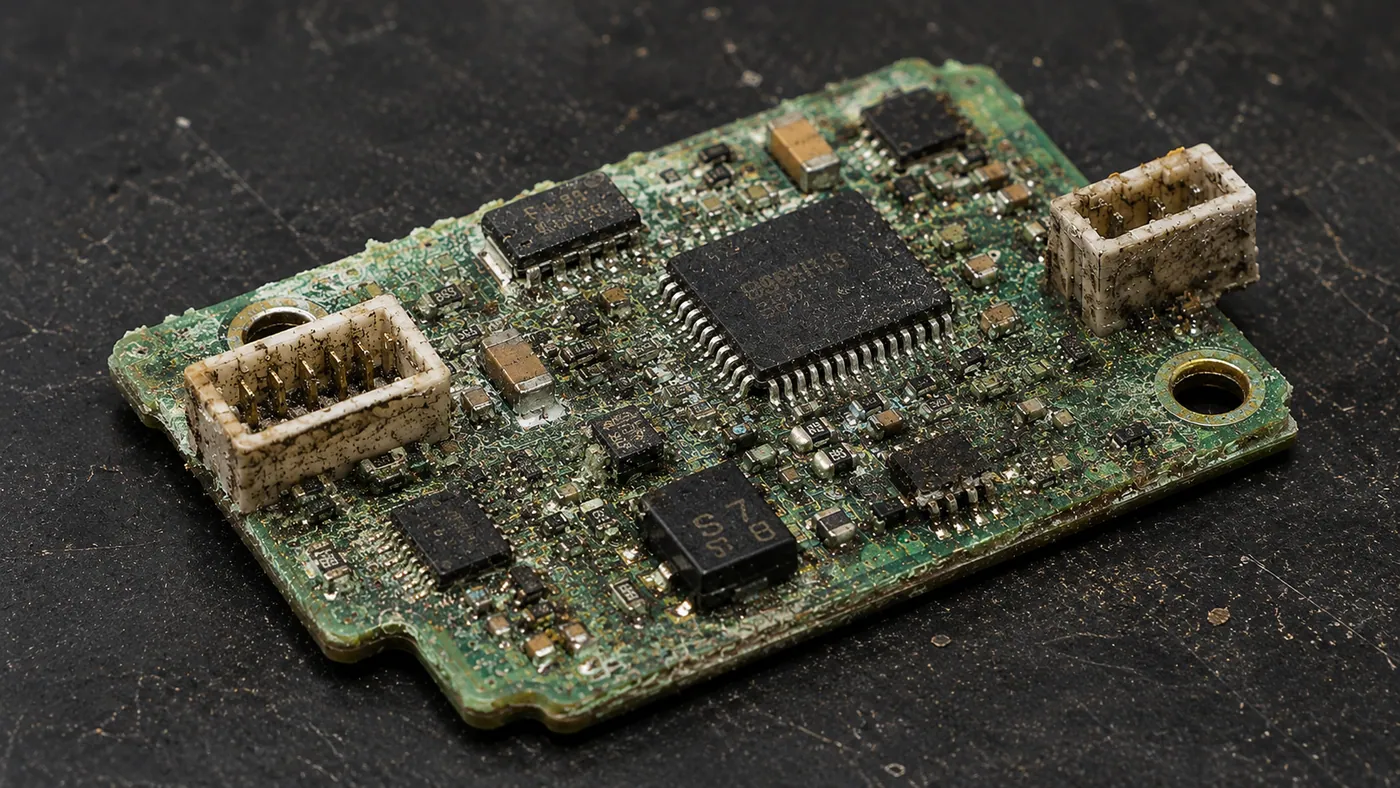 Parts and contaminants · 4 min readCleaning electronic modules after repair with ultrasoundRework flux, corrosion after liquid damage and old dust: how to clean a repaired module, what to remove first, and why solvents never go in a heated tank.
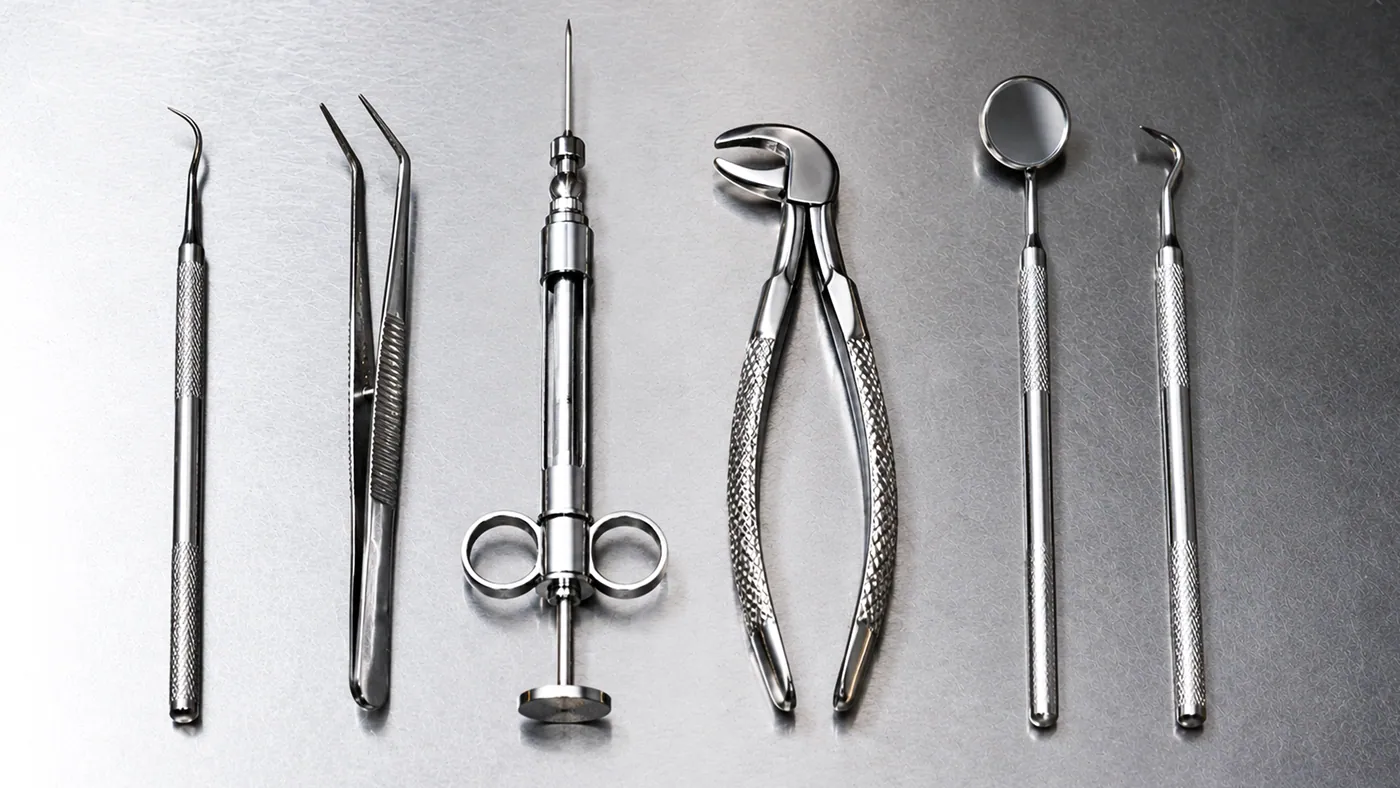 Parts and contaminants · 4 min readCleaning dental instruments with ultrasoundBurs, files, forceps and hand instruments carry blood, calculus and cement. How the ultrasonic step fits dental reprocessing, and what stays out of the bath.
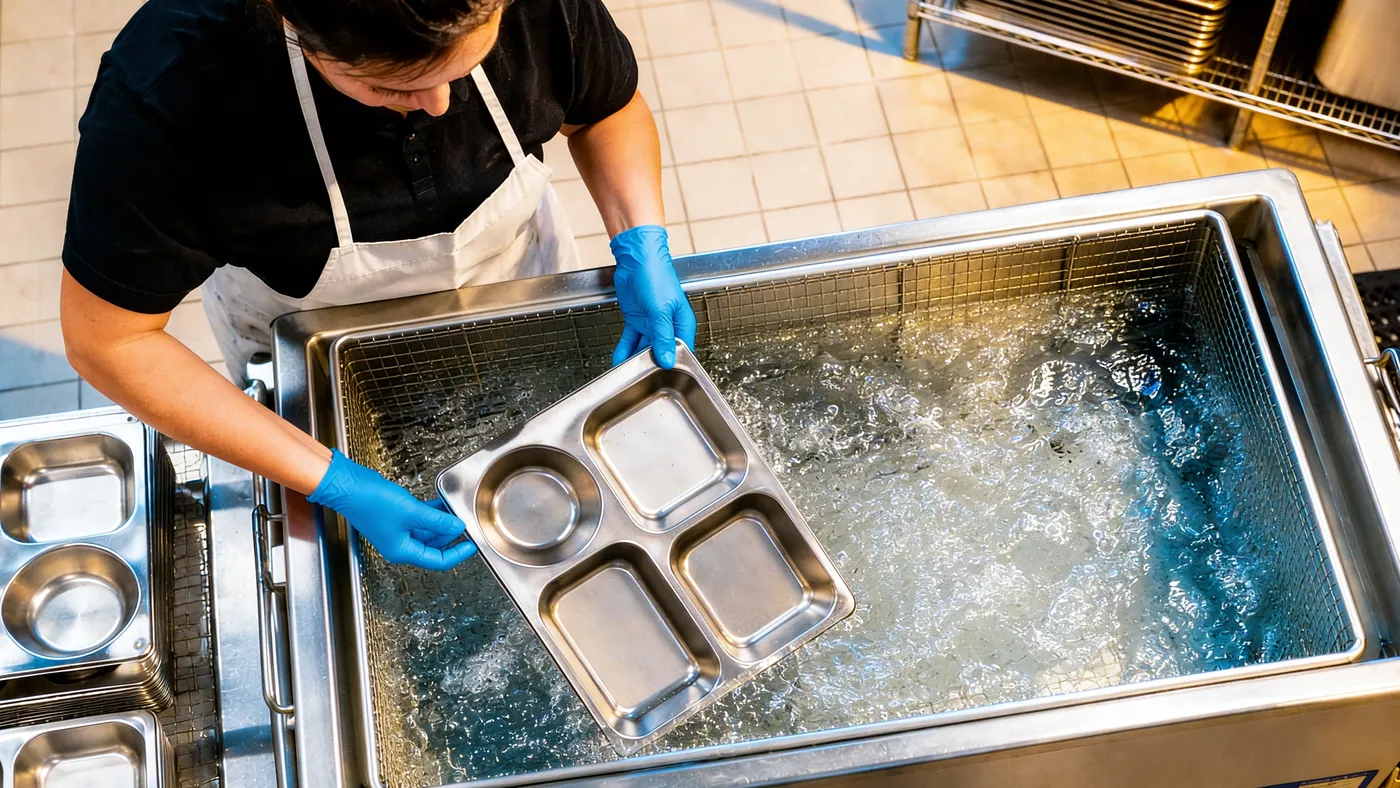 Parts and contaminants · 3 min readUltrasonic cleaning of stainless steel food contact partsValves, pump rotors, fittings, nozzles, sieves and change parts in AISI 304 and 316 stay hygienic only if their surface stays clean and passive. How ultrasonic cleaning fits between dismantling and disinfection, the chemistry that protects stainless, the mistakes that make it rust, and how the result is verified.
 Parts and contaminants · 4 min readUltrasonic cleaning of precision parts before quality inspectionA coolant film or a single chip on a datum face is a measuring error, and a part that comes out of a warm bath is not yet the size on the drawing. How to clean precision parts so the inspection measures the part and not its dirt, and how cleaning relates to a technical cleanliness test.
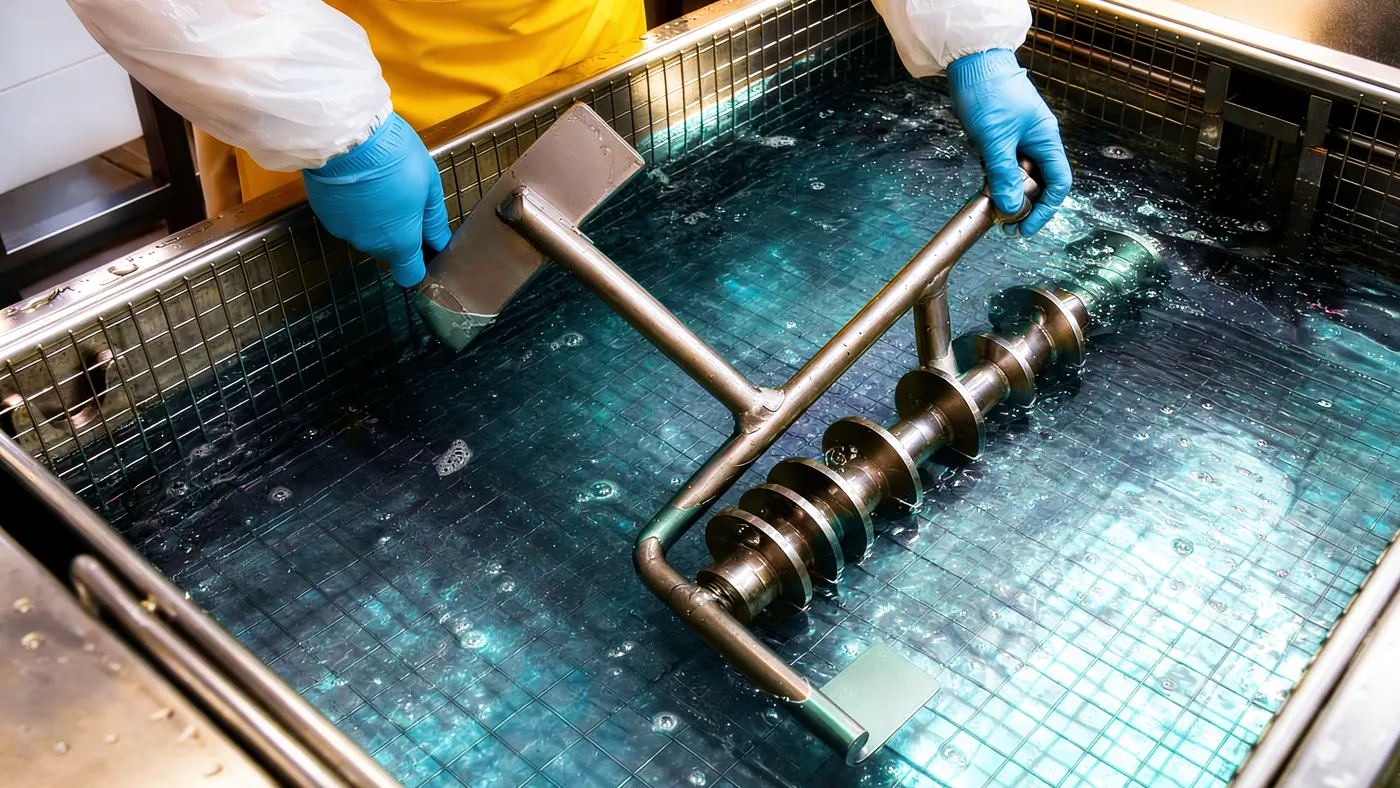 Parts and contaminants · 3 min readUltrasonic cleaning of packaging equipment componentsFilling nozzles, dosing pistons, forming sets, sealing jaws, cutting knives and vacuum cups collect product, film residue and dust between format changes. Which packaging parts are cleaned in an ultrasonic tank, how to treat heat-sealing jaws and coated parts, and how cleaning fits a format or allergen changeover.
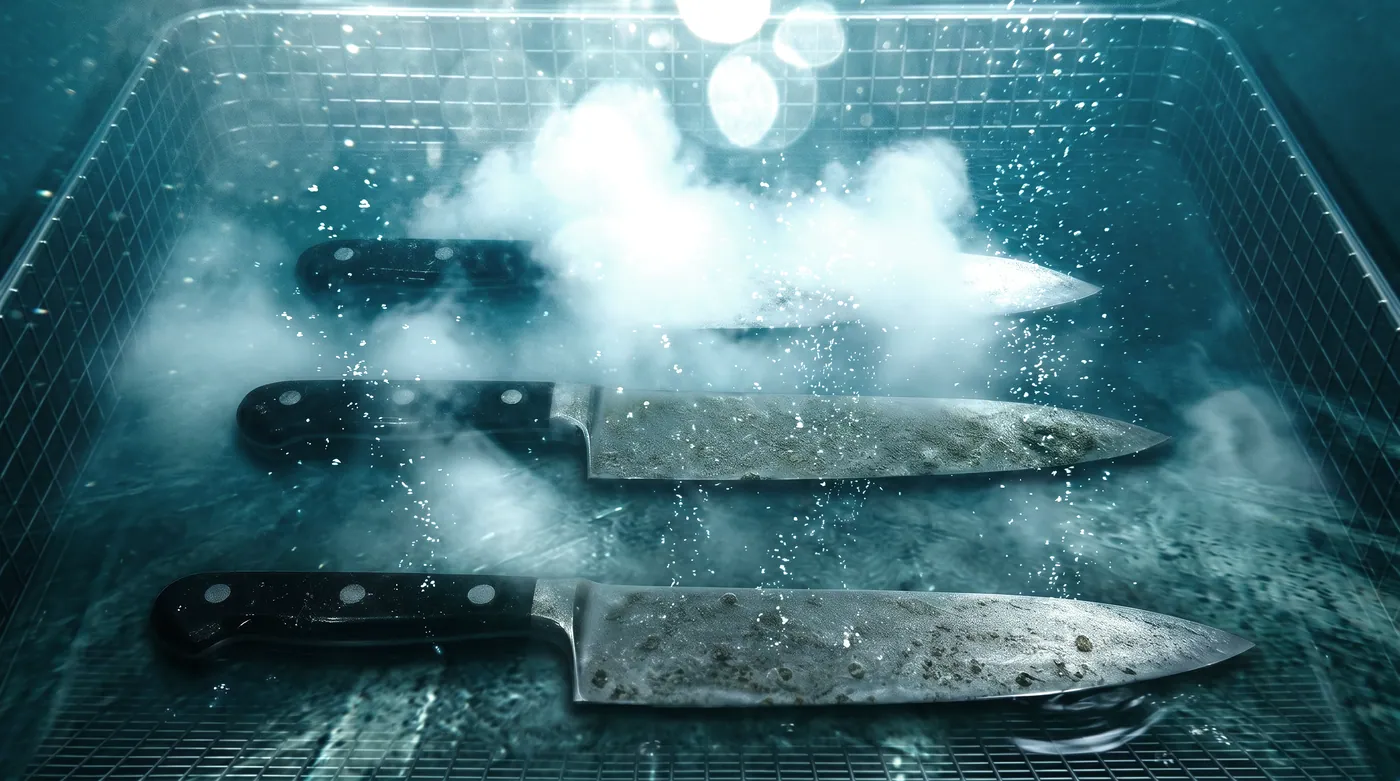 Parts and contaminants · 4 min readUltrasonic cleaning of knives in food processing plantsHand knives, steels, scabbards and knife baskets collect fat and protein in the handle joint and along the edge, where a quick rinse leaves them. How a knife-cleaning station with an ultrasonic tank fits the shift, the temperatures that keep protein from baking on, and the steps before disinfection.
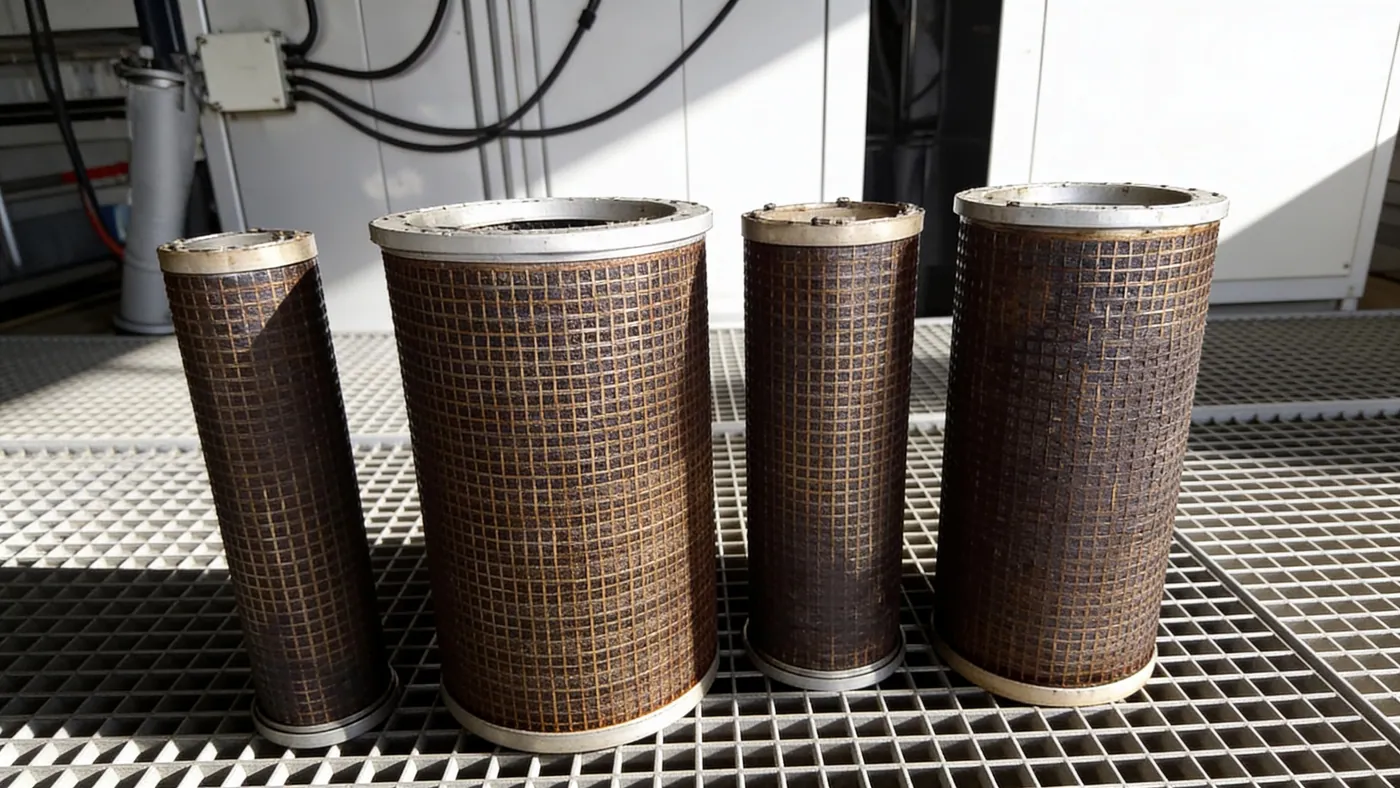 Parts and contaminants · 4 min readUltrasonic cleaning of industrial filters for reuseStainless mesh, sintered metal and wire-wound filters can be cleaned and reused many times; paper and felt cannot. Which filters are worth cleaning, how to get the dirt out of the depth of the medium rather than just its surface, and how to prove a cleaned filter is fit to go back into service.
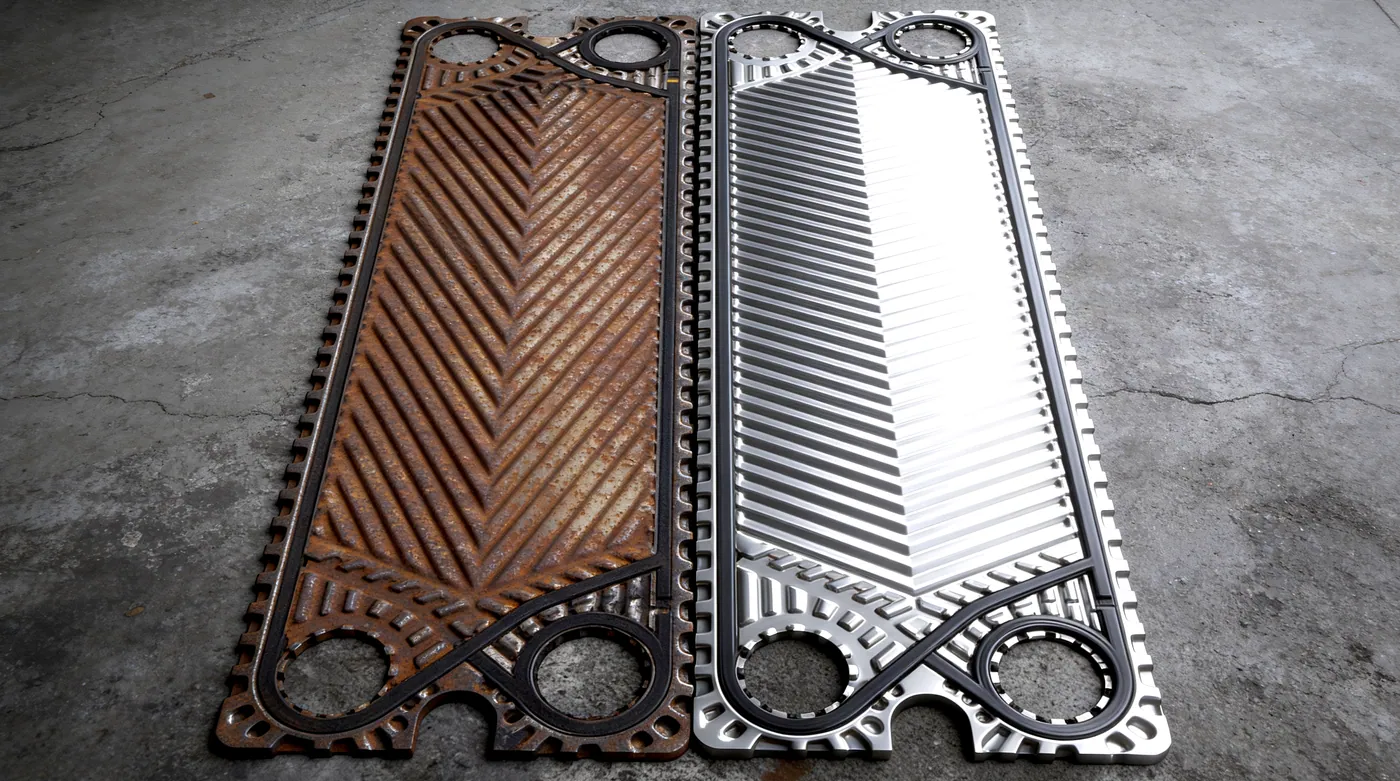 Parts and contaminants · 4 min readUltrasonic cleaning of heat exchangers in industryScale, oil, biofilm and deposits on plate packs, tube bundles and coolers cost heat transfer and pumping energy. Which heat exchangers can go into an ultrasonic tank and which cannot, the two-step chemistry for scale and oil, tank sizes for plates and bundles, and the checks before the exchanger goes back into service.
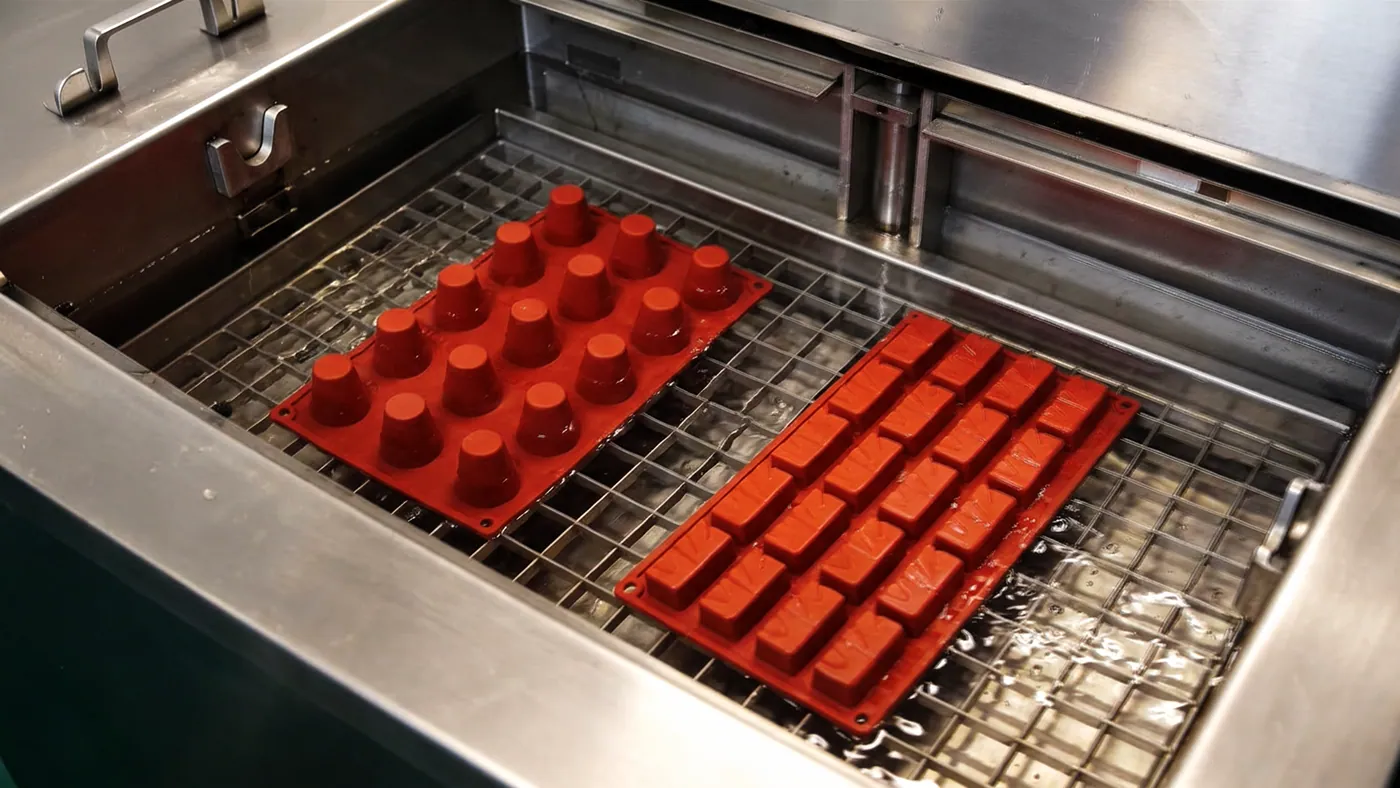 Parts and contaminants · 3 min readUltrasonic cleaning of food processing mouldsChocolate and confectionery moulds, cheese moulds, depositor plates and pasta dies hold product in cavities, perforations and die holes. How ultrasonic cleaning reaches them, the gentle chemistry polycarbonate and bronze need, and the loading that keeps moulds from being scratched.
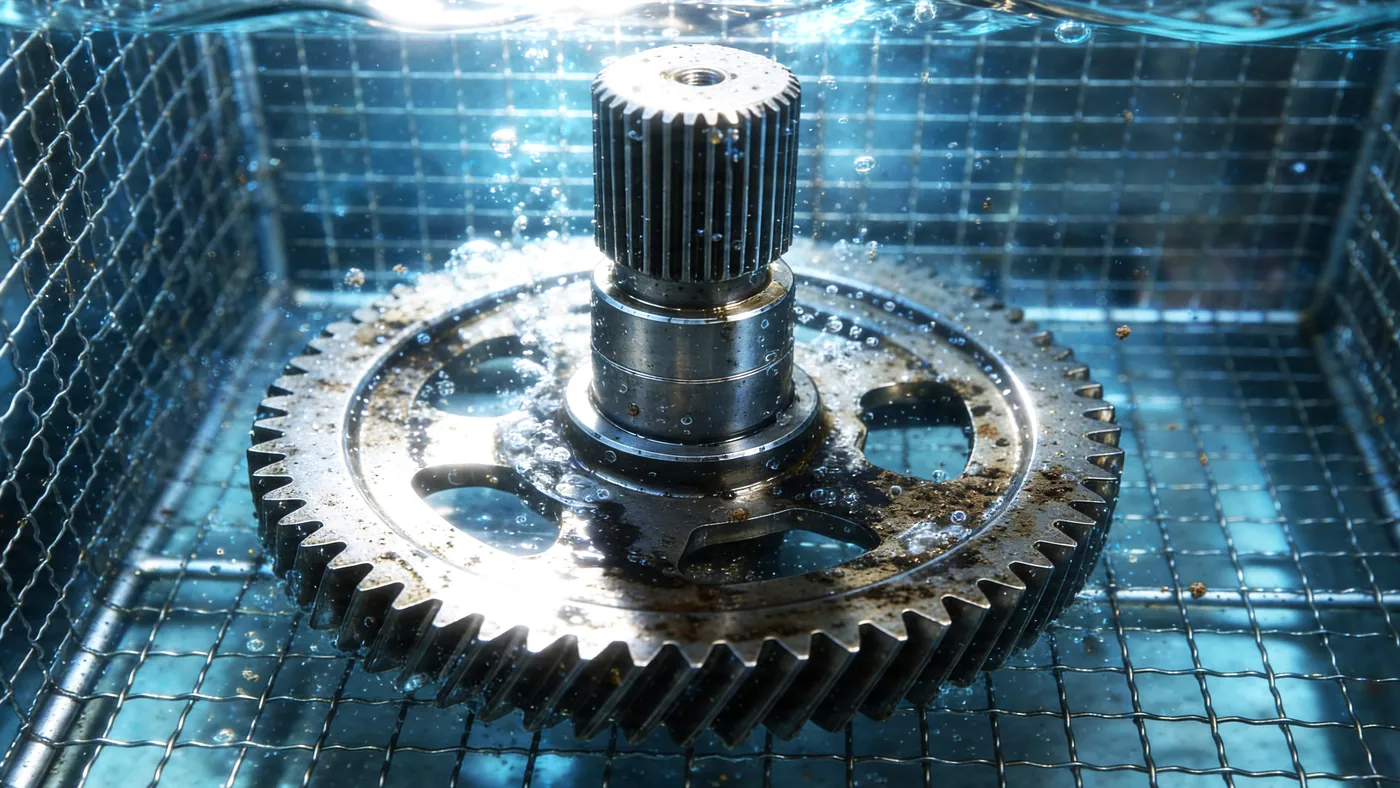 Parts and contaminants · 4 min readUltrasonic cleaning of CNC machined parts before assemblyA machined part that goes into an assembly carries its coolant, chips and burr flakes into the product unless they come off first. What assembly asks of the cleaning step, how to lay out wash, rinse and dry around the machining cell, and how to keep the part clean between the tank and the fitter's bench.
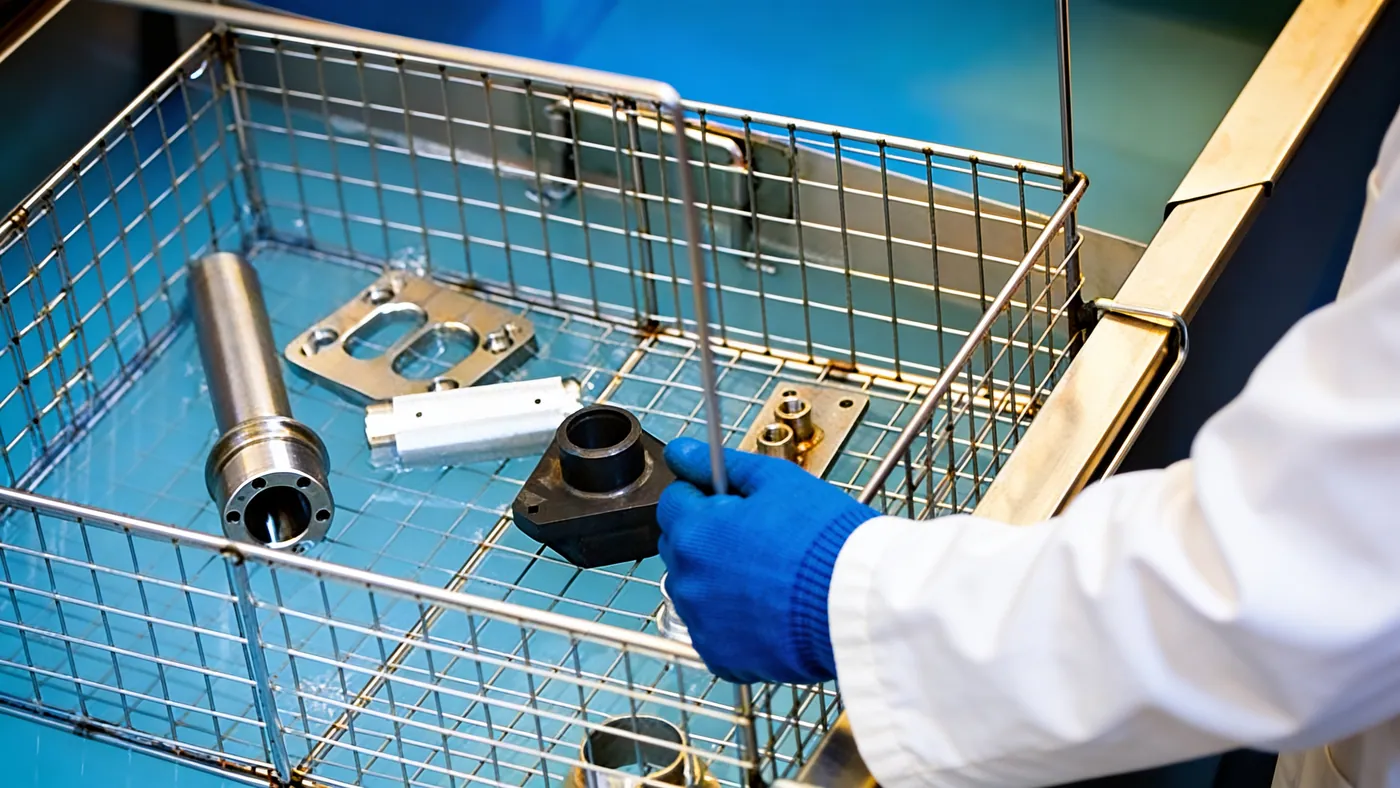 Parts and contaminants · 3 min readUltrasonic cleaning of bottling equipment partsFilling valves, vent tubes, capping and crowning heads, change parts and labeller parts collect sugar, fruit pulp, yeast, beer stone, tartrate and glue. How to clean them at an overhaul or a product change, the chemistry for each beverage soil, and how to keep valve sets and seals in order.
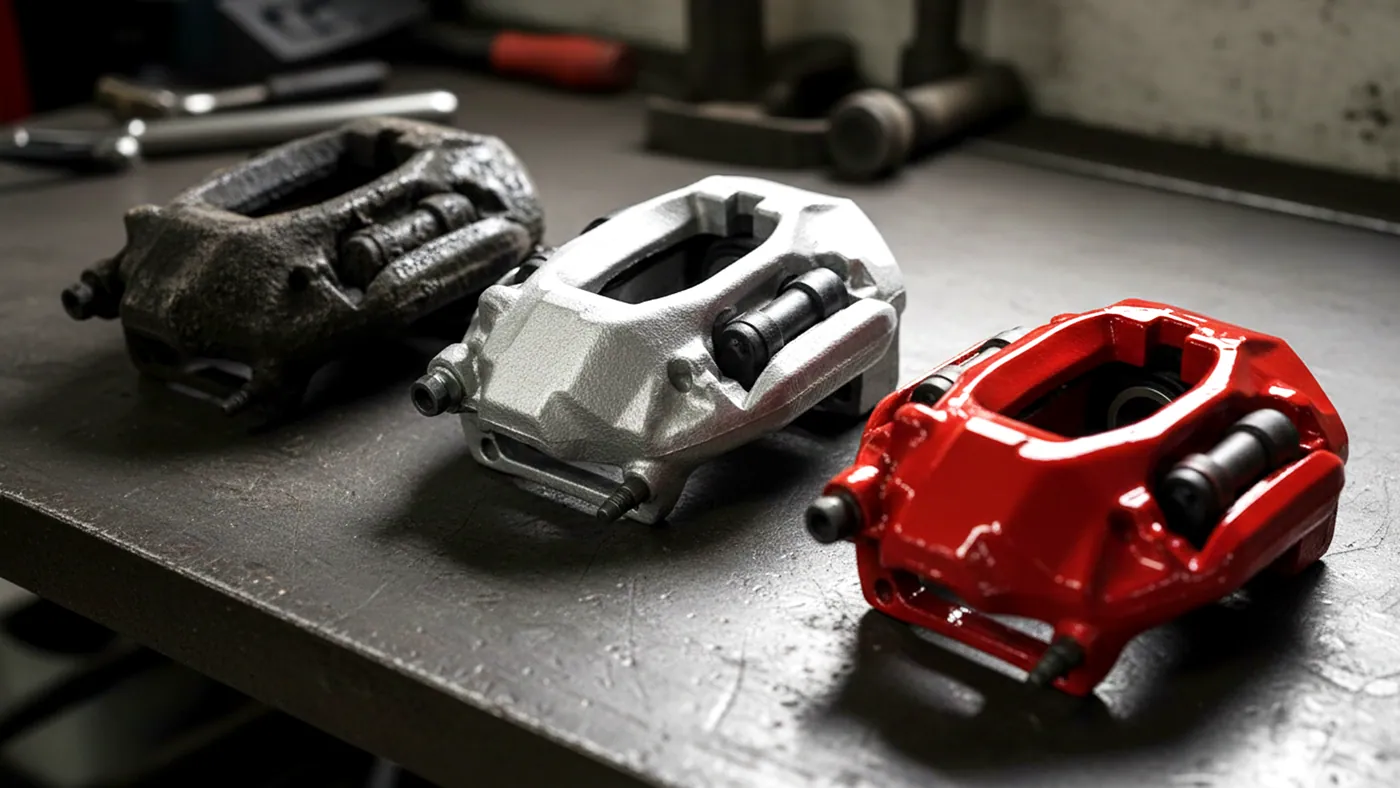 Parts and contaminants · 4 min readCleaning parts before coating or painting with ultrasoundPaint, powder, plating and bonding fail on oil, fingerprints and residue. The cleaning sequence in front of a coating line, how to test that a surface is ready, the contaminants that cause craters and blisters, and how ultrasonic cleaning fits with conversion coatings and pretreatment.
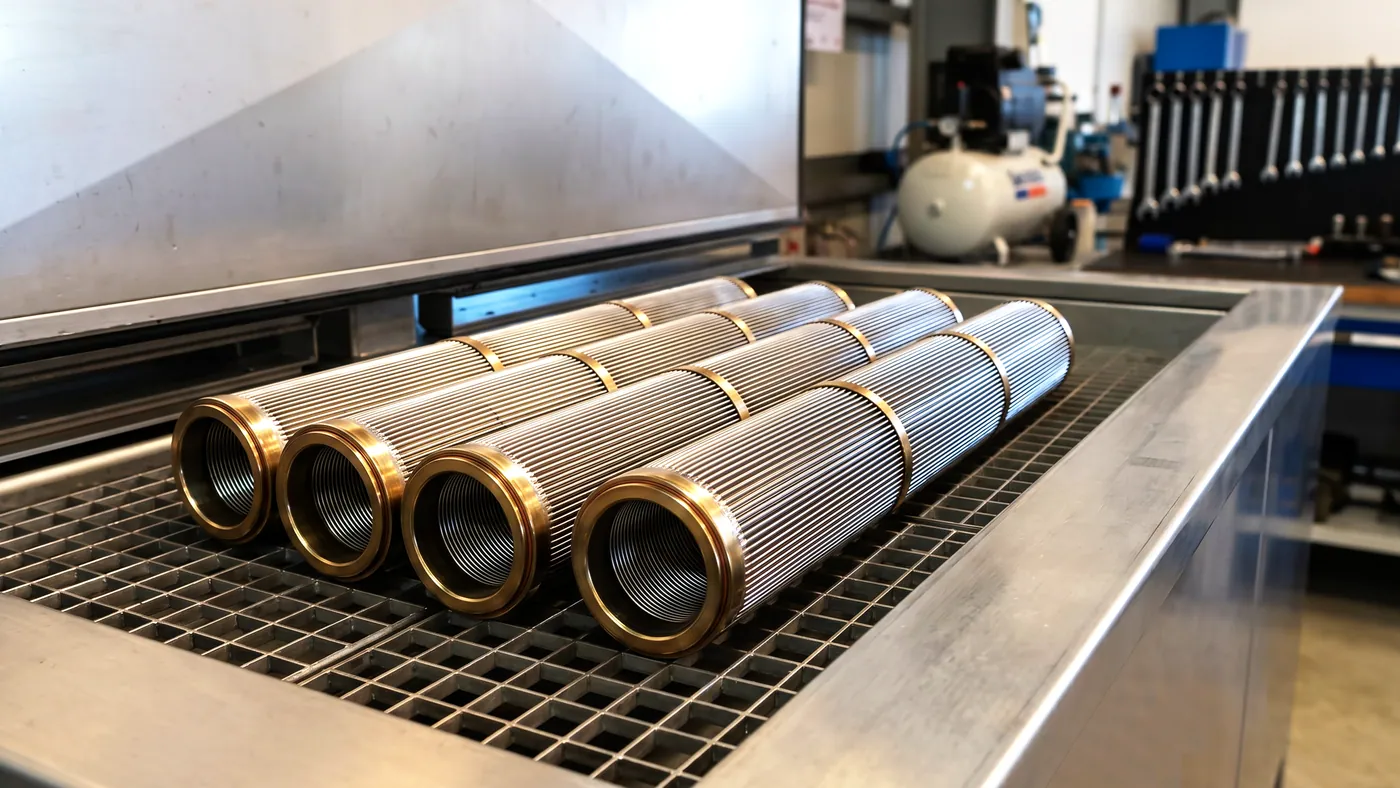 Parts and contaminants · 3 min readCleaning food industry filters with ultrasoundSieves, strainers, sifter screens, fryer filters, filter candles and centrifuge screens clog with fat, protein, pulp, starch and carbonised oil. Which food filters can be cleaned and reused, the chemistry for each soil, why the reverse flush matters, and the hygiene steps before a filter goes back into the line.
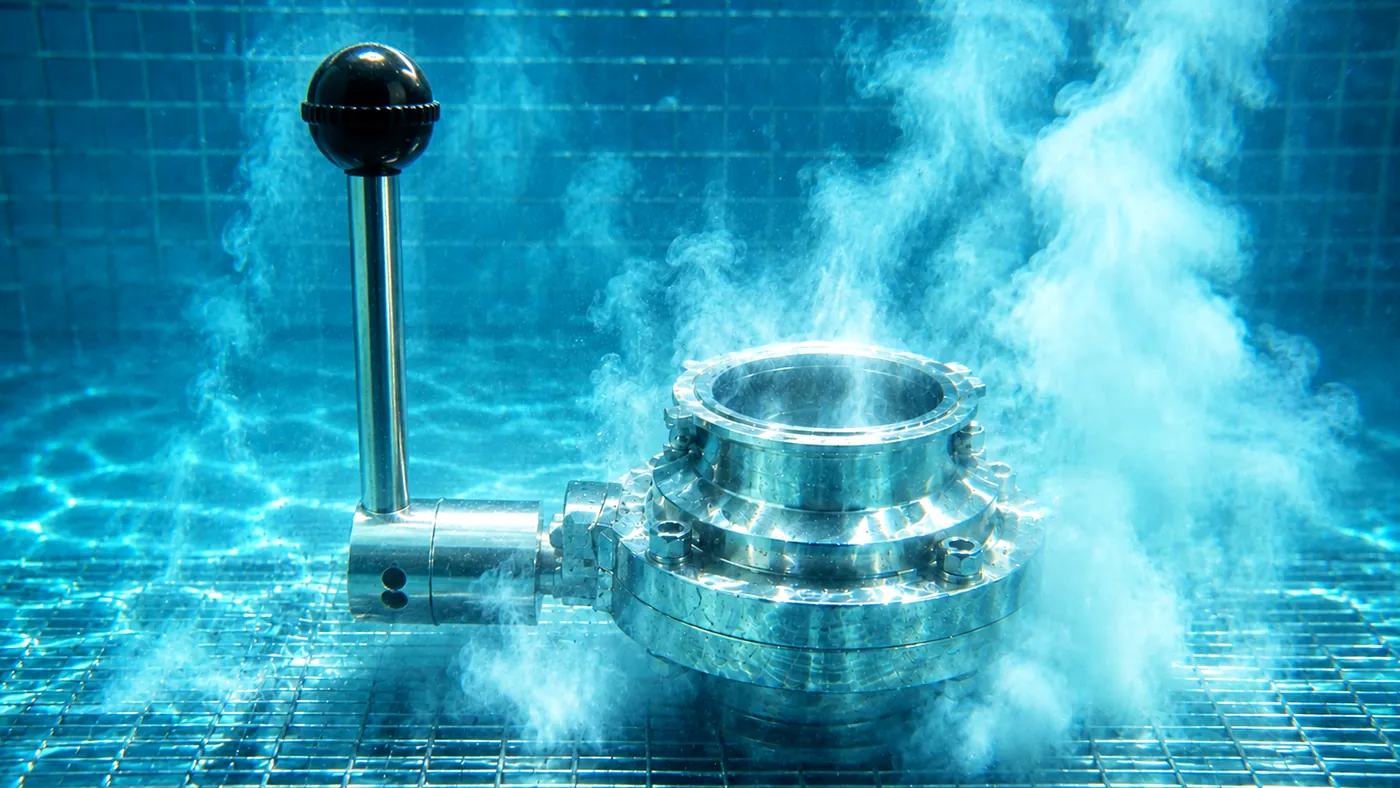 Parts and contaminants · 3 min readCleaning dairy equipment with ultrasonic systemsSeparator discs, homogeniser valves, pasteuriser plates, filling nozzles and cheese moulds carry milk fat, protein and milk stone that cleaning in place does not always remove. The two-step alkaline and acid wash, the temperatures for raw and heat-treated milk soil, and the dairy parts worth taking out for an ultrasonic tank.
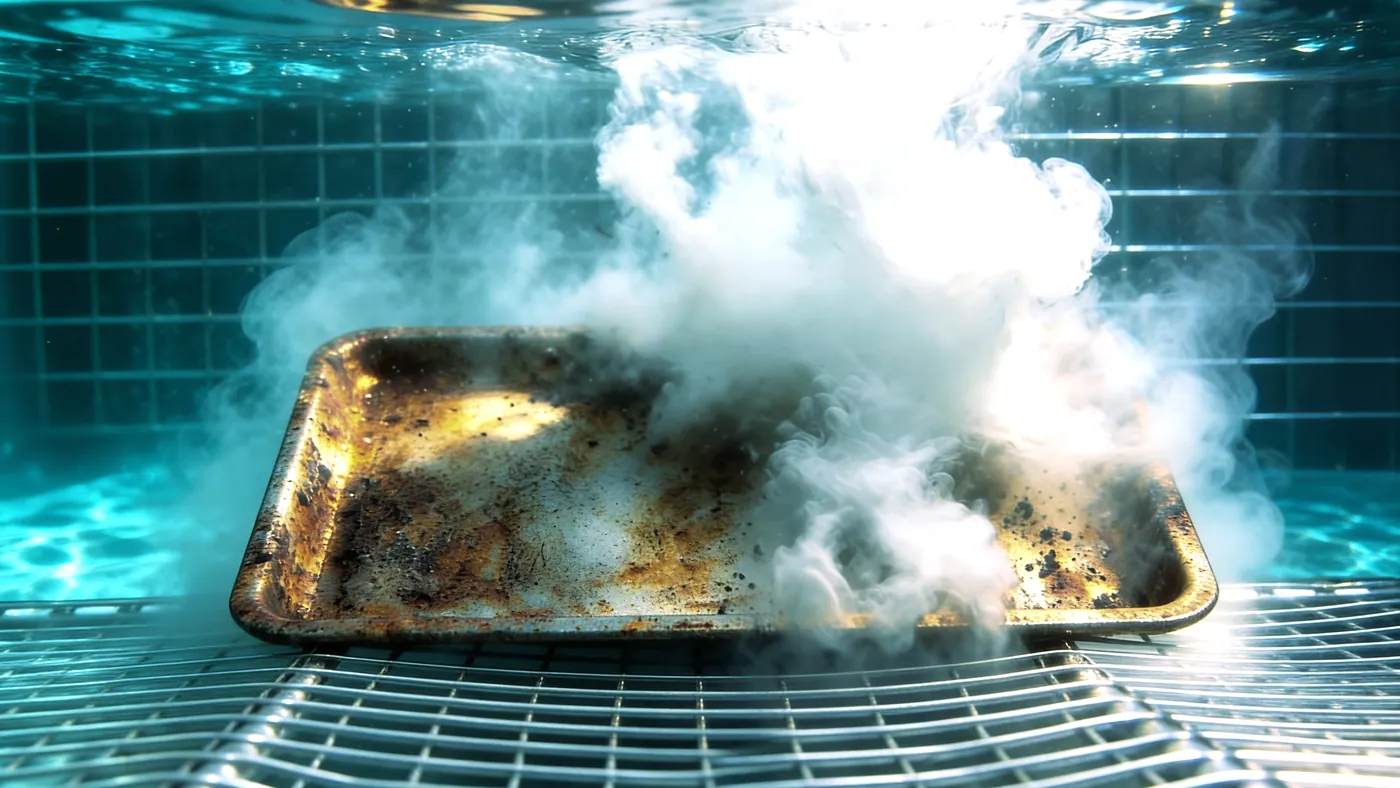 Parts and contaminants · 3 min readCleaning bakery equipment with ultrasoundBaking tins and trays, depositor nozzles and pistons, divider parts, slicer blades and cutters carry dough, sugar, fat and carbonised release agent. What ultrasonic cleaning removes in a bakery, what it cannot remove without harsh chemistry, and how to treat coated tins so the coating survives.
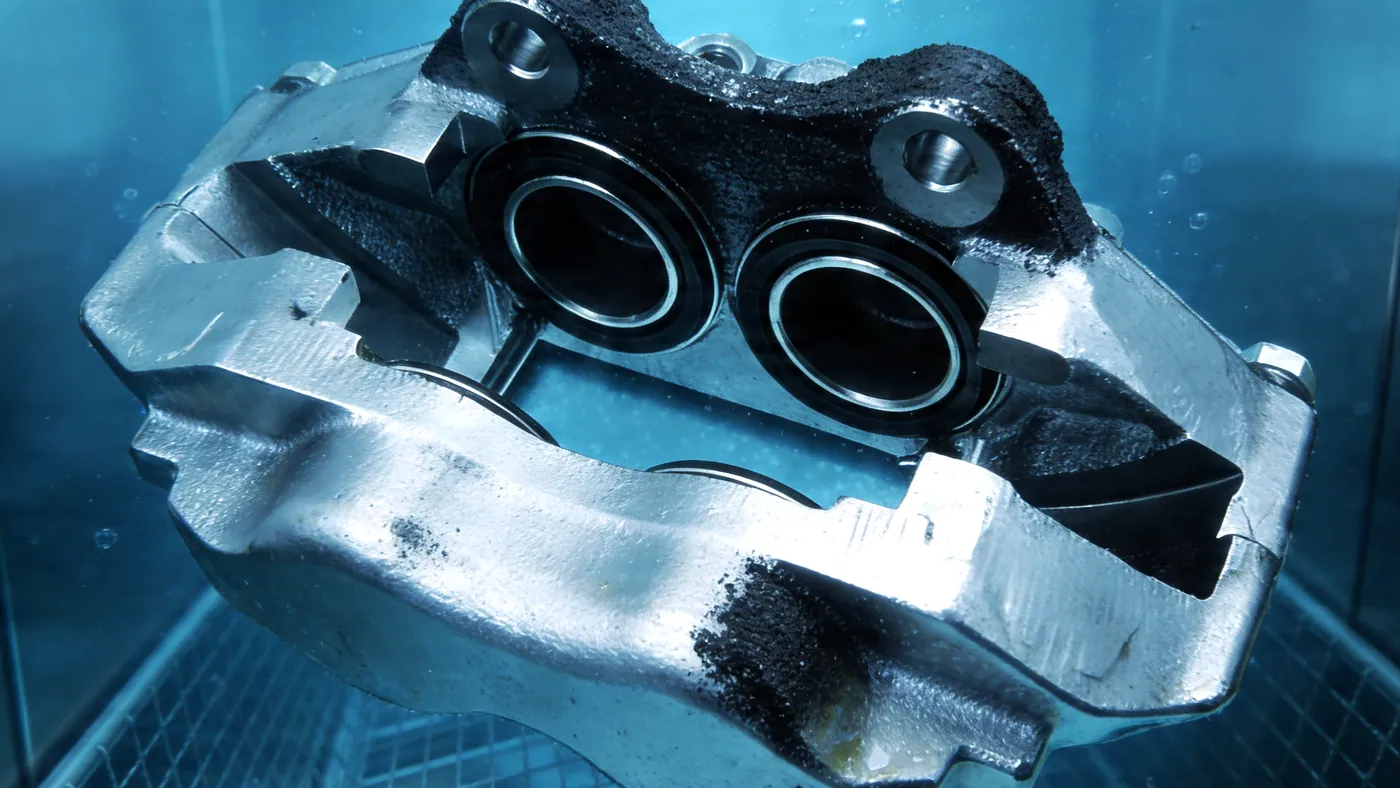 Parts and contaminants · 3 min readUltrasonic cleaning of brake calipers for reuseBrake dust, road grime, old fluid and surface rust come off a stripped caliper in one cycle, without dry brushing or blasting the bores. What is removed before the bath, the settings for cast-iron and aluminium calipers, and the steps between the bath and a caliper that is safe to refit.
 Process and parameters · 4 min readRinsing and drying after ultrasonic cleaningThe wash lifts the soil; the rinse takes the wash off the part; the dryer takes the rinse off. Skip either and the part carries a film of detergent, or water in every blind hole. How each stage is done, from a bucket to a DT dryer tank.
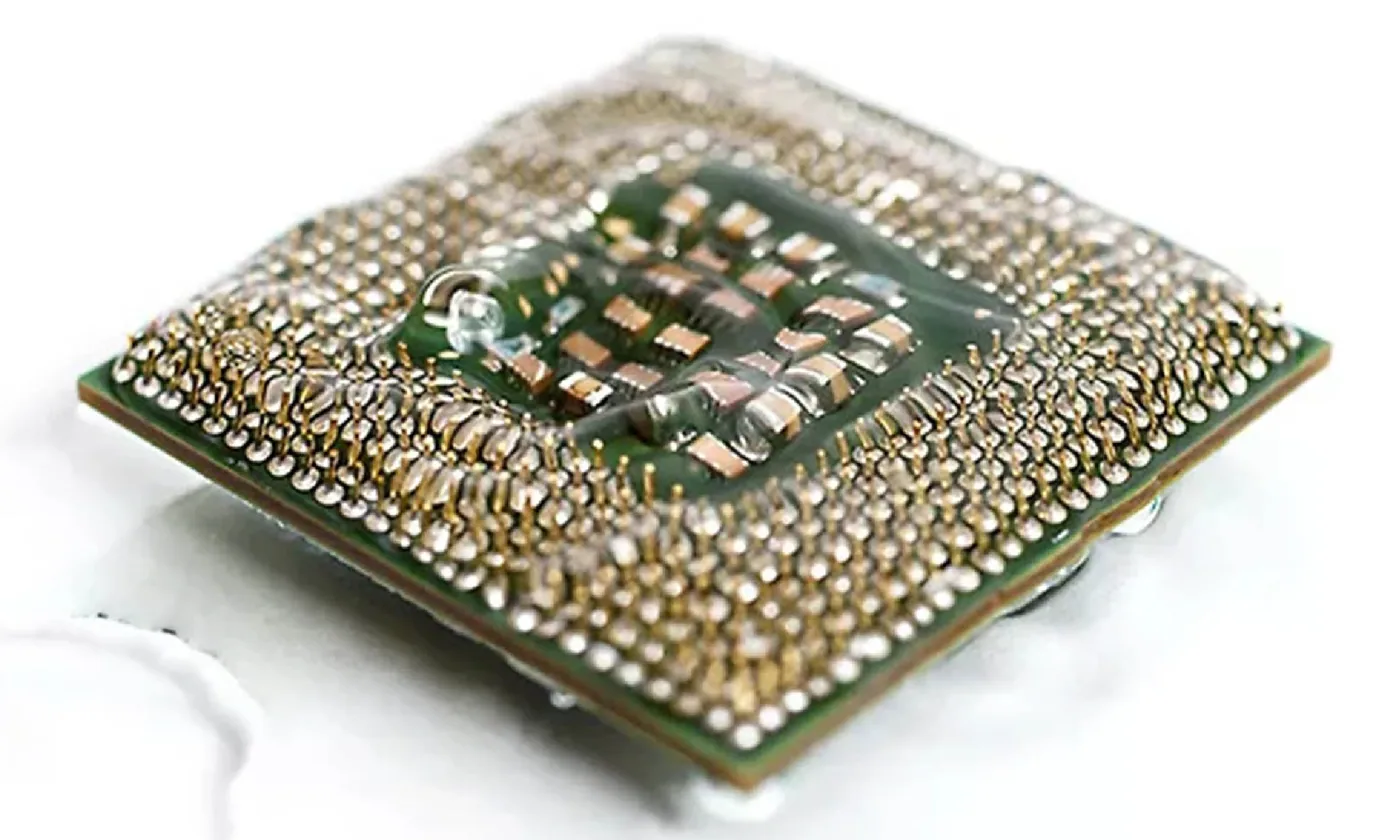 Parts and contaminants · 3 min readRemoving flux residues from circuit boards and assembliesFlux left after soldering attracts moisture, corrodes joints and leaks current between tracks. Which flux types need cleaning, the 40 kHz bath that removes them without harming components, what to keep out of the tank, and how to prove the board is clean.
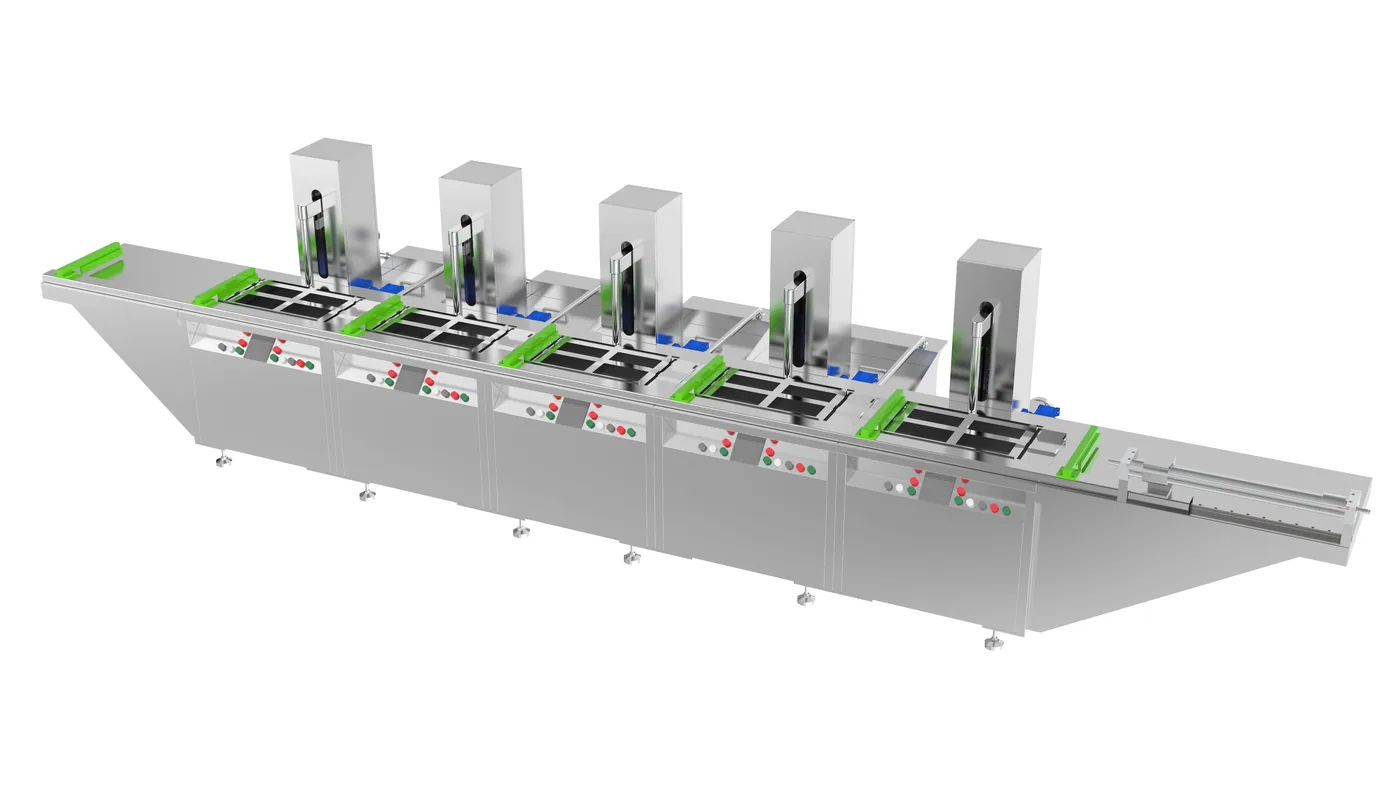 Choosing a machine · 3 min readMulti-tank lines: wash, rinse, dryWhen a clean part has to come out dry and residue-free, one tank is not enough. How a wash, rinse and dry line is laid out, how a transport carriage moves the basket through it, and how to decide the number of stations from the cleanliness you need.
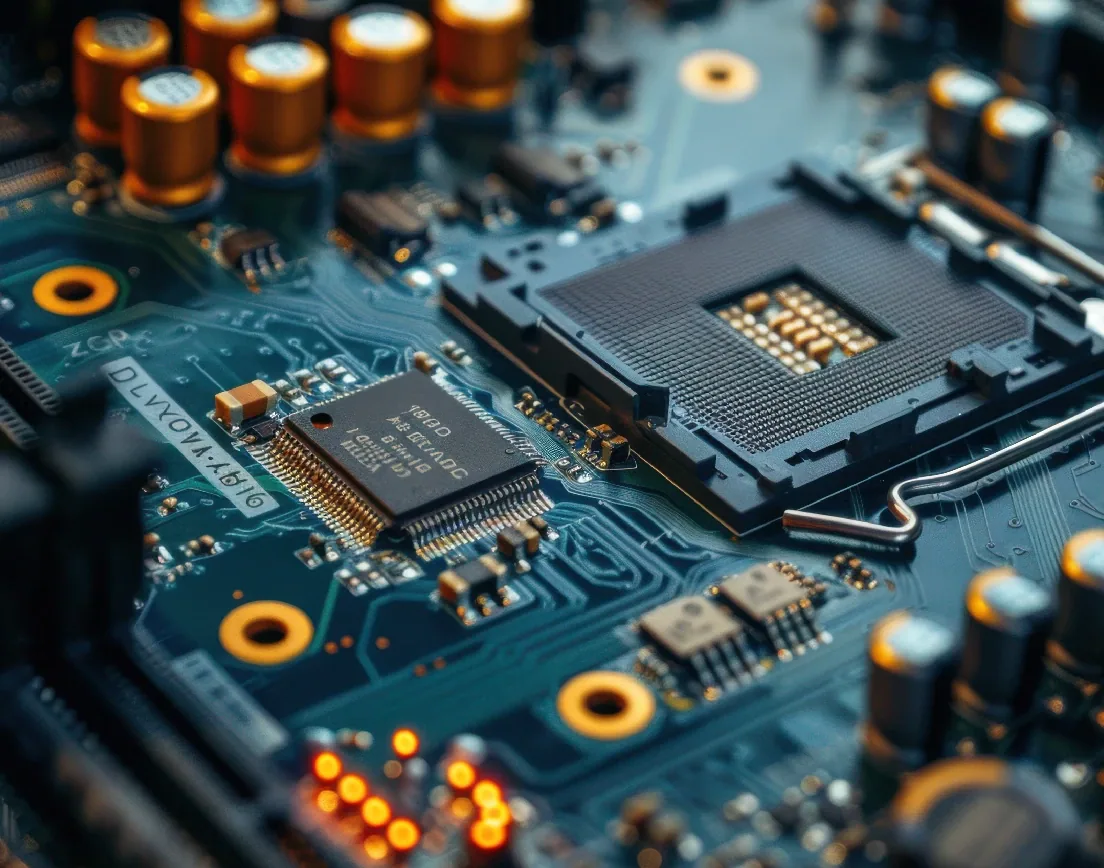 Industries · 3 min readUltrasonic cleaning in electronics and PCB assemblyFlux after soldering, dust and oxide on connectors, machining residue on housings and heat sinks, particles on sensors and optics. What ultrasonic cleaning does in electronics production and repair, at 40 kHz with deionised rinses, and what must never go in the bath.
Let's find the right fit
Not sure which size you need?
Send us the part, the quantity per hour and the soil you are removing. We will size the tank and the frequency with you.