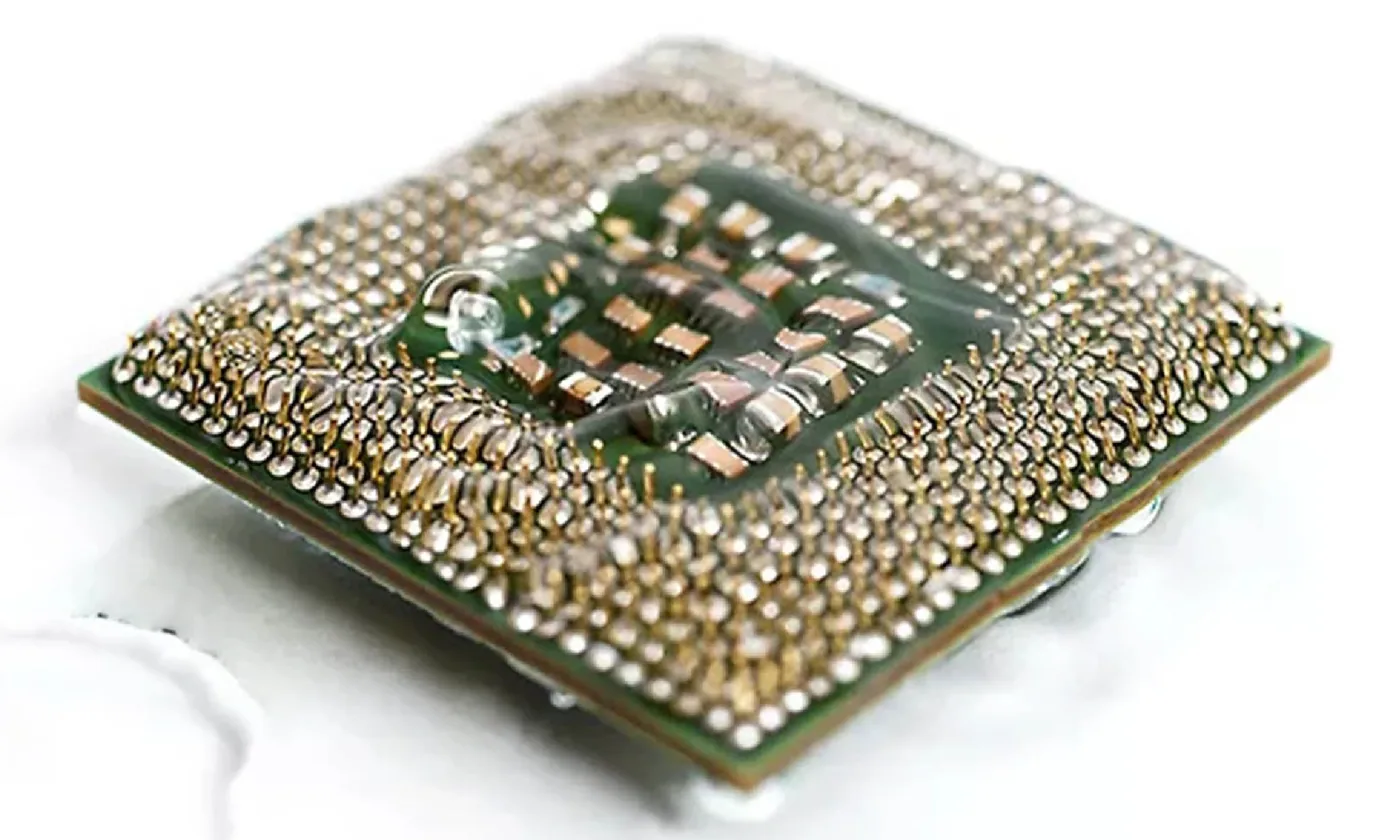
Industries · 3 min read · Updated 2026-09-25
Ultrasonic cleaning in electronics and PCB assembly
Flux after soldering, dust and oxide on connectors, machining residue on housings and heat sinks, particles on sensors and optics. What ultrasonic cleaning does in electronics production and repair, at 40 kHz with deionised rinses, and what must never go in the bath.
Technical guide. Figures are taken from our own spec tables; for your process we confirm the settings with a cleaning trial.
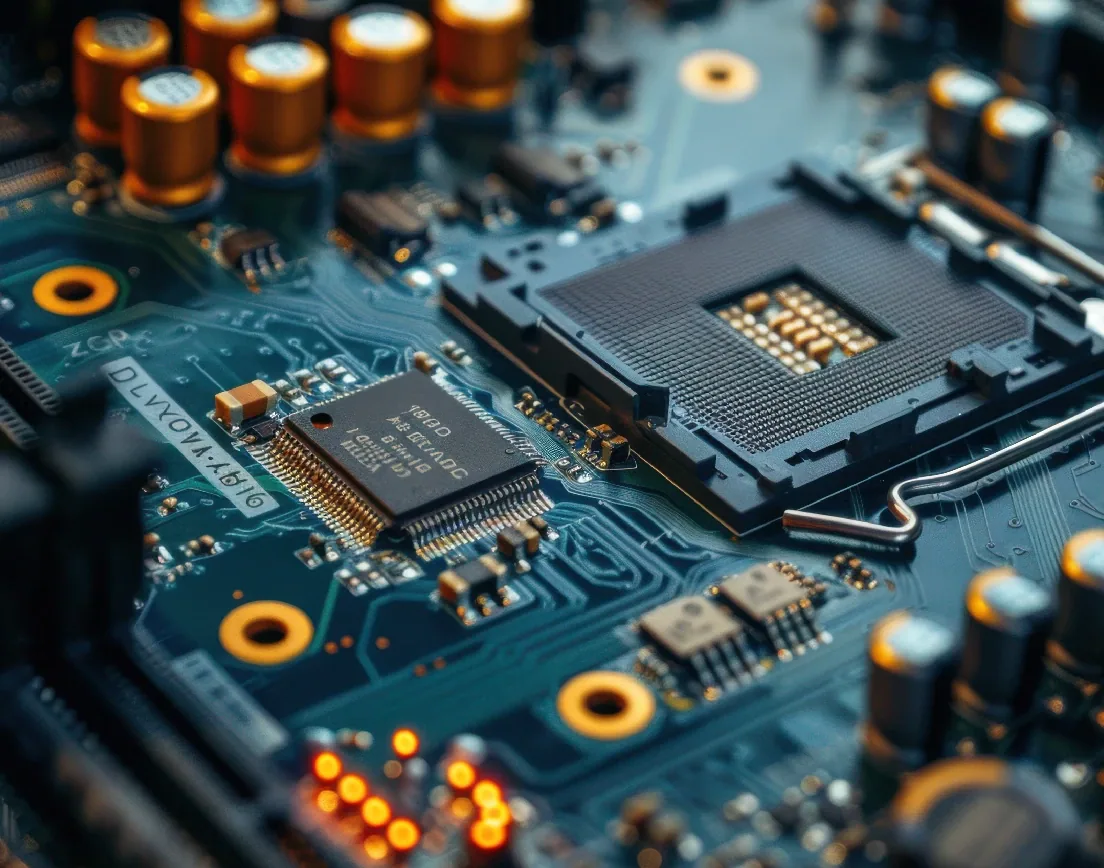
Electronics is the industry that uses the gentle end of ultrasonic cleaning. The parts are small, the soils are thin, the tolerances are in the micron range, and some components can be damaged by the process itself. Done right, an ultrasonic bath at 40 kHz with a deionised rinse is the standard way to clean assembled boards, connectors and precision parts before coating, testing and final assembly.
What is cleaned
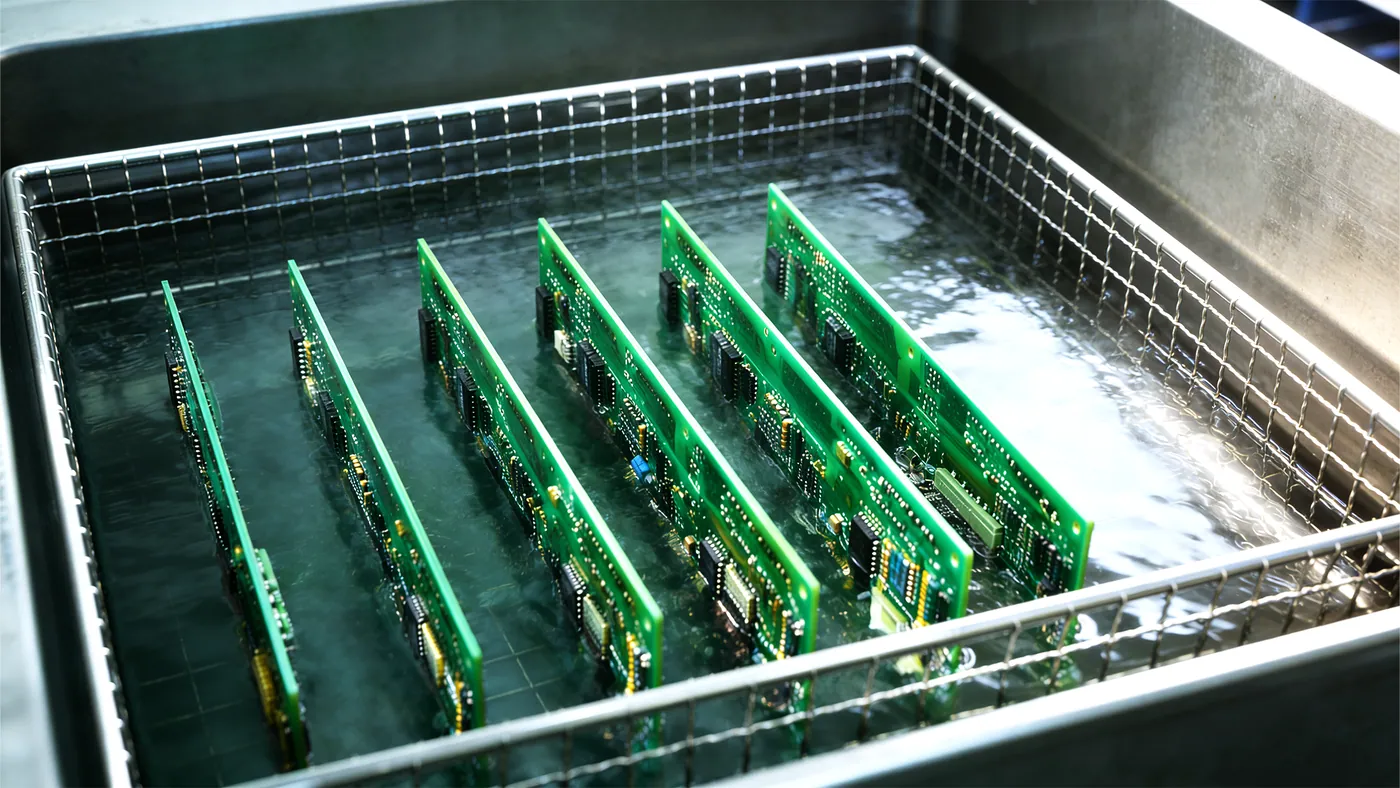
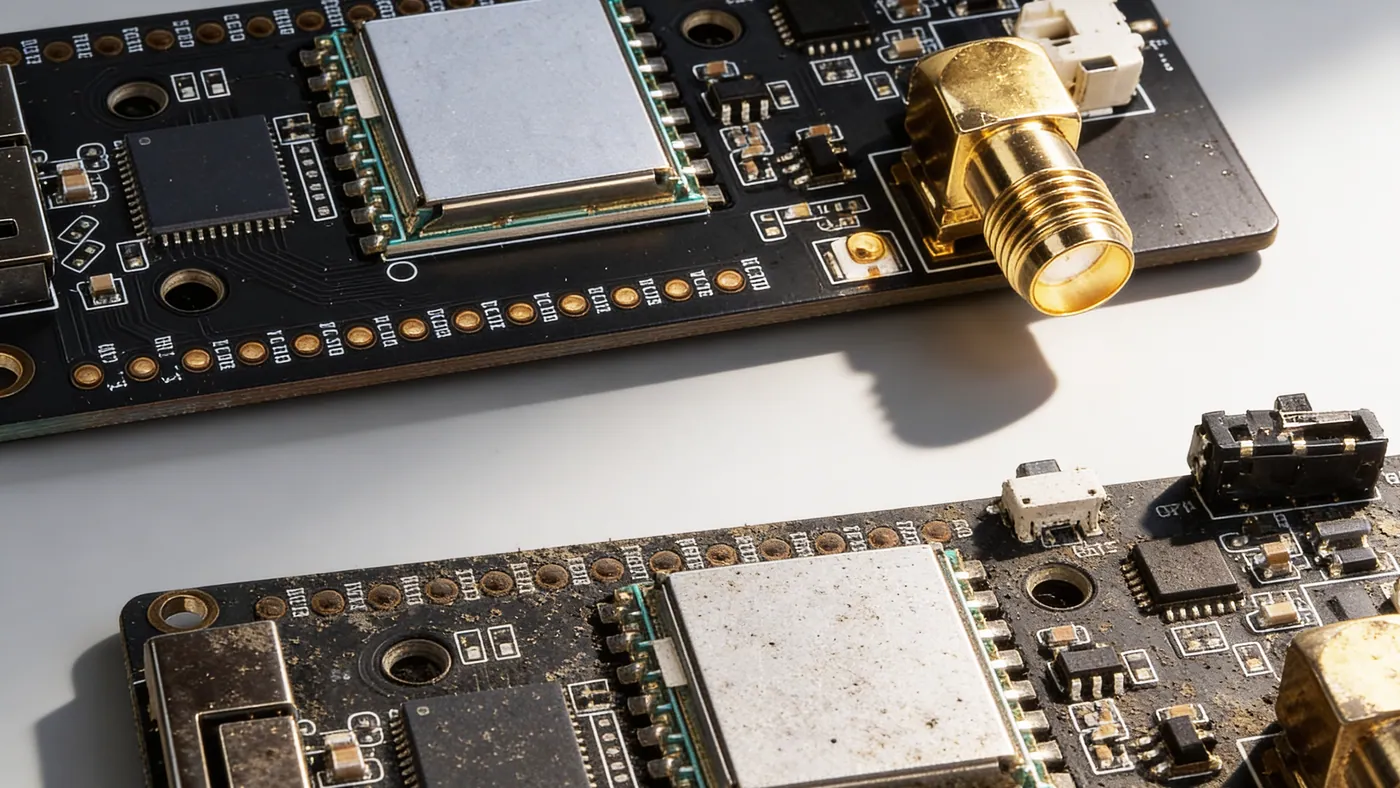
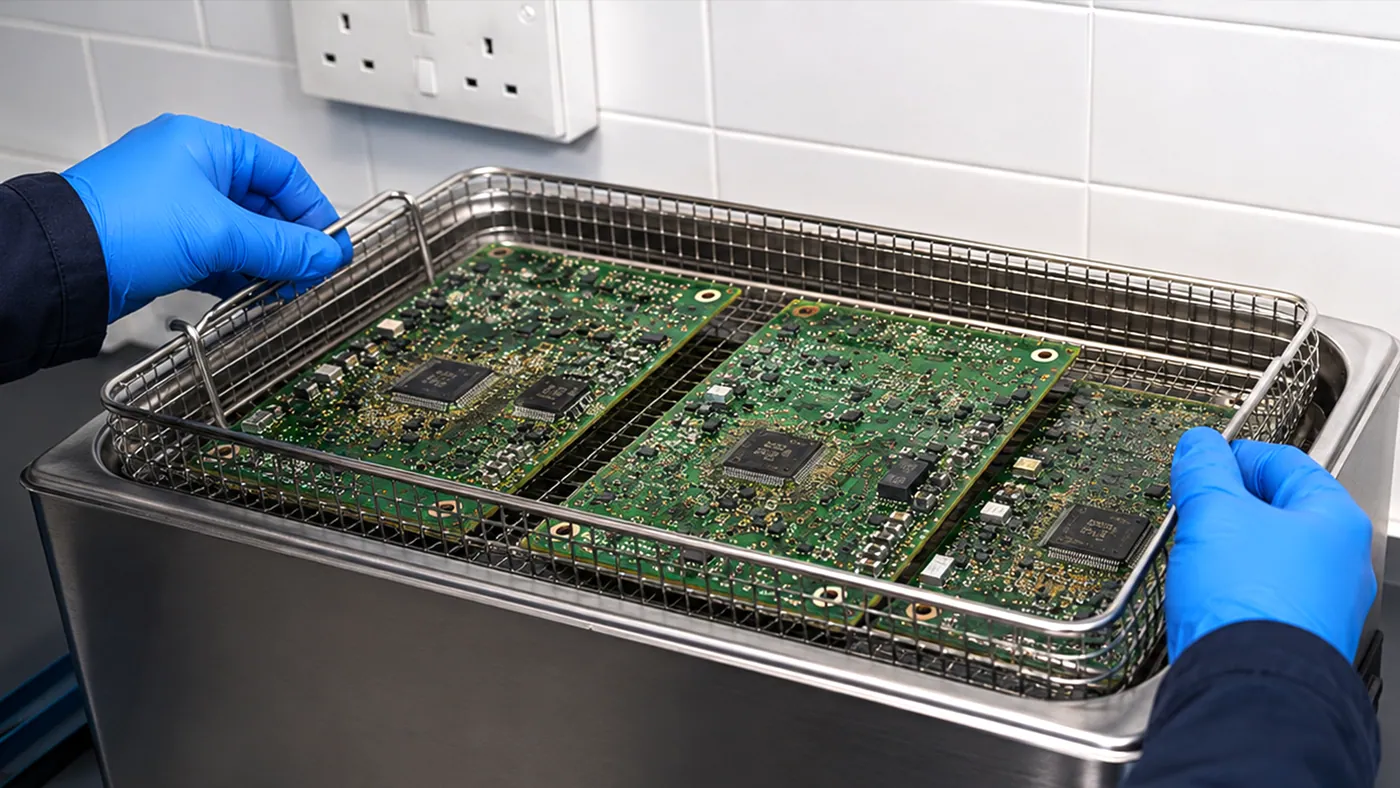
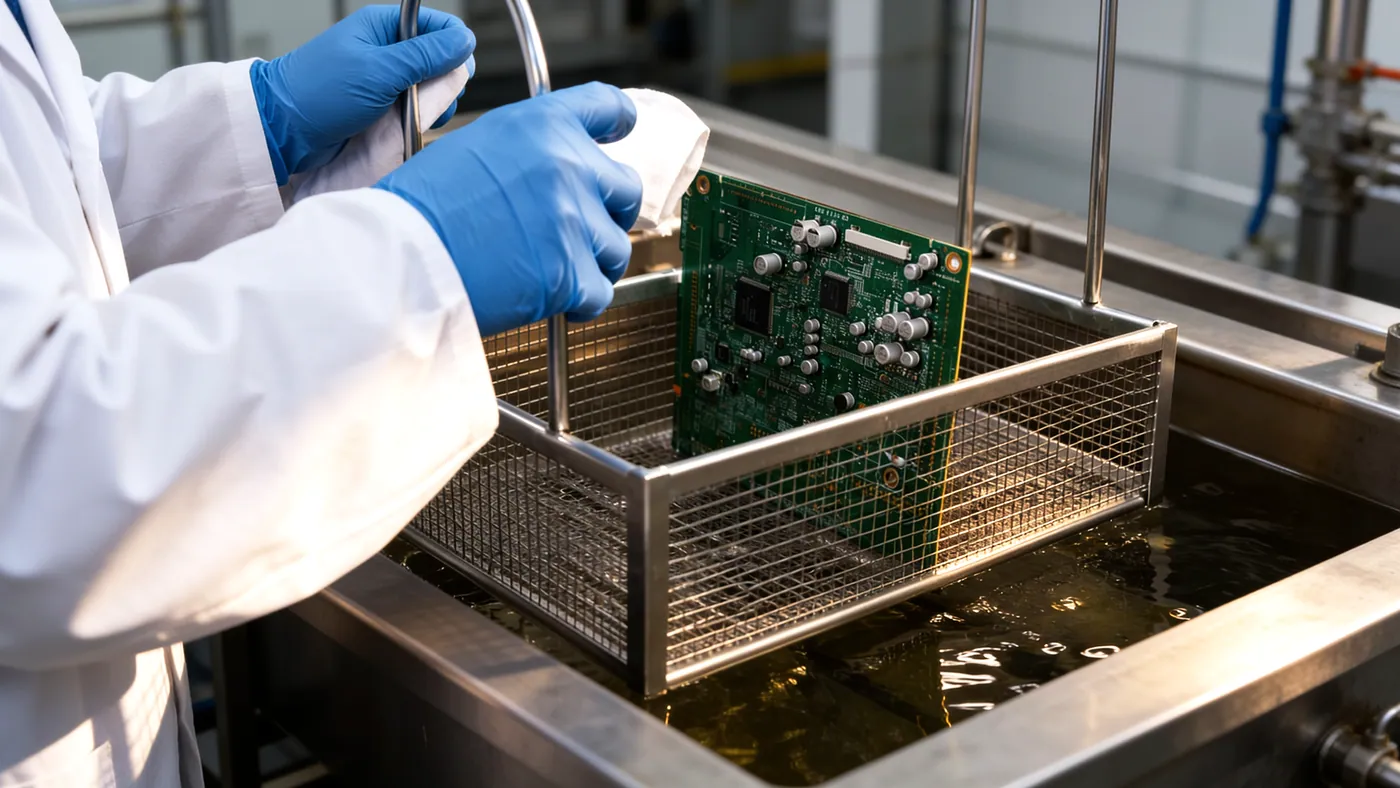
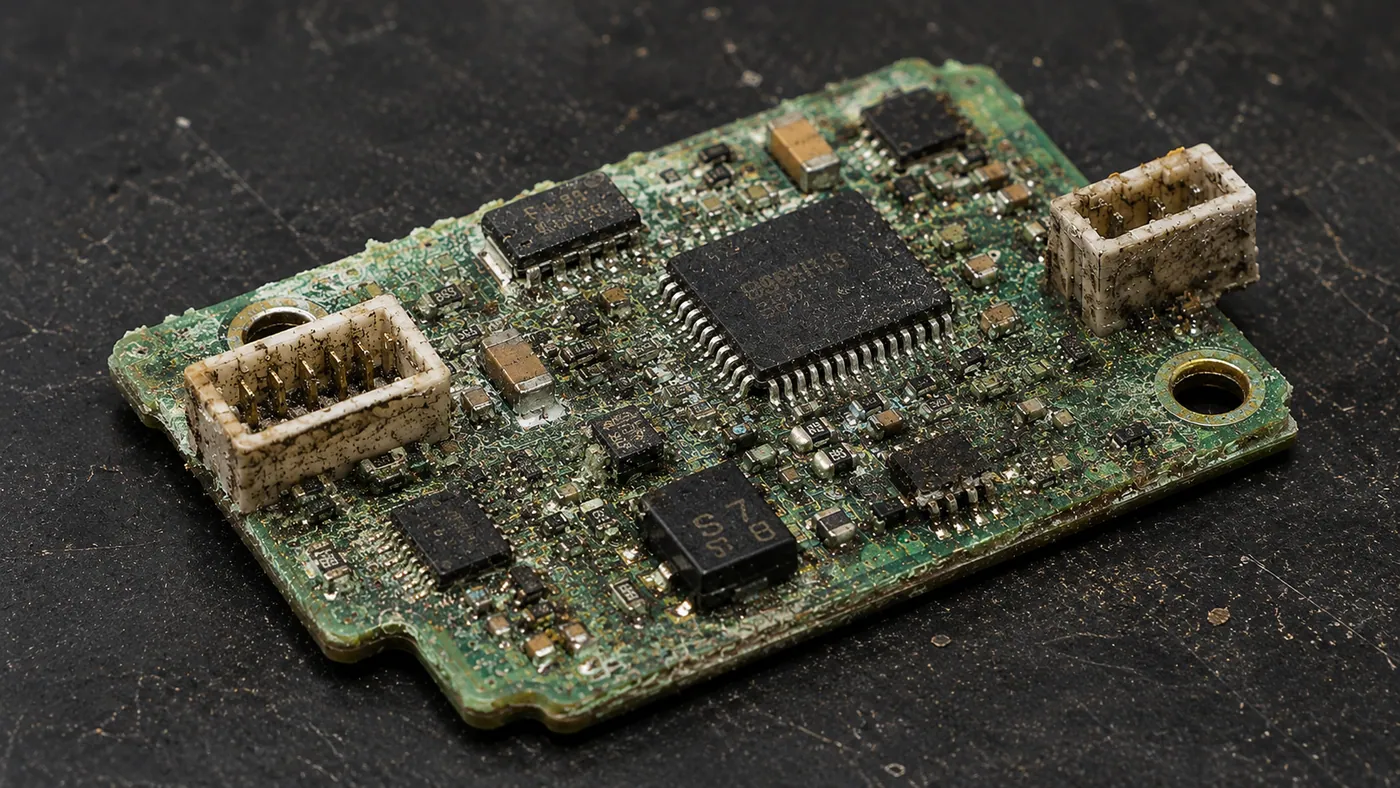
- Populated circuit boards after wave, reflow or hand soldering: flux residues under components, solder balls, fingerprints. The flux article is the detailed process.
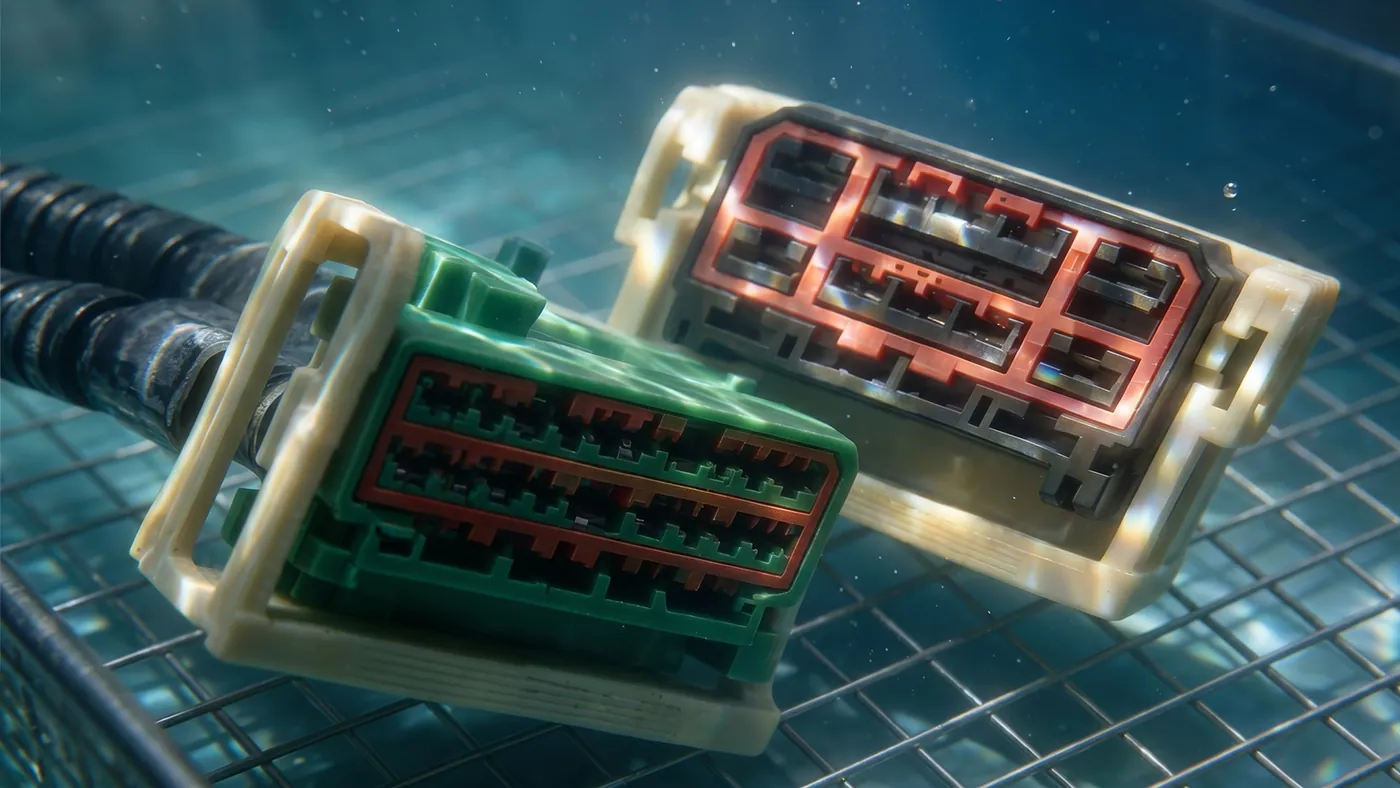
- Connectors and contacts: oxide, dust and lubricant from plating and machining, before plating and after storage.
- Housings, heat sinks, shields: machining coolant and chips from aluminium and copper parts, before anodising or assembly; see machining residue.
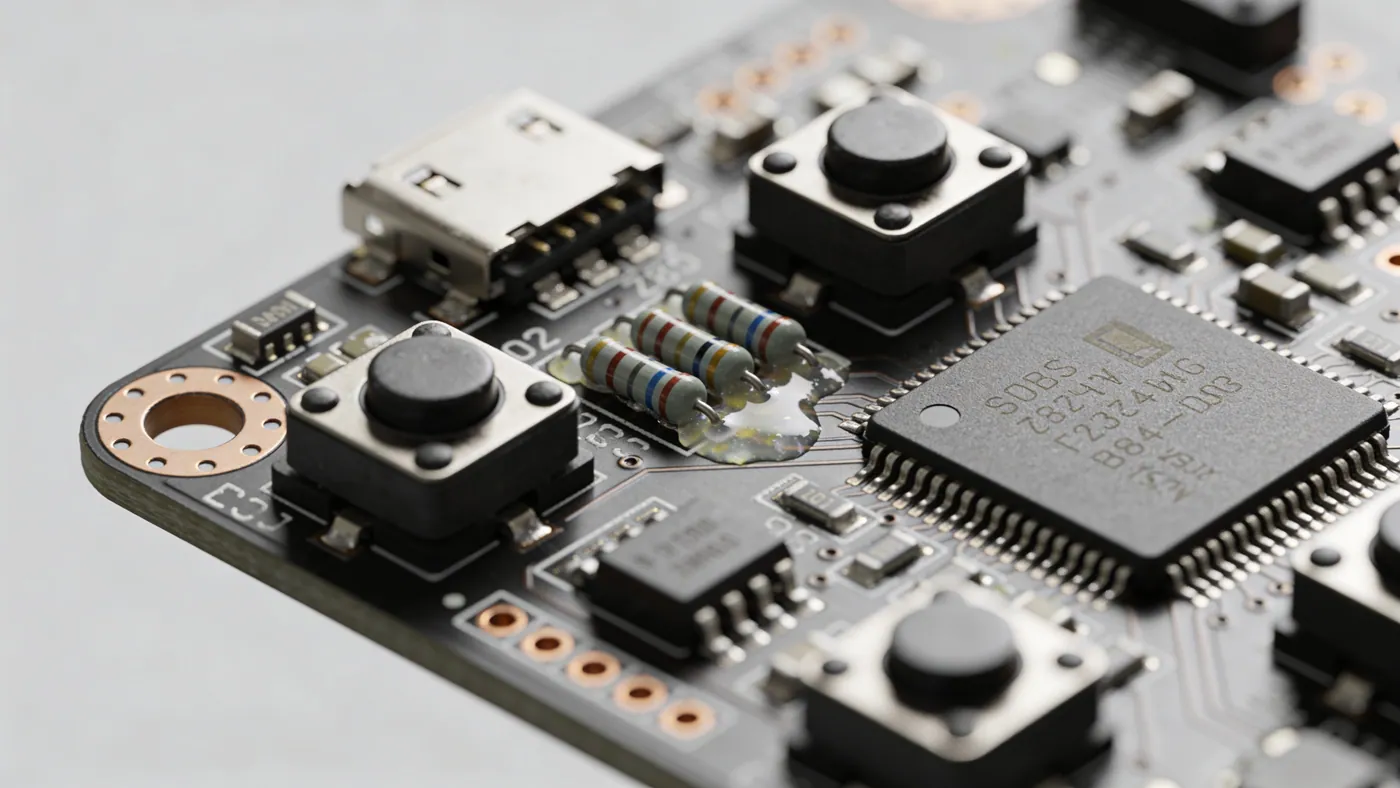
- Sensors, optical windows, lenses: particles and fingerprints, at low power and short cycles, often in the indirect method in a beaker of the right solvent.
- Repaired modules: flux and handling residue after rework, before the module goes back into service.
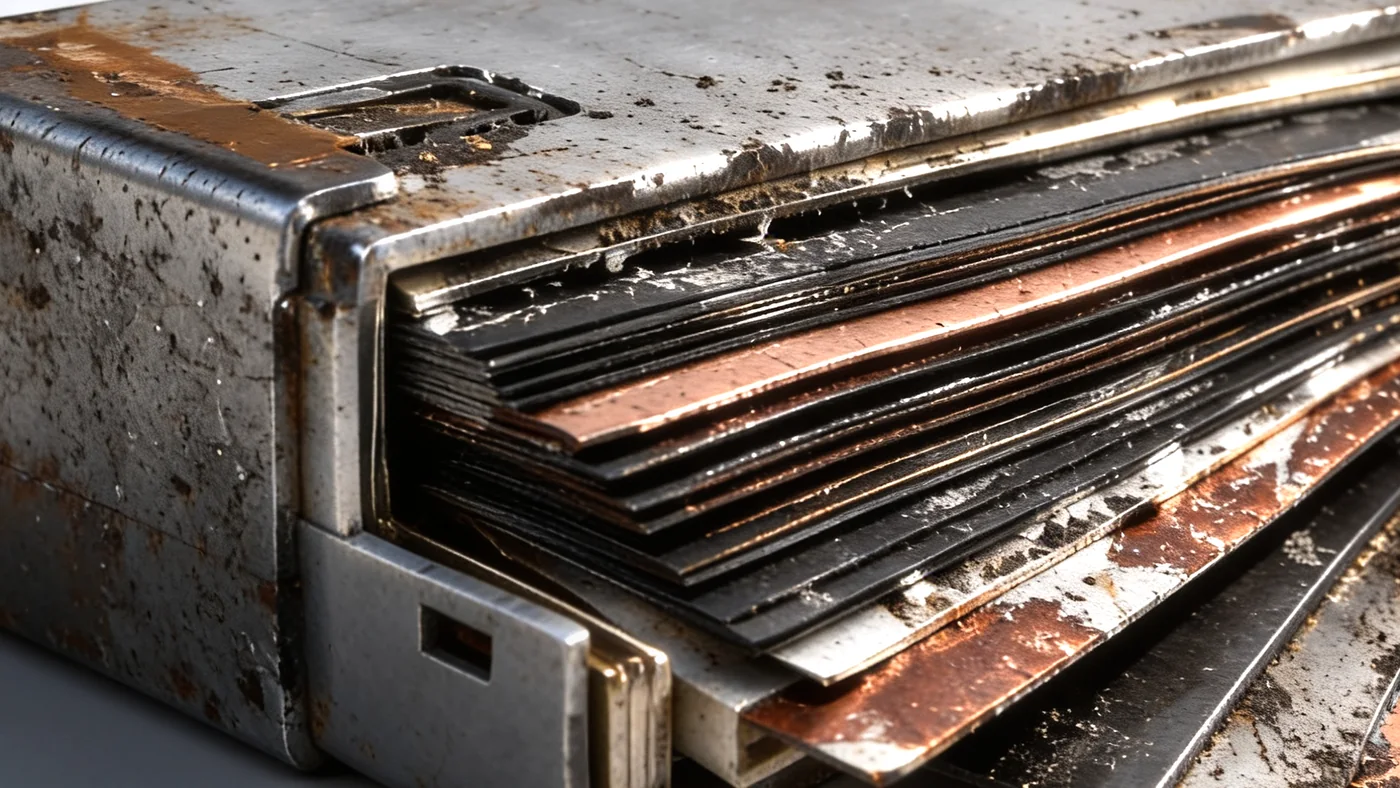
- Battery components and cell housings: machining and stamping residue before assembly, with a dry stage that leaves no moisture.
- Stencils, pallets and fixtures: solder paste and flux build-up from the line.
The process
Frequency. 40 kHz throughout. 28 kHz is for castings, not for boards.
Chemistry. Aqueous flux removers or saponifiers for rosin and no-clean fluxes; deionised water with a mild surfactant for water-soluble flux; light-alloy cleaners for aluminium housings; and for optics, the solvent the lens maker specifies, cold, in a beaker.
Temperature. 45 to 55 °C for boards, 50 to 60 °C for metal parts, room temperature for optics.
Time. 3 to 6 minutes for boards, 3 to 5 for parts. Short.
Sweep and adjustable power. A standing wave holds a component at an antinode; sweep prevents it. Adjustable power lets a delicate assembly run at half density.
Rinse. Deionised water, twice, the first with ultrasound to flush under components. Tap water is never used; its ions are the contamination.
Dry. Warm filtered air at 50 to 60 °C until dry under the components; a DT dryer or a drying cabinet, 15 to 30 minutes for boards.
What must not go in
Components with cavities or openings: relays, unsealed switches, some crystals, MEMS microphones and sensors, trimmer potentiometers. Parts marked by their maker as not ultrasonic-cleanable. Batteries and cells. Anything with a paper label that matters. The rule in a production line is a cleaning specification per assembly, qualified once and stored as a programme on the machine.
The machine
| Task | Machine |
|---|---|
| Rework bench, prototype shop | STS-060 to STS-150, 40 kHz, board rack, deionised rinse in a second unit or a beaker |
| Production cleaning of boards | UMX Pro 50L to 88L with programmes, adjustable power, filtration module; deionised rinse tank; DT dryer or cabinet |
| Housings and heat sinks after machining | UMX Pro 88L to 162L or ST-96, light-alloy cleaner, demineralised rinse, dry |
| Connectors and small metal parts in bulk | STS-300 or ST-40 with fine-mesh inserts, shallow layers |
| Optics and sensors | STS-030 to STS-090, beaker holders, indirect cleaning |
Every machine in a board line runs with sweep on and a written programme. The UMX Pro stores the programme per board family, which is what makes the second shift's result the same as the first's.
Cleanliness
For regulated work the measures are resistivity of solvent extract and ion chromatography; for the rest, a UV lamp shows rosin as a fluorescent haze and a loupe shows what the rinse missed. Cleanliness before conformal coating is the usual reason to install the line, and the coating supplier's specification sets the target.
The detailed articles: the whole process for circuit boards after soldering, connectors and charging ports, sensors and microelectronic parts, battery components, housings, heat sinks and shields before assembly, communication equipment components, modules after repair, and a risk guide for precision electronics that lists what must stay out of the bath.
The articles below cover individual parts and processes as they are written. The quote article lists what to send for a board-cleaning line.