
Parts and contaminants · 3 min read · Updated 2026-09-26
Cleaning bakery equipment with ultrasound
Baking tins and trays, depositor nozzles and pistons, divider parts, slicer blades and cutters carry dough, sugar, fat and carbonised release agent. What ultrasonic cleaning removes in a bakery, what it cannot remove without harsh chemistry, and how to treat coated tins so the coating survives.
Technical guide. Figures are taken from our own spec tables; for your process we confirm the settings with a cleaning trial.
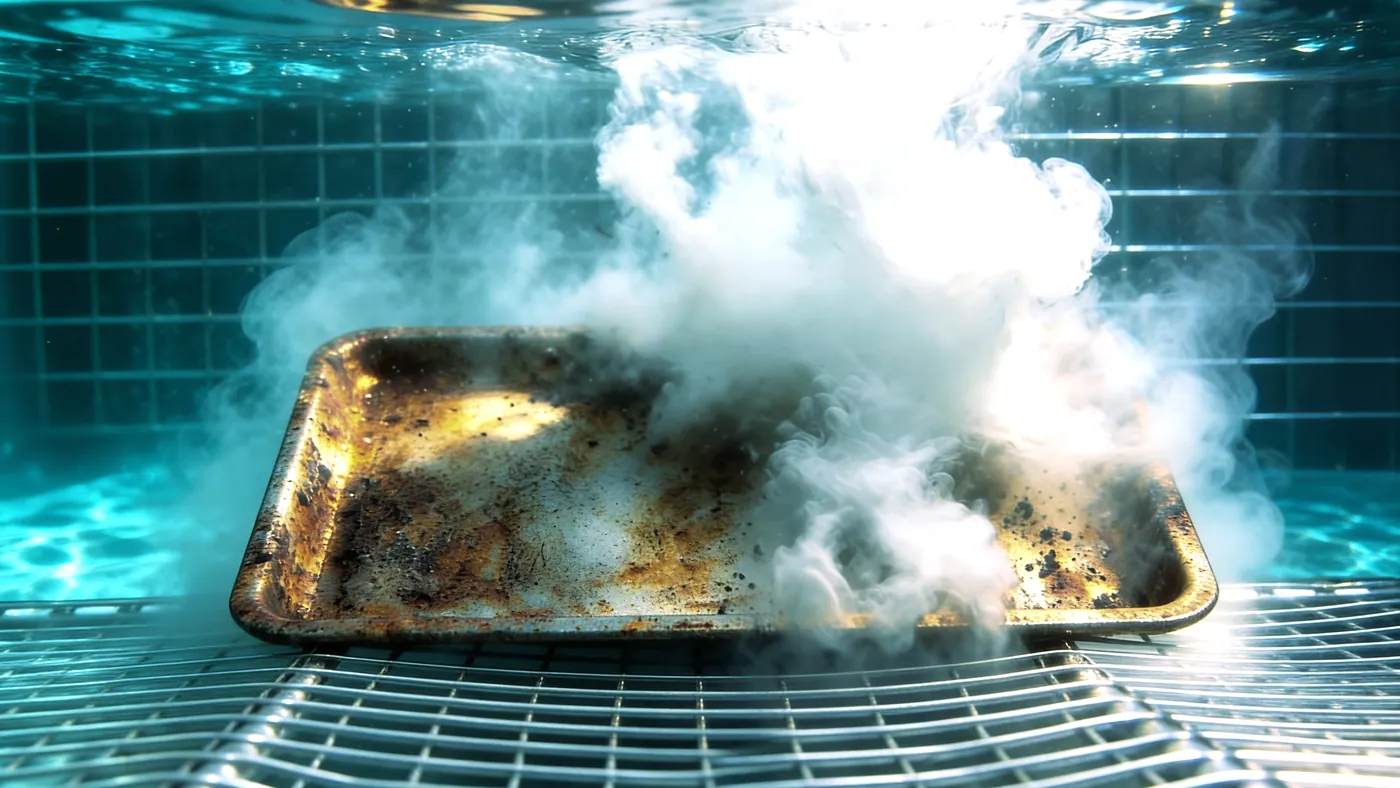
A bakery has two kinds of dirty equipment. The first is the make-up side: dividers, rounders, depositors, piping nozzles, slicers and cutters, which carry raw dough, batter, cream and filling. That soil is soft, water-soluble and easy for an ultrasonic bath. The second is the oven side: baking tins, trays and moulds that carry baked-on fat and carbonised release oil. That soil is hard and needs strong chemistry and heat as well as cavitation. The two are cleaned differently, and mixing them up either wastes time or ruins coatings.
Make-up equipment
| Part | Soil | Wash |
|---|---|---|
| Depositor nozzles, pistons, valves | Batter, cream, fillings, sugar | Warm water with mild detergent, 45 to 55 °C, 40 kHz, 5 to 10 min |
| Divider and rounder parts | Dough, flour, divider oil | Mild alkaline, 50 to 55 °C, 28 or 40 kHz, 10 min |
| Slicer blades, cutters, cake rings | Crumb, cream, fat | Mild alkaline, 45 to 55 °C, 40 kHz, 5 min |
| Piping tips, decorating nozzles | Icing, cream, chocolate | Warm water with detergent, 40 to 45 °C, 40 kHz, 3 to 5 min |
Dough is easiest when it has not dried. Soak parts in water straight after the shift, or put them into the ultrasonic tank before the dough sets. Dried dough and sugar soften in warm water within minutes; the ultrasound then clears the nozzle bores and piston grooves that a brush cannot reach.
After the wash: rinse in potable water, disinfect if the hygiene plan requires it for the part, and dry fully. Flour and water left in a crevice ferment and grow mould.
Tins, trays and baking moulds
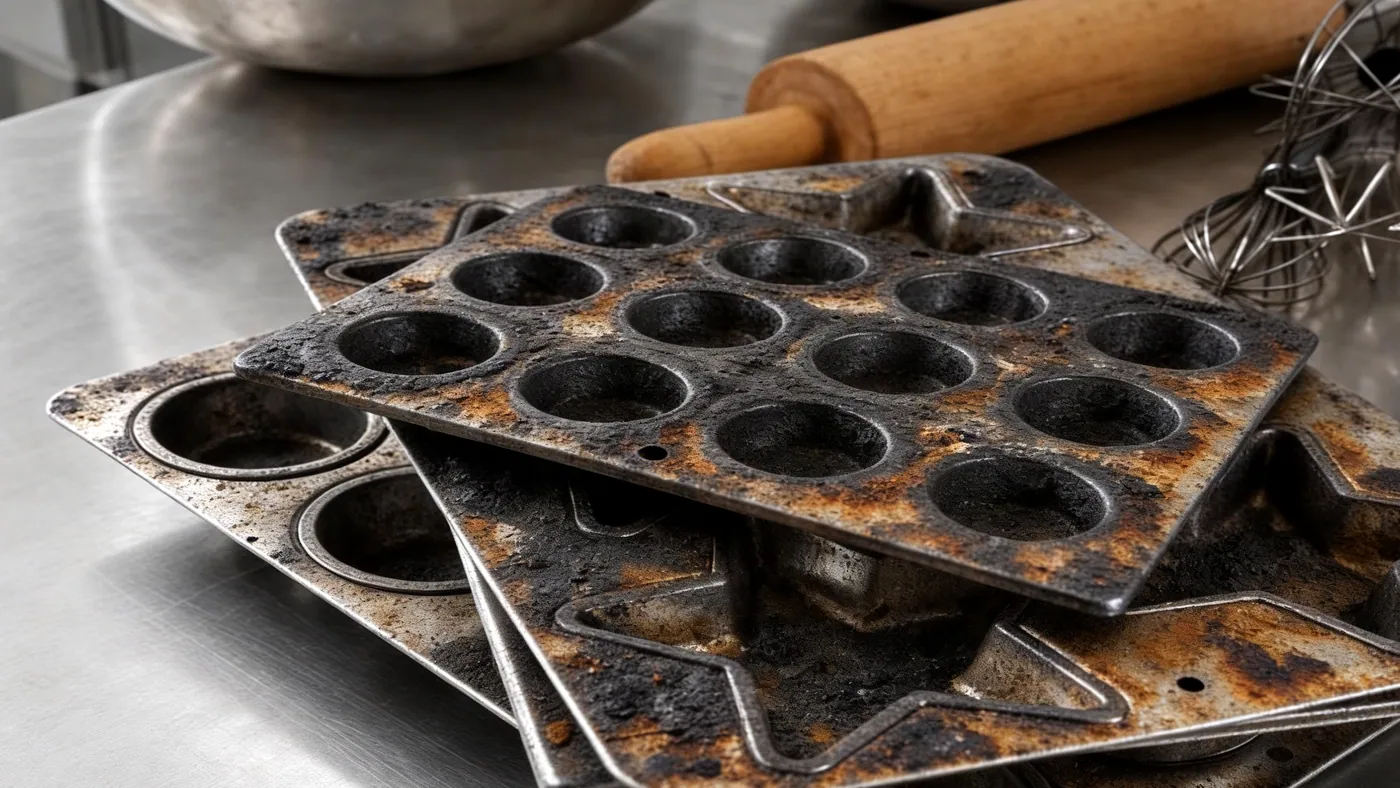
Baked-on fat and release oil polymerise in the oven into a hard, brown to black film. On uncoated steel tins, the traditional method is a heavy-duty alkaline cleaner at 70 to 80 °C with a long soak, and ultrasound shortens it considerably. The limits:
- Coated tins (silicone glaze, PTFE and similar non-stick coatings) must not see strong alkaline cleaners, high temperatures or long cavitation. Clean them gently: mild cleaner, below 60 °C, short cycles at 40 kHz, and follow the coating supplier's instructions. Many coated tins are re-glazed by a specialist rather than cleaned back to bare metal.
- Aluminium trays etch in strong alkali. Use a cleaner rated for aluminium, at moderate temperature.
- Heavy carbon that has built up over months may need several cycles, or a separate soak, before the ultrasonic wash; see removing carbon deposits.
Stack trays in a rack with space between them. Trays nested inside each other shield each other and do not clean.
Keeping the bath working
Bakery soil puts sugar, starch, flour and fat into the bath. Sugar and starch make a warm bath ferment and smell within a day, so the make-up side's bath is changed daily. Fat floats and is skimmed. For tins and trays, the heavy-duty bath lasts longer but collects carbon flakes that a filter should remove; see filtration and bath life.
Which machine
| Work | Set-up |
|---|---|
| Craft bakery or patisserie: nozzles, tips, cutters, small parts | UMX Pro 50L or 62L at 40 kHz, rinse sink |
| Industrial bakery, depositor and divider parts daily | ST-96 to ST-157 at 40 kHz with skimmer, rinse tank, drying rack |
| Baking tins and trays in volume | SF-310 or SF-360 with filtration, or an AL-300 to AL-600 with lift and tray racks for the weight |
A tray rack sets the tank size; measure the largest rack before choosing; see how to size a tank. For chocolate and confectionery moulds, see food processing moulds.