
Parts and contaminants · 3 min read · Updated 2026-09-26
Ultrasonic cleaning of bottling equipment parts
Filling valves, vent tubes, capping and crowning heads, change parts and labeller parts collect sugar, fruit pulp, yeast, beer stone, tartrate and glue. How to clean them at an overhaul or a product change, the chemistry for each beverage soil, and how to keep valve sets and seals in order.
Technical guide. Figures are taken from our own spec tables; for your process we confirm the settings with a cleaning trial.
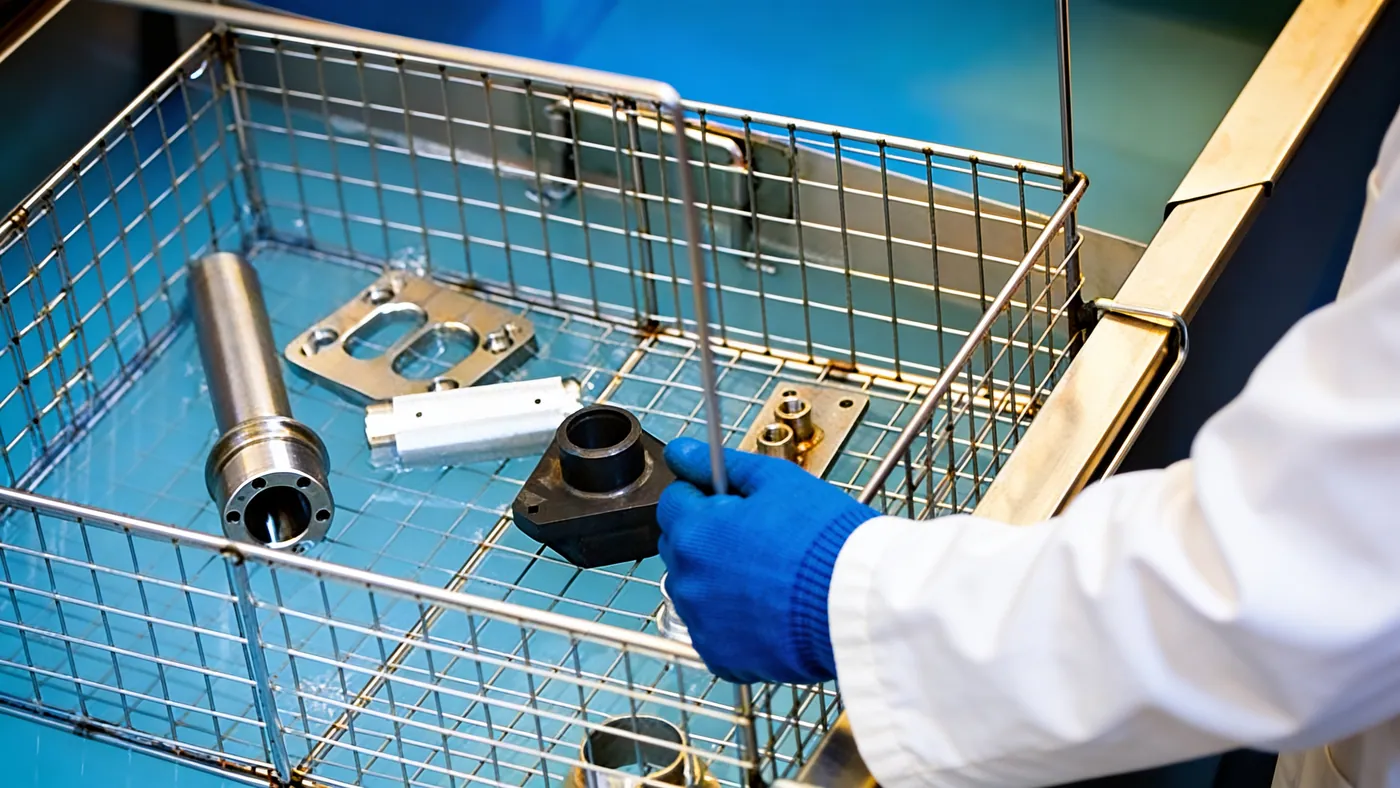
A rotary filler has dozens of filling valves, each with springs, small bores, a vent tube and several seals, and a capper has a head for every station. The filler's CIP cycle cleans the product path while the machine is assembled, but at an overhaul or a hygiene inspection the valves come apart, and then the deposits in the valve bodies, the spring seats and the vent tubes show. Cleaning them by hand is slow and uneven across dozens of valves. An ultrasonic tank cleans a full set of valve parts in one load, the same way every time.
Parts from a bottling line
| Part | Typical soil |
|---|---|
| Filling valves: bodies, stems, springs, vent tubes, centring bells | Sugar, syrup, fruit pulp, yeast, beer stone, wine tartrate |
| Capping, crowning and screw-cap heads | Sugar splash, closure lubricant, cork and plastic dust |
| Change parts: star wheels, infeed screws, guides | Spilled product, broken-glass dust |
| Labeller parts: glue rollers, pallets, grippers | Label glue, paper fibre |
| Rinser and nozzle parts | Mineral scale, product residue |
Chemistry by beverage soil
| Soil | Cleaner | Temperature | Time |
|---|---|---|---|
| Sugar, syrup, soft drinks, juice pulp | Warm water with mild alkaline detergent | 45 to 55 °C | 5 to 10 min |
| Yeast and protein (beer, wine) | Food-safe alkaline cleaner | 50 to 60 °C | 10 to 15 min |
| Beer stone (calcium oxalate) | Acidic cleaner, after the alkaline step | 40 to 50 °C | 10 to 20 min |
| Wine tartrate | Alkaline cleaner dissolves it well | 50 to 60 °C | 10 to 15 min |
| Label glue | Warm water with alkaline detergent; the glue supplier names a suitable cleaner | 50 to 60 °C | 10 to 15 min |
| Water scale on rinser nozzles | Acidic descaler | 40 to 50 °C | 10 min |
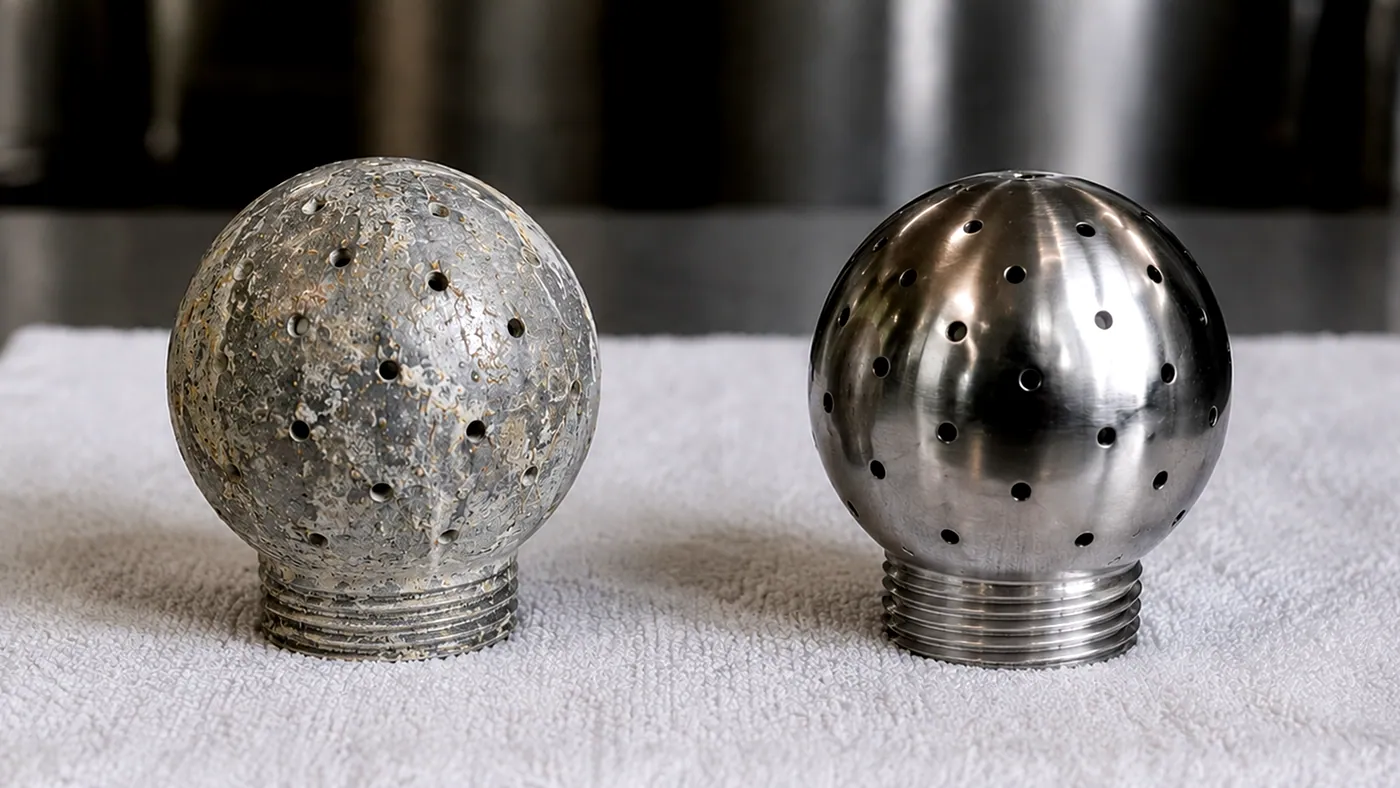
40 kHz suits filling valve parts: small bores, springs and fine threads. Acid steps run in a separate tank or insert, not directly in a 304 tank if the chemistry contains chlorides; see tank material.
Handling valve sets
A filler has many identical valves, but their parts are not always interchangeable after years of wear, and an overhaul records each valve's condition.
- One basket position per valve, or one small basket per valve, labelled with the valve number.
- Seals and O-rings out before the wash; they are replaced at the overhaul.
- Springs and vent tubes stand upright or lie in a fine-mesh basket so the liquid flows through them.
- Rinse, disinfect as required, dry and reassemble valve by valve, with food-grade lubricant where the maker specifies it.
See loading the basket.
Keeping the bath working
Sugar and yeast make a warm bath ferment within a day, so beverage baths are changed daily in use. A filter loop catches pulp, yeast flakes and glass dust; glass dust in particular should not circulate back onto sealing surfaces. See filtration and bath life.
Which machine
| Work | Set-up |
|---|---|
| Small winery, craft brewery or juice producer | UMX Pro 50L or 62L at 40 kHz, separate acid insert, rinse sink |
| Filler overhaul, full valve sets | ST-157 to ST-300 at 40 kHz with baskets per valve, rinse tank, drying |
| Change parts and large capper heads in volume | SF-225 to SF-360 with filtration, or an AL system with lift |
For general packaging-line parts such as dosing pistons, forming sets and sealing jaws, see packaging equipment. For the hygiene rules around stainless food contact parts, see stainless food contact parts.