
Parts and contaminants · 3 min read · Updated 2026-09-26
Cleaning food industry filters with ultrasound
Sieves, strainers, sifter screens, fryer filters, filter candles and centrifuge screens clog with fat, protein, pulp, starch and carbonised oil. Which food filters can be cleaned and reused, the chemistry for each soil, why the reverse flush matters, and the hygiene steps before a filter goes back into the line.
Technical guide. Figures are taken from our own spec tables; for your process we confirm the settings with a cleaning trial.
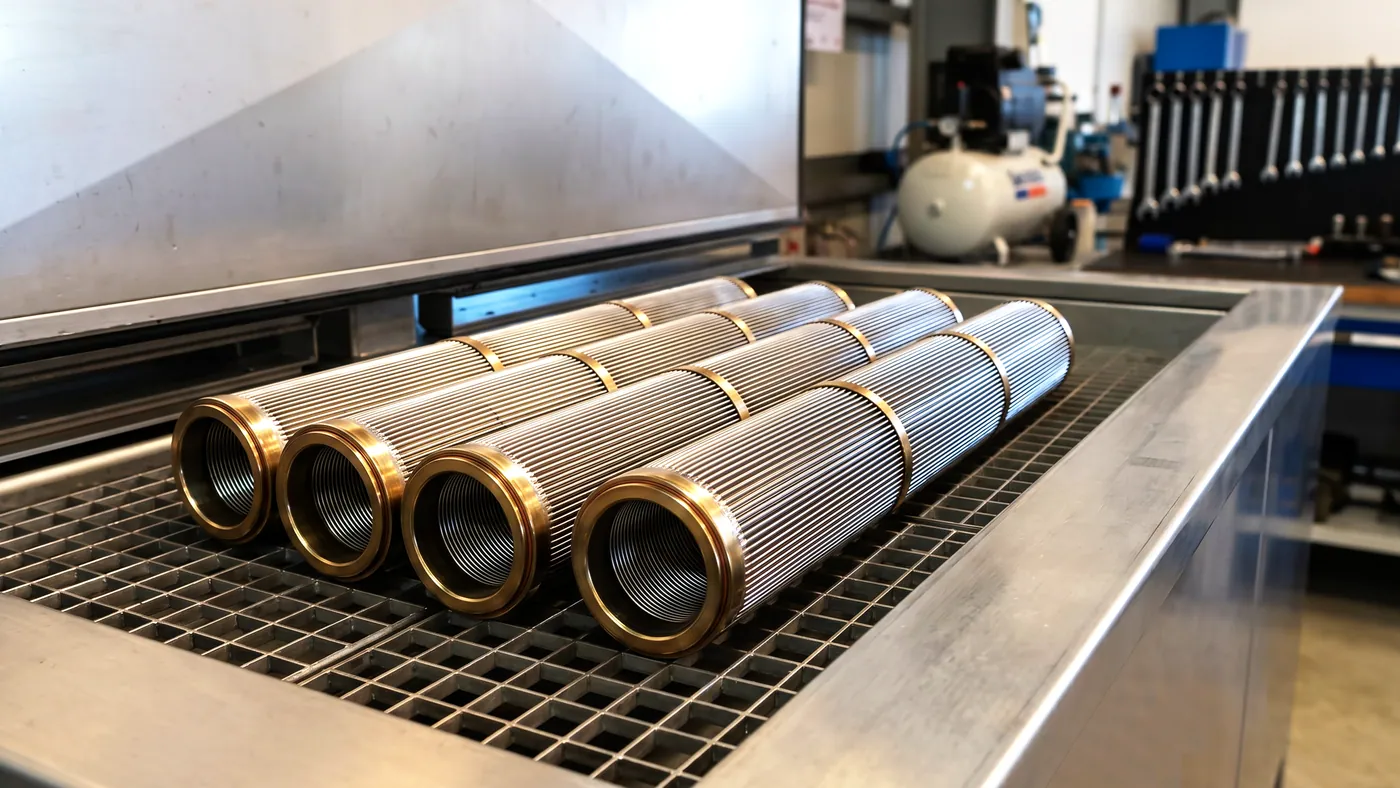
Filters are everywhere in a food plant: line strainers in front of pumps and fillers, sifter screens in flour and sugar handling, fryer oil filters, wedge-wire screens on juice and starch lines, candle filters in breweries and edible-oil refining, centrifuge screens and basket strainers. Stainless filters are built to be reused, but only if the soil comes out of the whole depth of the mesh. A filter that is clean on the outside and blocked inside clogs again within hours and holds soil that bacteria live on. Ultrasonic cleaning reaches into the mesh, which is why it is the common method for cleaning reusable food filters.
Which filters
| Filter | Soil | Cleaned and reused? |
|---|---|---|
| Stainless line strainers and basket strainers | Product particles, fat, protein | Yes |
| Sifter and sieve screens (flour, sugar, powders) | Caked powder, dough | Yes, gently: fine meshes are thin |
| Fryer oil filter screens | Carbonised oil, crumbs | Yes, with heavy-duty chemistry |
| Wedge-wire screens (juice, starch, sugar) | Pulp, starch, fibres | Yes |
| Brewery and edible-oil candle filters (stainless) | Filter aid, yeast, protein, oil | Yes, as the filter maker specifies |
| Paper, cellulose and single-use cartridges | Anything | No: replace |
For the general method, the reverse flush and the integrity tests that apply to any metal filter, see industrial filters for reuse.
Chemistry by soil
| Soil | Cleaner | Temperature | Time |
|---|---|---|---|
| Protein (meat, dairy, egg) | Food-safe enzymatic or mild alkaline | 35 to 45 °C | 10 to 20 min |
| Fat and oil | Food-safe alkaline | 50 to 60 °C | 10 to 20 min |
| Carbonised frying oil | Heavy-duty food-safe alkaline, longer soak | 60 to 75 °C | 20 to 40 min, repeated if needed |
| Starch, dough, sugar, pulp | Warm water with detergent; enzymatic for starch | 45 to 55 °C | 10 to 15 min |
| Mineral scale, beer stone | Acidic cleaner after the alkaline step, in an insert or 316 tank | 40 to 50 °C | 10 to 15 min |
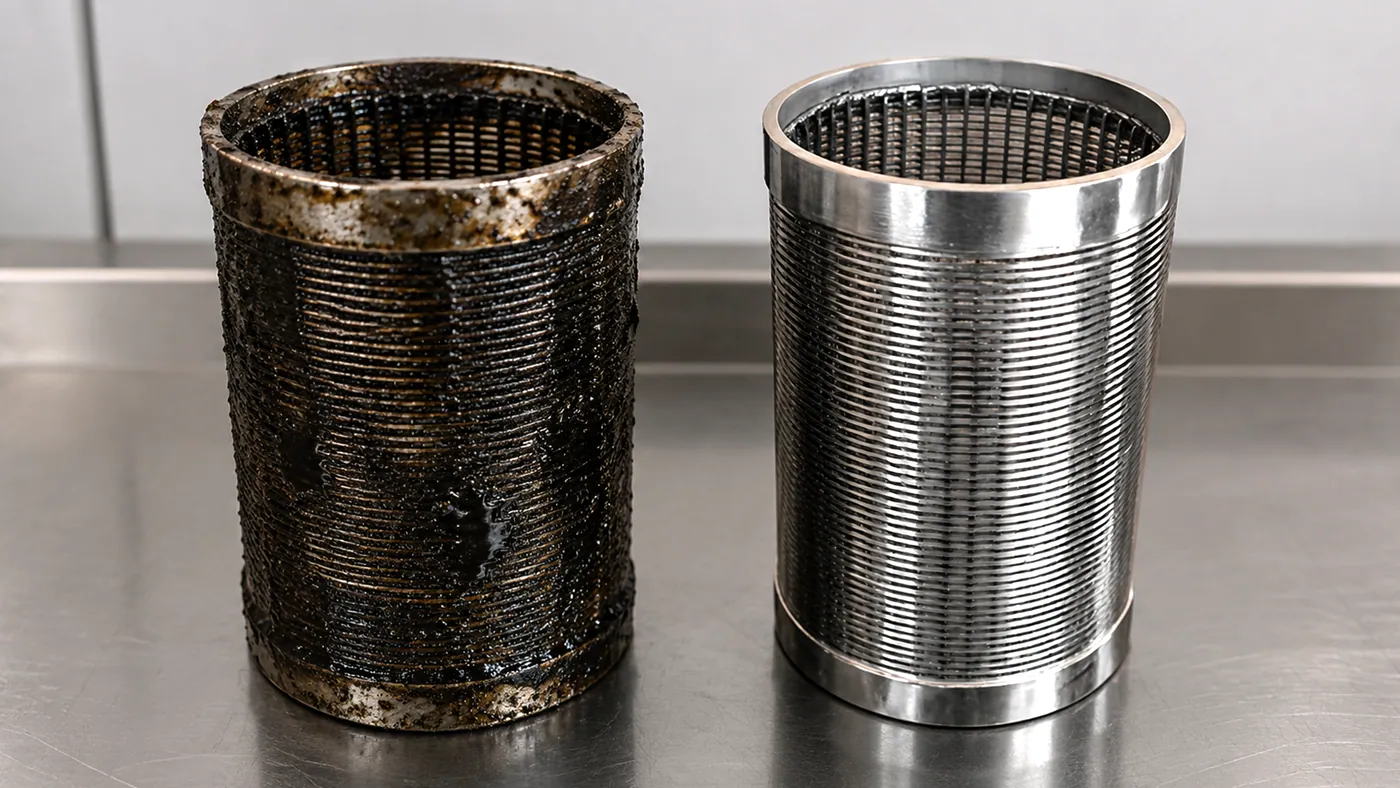
40 kHz suits most food filters, especially fine sifter meshes; 28 kHz helps on heavy strainers and fryer screens with thick carbon. Fine screens should not stay in a strong bath longer than needed.
The sequence
- Knock out or rinse the loose cake over a drain.
- Ultrasonic wash with the chemistry for the soil, filters upright and apart so both faces meet the liquid.
- Reverse flush with clean water from the clean side outwards. The ultrasound loosens the soil in the mesh; the reverse flow carries it out.
- Repeat wash and flush for fine or heavily loaded filters.
- Rinse in potable water, disinfect by the plant's method, and dry before storage or reinstallation.
- Inspect the mesh and seams for holes and tears under good light; a torn sifter screen lets foreign material through and is replaced.
Keeping the bath working
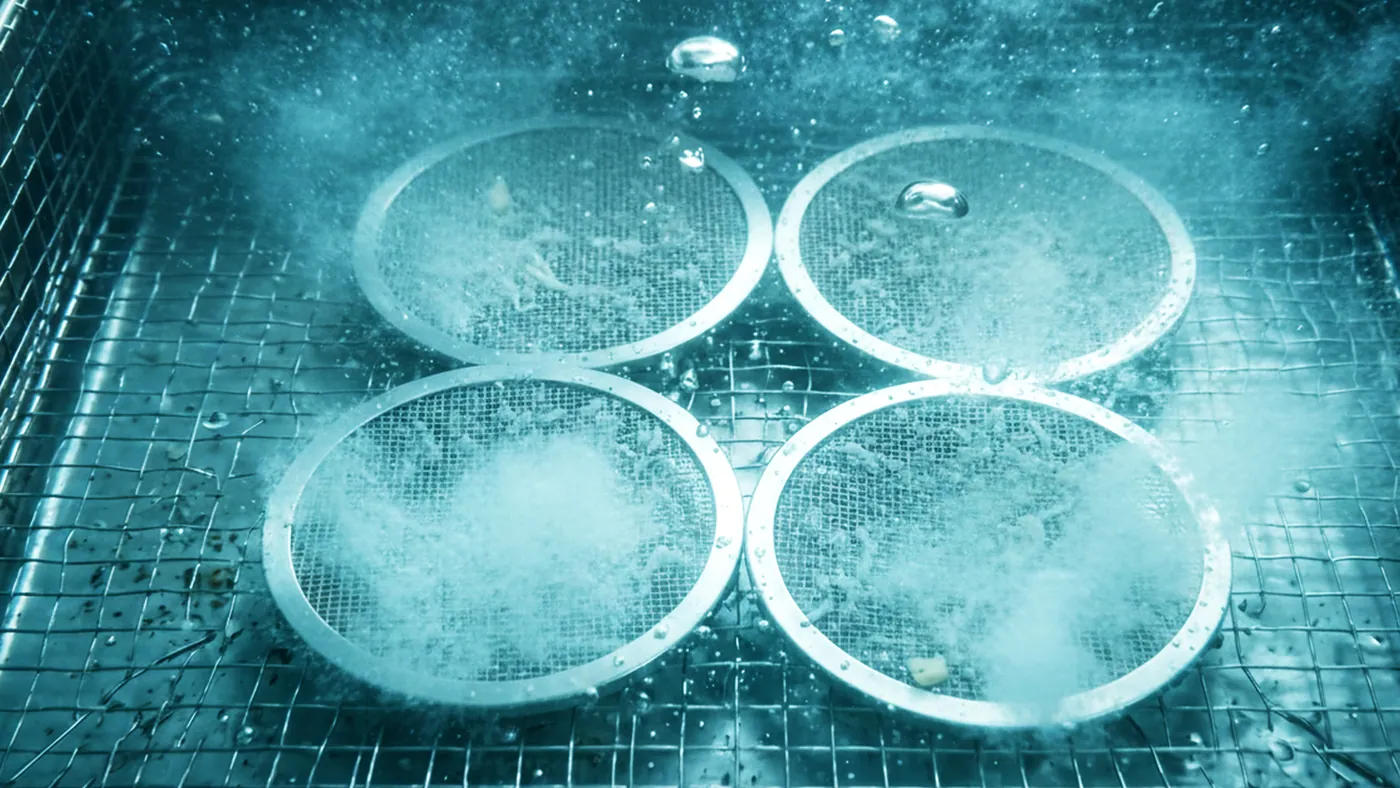
The filter bath collects everything the filters caught, so it loads faster than any other cleaning bath in the plant. Its own filtration loop and a skimmer for fat and oil decide whether the next filter comes out clean; see ST or SF. Change the bath daily when it takes protein or sugar, which ferment in a warm bath.
Which machine
| Work | Set-up |
|---|---|
| Strainers and small screens from a few lines | UMX Pro 50L or 62L, or ST-40 to ST-65, at 40 kHz, with a reverse-flush point |
| Filters from the whole plant, daily | SF-225 or SF-310 with filtration and skimmer, rinse tank |
| Candle filters and large screens | AL system with lift, or a custom tank sized to the candle length |
The food industry overview covers the tank materials and hygiene rules for food plants.