
Parts and contaminants · 3 min read · Updated 2026-09-26
Cleaning dairy equipment with ultrasonic systems
Separator discs, homogeniser valves, pasteuriser plates, filling nozzles and cheese moulds carry milk fat, protein and milk stone that cleaning in place does not always remove. The two-step alkaline and acid wash, the temperatures for raw and heat-treated milk soil, and the dairy parts worth taking out for an ultrasonic tank.
Technical guide. Figures are taken from our own spec tables; for your process we confirm the settings with a cleaning trial.
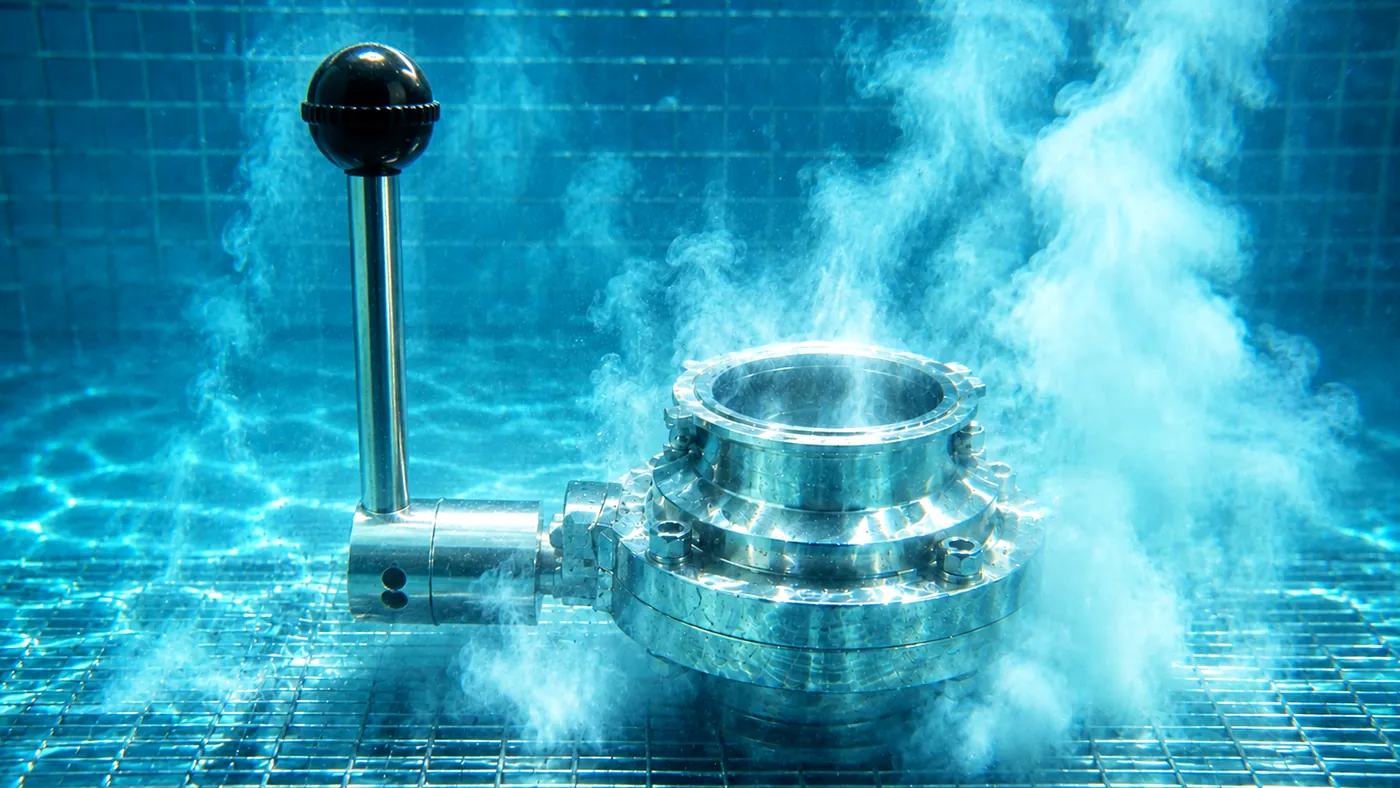
Dairies clean more thoroughly than almost any other food plant, and most of it is automatic: cleaning in place (CIP) with alkaline and acid circuits after every run. CIP is designed for closed pipework and tanks. It is weaker on parts with complex geometry, on heavily fouled heat-treatment sections, and on the removable parts that are taken out at overhauls. Those parts go into an ultrasonic tank, with the same two chemistries the CIP uses.
Two soils, two steps
Milk leaves two kinds of deposit:
- Organic soil: milk fat and protein. On raw-milk equipment it is soft; on heat-treated surfaces, such as the heating section of a pasteuriser, the protein is denatured and baked on.
- Milk stone: mainly calcium phosphate with protein bound into it, forming a grey to white film on hot surfaces and where water has evaporated.
Each needs its own chemistry, in this order:
| Step | Removes | Cleaner | Temperature | Time |
|---|---|---|---|---|
| 1. Pre-rinse | Loose milk | Lukewarm water, not hot | 30 to 40 °C | until clear |
| 2. Alkaline wash | Fat, protein | Food-safe alkaline dairy cleaner | Raw-milk parts 45 to 55 °C; heat-treated deposits 60 to 70 °C | 10 to 20 min |
| 3. Rinse | Alkaline cleaner | Potable water | warm | 3 to 5 min |
| 4. Acid wash | Milk stone | Phosphoric or nitric acid based dairy cleaner | 50 to 60 °C | 10 to 15 min |
| 5. Final rinse | Acid | Potable water | warm | 3 to 5 min |
Then disinfect by the dairy's validated method, and dry or reassemble.
Alkaline comes first because acid cannot reach mineral scale covered by fat and protein. The acid step does not go directly into a 304 stainless tank if its chemistry contains chlorides; use a separate acid tank or an insert, or specify the tank in 316. See tank material.
The temperature advice differs from other food soils on purpose. Raw milk protein bakes on above about 45 °C, so raw-milk equipment starts cool. Deposits from heat treatment are already baked on, and they need a hotter alkaline wash to come off.
Dairy parts for the ultrasonic tank
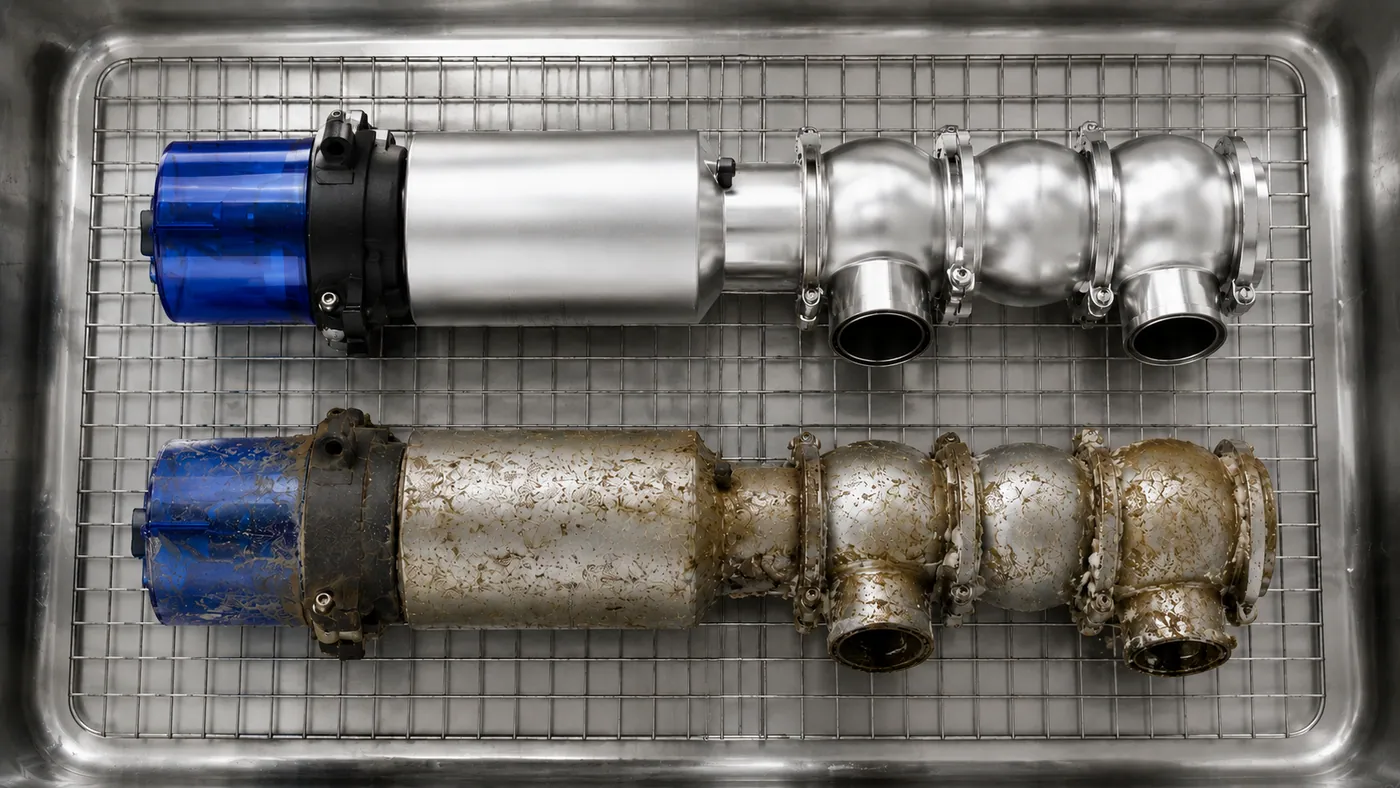
| Part | Why it comes out | Notes |
|---|---|---|
| Separator and clarifier disc stacks | Hundreds of conical discs with narrow gaps; heavy sludge at overhauls | Discs in a rack, spaced apart, never as a closed stack |
| Homogeniser valves, seats and impact rings | Fine gaps with protein and milk stone | 40 kHz, matched parts kept together |
| Pasteuriser and cooler plates | Burnt-on protein and milk stone in the heating section | Two-step wash; see heat exchangers |
| Filling nozzles and valves | Milk, yoghurt, cream in bores | 40 kHz, small parts basket |
| Cheese moulds and presses | Curd, whey protein, fat in perforations | See food moulds |
| Pump rotors, valve internals, fittings | Seal grooves, threads | See stainless food contact parts |
Rubber and elastomer parts, such as gaskets, liners and diaphragms, are cleaned separately at low temperature or replaced; hot alkaline and acid shorten their life.
Keeping the baths working
A dairy wash bath takes up fat quickly. A skimmer removes the fat that separates when the bath rests, and a filter loop keeps protein flakes and loosened milk stone off the tank floor. The acid bath lasts longer but is checked by titration. Both are logged with the cleaning record; see filtration and bath life.
Which machine
| Work | Set-up |
|---|---|
| Farm dairy or small cheese maker: small parts, nozzles, valves | UMX Pro 50L or 62L, separate acid step in an insert, rinse sink |
| Dairy plant, parts from several lines, homogeniser and filler parts | Two ST-96 to ST-157 tanks, alkaline and acid, with a rinse between them |
| Separator overhauls, pasteuriser plates | SF-225 to SF-360 with filtration for the alkaline step, a 316 acid tank, or an AL system with lift and plate racks |
Checking the result
After cleaning and before disinfection: visual inspection for the blue-grey sheen of milk stone, and ATP swabs on sample parts. On plates and discs, milk stone shows best on a dry surface under raking light.