
Parts and contaminants · 3 min read · Updated 2026-09-26
Ultrasonic cleaning of brake calipers for reuse
Brake dust, road grime, old fluid and surface rust come off a stripped caliper in one cycle, without dry brushing or blasting the bores. What is removed before the bath, the settings for cast-iron and aluminium calipers, and the steps between the bath and a caliper that is safe to refit.
Technical guide. Figures are taken from our own spec tables; for your process we confirm the settings with a cleaning trial.
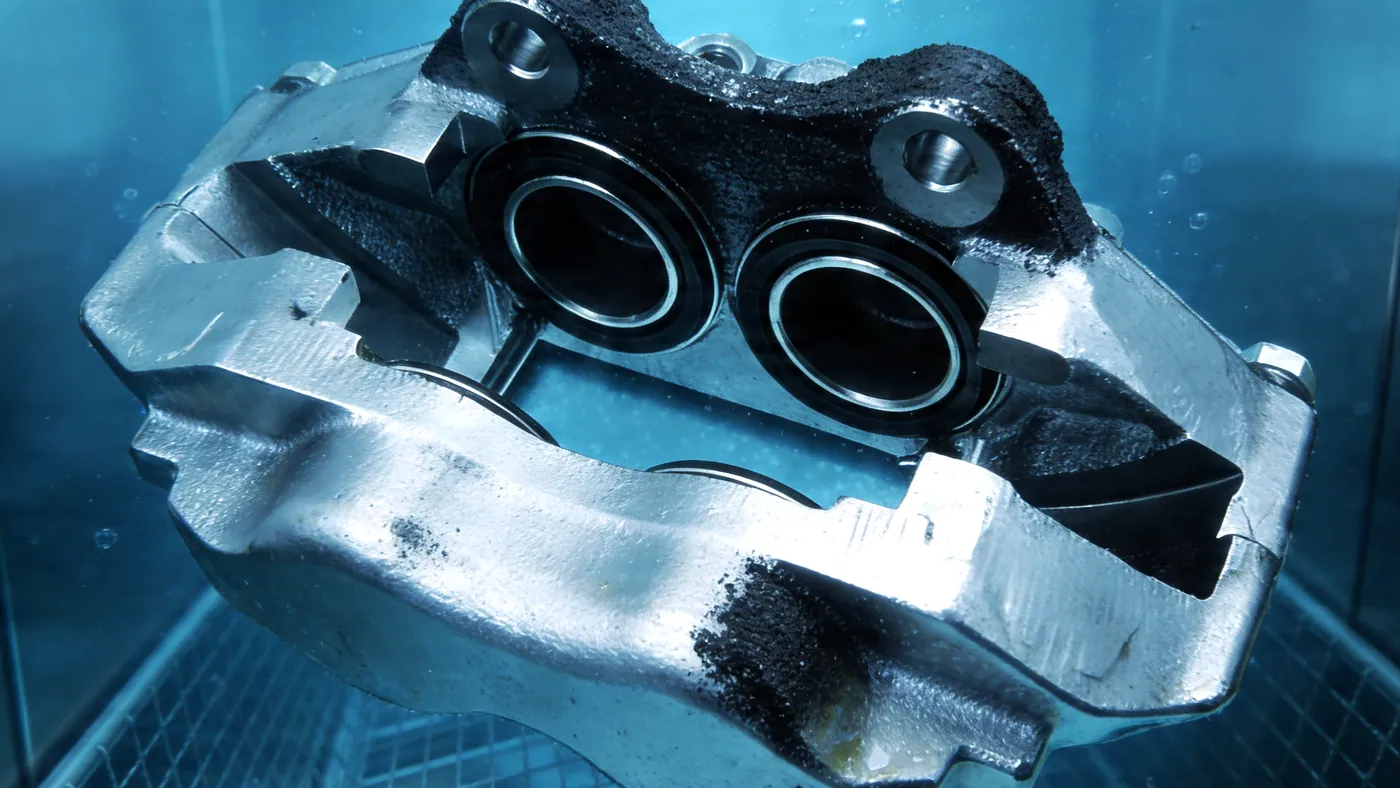
Caliper remanufacturing is one of the oldest jobs for ultrasonic cleaning in the motor trade. A caliper off a car carries a compacted layer of brake dust, road grime and old fluid, with rust on every cast-iron face. The bores and seal grooves must come out clean enough to inspect and hone, and the outside clean enough to paint or plate. Brushing does the outside badly and the grooves not at all; blasting cleans the outside and ruins the bore.
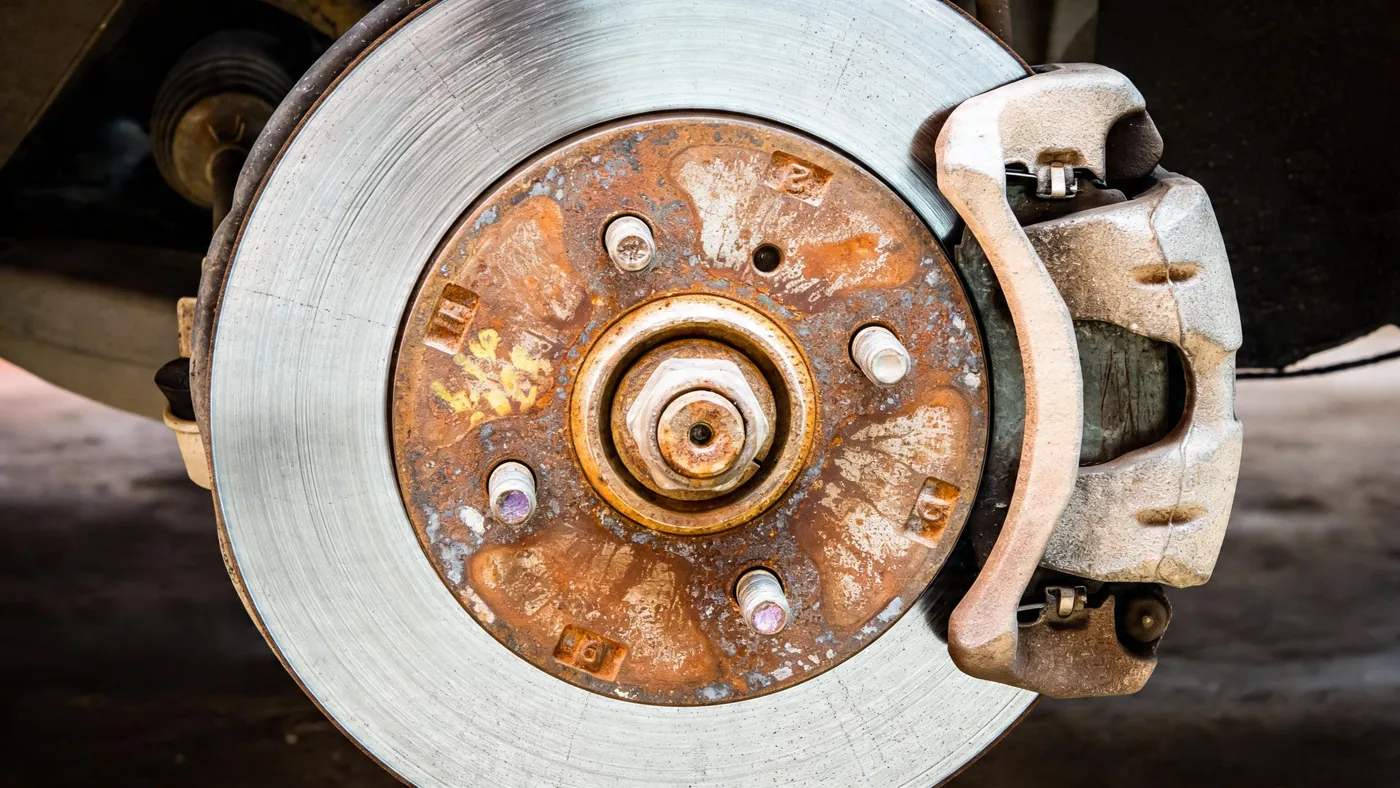
Strip completely
Everything rubber and everything that wears is replaced, so it comes off before the bath:
- Pistons out, with low-pressure air and a block of wood, not with fingers in the way.
- Seals and dust boots out of the grooves; slide-pin boots off.
- Bleed screw and banjo bolt out; bleed screws are often replaced.
- Slide pins and brackets separated; pins are cleaned or replaced, their bores cleaned.
- Pads, shims and clips are not cleaned; they are replaced.
Wet cleaning has one more advantage here: brake dust is handled wet from start to finish instead of being brushed into the air of the workshop.
The bath
| Caliper | Liquid | Temperature | Frequency | Time |
|---|---|---|---|---|
| Cast iron (most calipers) | alkaline cleaner with inhibitor | 60 to 65 °C | 28 kHz | 10 to 20 min |
| Aluminium (many performance and newer calipers) | light-alloy cleaner | 50 to 60 °C | 28 or 40 kHz | 10 to 15 min |
| Steel and chromed pistons, if reused | mild alkaline cleaner | 50 °C | 40 kHz | 5 to 10 min |
Brake dust and grime come off readily. Old brake fluid, which is glycol-based and water-soluble, rinses away with them. Rust is a different matter: the bath loosens flaking rust, but rust bonded to the iron needs a derusting chemistry afterwards, in a separate container or insert; see rust and scale. Phenolic pistons are best cleaned by hand; they are cheap to replace if in doubt.
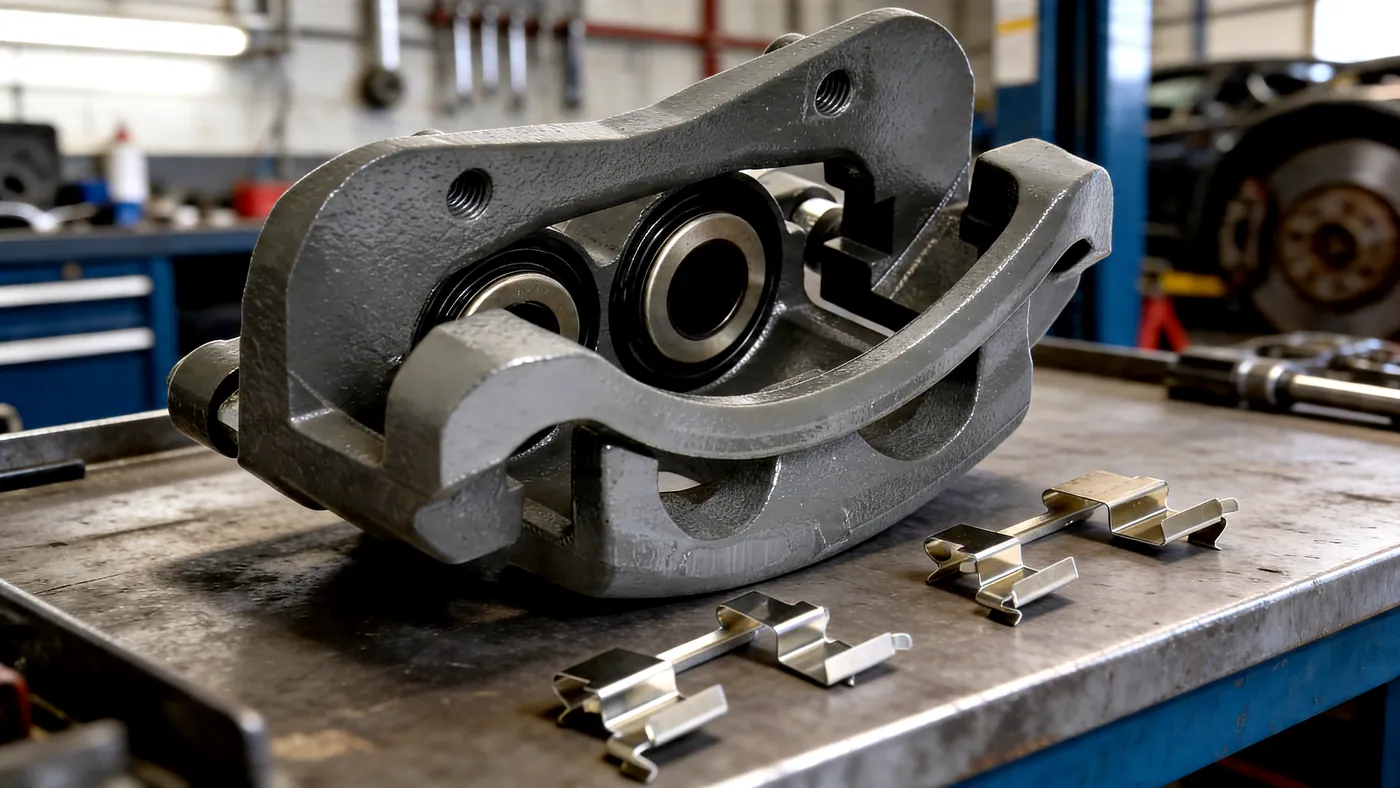
After the bath
- Rinse in clean warm water. Any cleaner or dissolved brake fluid left in the fluid passages or the bleed port contaminates the new fluid.
- Blow through the fluid passages and bleed port with compressed air.
- Dry at once in hot air; bare cast iron flash-rusts within the hour.
- Inspect the bore: pitting in the sealing area means the caliper is scrap or needs a sleeve, however clean it is.
- Hone lightly if the maker allows it, then clean again to remove the honing grit.
- Coat or plate the outside, masking the bore and grooves, then assemble with new seals, boots and bleed screw using brake-fluid-compatible assembly lubricant.
Which machine
| Work | Machine |
|---|---|
| Workshop, occasional calipers | ST-40 or ST-65, 28 kHz, basket with dividers |
| Caliper remanufacturer, daily batches | SF-225 or SF-310 with filtration and skimmer, rinse tank, DT dryer |
| Remanufacturing line with coating | MT multi-tank line with wash, rinse, rinse and dry, or an AL tank for the wash with separate rinse and dry stations; then the coating line |
Brake dust loads a bath with fine iron oxide and carbon. A filtration loop keeps it from settling in the next batch's bores; see ST or SF.
A word on safety
A caliper is a safety part. Cleaning makes it possible to see whether it can be reused; it does not make a pitted bore, a cracked body or a seized slide bore serviceable. The inspection after cleaning decides, and the rebuilt caliper is pressure-tested before it leaves.