

Topics
Articles about: 40 kHz
31 articles
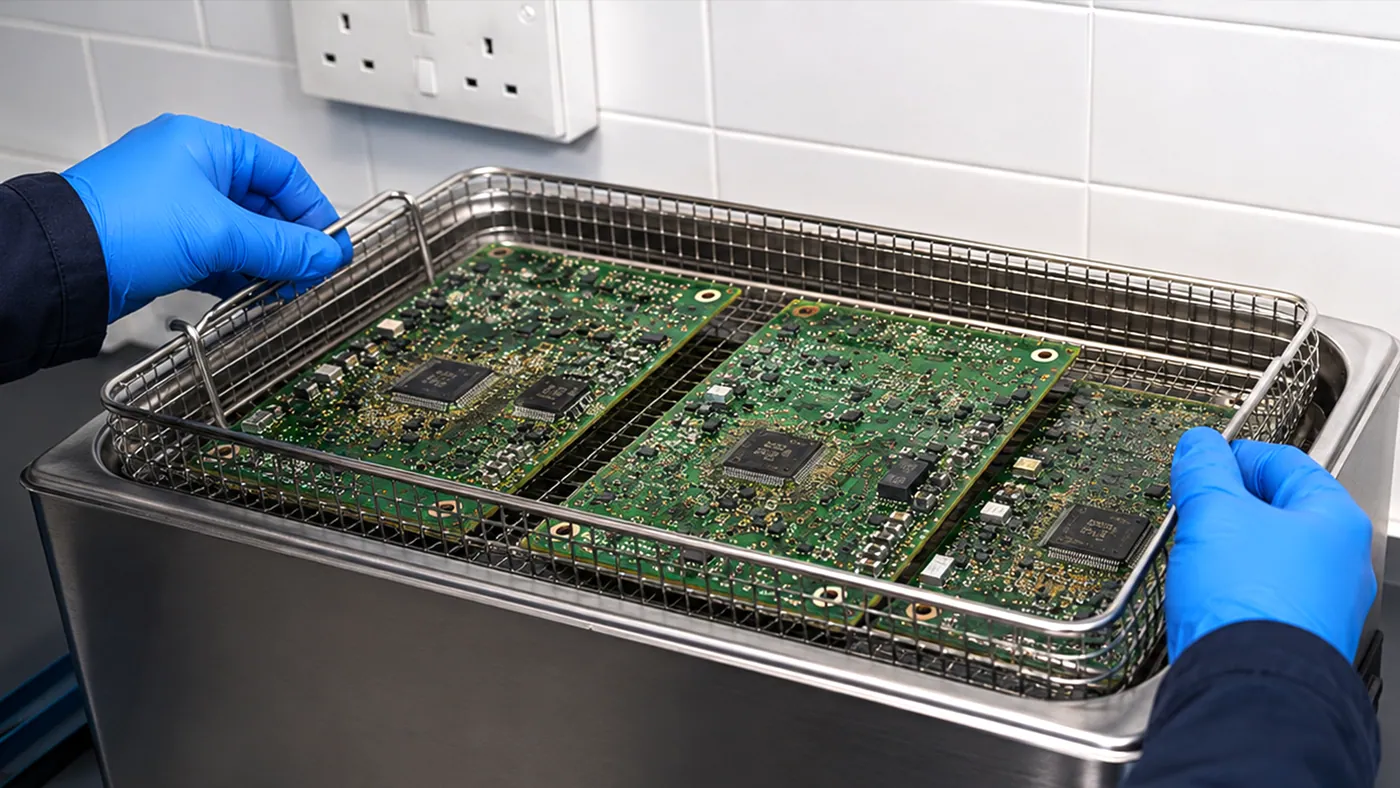 Parts and contaminants · 5 min readUltrasonic cleaning of circuit boards after solderingWash, deionised rinse, dry, test, coat: the full cleaning process for assembled boards after reflow, wave and hand soldering, and how to prove it worked.
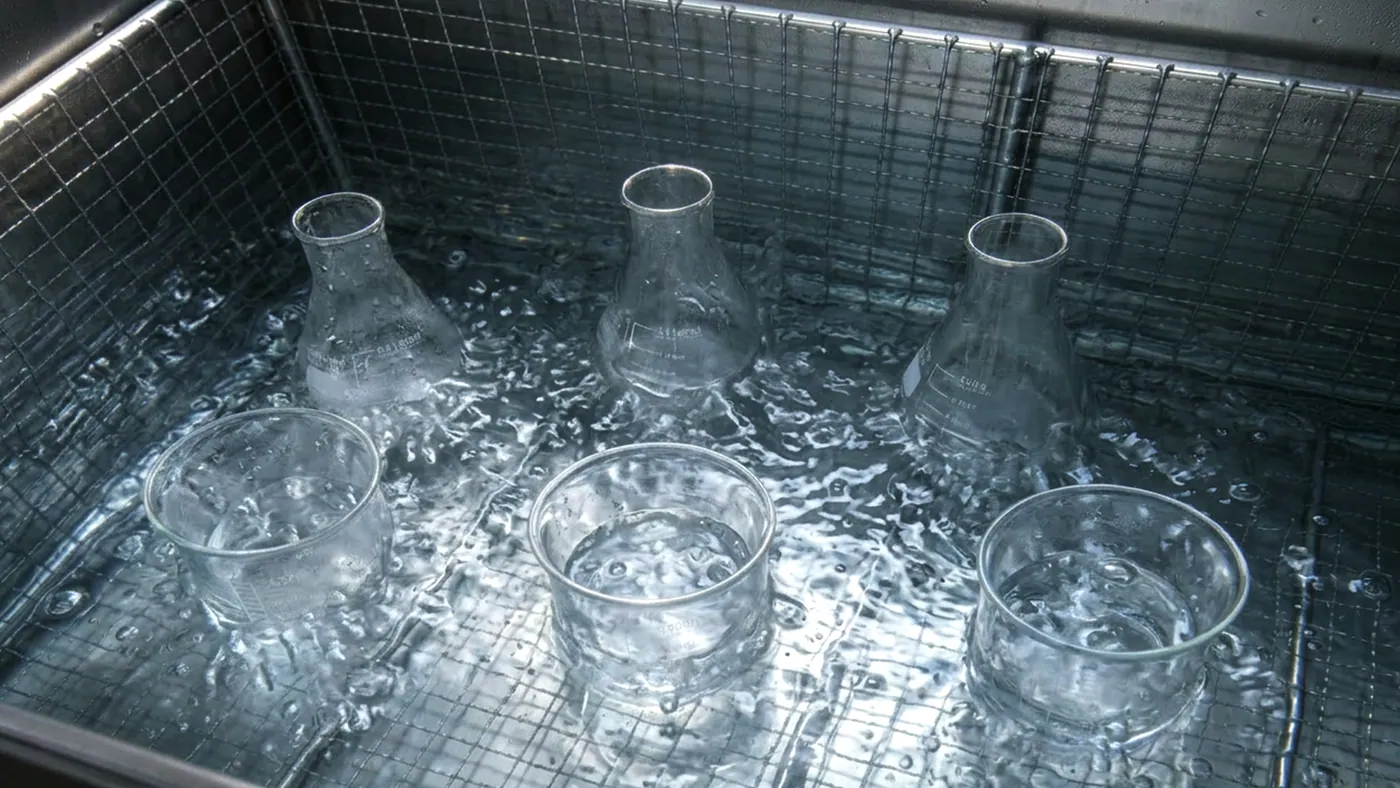 Parts and contaminants · 4 min readUltrasonic cleaning of laboratory glasswareThe detergents, temperatures and rinses that get beakers, flasks, pipettes and sieves clean enough for the next analysis, and the care volumetric glass needs.
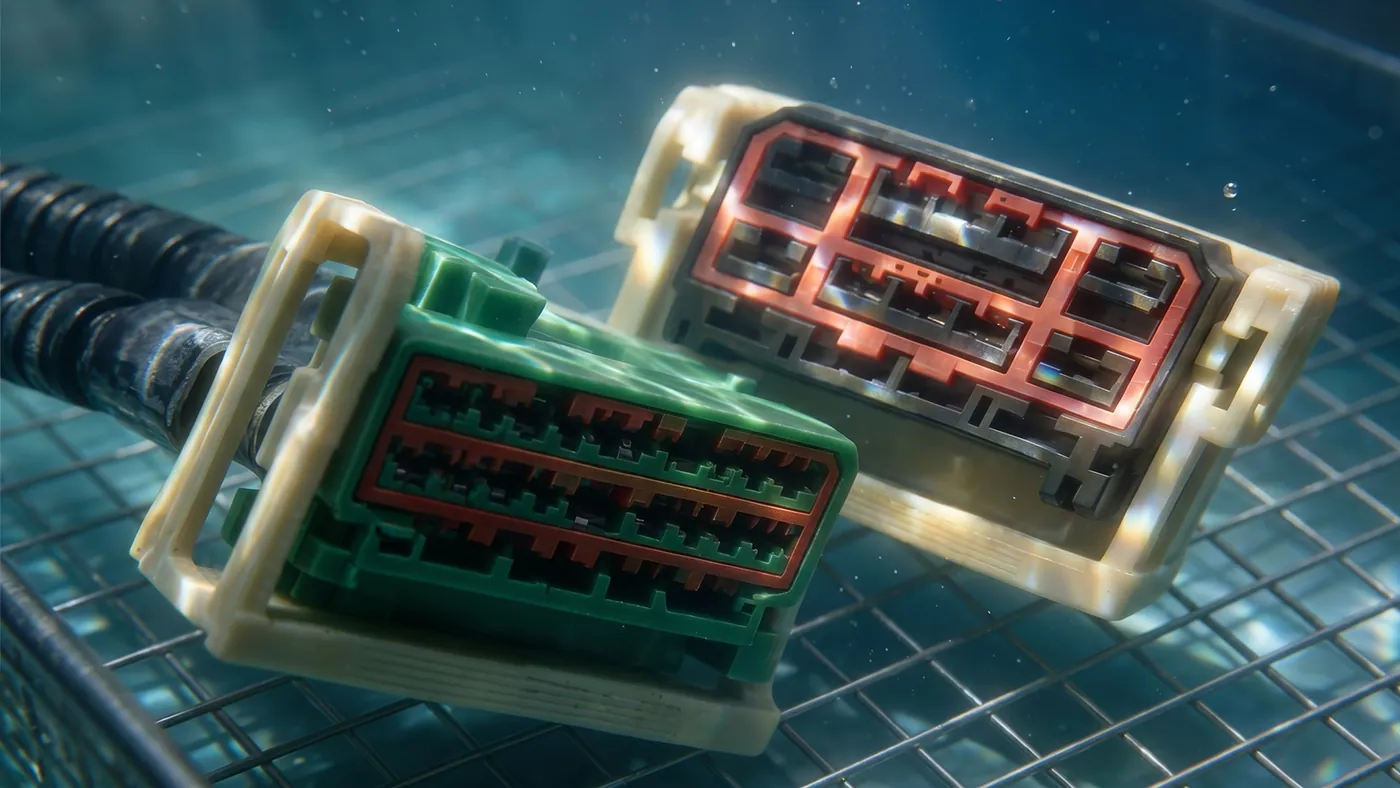 Parts and contaminants · 5 min readUltrasonic cleaning of electronic connectors for reliable contactOxide, flux, dust and old lubricant raise contact resistance. How to clean connectors, pins and charging ports without harming gold, silver or tin plating.
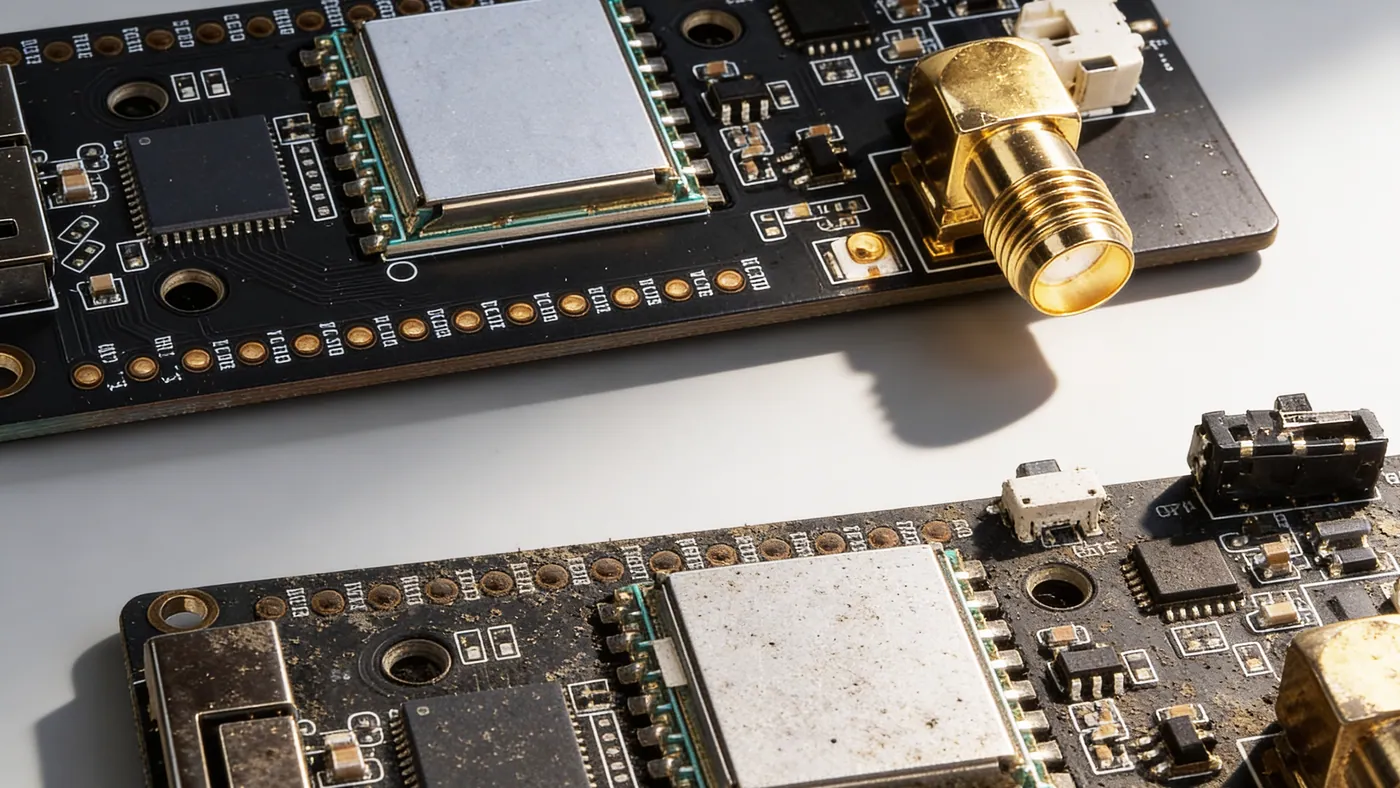 Parts and contaminants · 4 min readUltrasonic cleaning of communication equipment componentsRF housings, cavity filters, waveguides and antenna parts, often plated aluminium: gentle chemistry, no etching, no loose particles, and dry cavities.
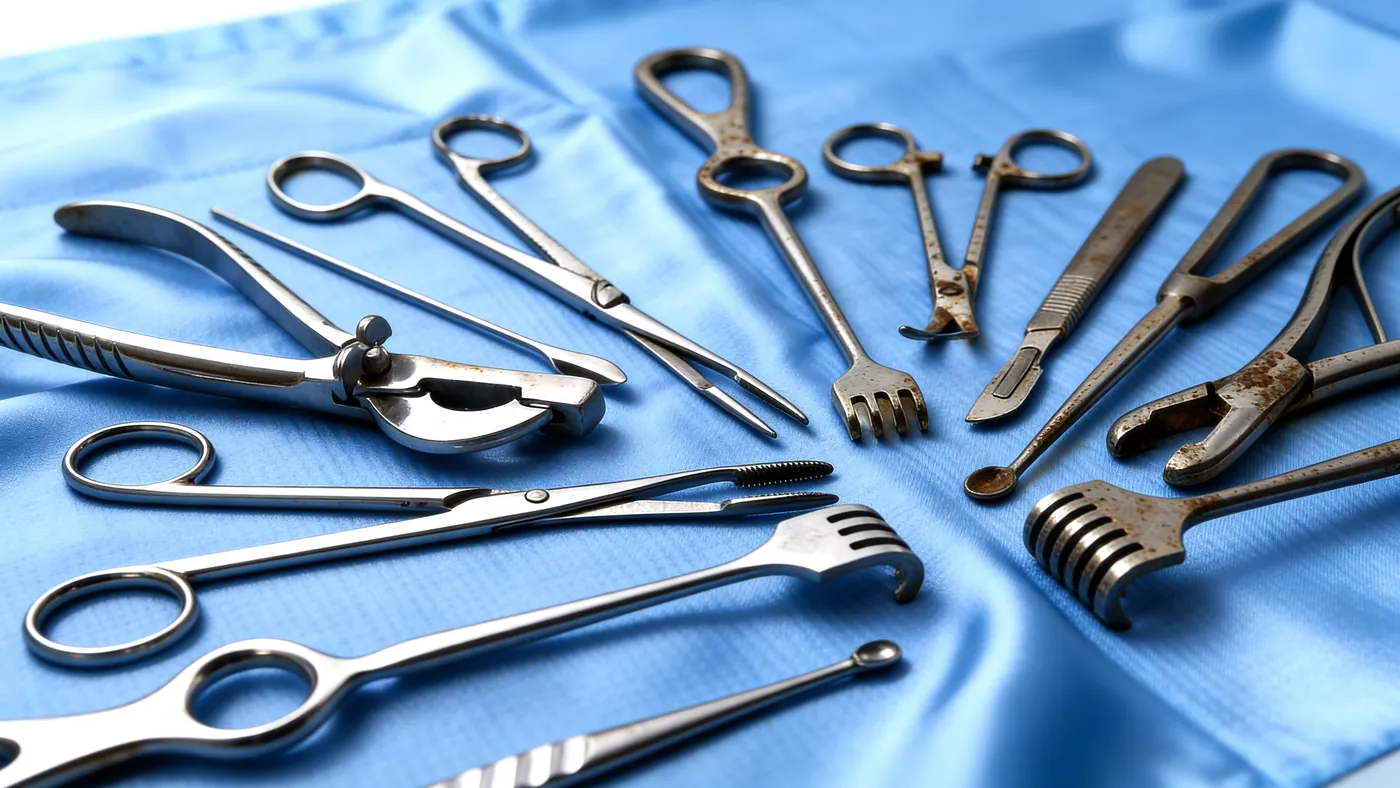 Parts and contaminants · 4 min readUltrasonic cleaning of veterinary surgical instrumentsBlood, hair and bone dust in box locks and serrations: how a veterinary practice cleans instruments before sterilisation, and the machines that fit.
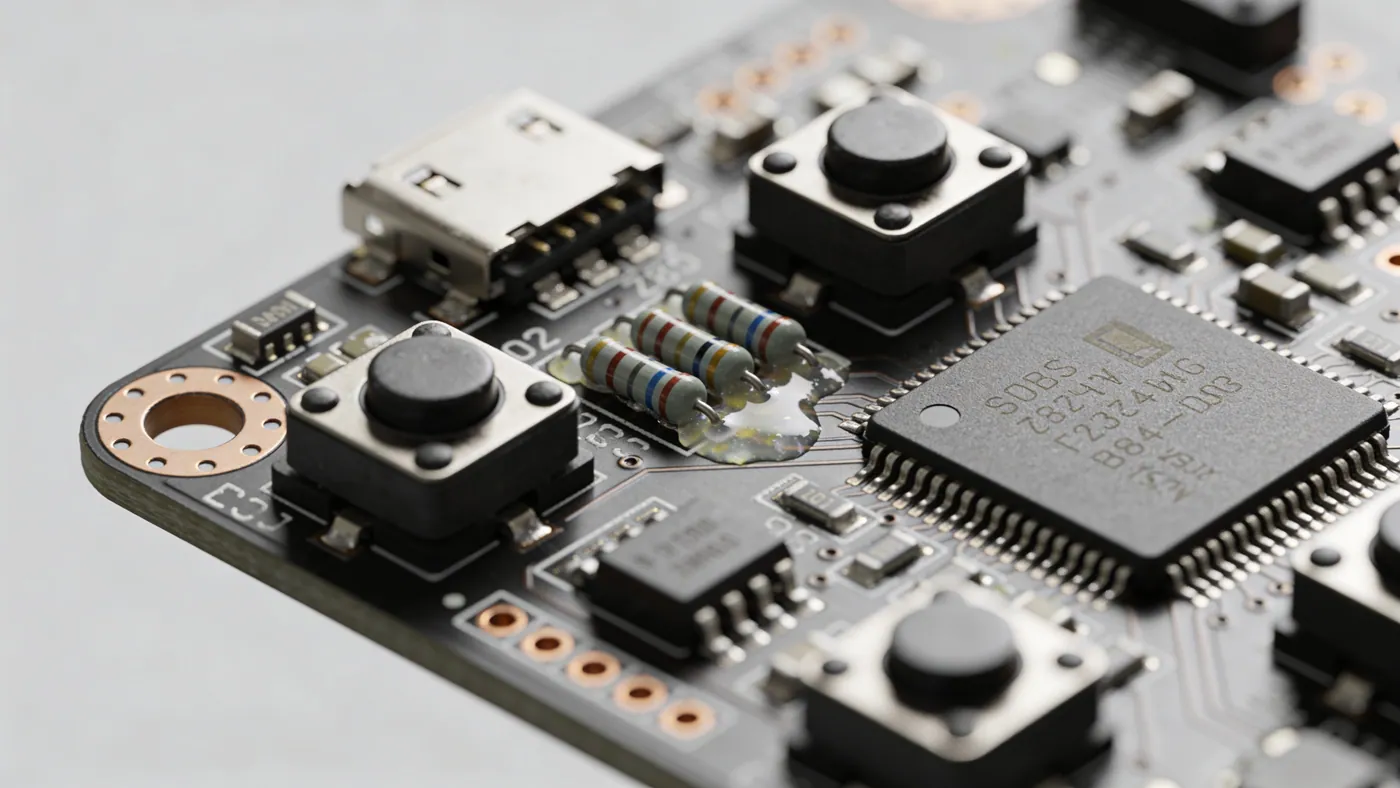 Parts and contaminants · 4 min readCleaning sensors and microelectronic parts with ultrasoundSensor housings, probes, optical windows and sensor elements before assembly: what ultrasound cleans well, and which sensor types must never go into the bath.
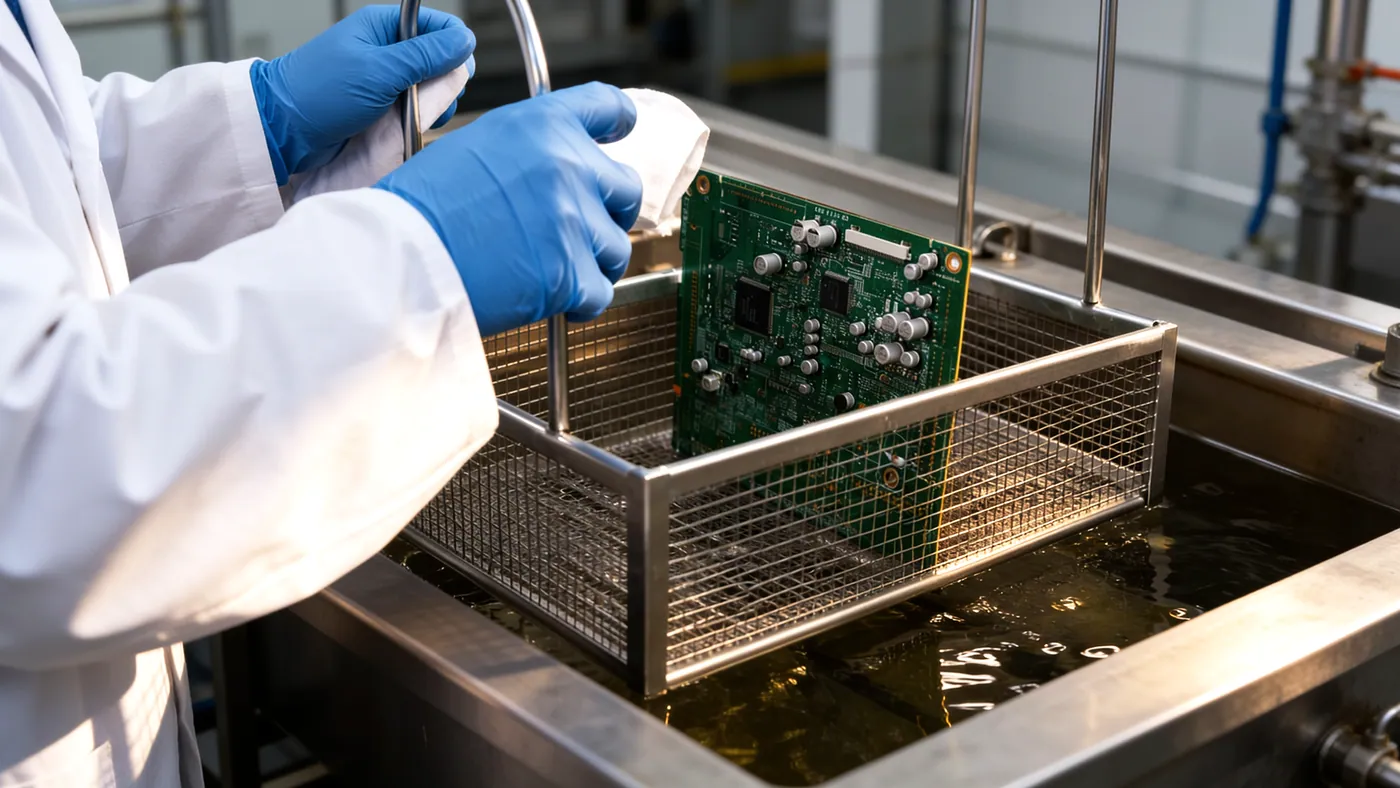 Parts and contaminants · 4 min readCleaning precision electronics without damageWhich electronic components tolerate ultrasound and which do not, and how frequency, power, time, support and a sample test keep a cleaning process safe.
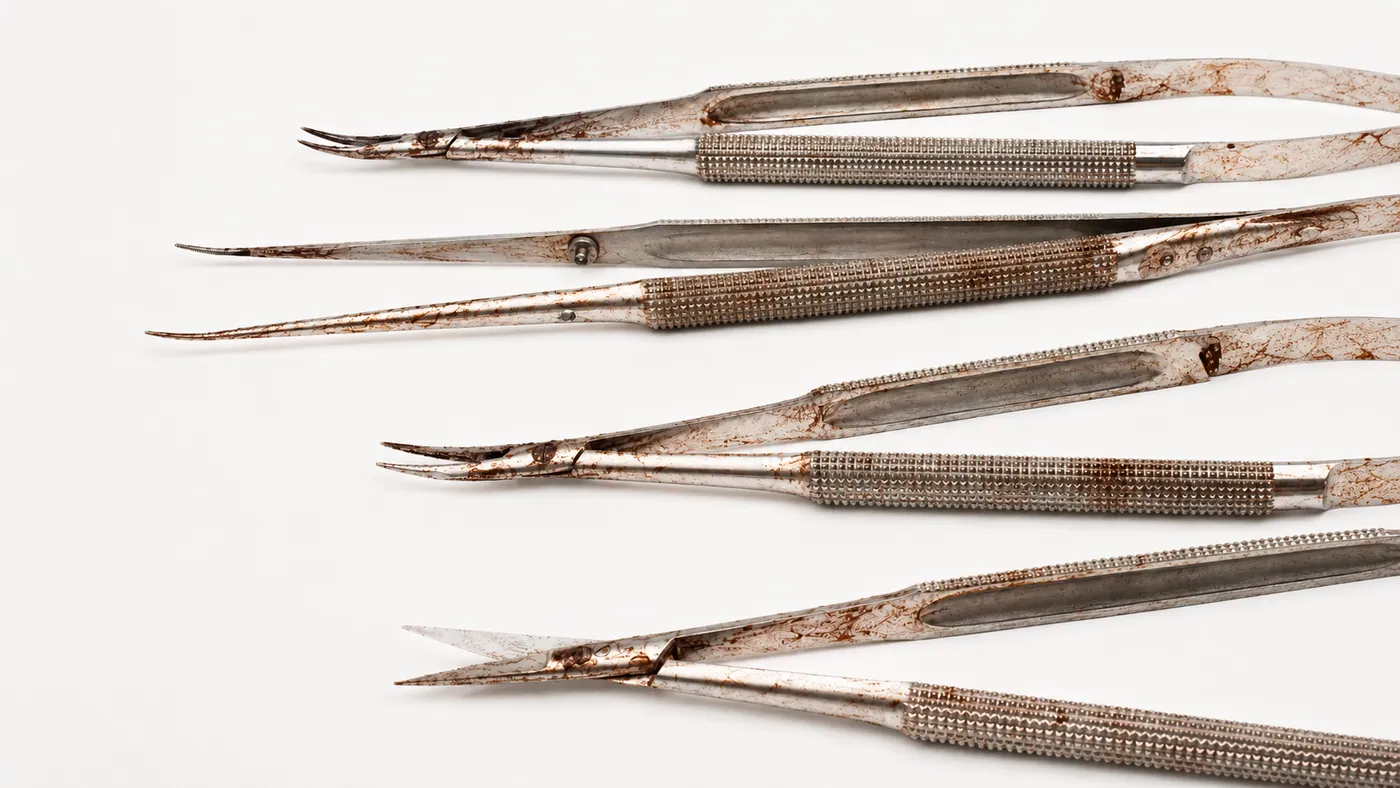 Parts and contaminants · 4 min readCleaning microsurgical instruments with ultrasoundMicrosurgical tips bend or break on contact. How fine instruments are held, cleaned and checked in hospitals, repair workshops and manufacturing.
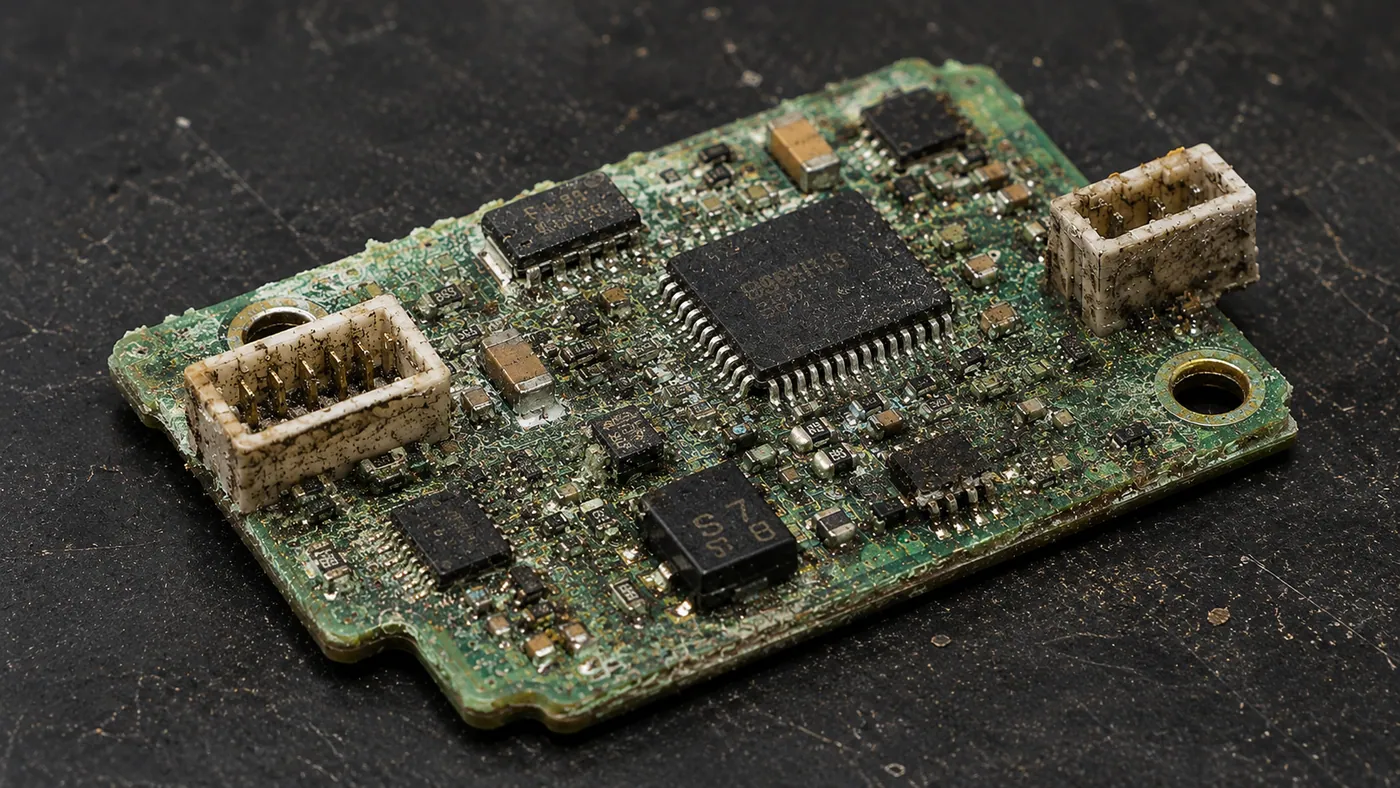 Parts and contaminants · 4 min readCleaning electronic modules after repair with ultrasoundRework flux, corrosion after liquid damage and old dust: how to clean a repaired module, what to remove first, and why solvents never go in a heated tank.
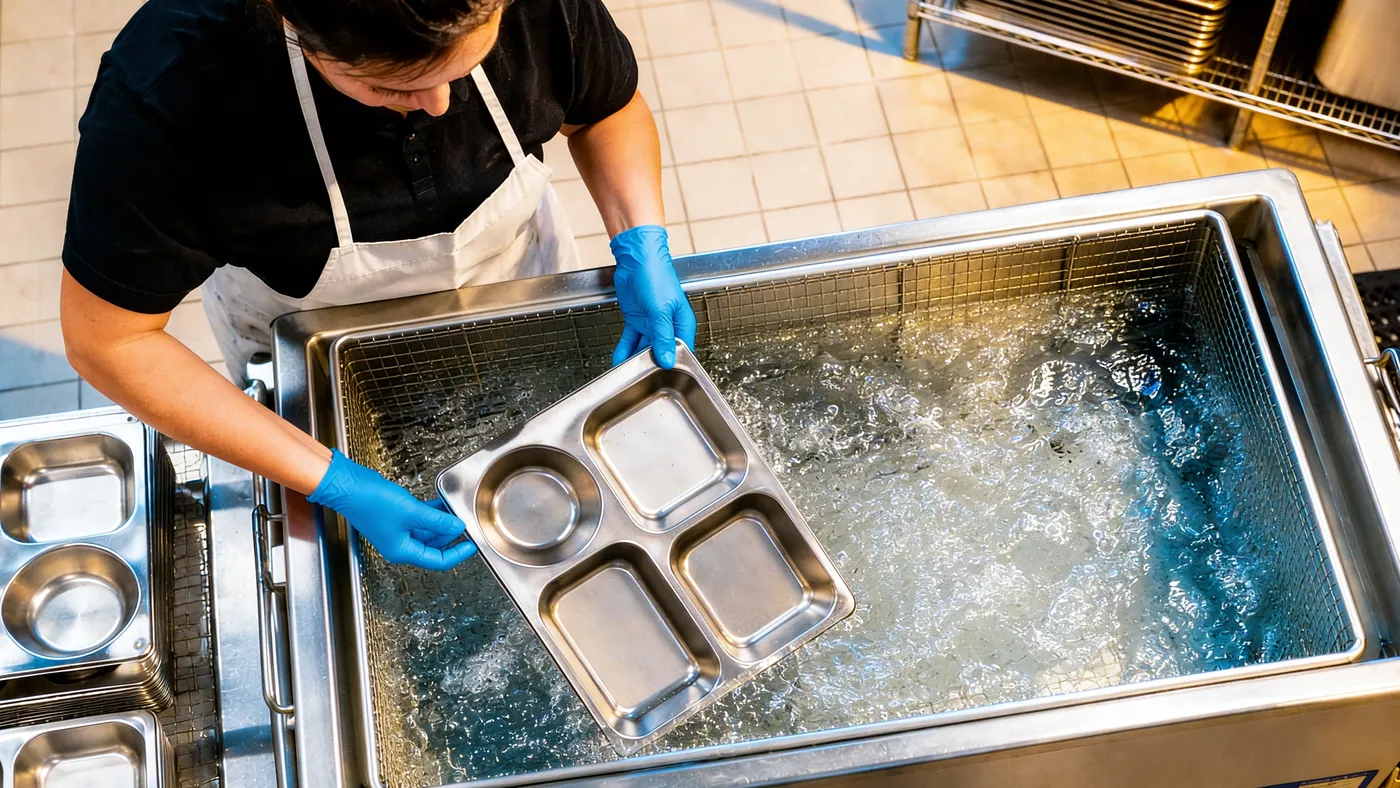 Parts and contaminants · 3 min readUltrasonic cleaning of stainless steel food contact partsValves, pump rotors, fittings, nozzles, sieves and change parts in AISI 304 and 316 stay hygienic only if their surface stays clean and passive. How ultrasonic cleaning fits between dismantling and disinfection, the chemistry that protects stainless, the mistakes that make it rust, and how the result is verified.
 Parts and contaminants · 4 min readUltrasonic cleaning of precision parts before quality inspectionA coolant film or a single chip on a datum face is a measuring error, and a part that comes out of a warm bath is not yet the size on the drawing. How to clean precision parts so the inspection measures the part and not its dirt, and how cleaning relates to a technical cleanliness test.
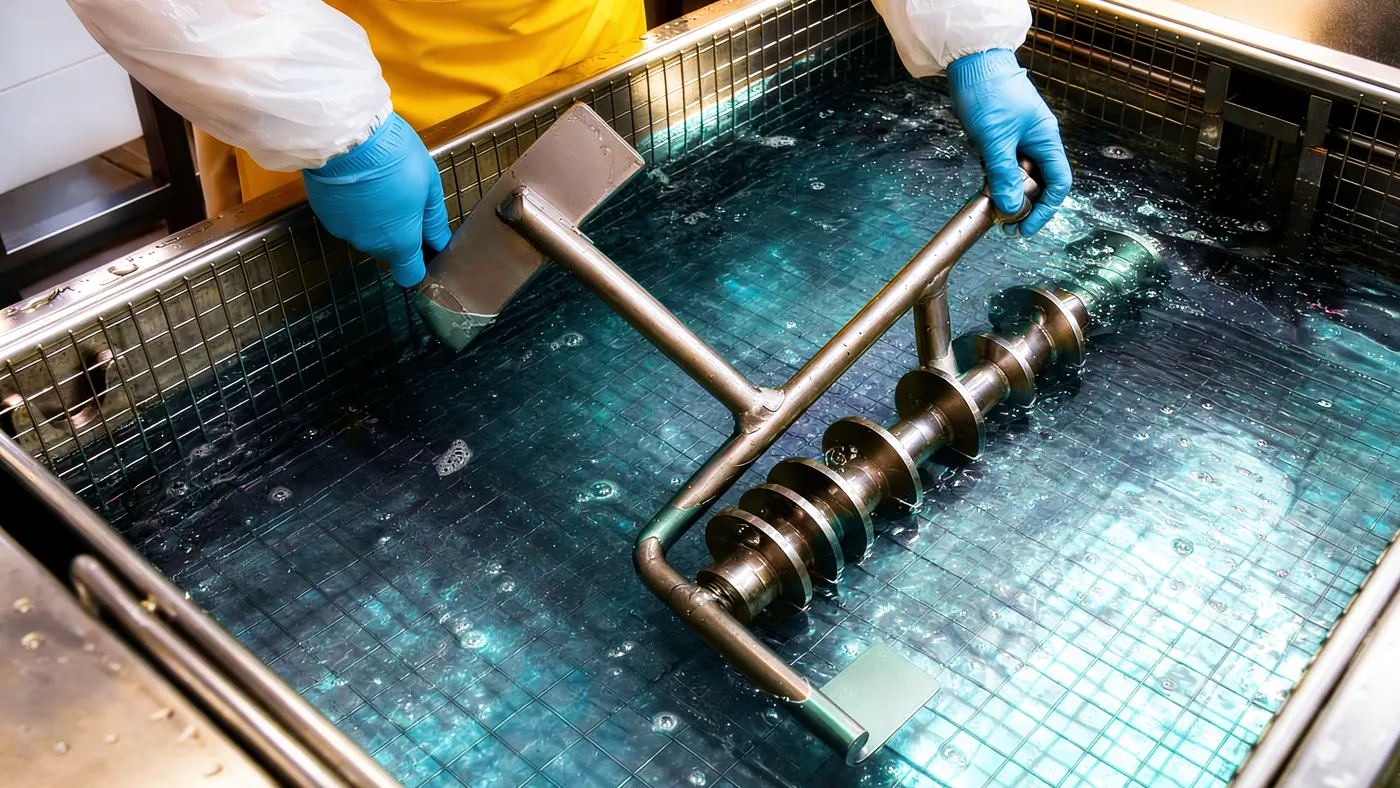 Parts and contaminants · 3 min readUltrasonic cleaning of packaging equipment componentsFilling nozzles, dosing pistons, forming sets, sealing jaws, cutting knives and vacuum cups collect product, film residue and dust between format changes. Which packaging parts are cleaned in an ultrasonic tank, how to treat heat-sealing jaws and coated parts, and how cleaning fits a format or allergen changeover.
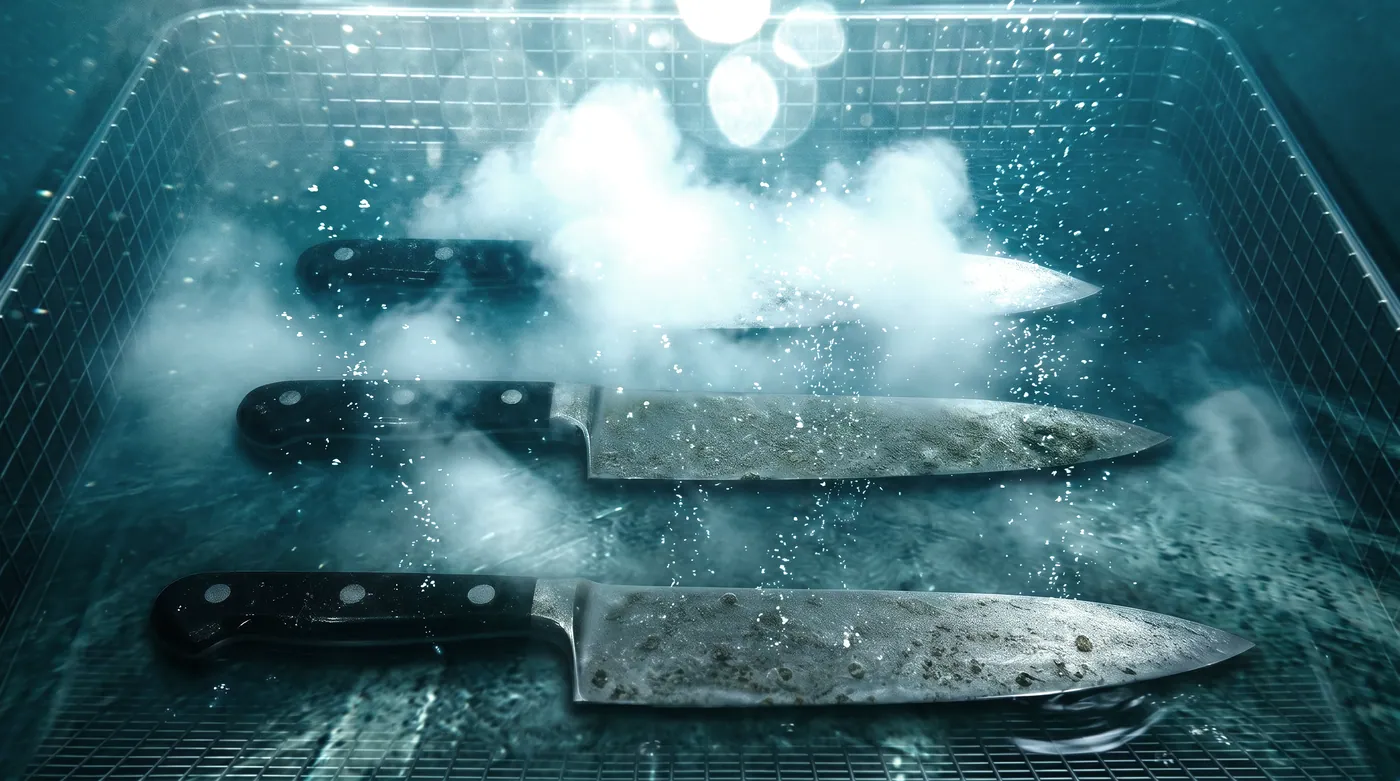 Parts and contaminants · 4 min readUltrasonic cleaning of knives in food processing plantsHand knives, steels, scabbards and knife baskets collect fat and protein in the handle joint and along the edge, where a quick rinse leaves them. How a knife-cleaning station with an ultrasonic tank fits the shift, the temperatures that keep protein from baking on, and the steps before disinfection.
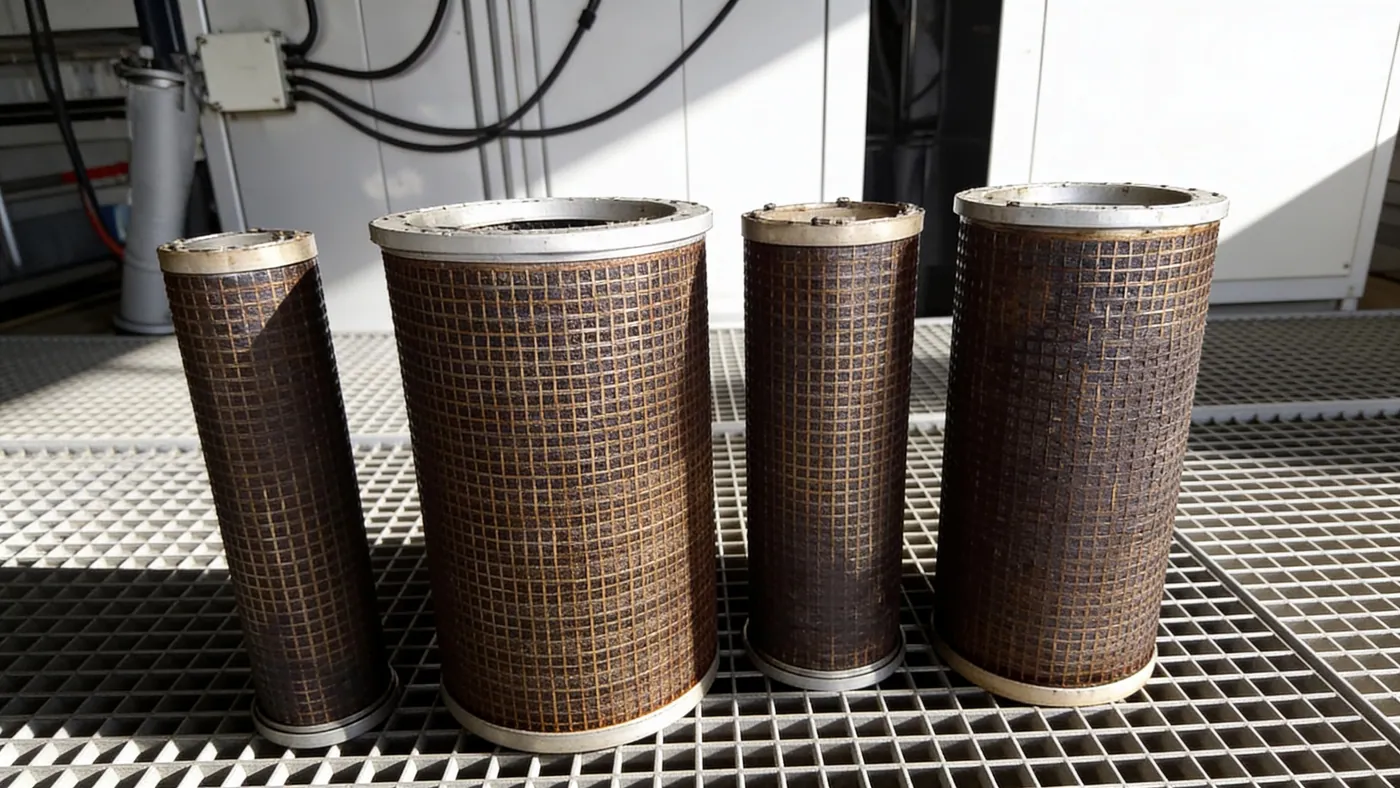 Parts and contaminants · 4 min readUltrasonic cleaning of industrial filters for reuseStainless mesh, sintered metal and wire-wound filters can be cleaned and reused many times; paper and felt cannot. Which filters are worth cleaning, how to get the dirt out of the depth of the medium rather than just its surface, and how to prove a cleaned filter is fit to go back into service.
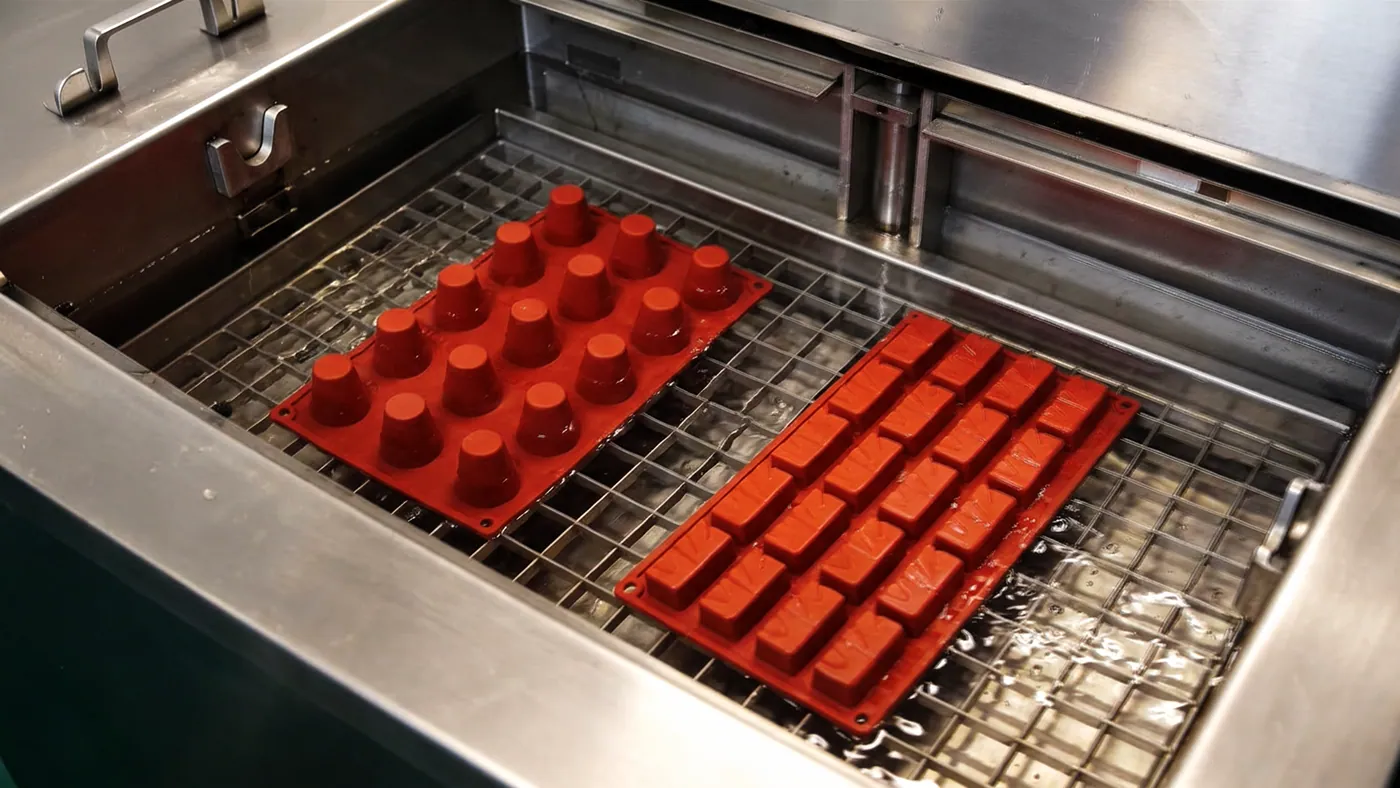 Parts and contaminants · 3 min readUltrasonic cleaning of food processing mouldsChocolate and confectionery moulds, cheese moulds, depositor plates and pasta dies hold product in cavities, perforations and die holes. How ultrasonic cleaning reaches them, the gentle chemistry polycarbonate and bronze need, and the loading that keeps moulds from being scratched.
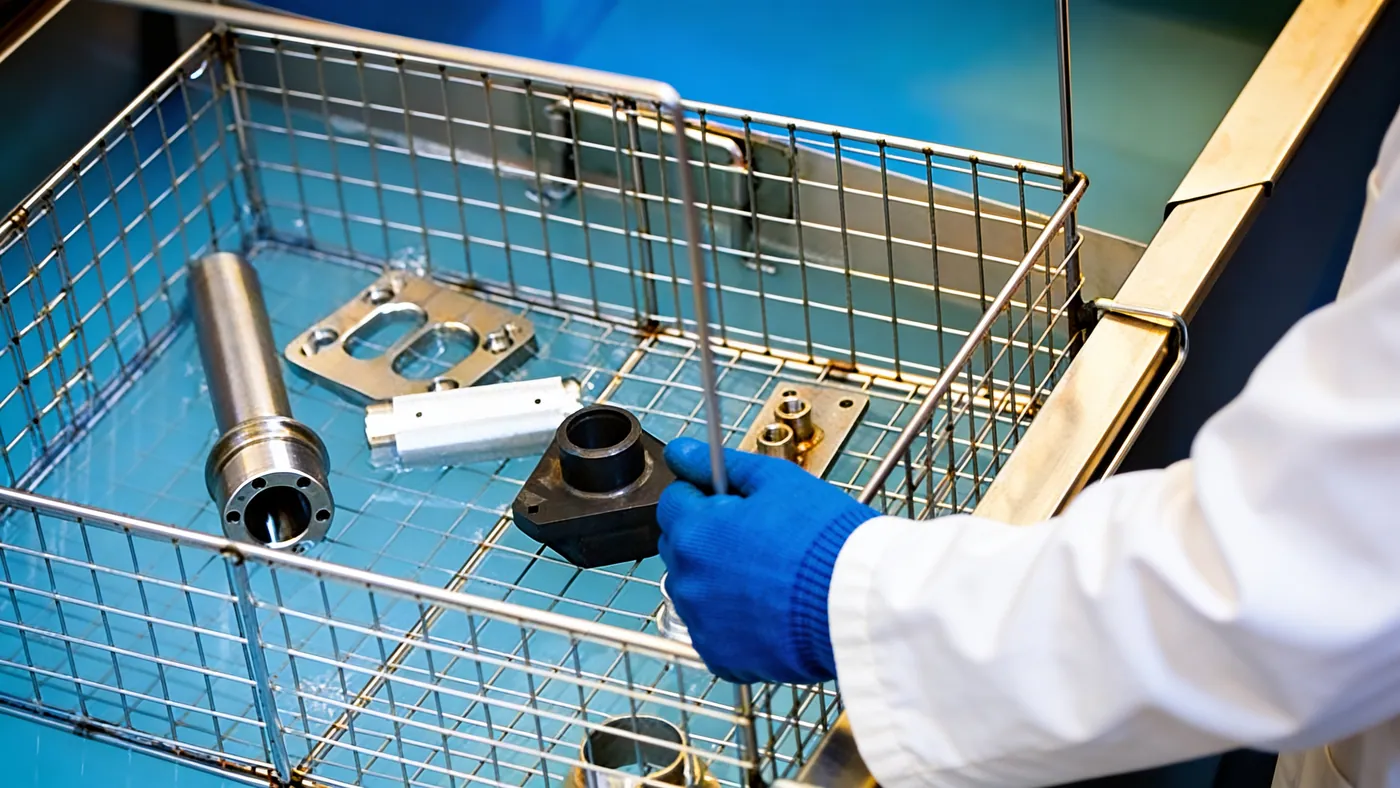 Parts and contaminants · 3 min readUltrasonic cleaning of bottling equipment partsFilling valves, vent tubes, capping and crowning heads, change parts and labeller parts collect sugar, fruit pulp, yeast, beer stone, tartrate and glue. How to clean them at an overhaul or a product change, the chemistry for each beverage soil, and how to keep valve sets and seals in order.
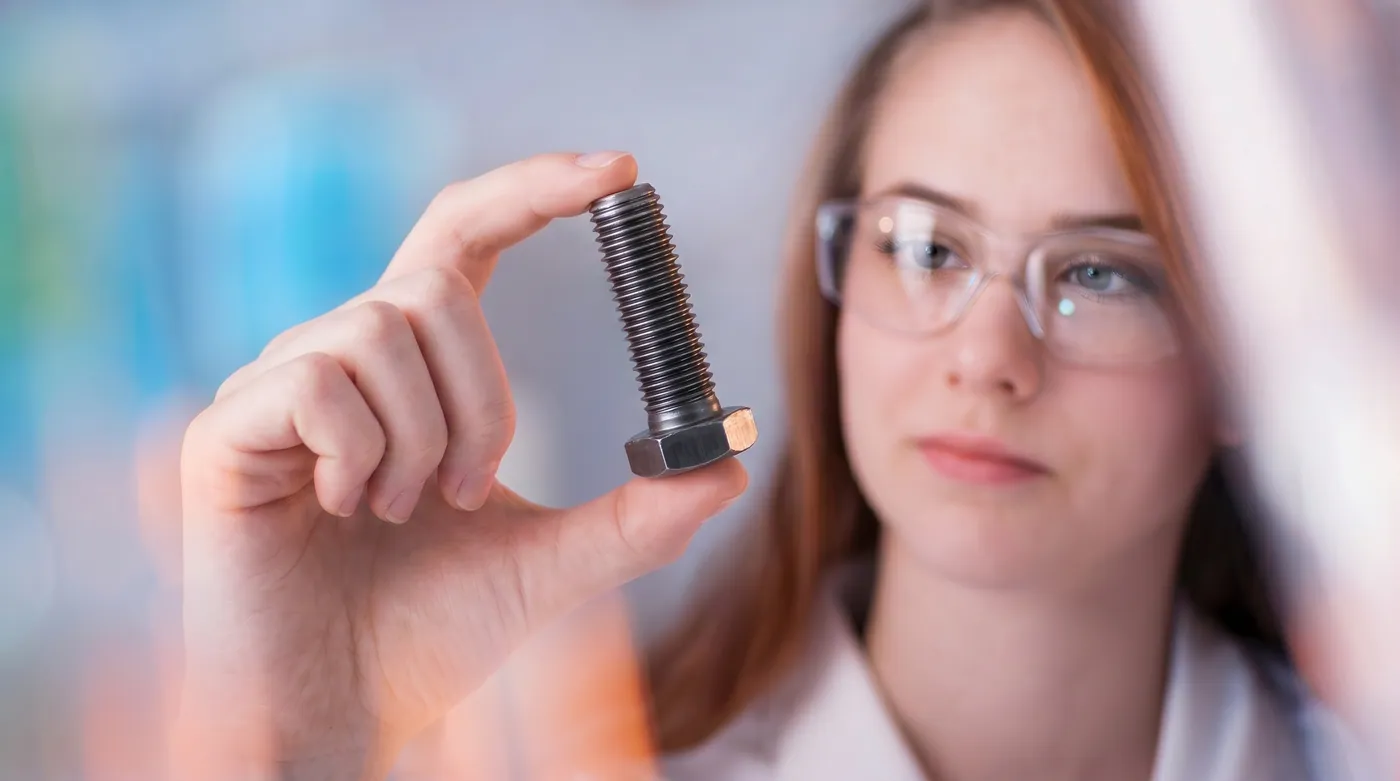 Parts and contaminants · 4 min readCleaning threaded parts and blind holes with ultrasoundTapped holes, blind bores and internal threads trap chips, coolant and air. Why the trapped air is the real enemy, how part orientation, degassing and movement get the liquid in, which frequency suits fine threads, and how to get the liquid out again.
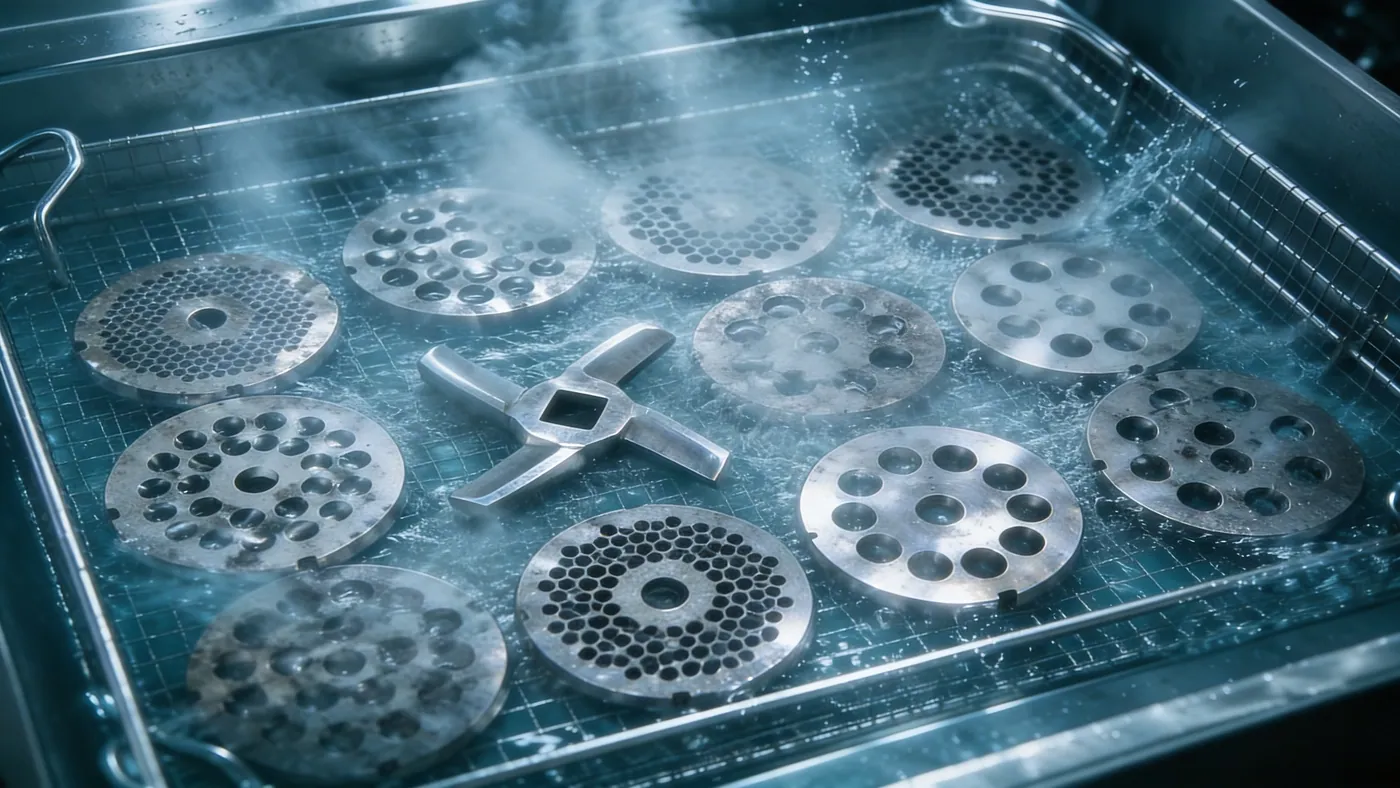 Parts and contaminants · 4 min readCleaning meat processing blades with ultrasoundMincer knives and hole plates, bowl-cutter knives, slicer blades and skinner blades carry fat and protein in their bores, holes and hubs. How to clean machine blades so they come out ready for disinfection, the temperatures for protein, and how to protect the edges and the matched sets.
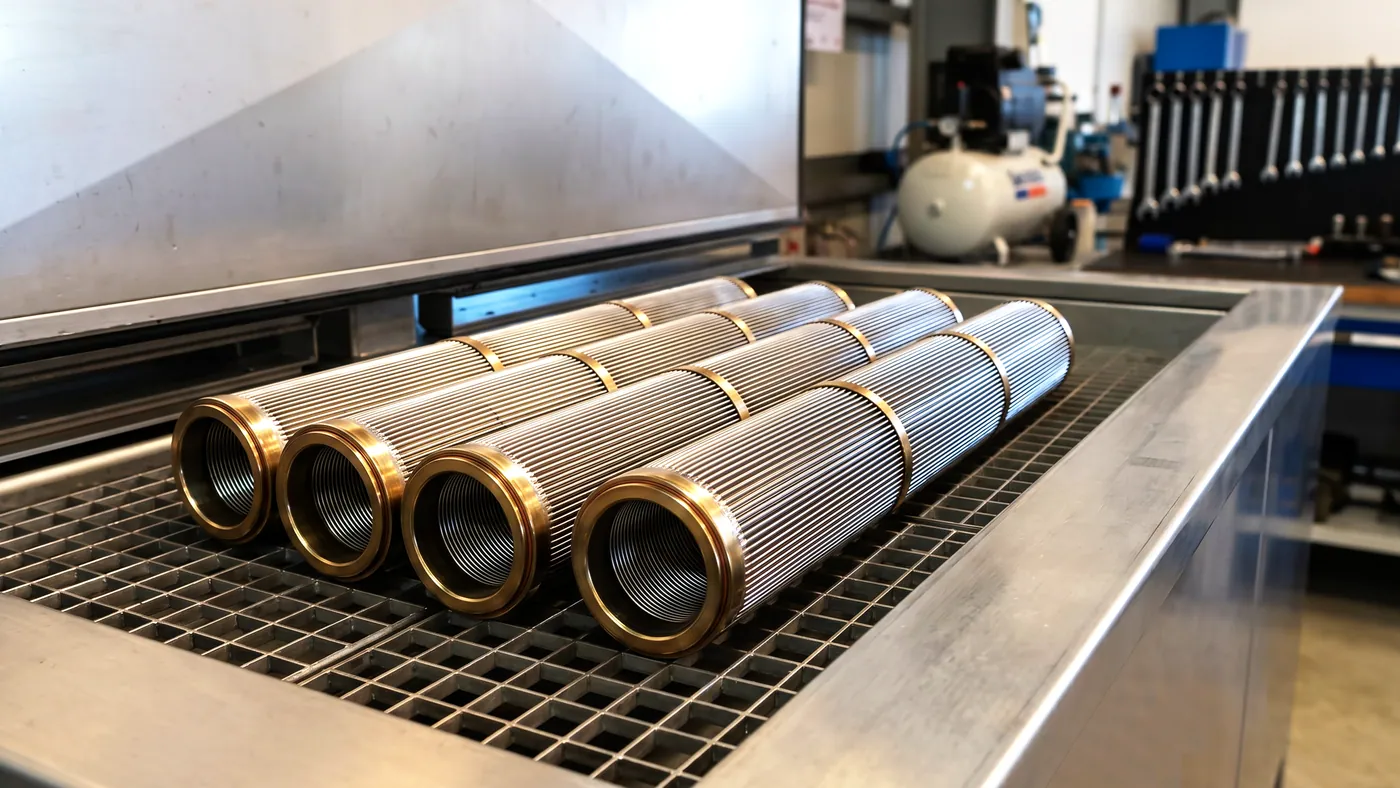 Parts and contaminants · 3 min readCleaning food industry filters with ultrasoundSieves, strainers, sifter screens, fryer filters, filter candles and centrifuge screens clog with fat, protein, pulp, starch and carbonised oil. Which food filters can be cleaned and reused, the chemistry for each soil, why the reverse flush matters, and the hygiene steps before a filter goes back into the line.
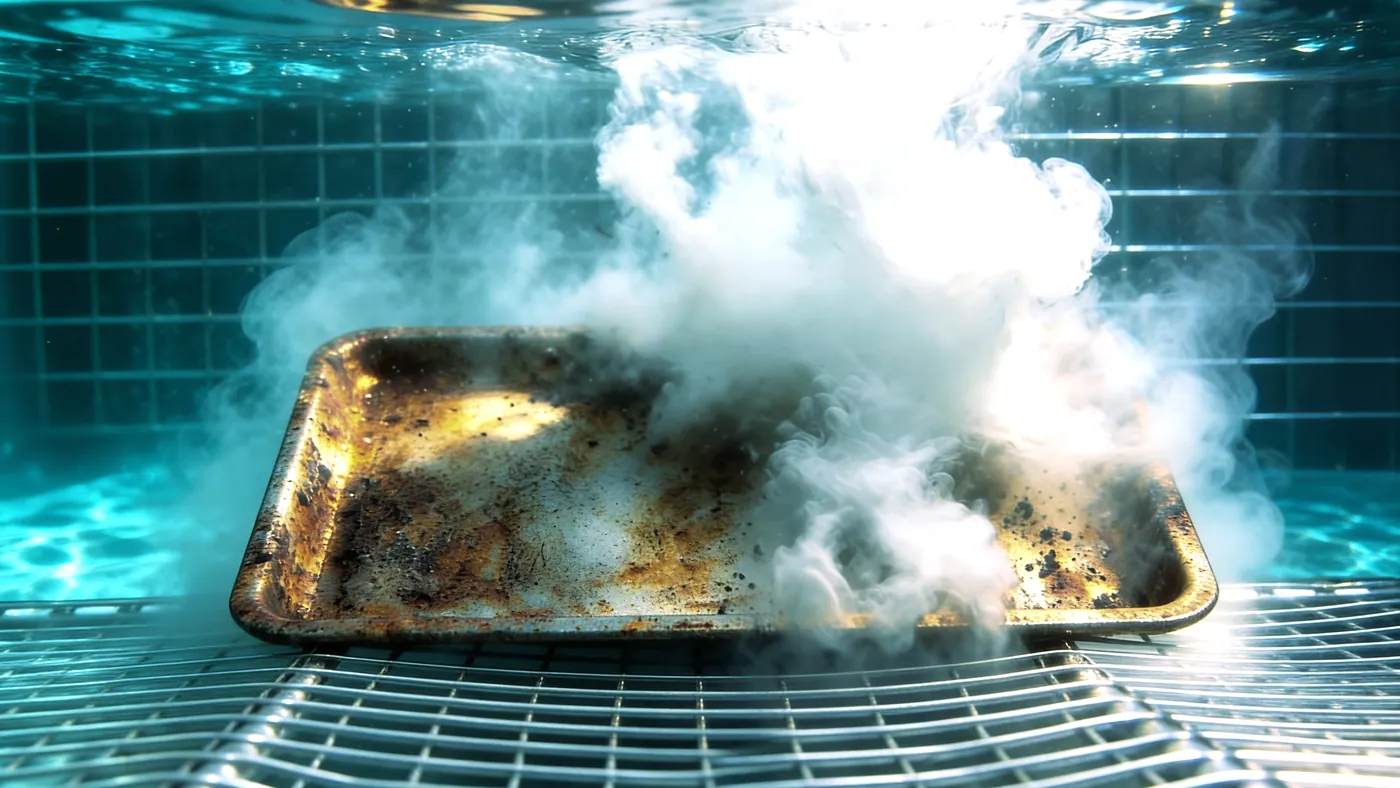 Parts and contaminants · 3 min readCleaning bakery equipment with ultrasoundBaking tins and trays, depositor nozzles and pistons, divider parts, slicer blades and cutters carry dough, sugar, fat and carbonised release agent. What ultrasonic cleaning removes in a bakery, what it cannot remove without harsh chemistry, and how to treat coated tins so the coating survives.
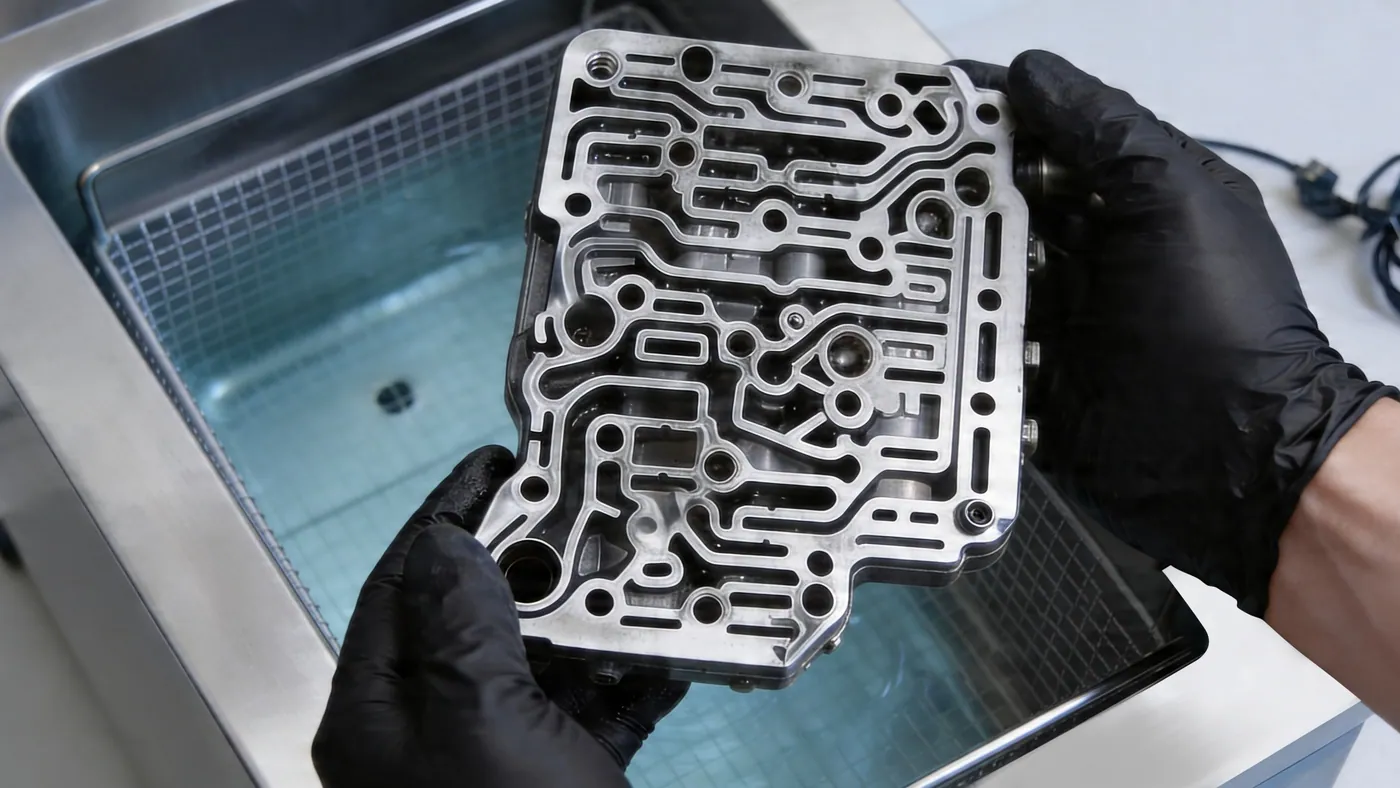 Parts and contaminants · 3 min readCleaning automatic-transmission valve bodiesVarnish from old fluid and friction-material fines stick the spool valves, and the gearbox shifts late, hard or not at all. How rebuilders strip a valve body, keep every spool with its bore, and clean the channels and valves at 40 kHz without harming a single clearance.
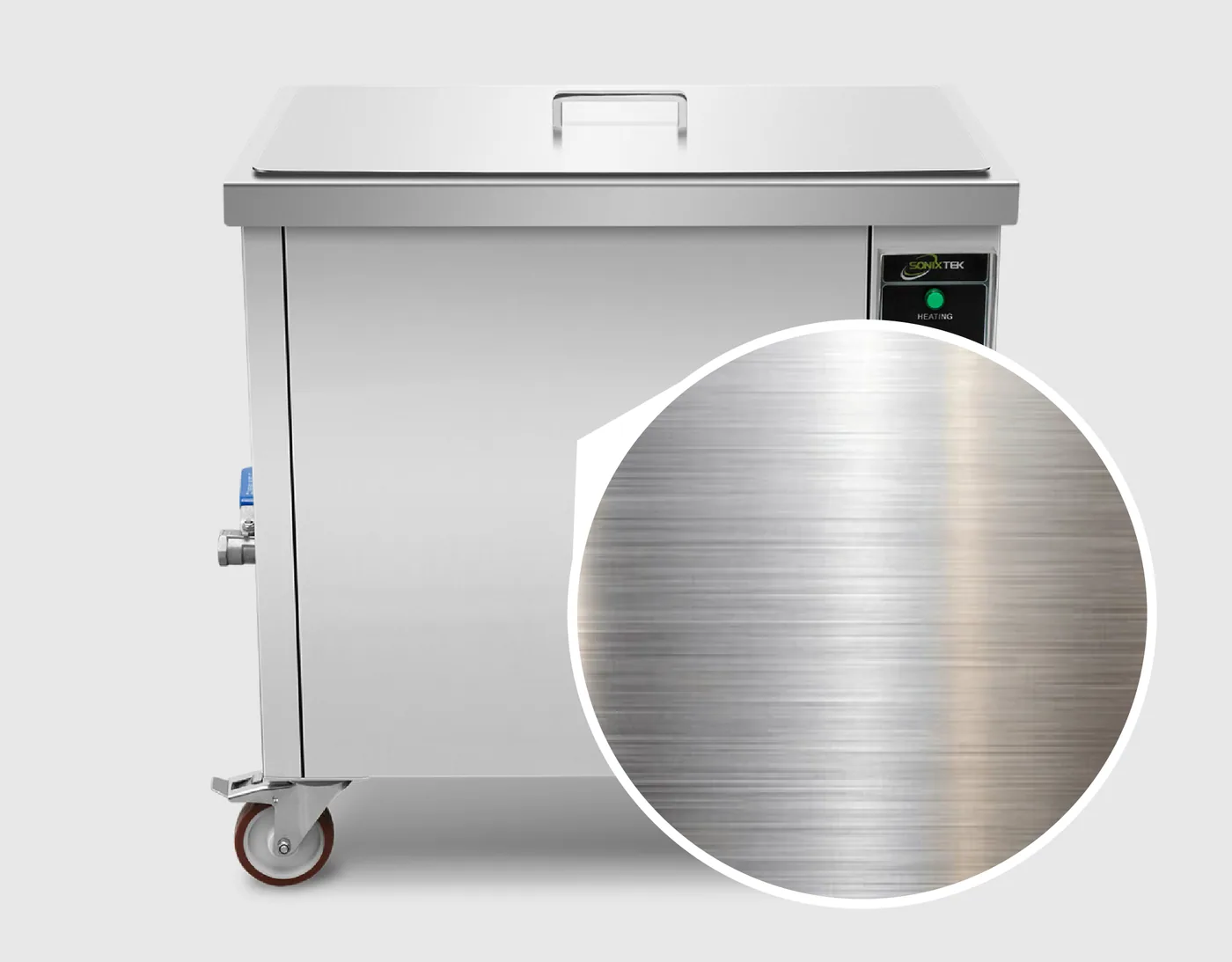 Parts and contaminants · 3 min readUltrasonic cleaning of turbocharger componentsCoked oil in the bearing housing, soot in the turbine housing, sticking vanes in a variable-geometry ring, oil film on the compressor side. How a turbo rebuilder strips and cleans each part, which metals need which bath, and what gets replaced rather than cleaned.
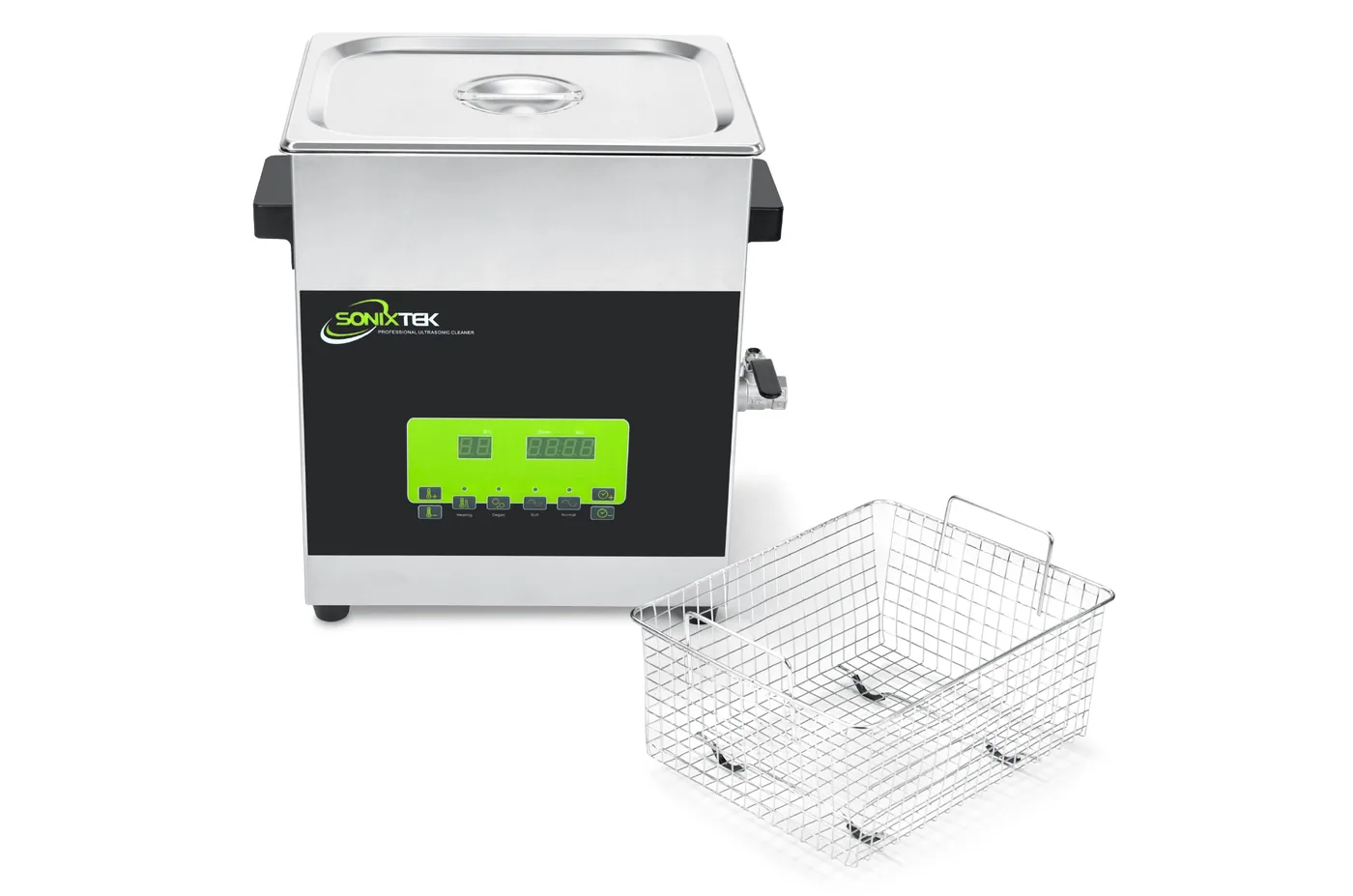 Parts and contaminants · 4 min readHow to clean petrol fuel injectors with ultrasoundPort and direct injectors clog at the filter basket and the nozzle. What an ultrasonic bath cleans, why the injector has to be pulsed for the inside, which parts come off first, and the flow test that proves the result.
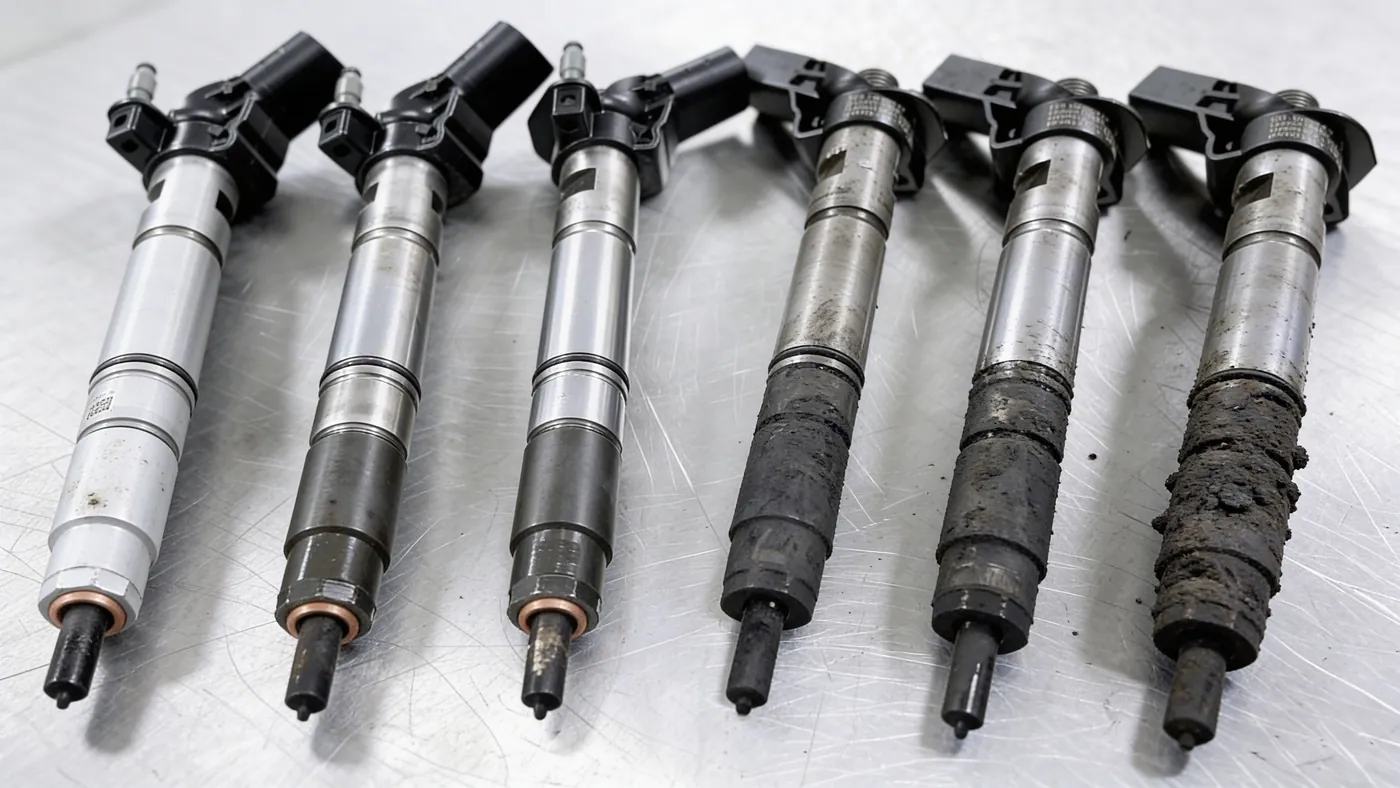 Parts and contaminants · 3 min readUltrasonic cleaning of diesel injectors in the workshopCarbon at the nozzle, tar from blow-by on the body, lacquer inside. How common-rail injectors are prepared, which parts go in the bath and which never do, the liquid, temperature and time, and why the test bench has the last word.
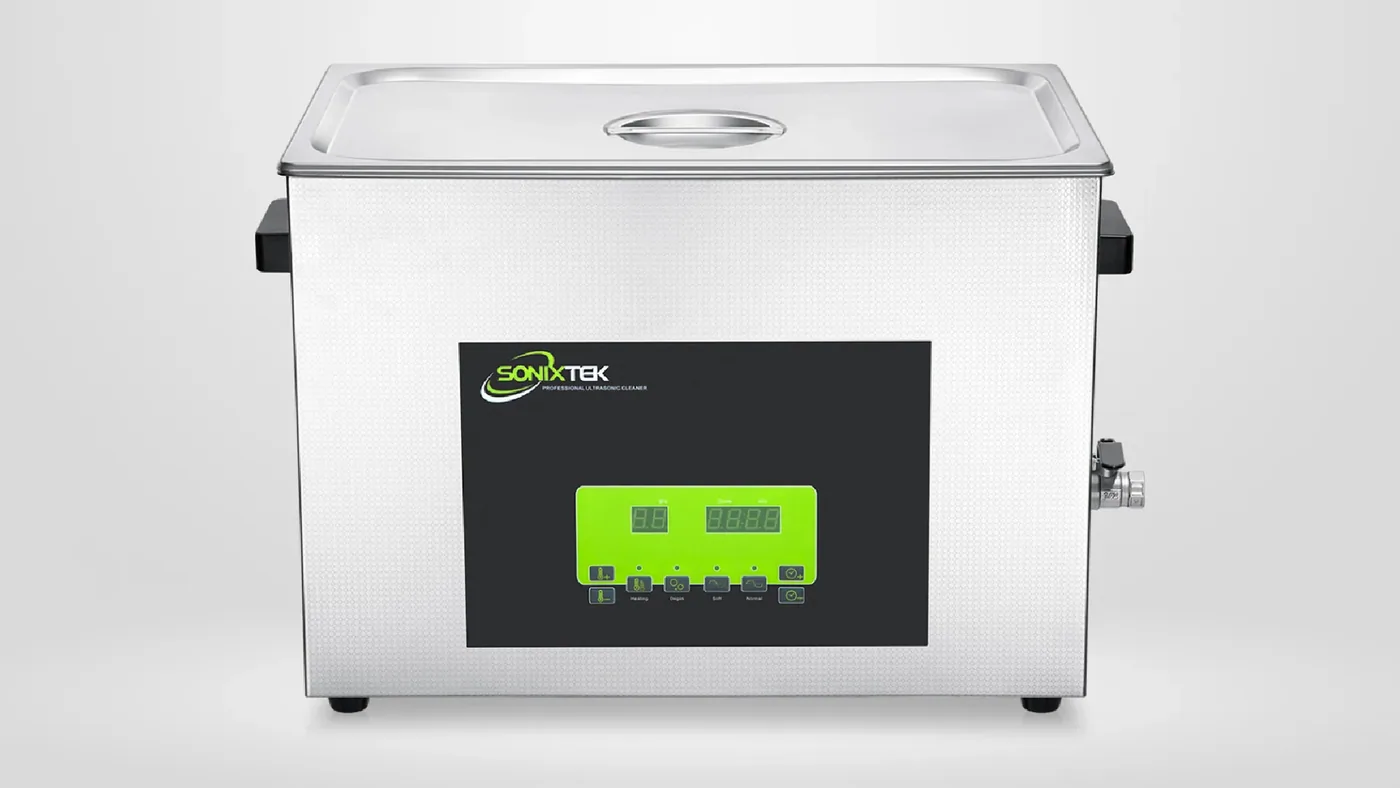
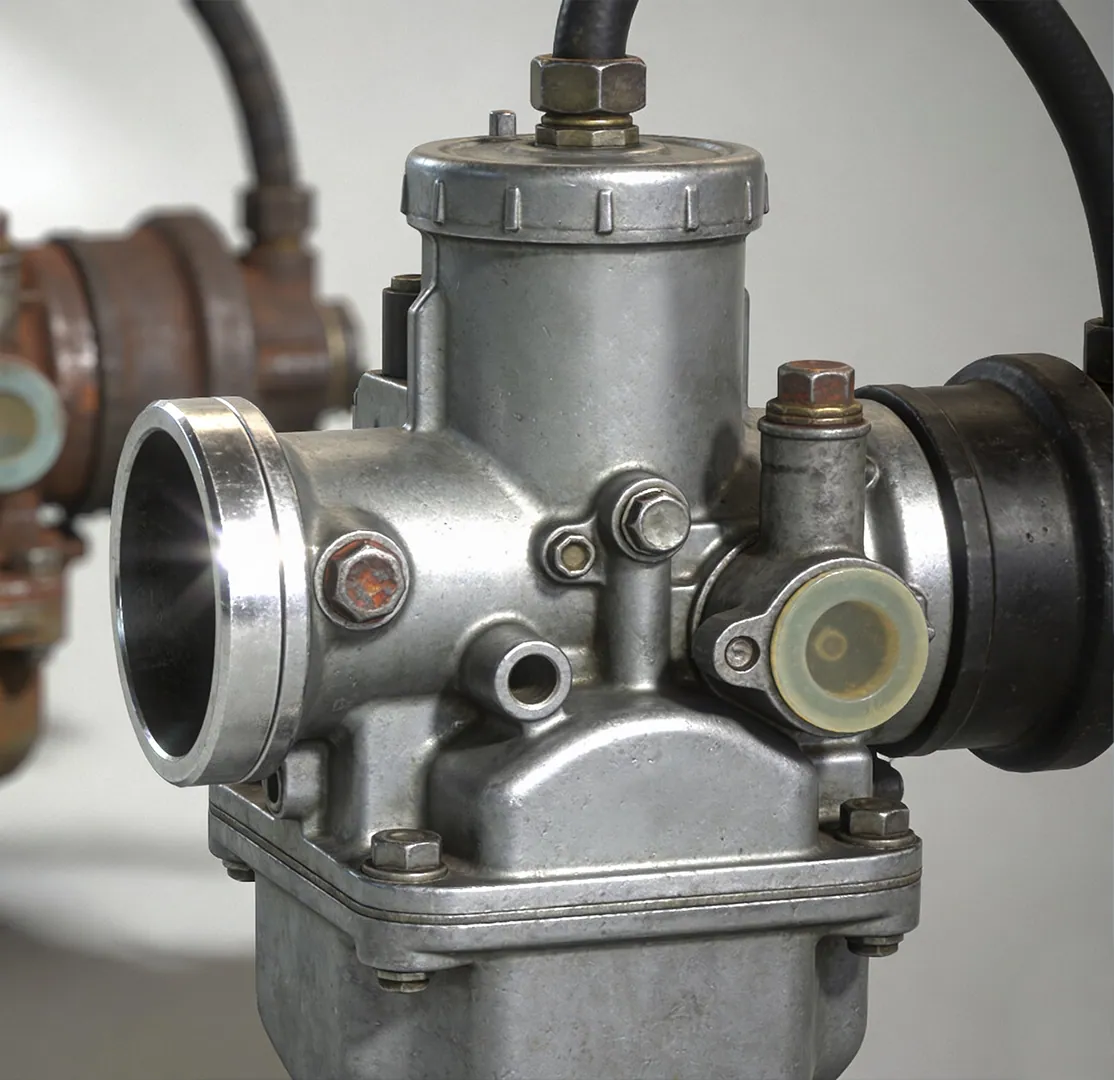 Parts and contaminants · 4 min readUltrasonic cleaning of carburettors: the complete processVarnish, gum and carbon out of jets, emulsion tubes and drillings without hours of wire and spray can. Strip-down, liquid, temperature, frequency and time for aluminium and zinc bodies, and what must never go in the bath.Parts and contaminants · 2 min readCleaning pedicure instruments before disinfectionNippers, files and pushers must be free of soil before a disinfectant or steriliser can work. What an ultrasonic bath removes, how a salon uses it, and the steps that follow it.
 Parts and contaminants · 2 min readCleaning hairstyling tools before disinfectionCombs, clippers and scissors carry hair, product and skin residue that a disinfectant cannot reach through. A benchtop cleaner removes the soil first; disinfection follows as its own step.
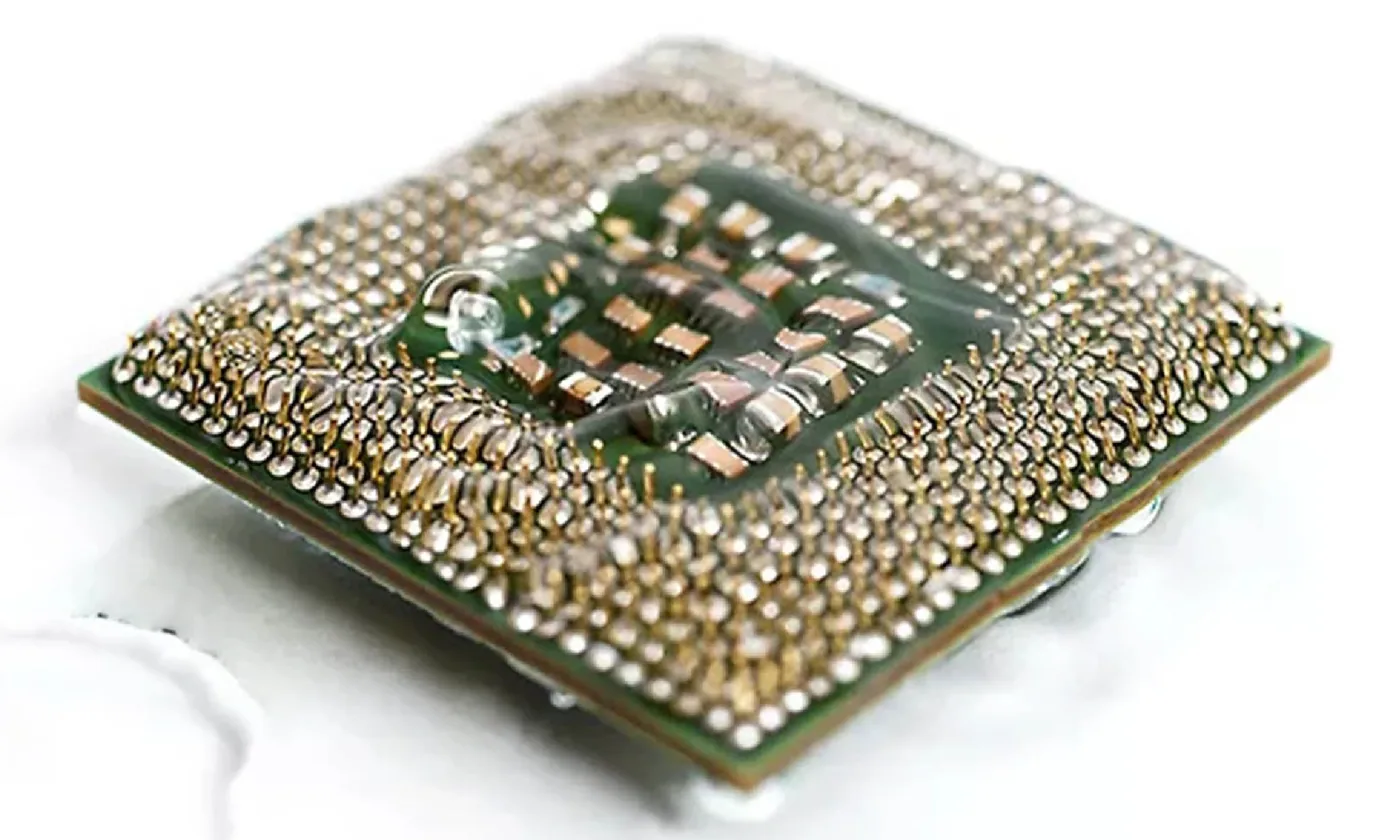 Parts and contaminants · 3 min readRemoving flux residues from circuit boards and assembliesFlux left after soldering attracts moisture, corrodes joints and leaks current between tracks. Which flux types need cleaning, the 40 kHz bath that removes them without harming components, what to keep out of the tank, and how to prove the board is clean.
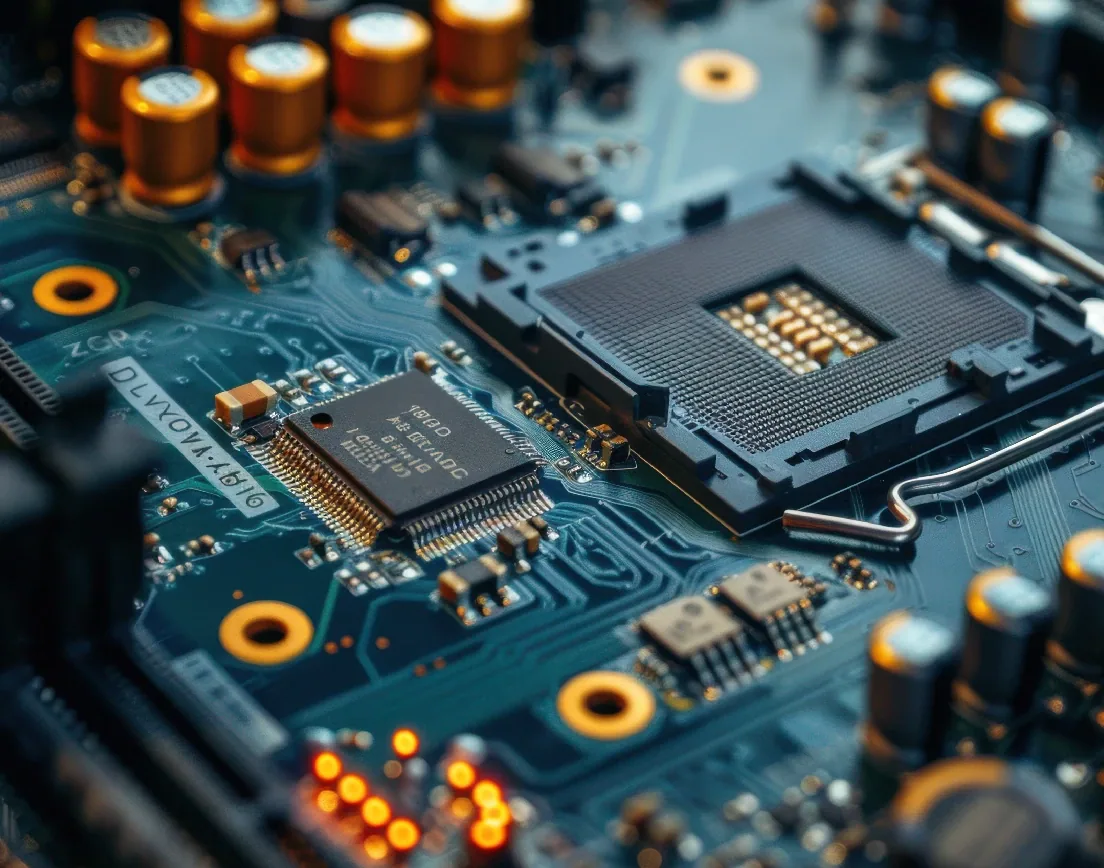 Industries · 3 min readUltrasonic cleaning in electronics and PCB assemblyFlux after soldering, dust and oxide on connectors, machining residue on housings and heat sinks, particles on sensors and optics. What ultrasonic cleaning does in electronics production and repair, at 40 kHz with deionised rinses, and what must never go in the bath.
 Process and parameters · 2 min read28 kHz or 40 kHz: which frequency cleans your part?Lower frequency hits harder, higher frequency reaches further. The part, the soil and the surface decide.Process and parameters · 2 min readParticle size removal versus ultrasonic frequencyLower frequencies make bigger, more energetic bubbles for heavy soil; higher frequencies make smaller, gentler bubbles that do better on fine particles. How to choose between 28 and 40 kHz.
Let's find the right fit
Not sure which size you need?
Send us the part, the quantity per hour and the soil you are removing. We will size the tank and the frequency with you.