
Parts and contaminants · 2 min read · Updated 2026-09-26
Cleaning pedicure instruments before disinfection
Nippers, files and pushers must be free of soil before a disinfectant or steriliser can work. What an ultrasonic bath removes, how a salon uses it, and the steps that follow it.
Technical guide. Figures are taken from our own spec tables; for your process we confirm the settings with a cleaning trial.
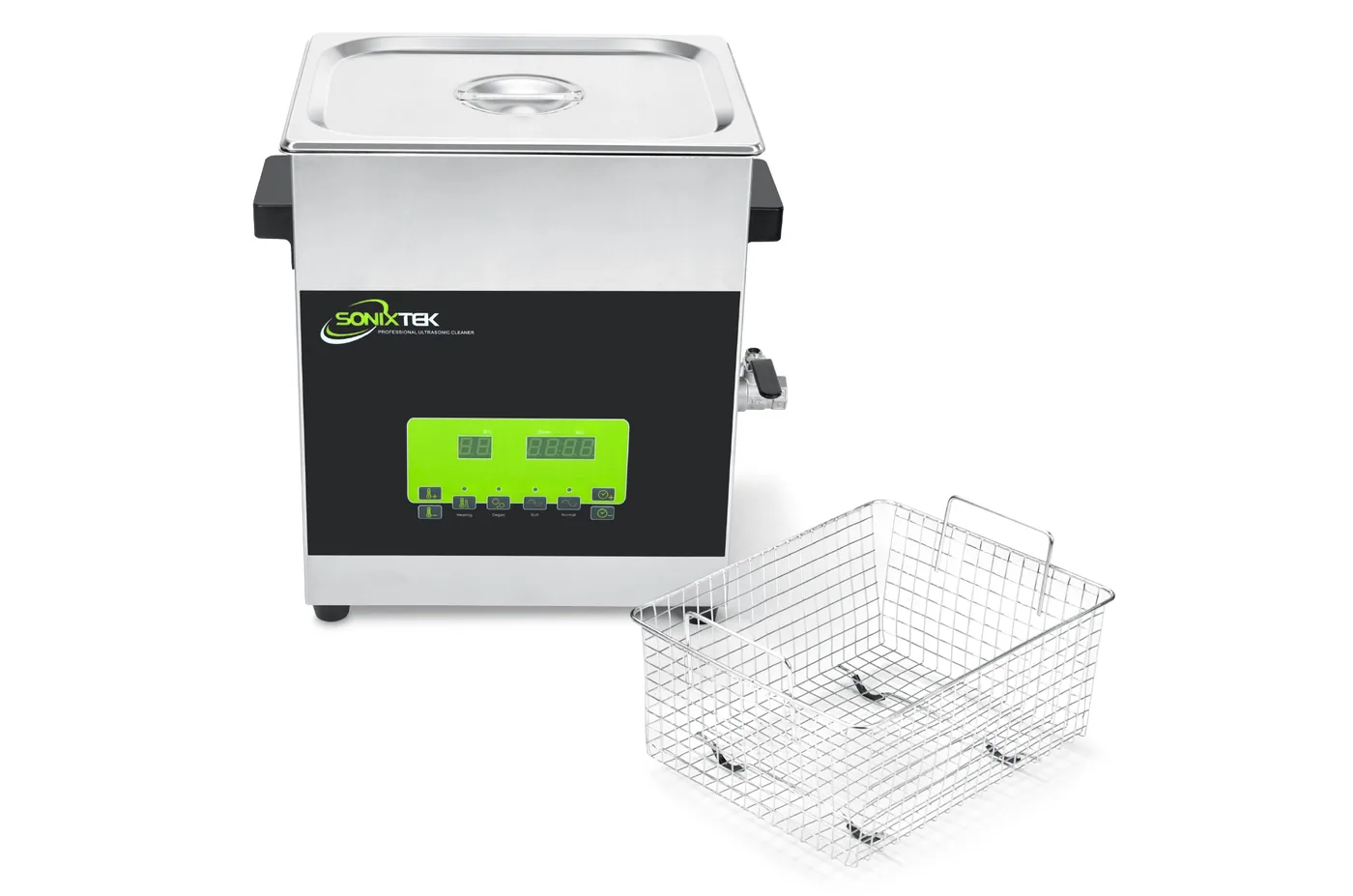
An ultrasonic bath removes soil. Disinfection and sterilisation are separate steps that follow cleaning and need their own approved products and procedures; the ultrasonic cleaner does not replace them.
Pedicure instruments have joints, serrations and hinges where skin, nail dust and tissue collect. A disinfectant or a steriliser cannot work through that layer: soil shields the surface beneath it. This is why every hygiene guideline puts cleaning first, and why an ultrasonic bath is common in salons and podiatry practices. It removes the soil from places a brush does not reach, so the disinfection or sterilisation step that follows has a clean surface to act on.
How a salon uses it
- Collect used instruments in a closed container, open joints open.
- Pre-rinse under running water to remove visible soil.
- Ultrasonic cleaning in a detergent intended for instruments, at the concentration its maker specifies, with joints open and instruments not touching each other, typically 5 to 10 minutes at 40 kHz.
- Rinse in clean water and dry.
- Disinfect or sterilise with the approved product or process your local rules require.
- Store dry and protected until use.
Some instrument detergents are formulated to clean and disinfect in one bath. Whether such a product meets your local requirements depends on its approval, not on the ultrasonic cleaner; follow the product's instructions and your professional guidelines.
Settings that matter
- Temperature: keep the bath below about 45 °C. Protein-based soil such as tissue and blood coagulates above that and becomes harder to remove, and many instrument detergents are specified for lower temperatures. The ultrasound itself warms the bath over repeated cycles; let it cool or change it.
- Frequency: 40 kHz suits fine instruments and hinges.
- Loading: a basket, never on the tank floor; joints open; no overlapping.
- Bath: change it at least daily, and whenever soil is visible on the floor. Clean and dry the tank at the end of the day.
Which size
Most pedicure instruments fit a small benchtop unit. The STS-030 (3 L, tank 240 × 140 × 100 mm) takes a handful of nippers and pushers; the STS-060 or STS-090 (6 or 9 L) a full set per cycle; a practice with several chairs often chooses the STS-150 (15 L).