
Parts and contaminants · 3 min read · Updated 2026-09-26
Ultrasonic cleaning of turbocharger components
Coked oil in the bearing housing, soot in the turbine housing, sticking vanes in a variable-geometry ring, oil film on the compressor side. How a turbo rebuilder strips and cleans each part, which metals need which bath, and what gets replaced rather than cleaned.
Technical guide. Figures are taken from our own spec tables; for your process we confirm the settings with a cleaning trial.
A turbocharger has two very different halves joined by a shaft. On the turbine side, exhaust at 700 to 1000 °C drives a nickel-alloy wheel in a cast-iron or steel housing. On the compressor side, an aluminium wheel in an aluminium housing pushes intake air. Between them, the centre housing carries the shaft on oil-fed bearings. Each part collects its own deposit, and a rebuild cleans them separately, because what is right for cast iron is wrong for aluminium.
Where the dirt is
| Part | Material | Deposit | Why it matters |
|---|---|---|---|
| Turbine housing | cast iron, Ni-resist or cast steel | soot and hard carbon | narrows the volute, flakes off into the wheel |
| Turbine wheel and shaft | nickel alloy wheel welded to steel shaft | carbon on the blades | unbalance, rubbing |
| Variable-geometry ring and vanes (VGT, VNT) | heat-resistant steel | soot that locks the vanes | the classic fault: vanes stick, boost control fails |
| Centre bearing housing (CHRA) | cast iron | coked oil in the drain and bearing bores, sludge | oil starvation, smoke, bearing failure |
| Compressor housing and wheel | aluminium | oil film and dust from crankcase ventilation | lower efficiency, more oil into the intake |
Strip first, then sort the metals
Rebuilders dismantle the turbo completely: housings off, rotating assembly out of the centre housing, bearings, thrust parts, piston rings and seals removed. Bearings, rings, seals and gaskets are replaced, not cleaned; they are the wear parts of a turbo rebuild. The actuator, wastegate solenoid and any electronic position sensor stay out of the bath.
The metal parts then go into two baths, or two cycles:
Iron and steel parts (turbine housing, centre housing, VGT ring and vanes, shaft and turbine wheel): heavy-duty alkaline carbon remover, 65 to 75 °C, 28 kHz, a 15-minute soak followed by 30 to 45 minutes of ultrasound. A VGT ring with stuck vanes is the best case for ultrasound in turbo work: the soot sits between vanes, pins and ring where no tool reaches, and after a cycle the vanes move freely again.
Aluminium parts (compressor housing, compressor wheel, back plate): a light-alloy cleaner at 50 to 60 °C, 40 kHz, 10 to 15 minutes. A carbon remover strong enough for the turbine side etches aluminium; a compressor wheel with its blade edges etched is scrap.
See removing carbon deposits for the chemistry and removing oil and grease for the compressor side.
After cleaning
- Rinse each part in warm water, blow the oil drillings of the centre housing through with compressed air, dry at once. Cast iron rusts within an hour if it is left wet; oil it or use an inhibitor in the rinse.
- Inspect: cracks in the turbine housing, especially at the wastegate port and the tongue; wear in the bearing bores; blade damage.
- Balance. Carbon removed from the turbine wheel changes its balance. The rotating assembly is balanced after cleaning and before assembly, then the core assembly is balanced again at speed.
- Reassemble with the new bearing and seal kit.
Which machine
A car turbo housing is about 200 to 250 mm across; a truck turbine housing can be 350 mm and 15 kg.
| Work | Machine |
|---|---|
| Garage, occasional turbo with a VGT ring | ST-40 or ST-65 at 28 kHz, a separate benchtop unit at 40 kHz for aluminium parts |
| Turbo specialist, several rebuilds a day | ST-96 or ST-157 for iron parts with a filtration loop; UMX Pro 62L for aluminium parts with a stored programme |
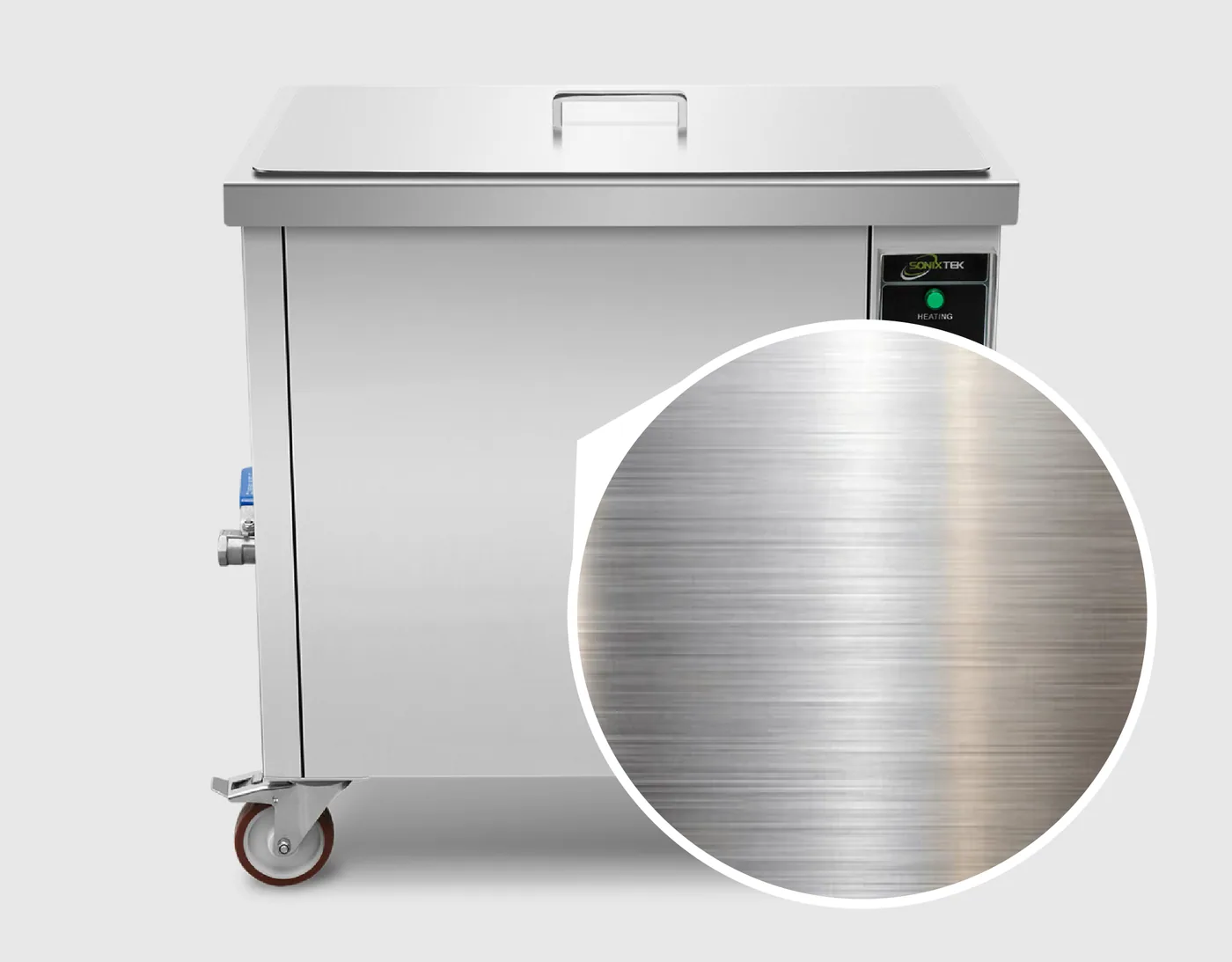
| Truck and industrial turbos, remanufacturing | AL-300 or AL-400 with lift and agitation, modular filtration, rinse and dryer stations |
Cleaning restores flow and movement. It does not repair a cracked housing, a rubbed compressor wheel or a bent shaft, and a turbo that failed from oil starvation will fail again unless the oil supply line and the engine's oil condition are put right too.