

Topics
Articles about: Oil and grease
23 articles
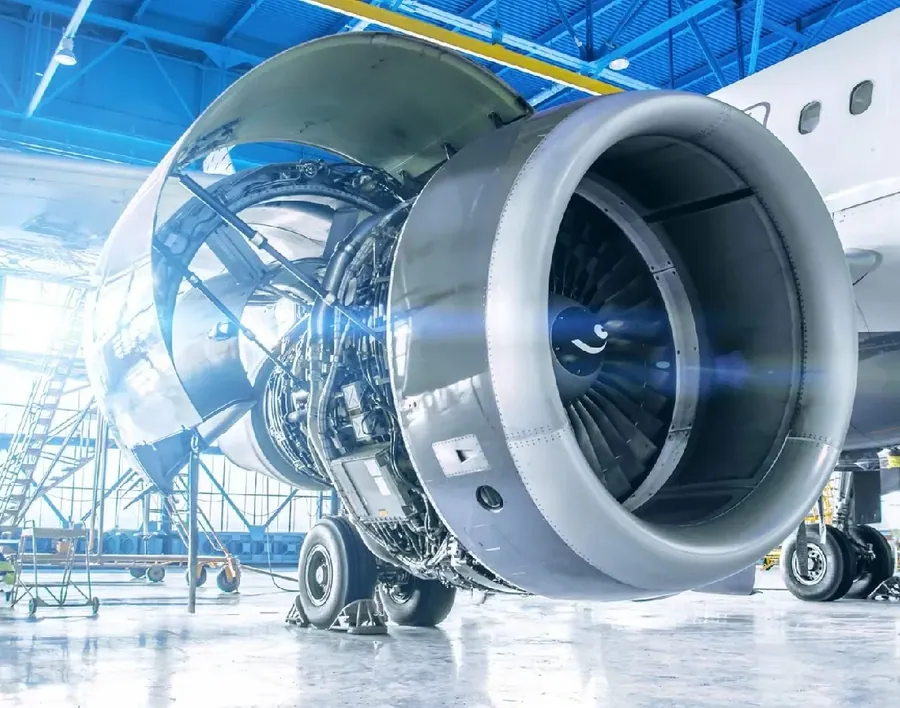 Industries · 4 min readUltrasonic cleaning in aerospace maintenance and manufacturingEngine parts from a shop visit, hydraulic components, avionics hardware and cabin fittings all reach the cleaning bay with different soil. What comes off them, which chemistry and settings suit each, and where the tank fits in a procedure the OEM manual still governs.
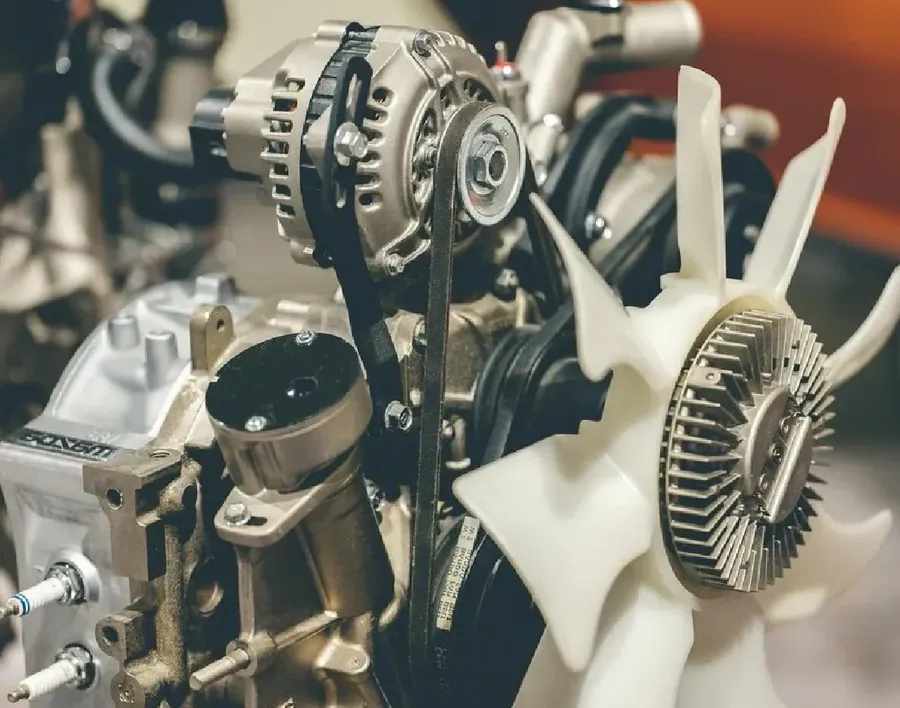 Industries · 4 min readUltrasonic cleaning of automotive partsEngine and transmission parts, carburettors and injectors, brake calipers and bearings: what soil each one carries, which cleaner and settings take it off, what ultrasound does not do, and which tank fits a workshop, a rebuilder or a production line.
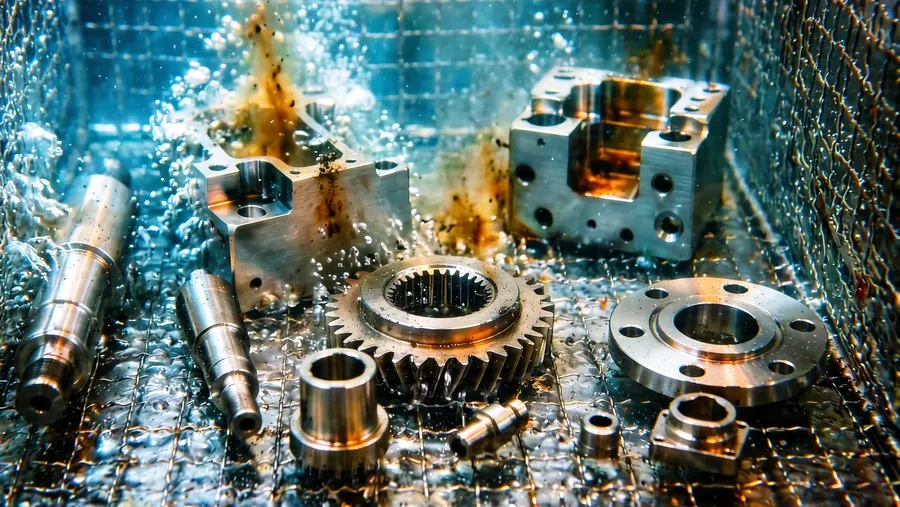 Parts and contaminants · 10 min readOne ultrasonic tank for the plant maintenance workshopPumps, valves, bearings and gears in one tank: size it from your largest regular part, choose frequency and cleaner, and know when filtration pays.
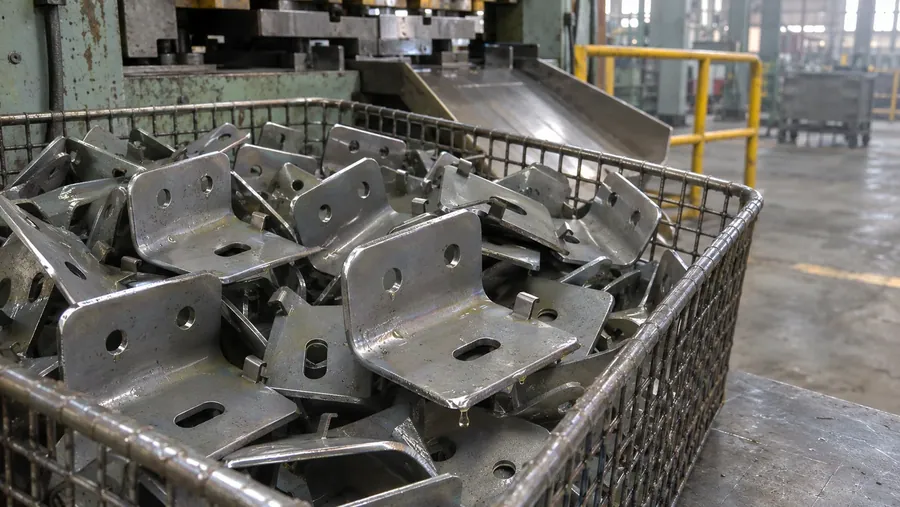 Parts and contaminants · 9 min readRemoving drawing and stamping oils from stamped partsDegreasing stamped parts in bulk: why flat parts nest and overload the bath, how to work out the oil load, and the loading, filtration, rinse and drying.
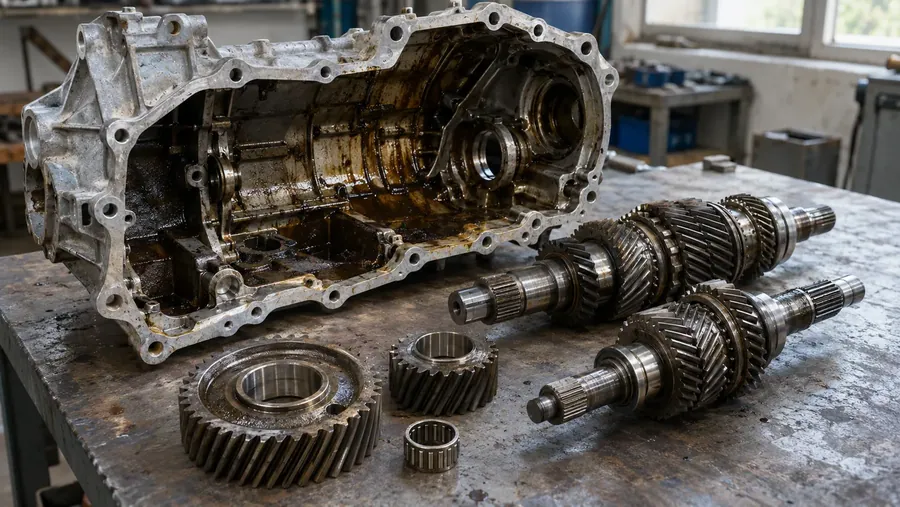 Parts and contaminants · 7 min readCleaning gearbox housings and gears with ultrasonicsClean gearbox housings and gears by pre-washing the sludge, checking basket height against the housing and loading gears so the bath reaches every tooth root.
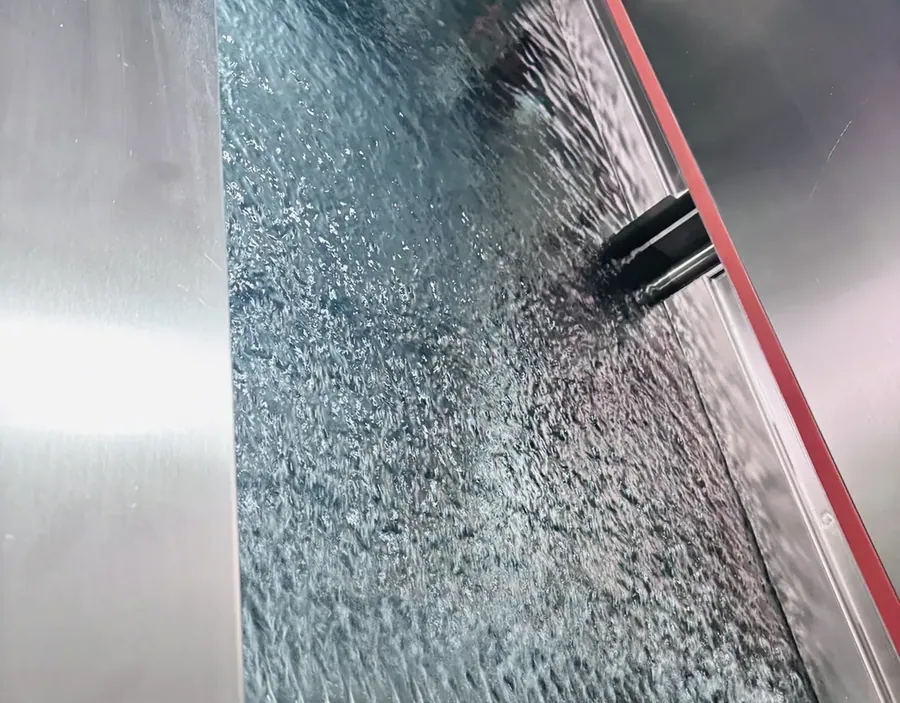 Operation and maintenance · 11 min readLaminar flow in an ultrasonic tank: what it does and which machines have itLaminar flow carries floating oil and dirt across the bath surface to an overflow, so parts leave through clean liquid. How it works, upkeep, which ranges.
 Parts and contaminants · 5 min readUltrasonic cleaning of electronic connectors for reliable contactOxide, flux, dust and old lubricant raise contact resistance. How to clean connectors, pins and charging ports without harming gold, silver or tin plating.
 Parts and contaminants · 4 min readUltrasonic cleaning of battery components before assemblyCell cans, lids, tabs, busbars, housings and cooling plates carry oil and particles into welding and bonding. How to clean them; cells never go in a bath.
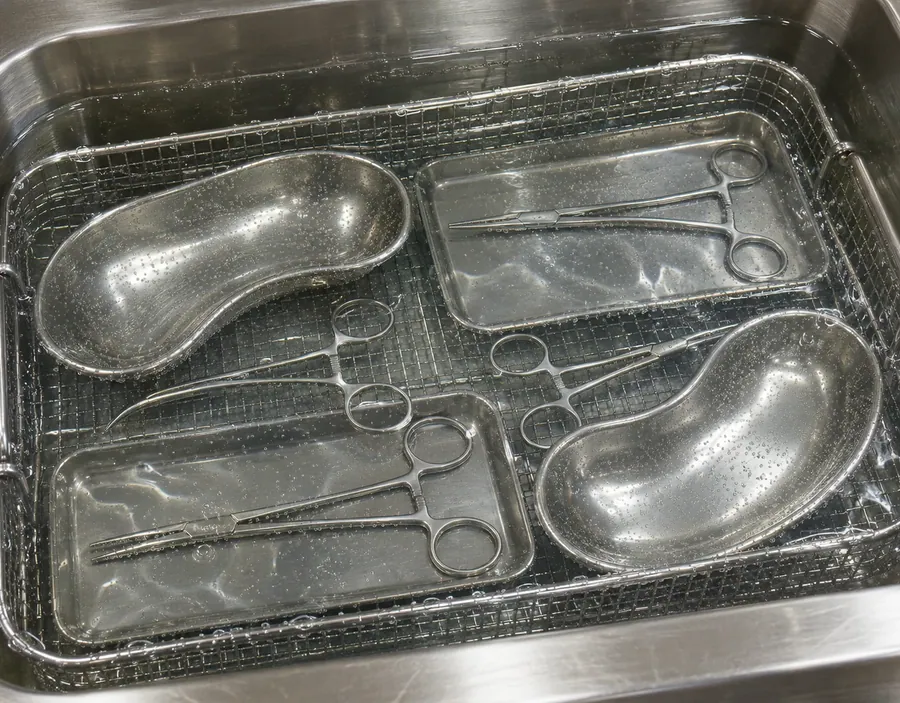 Parts and contaminants · 4 min readUltrasonic cleaning in hospital technical servicesCastors, trolley parts, kitchen filters and grilles: what a hospital's technical service can clean in an industrial tank, and the line it must not cross.
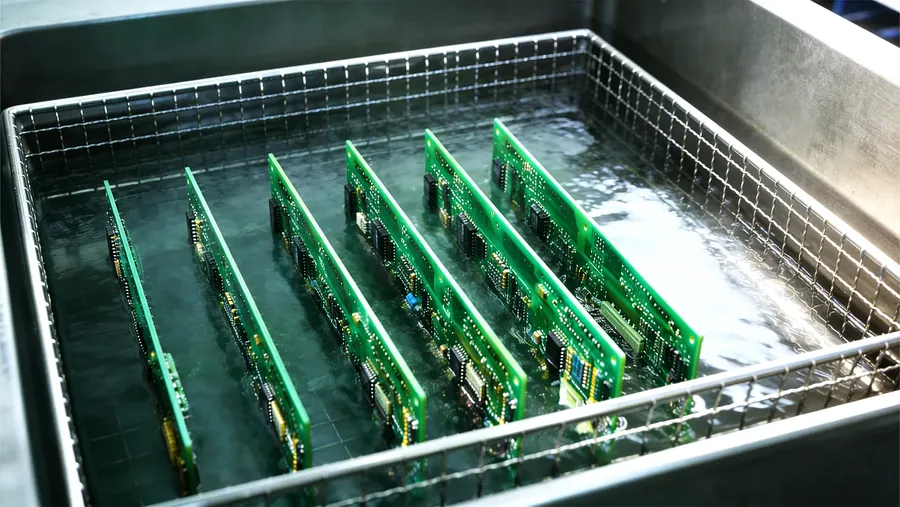 Parts and contaminants · 4 min readCleaning electronic parts before assembly with ultrasoundHousings, heat sinks, shields and frames carry oil, chips and fingerprints into the device. How to clean them first, and why conductive particles matter.
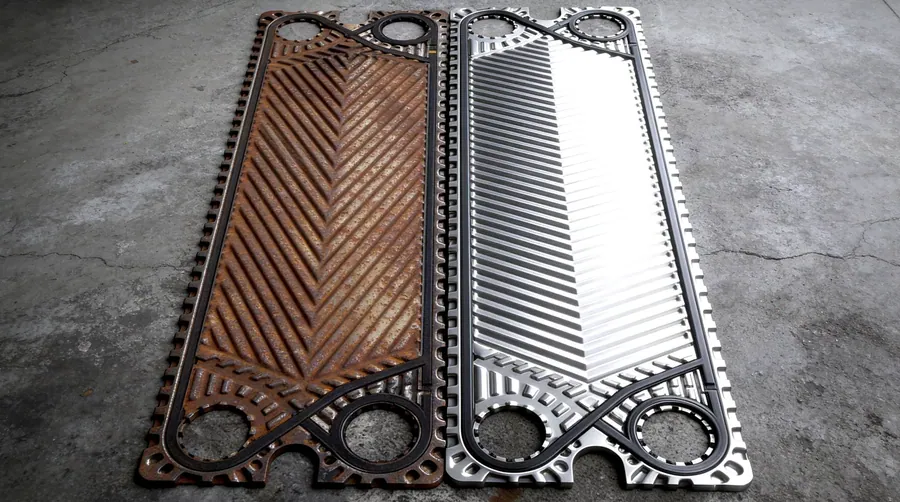 Parts and contaminants · 4 min readUltrasonic cleaning of heat exchangers in industryScale, oil, biofilm and deposits on plate packs, tube bundles and coolers cost heat transfer and pumping energy. Which heat exchangers can go into an ultrasonic tank and which cannot, the two-step chemistry for scale and oil, tank sizes for plates and bundles, and the checks before the exchanger goes back into service.
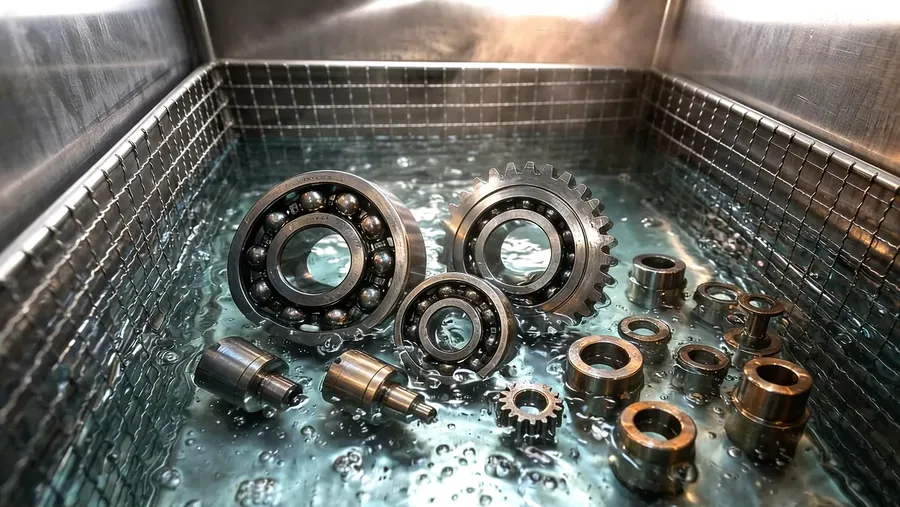 Parts and contaminants · 4 min readUltrasonic cleaning of bearings and mechanical componentsOld grease, wear particles and dirt out of dismounted bearings, gears and couplings so they can be inspected and reused. Which bearings to clean and which never to wash, the settings, and the steps that stop a clean bearing from rusting or being damaged before it is greased again.
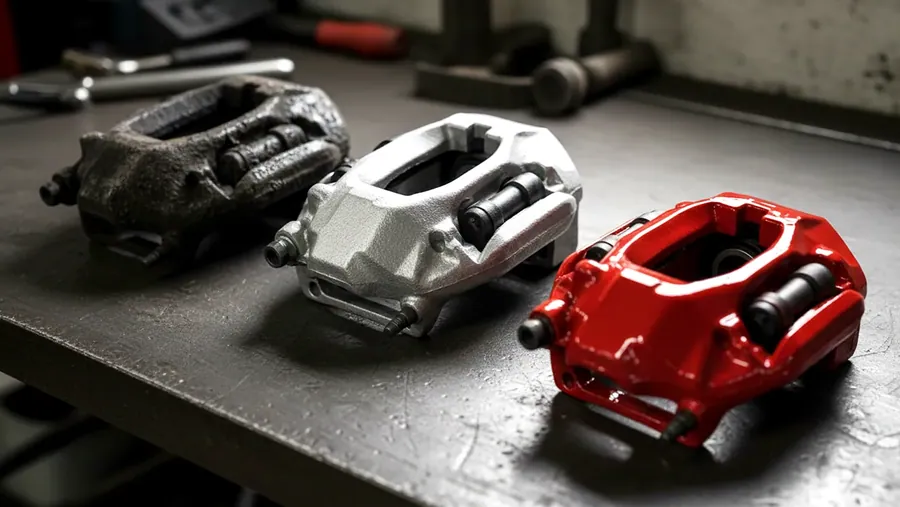 Parts and contaminants · 4 min readCleaning parts before coating or painting with ultrasoundPaint, powder, plating and bonding fail on oil, fingerprints and residue. The cleaning sequence in front of a coating line, how to test that a surface is ready, the contaminants that cause craters and blisters, and how ultrasonic cleaning fits with conversion coatings and pretreatment.
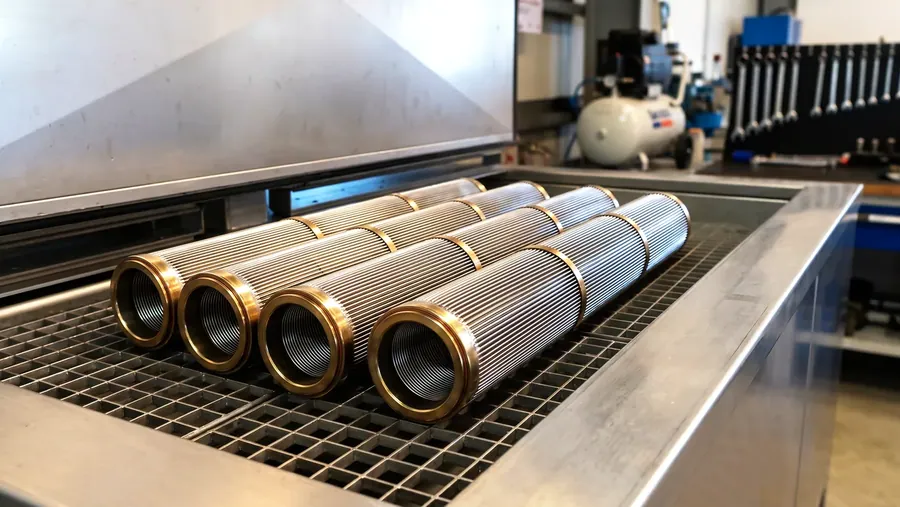 Parts and contaminants · 3 min readCleaning food industry filters with ultrasoundSieves, strainers, sifter screens, fryer filters, filter candles and centrifuge screens clog with fat, protein, pulp, starch and carbonised oil. Which food filters can be cleaned and reused, the chemistry for each soil, why the reverse flush matters, and the hygiene steps before a filter goes back into the line.
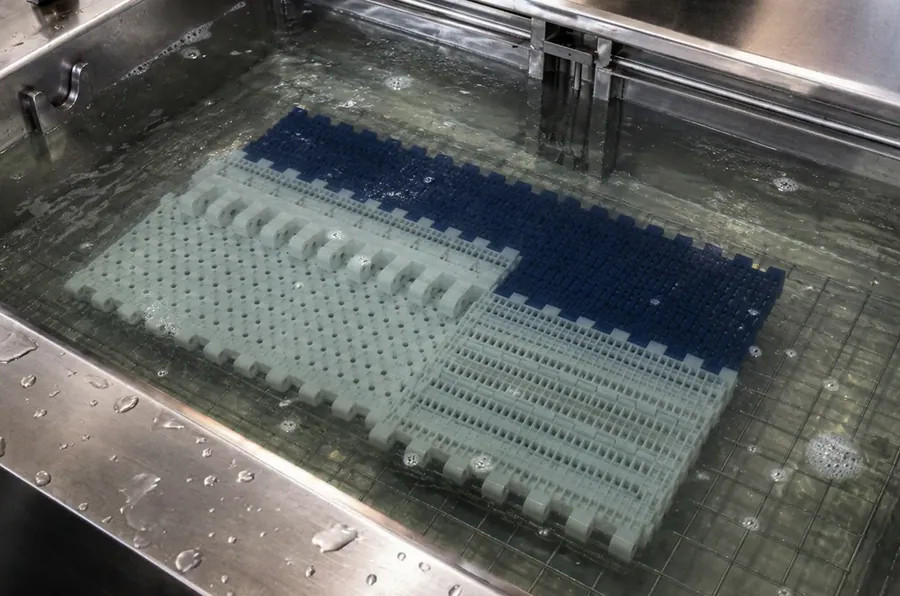 Parts and contaminants · 3 min readCleaning conveyor components in food production with ultrasoundModular belt sections, sprockets, chain links, guides and rollers collect product in hinges and joints that spray cleaning does not reach. Which conveyor parts come off for ultrasonic cleaning, the temperature limits of plastic belting, and how to size a tank for belt modules and sprockets.
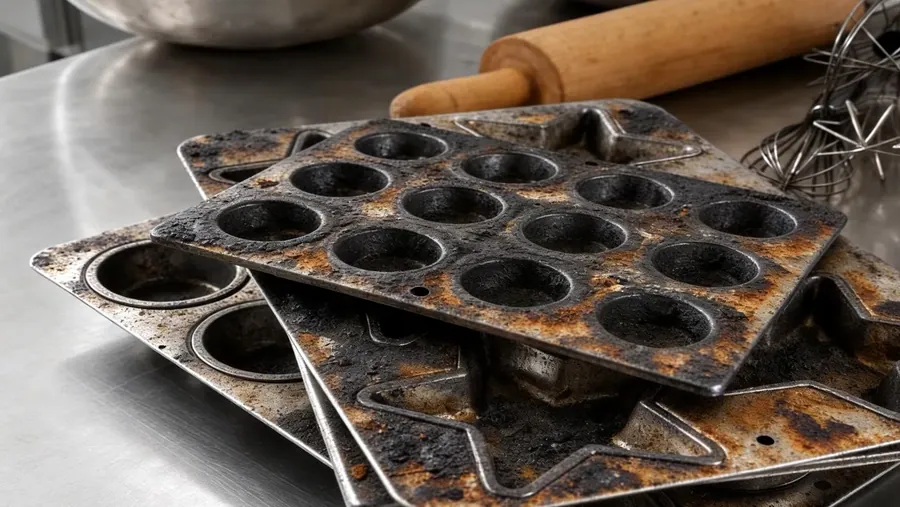 Parts and contaminants · 3 min readCleaning bakery equipment with ultrasoundBaking tins and trays, depositor nozzles and pistons, divider parts, slicer blades and cutters carry dough, sugar, fat and carbonised release agent. What ultrasonic cleaning removes in a bakery, what it cannot remove without harsh chemistry, and how to treat coated tins so the coating survives.
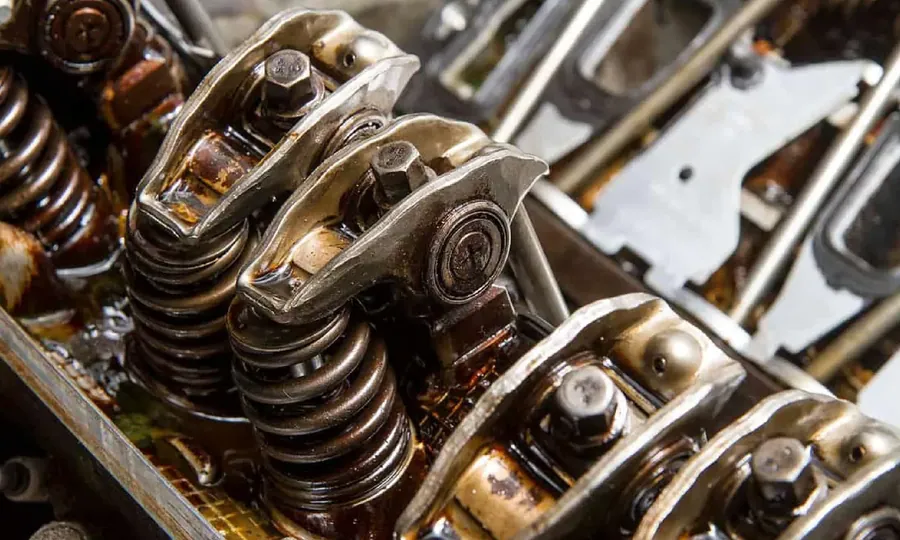 Parts and contaminants · 5 min readRemoving oil and greaseOil is the easiest soil for an ultrasonic bath and the one that kills the bath fastest. Chemistry, temperature and time for light machine oil, chassis grease and waxy lubricants, and why the skimmer matters more than the transducers once the parts come out clean.
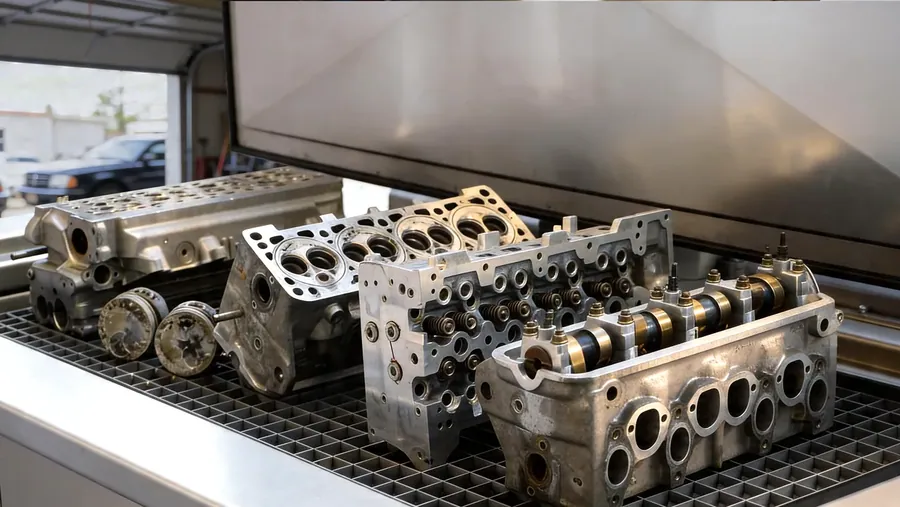 Parts and contaminants · 3 min readRemoving heavy grease and sludge from engine partsCrankshafts, connecting rods, sumps, timing covers and gearbox cases come in coated in oil, sludge and road grime. The hot soak, the ultrasonic cycle and the skimmer that let one bath degrease a week of engine rebuilds instead of a day.
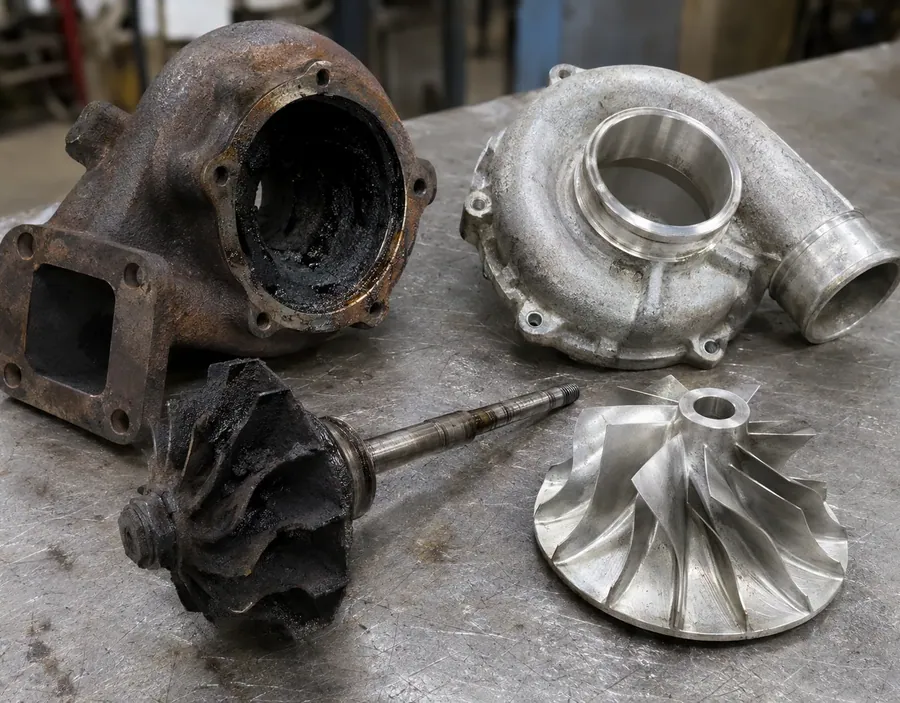 Parts and contaminants · 3 min readUltrasonic cleaning of turbocharger componentsCoked oil in the bearing housing, soot in the turbine housing, sticking vanes in a variable-geometry ring, oil film on the compressor side. How a turbo rebuilder strips and cleans each part, which metals need which bath, and what gets replaced rather than cleaned.
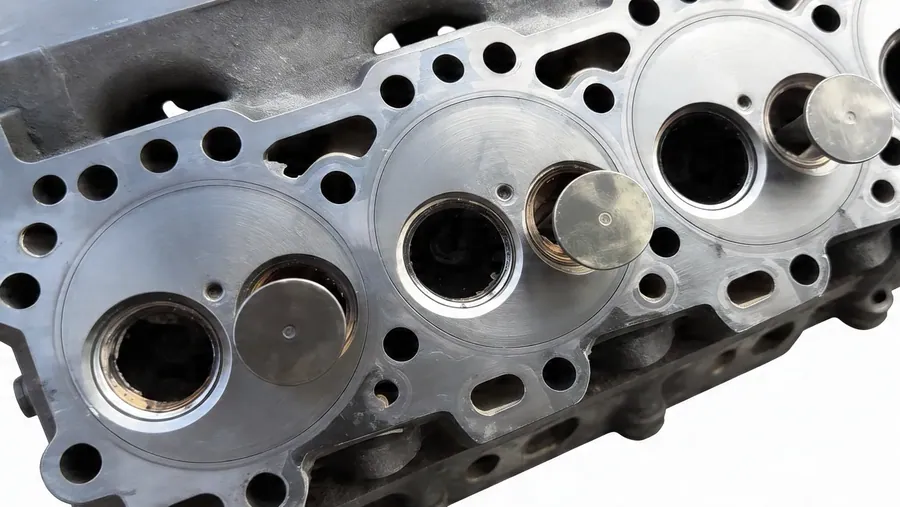 Parts and contaminants · 3 min readUltrasonic cleaning of cylinder heads for automotive repairCarbon in the chambers and ports, oil sludge under the cam covers, scale in the water jacket, gasket remains on the deck. How a head is stripped, which bath suits aluminium and which suits cast iron, and where cleaning sits between crack testing and valve-seat work.
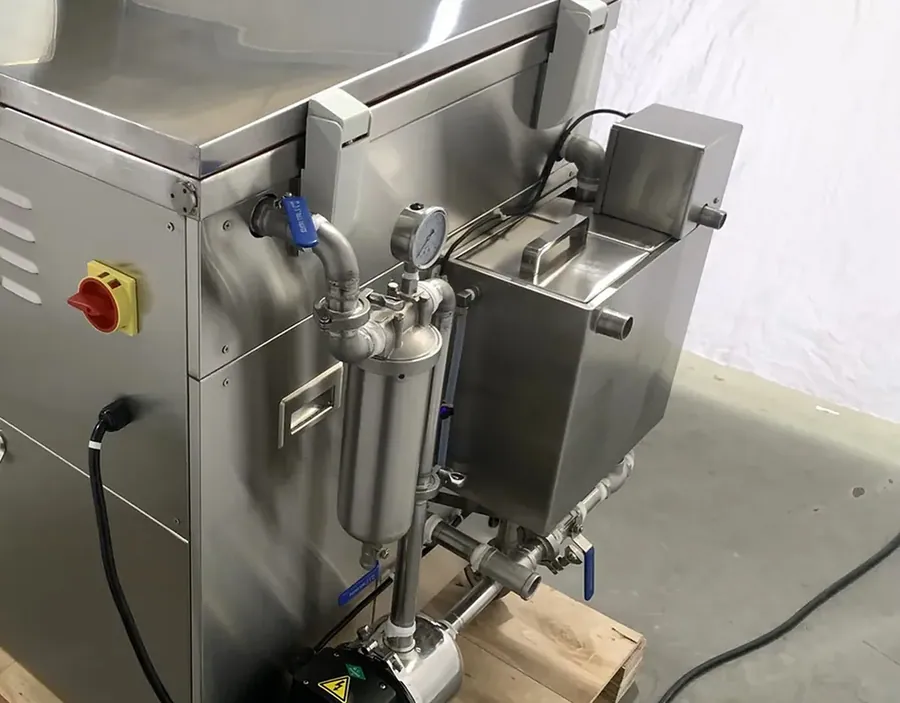 Choosing a machine · 4 min readST or SF: when the bath needs its own filtrationThe ST series is a heated ultrasonic tank; the SF series is the same tank built around a circulation loop with a buffer tank, oil skimmer and laminar flow. The second costs more and stands longer between bath changes. Where the line between them runs, with the overlapping models compared.
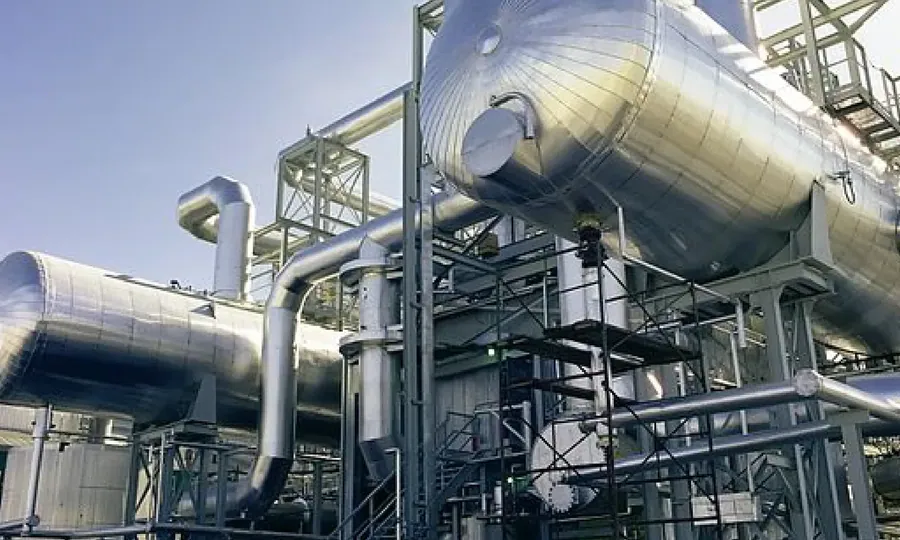 Industries · 3 min readUltrasonic cleaning in heavy industry: energy, oil and gas, mining, railHeat exchangers, valves, pump and compressor parts, turbine components, hydraulic blocks and filters from plants where a stopped machine costs more per hour than the cleaning tank costs to buy. Large tanks, heavy baskets, scale and heavy oil, and the maintenance schedules they fit into.
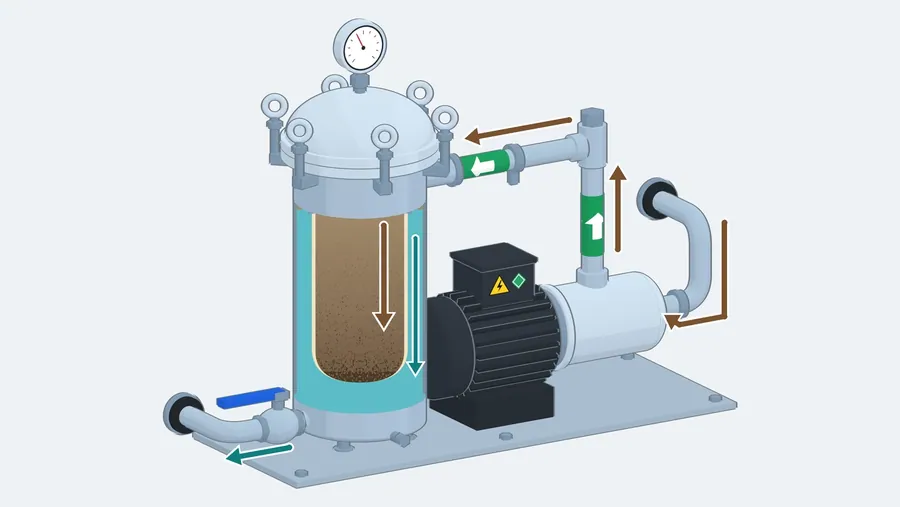 Process and parameters · 4 min readFiltration and bath lifeA cleaning bath fails in three ways: it fills with particles, it saturates with oil, or its chemistry is used up. Filtration handles the first two and stretches the third. What a filtration loop and an oil skimmer do, when a bath needs them, and how to tell when a bath is finished.
Let's find the right fit
Not sure which size you need?
Send us the part, the quantity per hour and the soil you are removing. We will size the tank and the frequency with you.