
Parts and contaminants · 3 min read · Updated 2026-09-26
Cleaning conveyor components in food production with ultrasound
Modular belt sections, sprockets, chain links, guides and rollers collect product in hinges and joints that spray cleaning does not reach. Which conveyor parts come off for ultrasonic cleaning, the temperature limits of plastic belting, and how to size a tank for belt modules and sprockets.
Technical guide. Figures are taken from our own spec tables; for your process we confirm the settings with a cleaning trial.
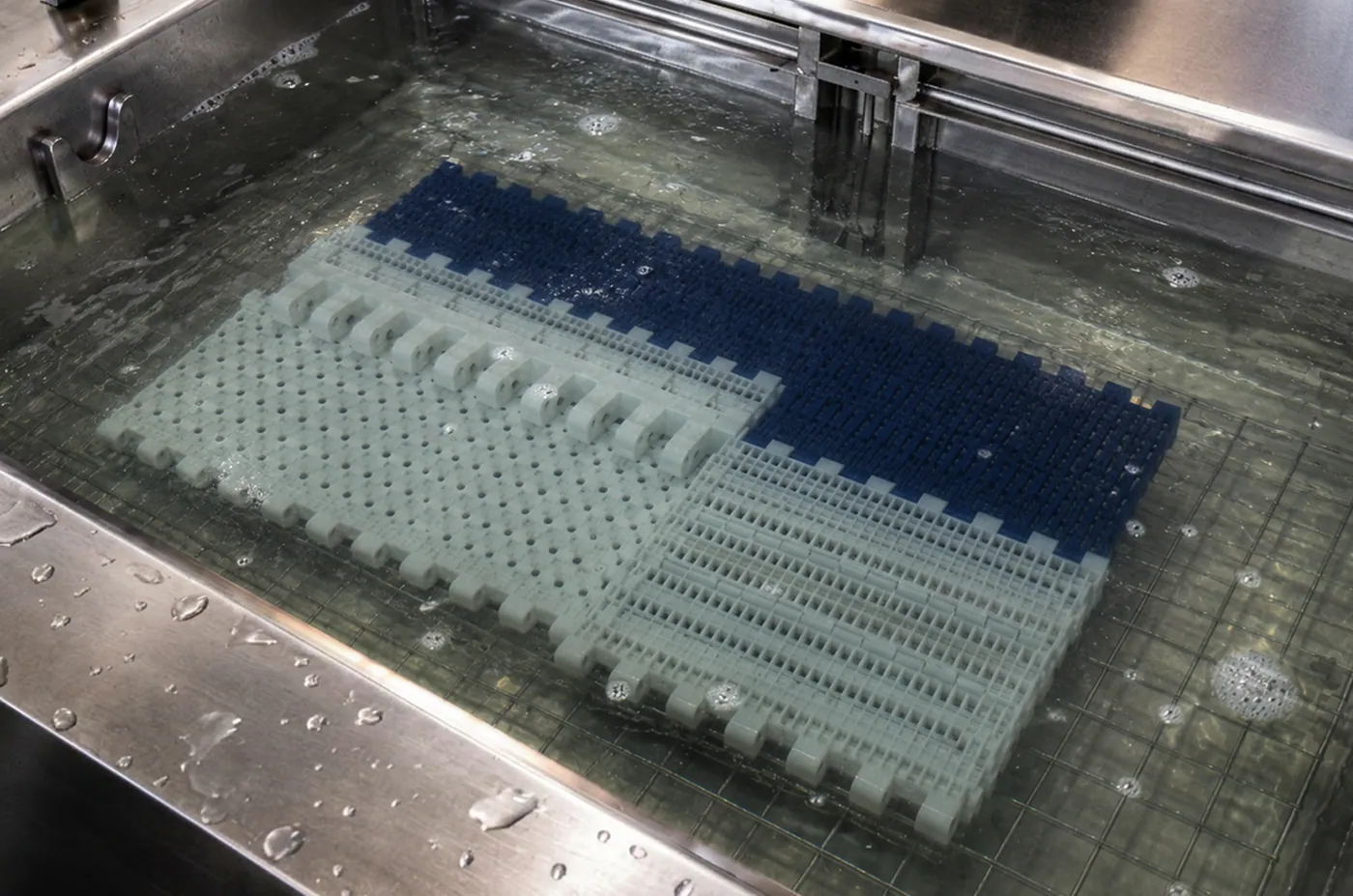
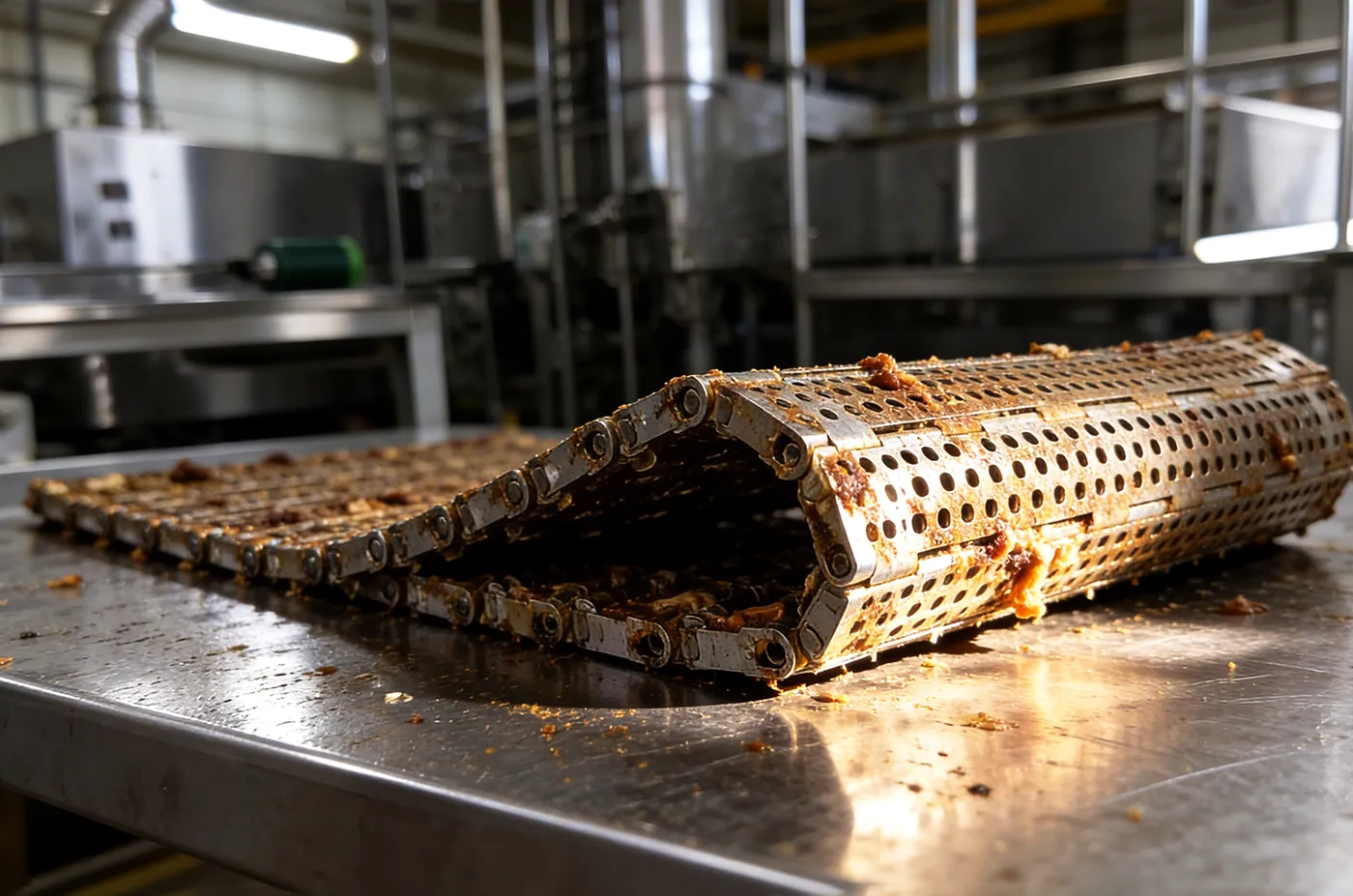
Conveyors carry product through the whole plant, and most of them are cleaned in place with foam and spray every day. That cleans the belt surface. It does not clean inside the hinges of a modular plastic belt, the bores of the rods, the joints of a chain or the teeth roots of a sprocket, and those are the places where product residue and biofilm build up between the deep cleans. At a planned deep clean, the belt modules and small conveyor parts come off, and an ultrasonic tank cleans what the spray missed.
What comes off
| Part | Material | Where soil sits |
|---|---|---|
| Modular belt sections | POM, PP, PE | Hinges, rod holes, module joints |
| Hinge rods | POM, PP, stainless | Along the rod, inside the modules |
| Sprockets and idlers | PA, POM, stainless | Bore, keyway, teeth roots |
| Stainless chains and links | AISI 304 or 316 | Pins, bushings, link plates |
| Wear strips and guides | UHMW-PE | Grooves, fixing holes |
| Rollers and small drums | Stainless, plastic | Bearings seats, end caps |
Parts with electrical components, motors and sensors without a suitable IP rating stay out of the tank.
Temperature and chemistry
Plastic belting sets the limits. Typical upper temperatures for cleaning are around 60 °C for polypropylene and polyethylene and a little higher for acetal (POM), but the belt maker's data sheet decides. Acetal is also sensitive to strong acids and to chlorine at high concentrations, so check the cleaner and the disinfectant against the belt material.
| Soil | Cleaner | Temperature | Time |
|---|---|---|---|
| Protein: meat, fish, dairy | Enzymatic or mild alkaline, food-safe | 35 to 45 °C | 10 to 15 min |
| Fat and oil | Mild alkaline, food-safe | 50 to 60 °C, within the plastic's limit | 10 to 15 min |
| Sugar, dough, starch | Warm water with detergent | 45 to 55 °C | 5 to 10 min |
| Food-grade chain lubricant on stainless chains | Mild alkaline | 50 to 60 °C | 10 to 15 min |
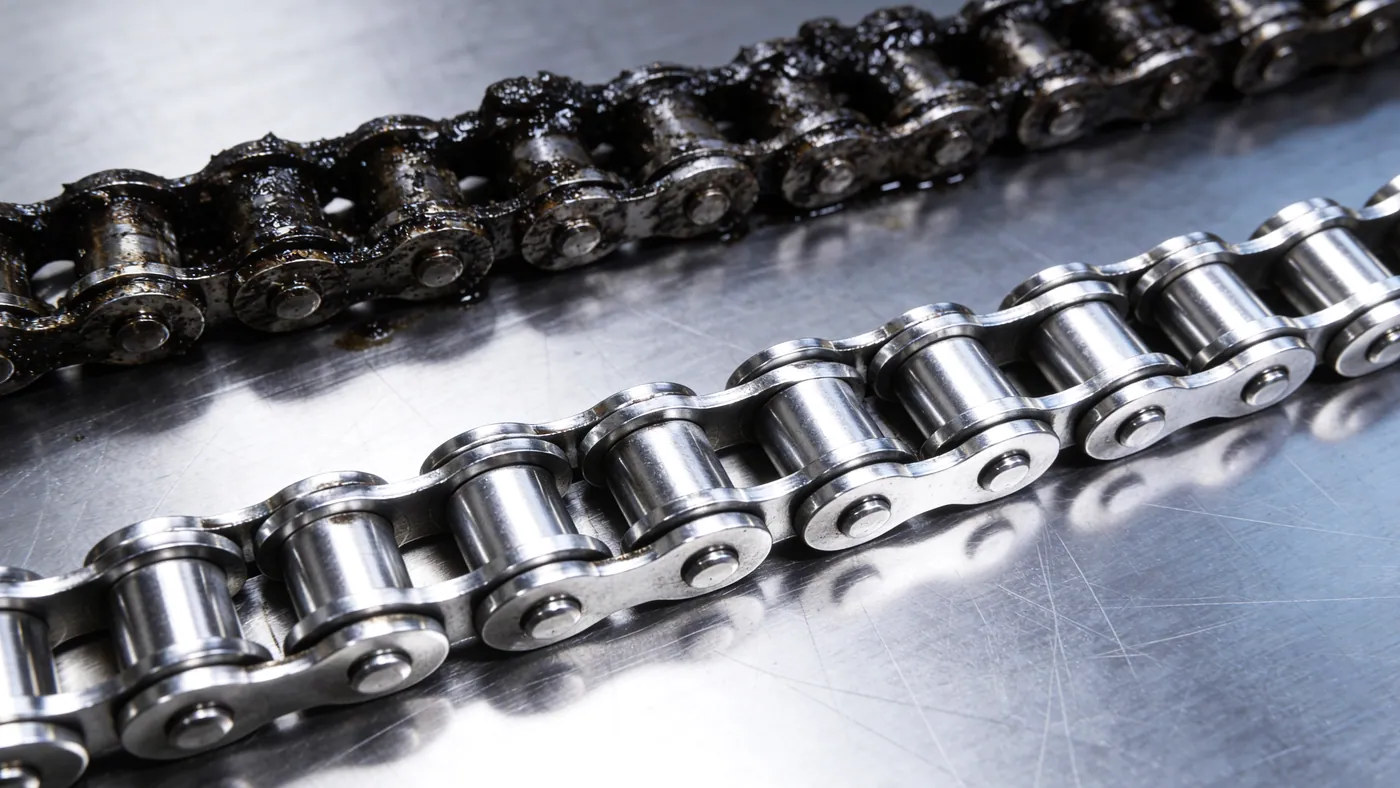
28 kHz suits belt modules, chains and sprockets: the parts are solid and the soil is in joints rather than on fine surfaces. After the wash: rinse in potable water, disinfect by the plant's method, dry, and reassemble with new hinge rods where the belt maker recommends it.
Loading belt modules
Modular belting comes off in long sections. Two ways work:
- Rolled or folded sections in a rack, loose enough that liquid reaches every hinge. A tightly rolled belt shields its inner turns; see loading the basket.
- Flat sections hung vertically from a frame in a deep tank, so both sides and all hinges face the liquid.
Moving the load up and down during the cycle pumps liquid through the hinges and rod holes. A lift system does this automatically and also handles the weight of a full rack of belt and sprockets; see when to choose a lift system.
Tank size
Tank length and width come from the belt width and the rack, not from the volume. A 600 mm wide belt in hanging sections needs a tank at least 700 mm long in that direction, with room for the rack. Measure the largest part or rack before choosing; see how to size a tank.
Which machine
| Work | Set-up |
|---|---|
| Sprockets, guides, chain lengths, small belt sections | ST-157 to ST-300 at 28 kHz with skimmer, rinse tank |
| Belt sections from one or two lines at each deep clean | AL-300 to AL-600 with lift, racks and filtration |
| Belting from many lines, planned deep cleans | AL-1000 or a custom tank sized to the rack, with rinse and drying stations |
Food soil loads a bath quickly, so filtration and a skimmer matter as much as the tank size; see ST or SF. For the general hygiene rules, see the food industry overview.
Why it pays
The deep clean of a conveyor is planned downtime. Cleaning belt modules by hand, hinge by hinge, takes hours; a loaded rack in an ultrasonic tank takes minutes per cycle. The time saved is line time, and the result is more consistent than hand brushing, which is what an audit looks for.