
Parts and contaminants · 3 min read · Updated 2026-09-26
Removing heavy grease and sludge from engine parts
Crankshafts, connecting rods, sumps, timing covers and gearbox cases come in coated in oil, sludge and road grime. The hot soak, the ultrasonic cycle and the skimmer that let one bath degrease a week of engine rebuilds instead of a day.
Technical guide. Figures are taken from our own spec tables; for your process we confirm the settings with a cleaning trial.
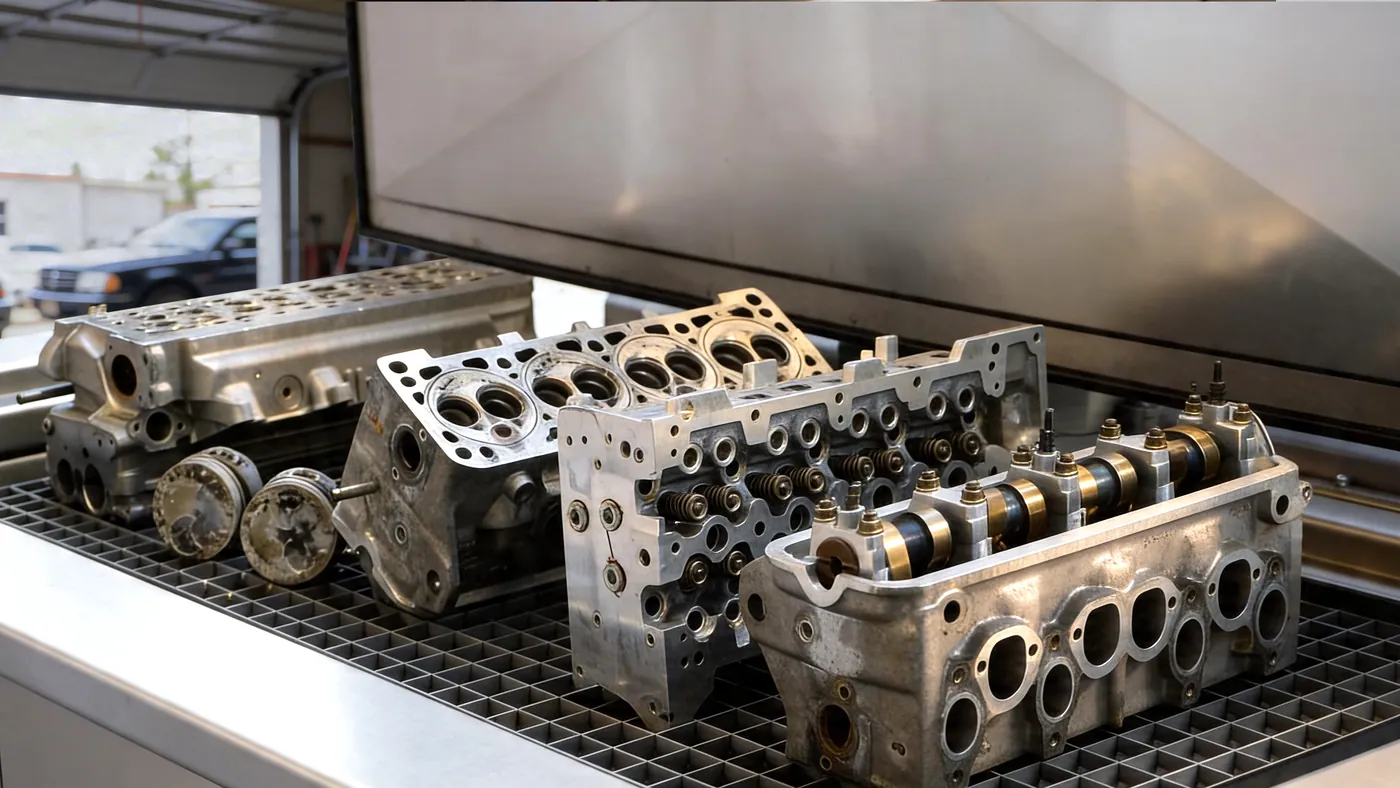
The first clean in an engine rebuild is a degreasing job, and a heavy one. The parts arrive coated in engine oil that has turned to sludge, grease packed around seals and bearings, and road grime bonded to the outside. Nothing can be measured, crack-tested or even assessed until it is off. An ultrasonic tank does it faster and more completely than a solvent sink, as long as the bath is managed, because the oil that comes off the parts is also what kills the bath.
What the soil is
- Oil and sludge: oxidised engine oil thickened with soot, water and wear metal, thick in sumps, timing covers, rocker covers and oil galleries.
- Grease: wheel-bearing, CV and assembly grease, solid at room temperature, liquid above 50 to 60 °C.
- Road grime bound to the outside by oil mist and baked on the hot parts.
- Gasket and sealant remains at every joint face.
The sequence that works
- Drain and scrape. Tip out standing oil, scrape the thick sludge out of sumps and covers into a waste tray. A kilogram of sludge scraped out is a kilogram the bath does not have to carry.
- Hot soak. 15 to 30 minutes in the tank at 70 to 80 °C with the ultrasound off. Grease melts, sludge softens, and much of the oil floats off on its own.
- Ultrasonic cycle. Down to 60 to 65 °C, alkaline degreaser at 3 to 5 %, 28 kHz, 10 to 20 minutes. The lower temperature matters: cavitation weakens above about 70 °C; see choosing the temperature.
- Lift and drain over the tank, then rinse in clean warm water.
- Dry and protect: machined steel and iron surfaces get oil or an inhibitor at once.
For aluminium parts (sumps, covers, gearbox cases) use a degreaser rated for light alloys and keep to the lower temperatures; strong hot alkali turns aluminium grey. The oil and grease article covers the chemistry in more detail.
The skimmer is the process
A 200-litre bath of alkaline degreaser can hold a few hundred grams of oil in emulsion before it starts laying a film back on the parts. One oily gearbox case can bring that much. The bath saturates in a day, the parts come out looking clean and feel greasy on the bench, and the bath is changed again.
Two things break that cycle:
- Let the oil separate. Overnight, with the heater and the ultrasound off, most of the emulsified oil rises to the surface.
- Take it off. A skimmer at the surface, a belt, disc or floating weir, removes the separated oil into a container before the next shift. The bath keeps its capacity for the day's work.
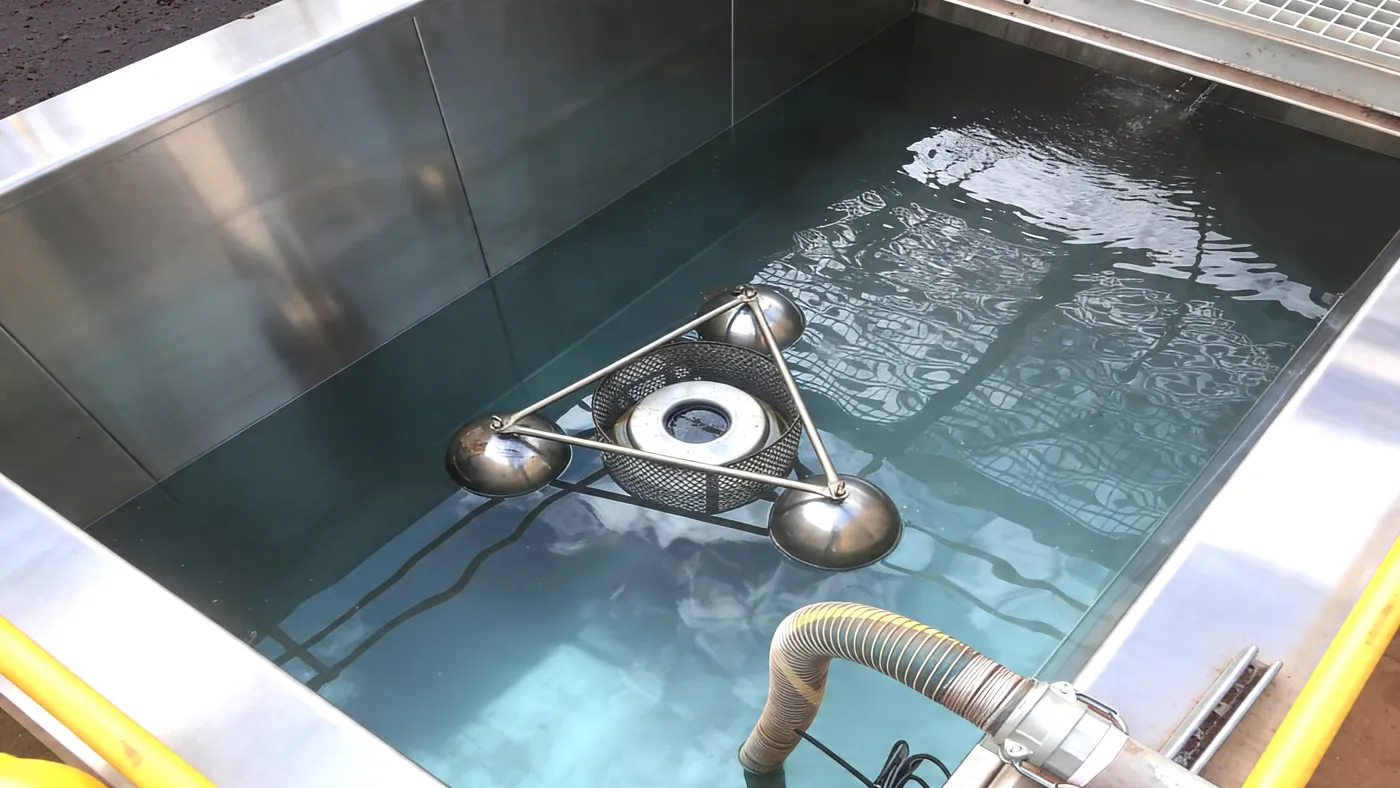
Add a bag filter of 25 to 50 µm on the circulation loop for the grit and wear metal, and a degreasing bath that lasted two days lasts two to four weeks. The SF series has the buffer tank and skimmer built in; the AL and AU series take them as modules. See filtration and bath life.
Which parts, which tank
| Parts | Typical size | Machine |
|---|---|---|
| Rods, pistons, rockers, small covers | basket loads to 50 kg | ST-96 with a skimmer loop, or an SF-225 |
| Crankshafts, camshafts, sumps, timing covers | up to 800 mm long | ST-206, ST-300, or an SF-360 |
| Gearbox cases, blocks, heavy loads | 100 kg and over | AL-600 or AL-1000 with lift, agitation, filtration and skimmer |
Crankshafts go on a rack or lie along the long axis of the tank; the oil drillings in the journals are blown through after the cycle, because sludge in a crank drilling goes straight to a new bearing.
Waste
Skimmed oil and a spent emulsion bath are waste oil and oily water: they go to a licensed collector, not to the drain. Skimming and filtering cut the volume of spent bath by an order of magnitude, which is most of the running cost of degreasing; the running costs article has the rest.