
Industries · 4 min read · Updated 2026-11-18
Ultrasonic cleaning in aerospace maintenance and manufacturing
Engine parts from a shop visit, hydraulic components, avionics hardware and cabin fittings all reach the cleaning bay with different soil. What comes off them, which chemistry and settings suit each, and where the tank fits in a procedure the OEM manual still governs.
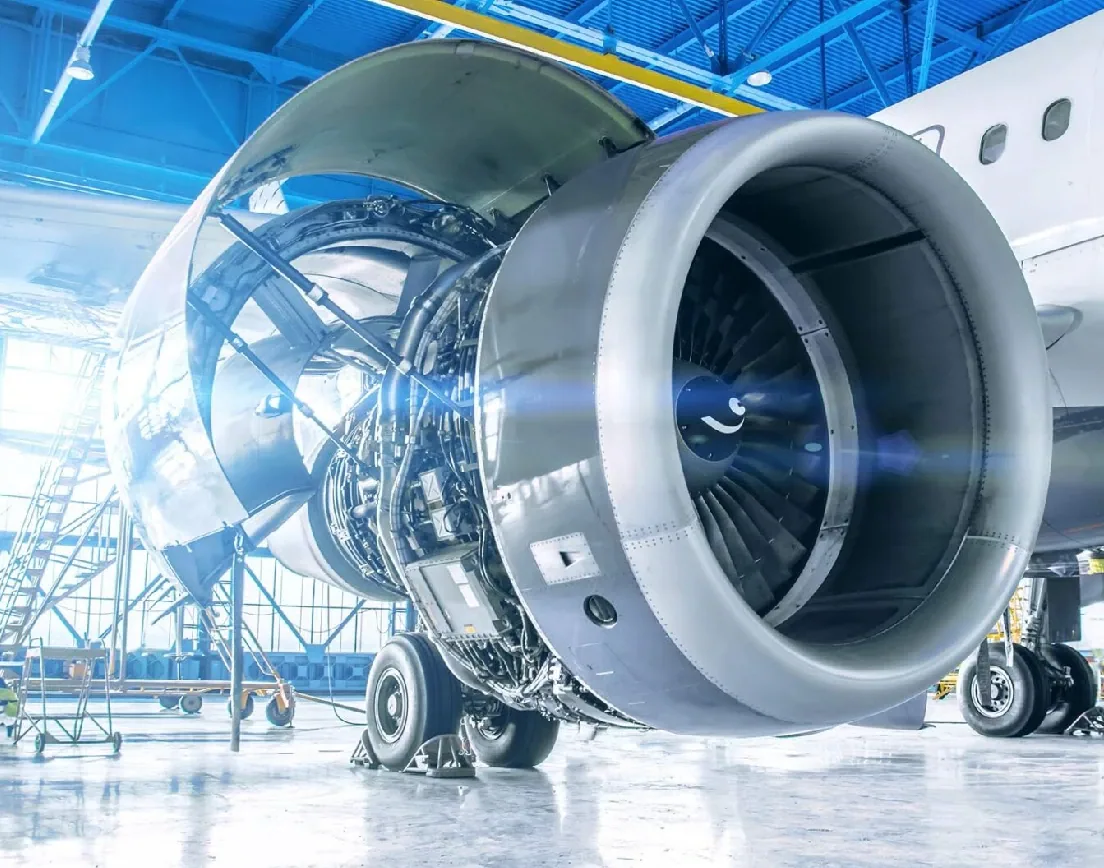
In aerospace work, cleaning is a step in a written procedure, not a goal of its own. A part is cleaned so it can be inspected, measured, repaired or assembled. The component maker's or OEM's manual sets the allowed cleaners, temperatures and the inspection that follows. An ultrasonic tank has to fit that procedure; it does not replace it. Within those limits it does one thing well: it reaches soil in bores, threads, cooling holes and cross-drillings that a brush and a spray gun cannot.
The parts
- Engine parts from a shop visit, once removed from the engine and disassembled: compressor and turbine blades and vanes off the disc, fuel nozzles, bearing housings, gearbox housings and gears, oil-system fittings.
- Hydraulic components: actuator parts, valve bodies and spools, pump parts, fittings and tube ends.
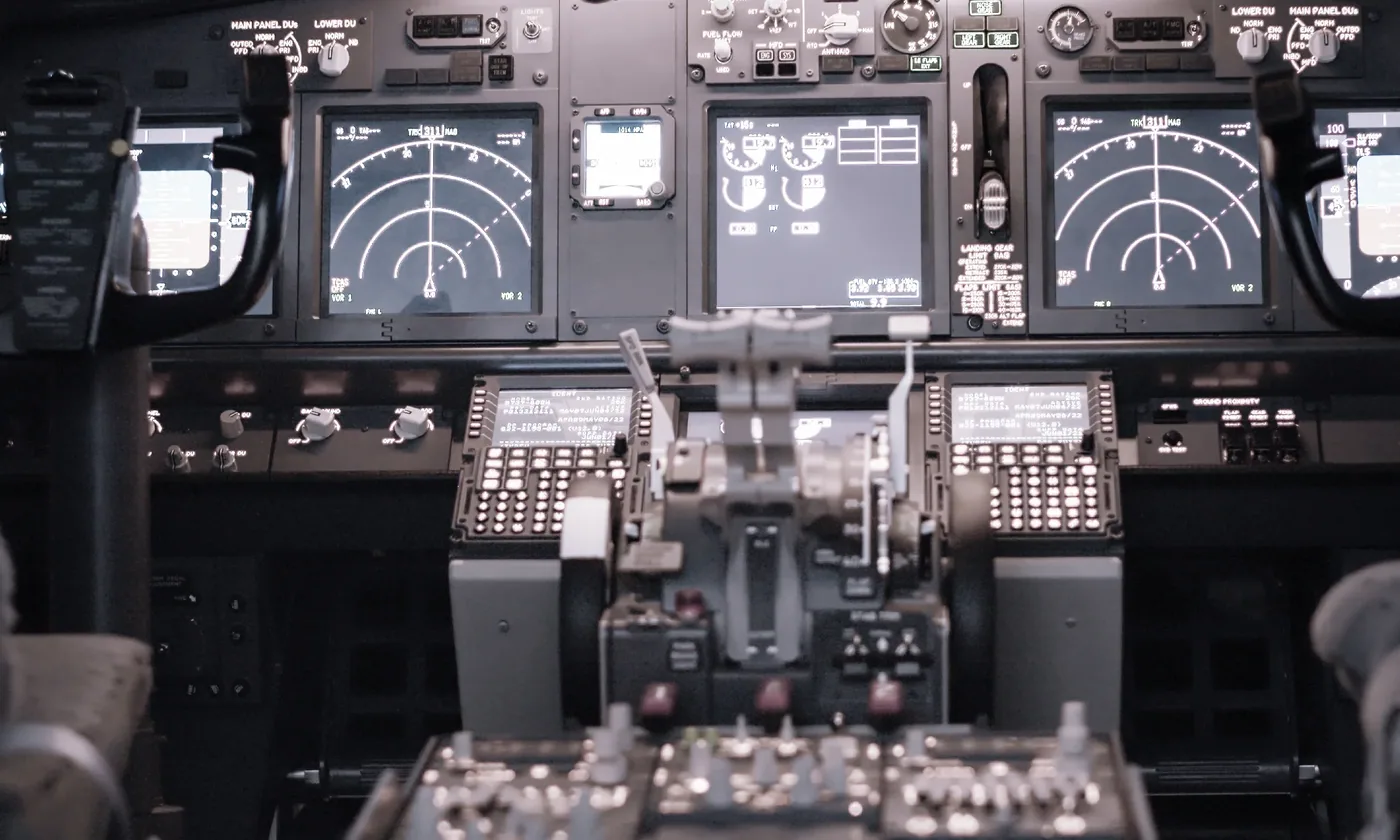
- Avionics hardware: chassis, brackets, connectors and circuit boards, only where the unit maker permits immersion cleaning.
- Cabin interior parts: seat fittings and track parts, galley hardware, latches and hinges.
- Precision instruments and tooling, and composite parts or lay-up tools where the material maker allows aqueous immersion.
The soil
| Part group | Typical soil |
|---|---|
| Hot-section engine parts | carbon, varnish, baked-on oil |
| Gearbox and bearing parts | lubricating oil, grease, wear particles |
| Hydraulic components | hydraulic fluid, fine particles, seal debris |
| New or repaired parts | machining oil, chips, polishing paste |
| Avionics and instruments | dust, handling residue, flux on repaired boards |
| Cabin fittings | dirt, old lubricant, food and drink residue |
Particles matter most where parts move against each other or fluid passes through narrow clearances: a chip in a valve spool bore or an oil passage is the kind of residue the clean is there to remove.
The chemistry
Use the cleaner the manual lists for the material. Most shops run aqueous alkaline cleaners for oil, grease and carbon, with a stronger formulation for hot-section carbon. Aluminium and magnesium alloys need an inhibited cleaner made for light alloys, because strong hot alkali etches them. High-strength steels, titanium and some coatings often carry restrictions on which cleaners and acids may touch them; the manual names them. Avionics and boards need a cleaner made for electronics.
After the ultrasonic stage, rinse in the water quality the procedure asks for, dry at once and protect bare steel against corrosion. Residue left by the cleaner is soil too.
Frequency, temperature and time
28 kHz suits robust parts with heavy, adherent soil: carbon on combustor and turbine hardware, grease on gearbox housings. 40 kHz suits fine features and sensitive surfaces: fuel nozzle passages, hydraulic spools and valve bores, small threads, anodised aluminium, connectors and boards.
Most aqueous cleaning runs at 50 to 65 °C
Load parts in a basket so they do not touch each other or the tank floor. Point blind holes and cavities sideways or upward so trapped air can escape and the liquid can get in.
Keeping it repeatable
A batch is only as clean as the bath. Oil and particles build up with every load and settle back on the next one. Skim oil, filter particles and change the bath on a schedule tied to the number of loads, not on appearance. See filtration and bath life.
Which Sonixtek machine
| Work | Machine | Why |
|---|---|---|
| Fuel nozzles, small hydraulic parts, instruments, connectors | STS benchtop, 2 to 30 L |
40 kHz, small batches on a bench |
| Gearbox parts, actuator and valve bodies, cabin fittings | ST, 40 to 400 L |
28 or 40 kHz, chosen at order; sweep standard |
| Mixed work with oily soil | UMX Pro, 50 to 255 L |
optional pump, filter and oil skimmer; dual 28/40 kHz on request |
| Heavy housings and baskets of engine parts | AL with lift, AL-75 to AL-2000 | basket loads from 75 to 1000 kg |
| Large assemblies, high throughput | AU, AU-400 to AU-8000 | automatic systems up to 2800 × |
| Drying after the rinse | DT hot-air dryers, 96 to 300 L |
dry the load before corrosion starts |
The industrial series heat from room temperature to 100 °C
Send us a part and the cleaning section of its manual, and we will run a trial against it.