

Topics
Articles about: Cleaning liquids
17 articles
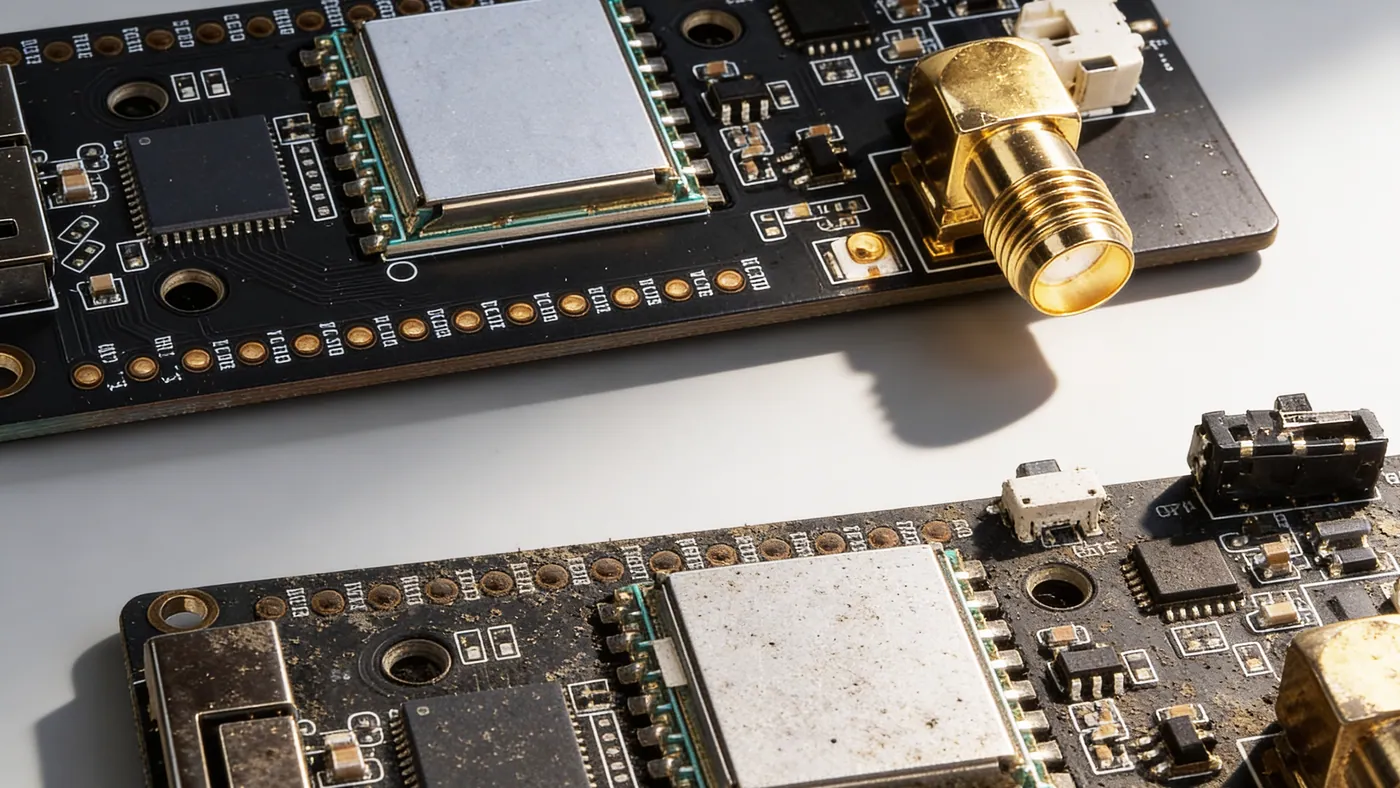 Parts and contaminants · 4 min readUltrasonic cleaning of communication equipment componentsRF housings, cavity filters, waveguides and antenna parts, often plated aluminium: gentle chemistry, no etching, no loose particles, and dry cavities.
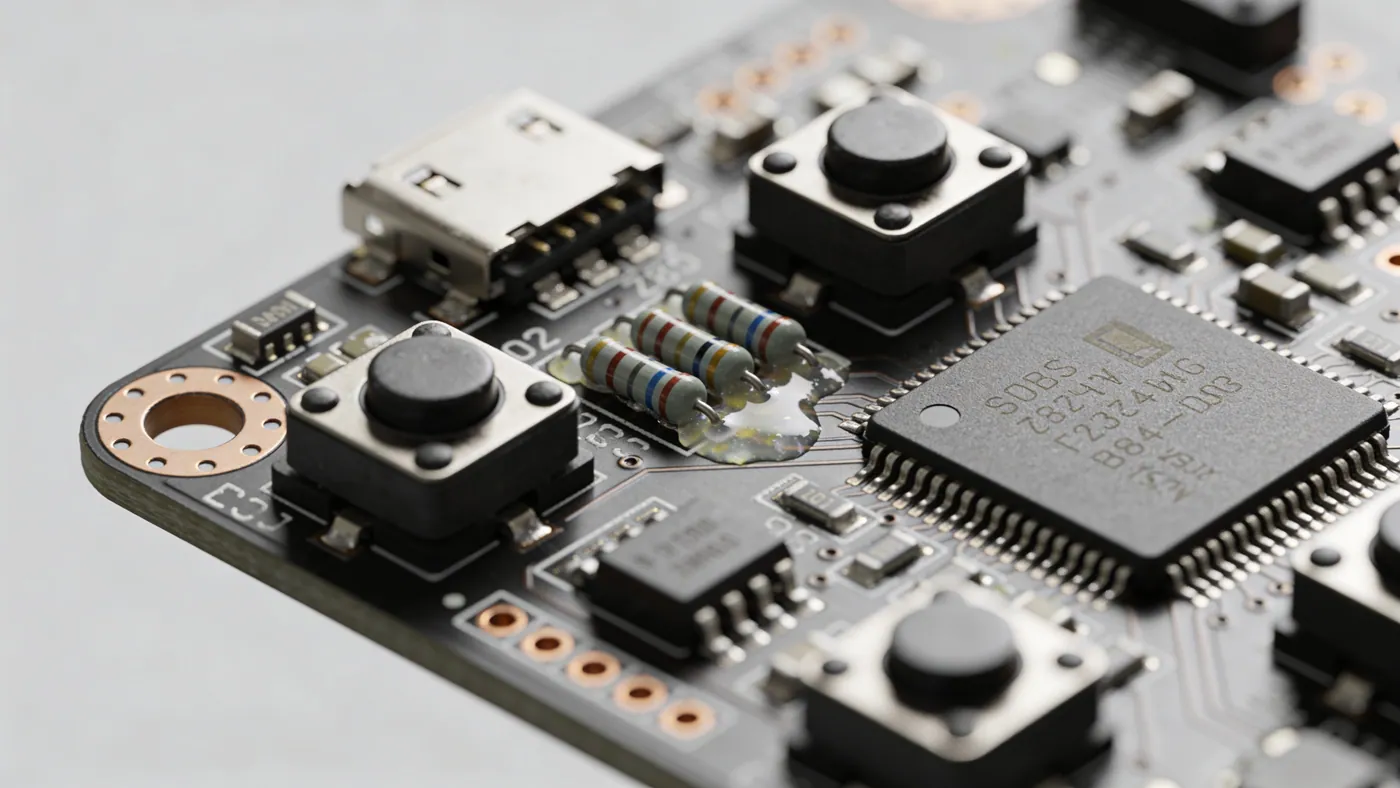 Parts and contaminants · 4 min readCleaning sensors and microelectronic parts with ultrasoundSensor housings, probes, optical windows and sensor elements before assembly: what ultrasound cleans well, and which sensor types must never go into the bath.
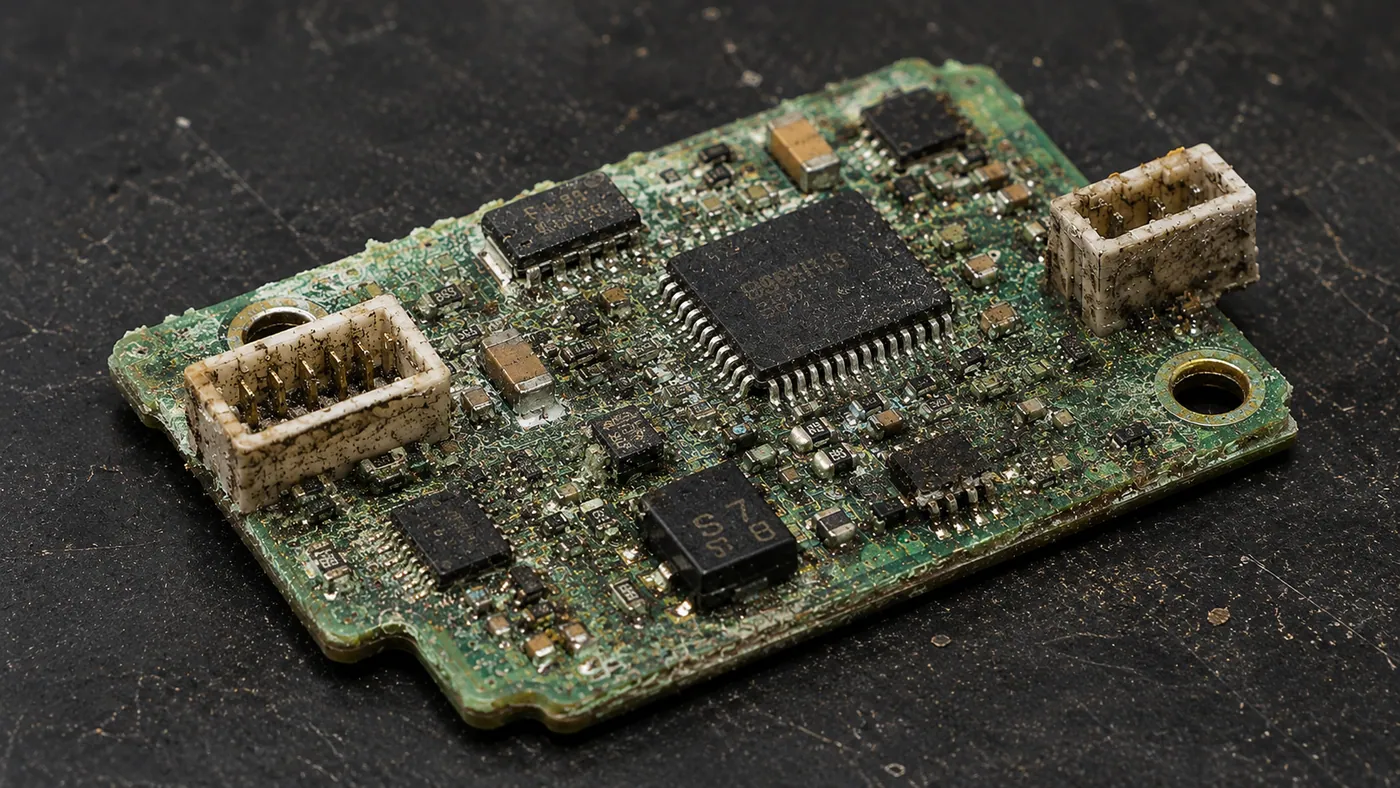 Parts and contaminants · 4 min readCleaning electronic modules after repair with ultrasoundRework flux, corrosion after liquid damage and old dust: how to clean a repaired module, what to remove first, and why solvents never go in a heated tank.
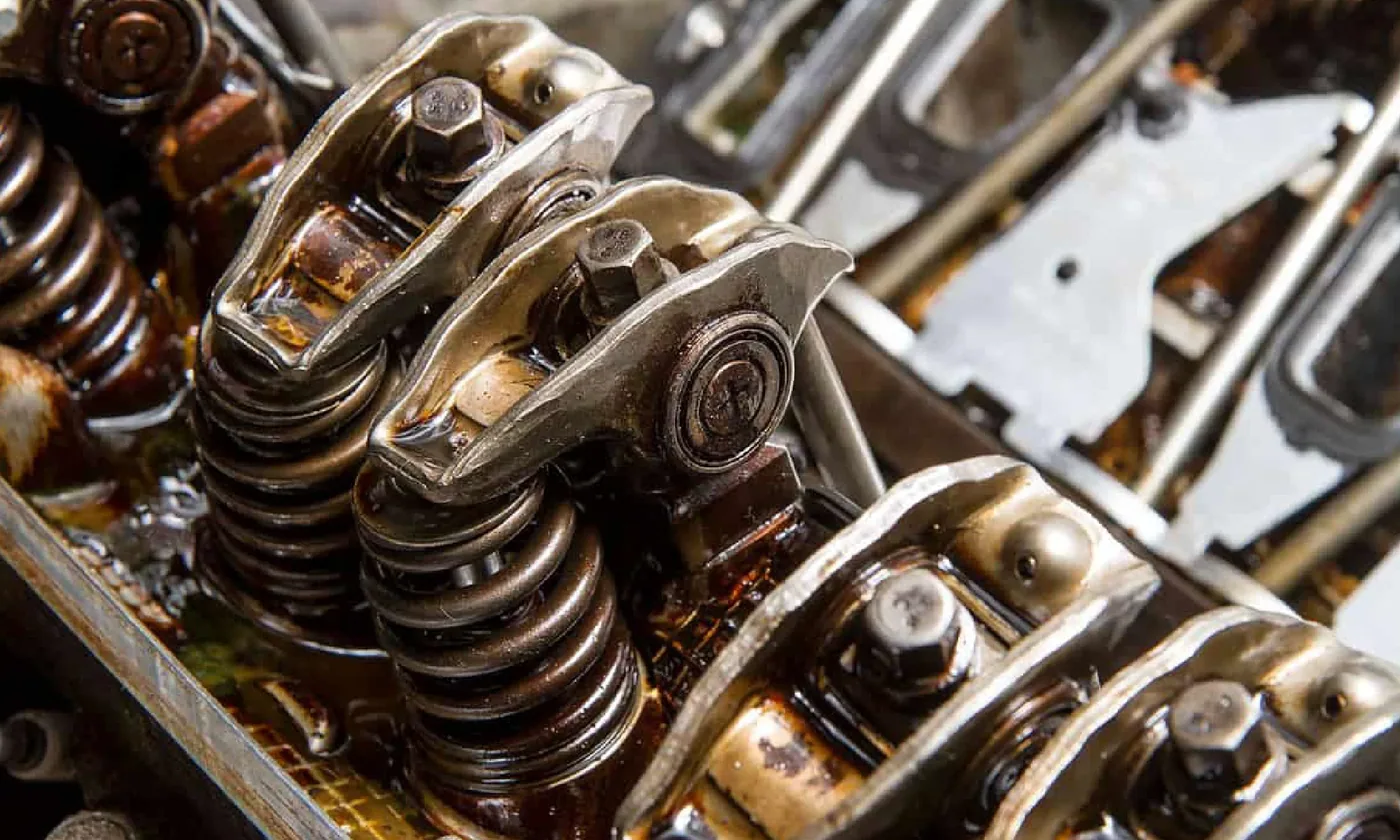 Parts and contaminants · 5 min readRemoving oil and greaseOil is the easiest soil for an ultrasonic bath and the one that kills the bath fastest. Chemistry, temperature and time for light machine oil, chassis grease and waxy lubricants, and why the skimmer matters more than the transducers once the parts come out clean.
 Process and parameters · 4 min readCleaning liquids for ultrasonic cleaningWater with a detergent does most jobs. Which chemistry for oil, carbon, oxide and flux, what never goes in the tank, and why concentration and temperature matter as much as the product.
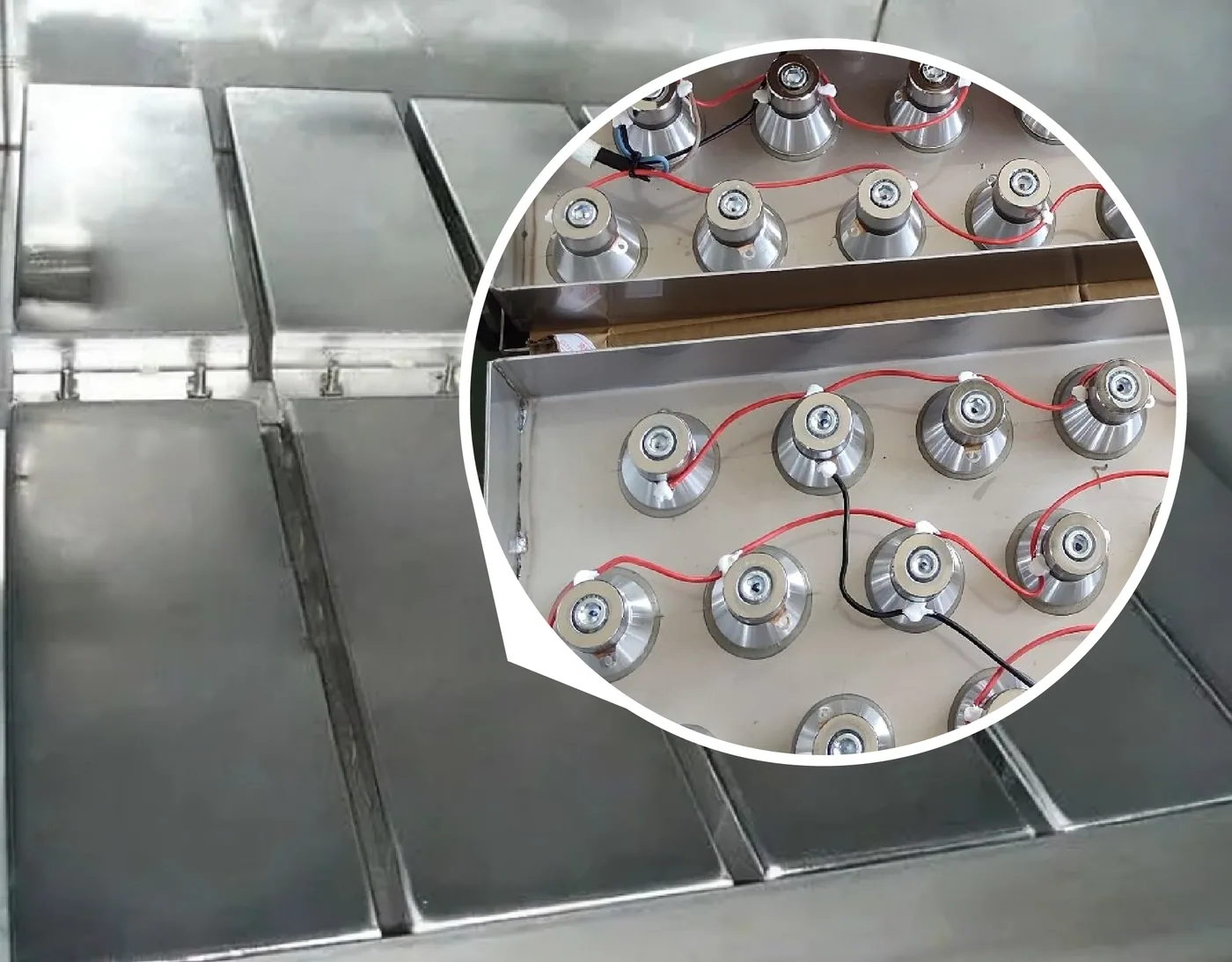 Ultrasonic cleaning basics · 3 min readCavitation: how a collapsing bubble cleans a surfaceUltrasound does not scrub. It makes millions of microscopic bubbles grow and collapse against the part every second, and the collapse does the work. What happens in the liquid, and what it means for the settings you choose.
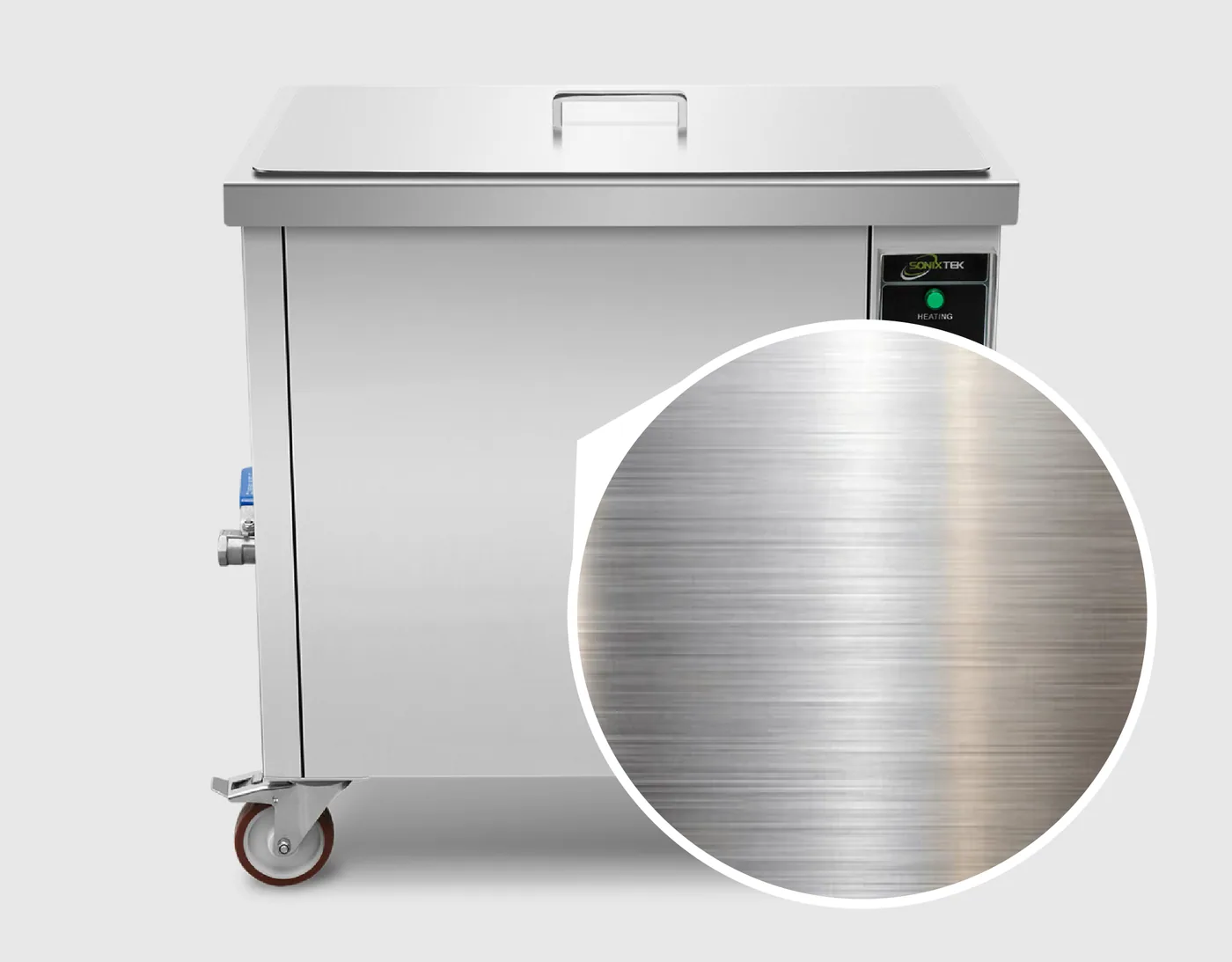 Choosing a machine · 3 min readTank material and wall thicknessOur tanks are AISI 304 stainless steel, 2 mm on the ST and SF series and 2.5 mm from the AL-600 upwards. Why that grade, why those thicknesses, what cavitation does to a tank floor over the years, and when AISI 316 is worth specifying.
 Operation and maintenance · 4 min readSafety around an ultrasonic cleaning tankHot alkaline liquid, a running bath that causes pain and tissue damage to a hand put into it, noise above the hearing range that is still noise, fumes, and heavy baskets over an open tank. The hazards of an industrial cleaner, and the habits and fittings that control them.
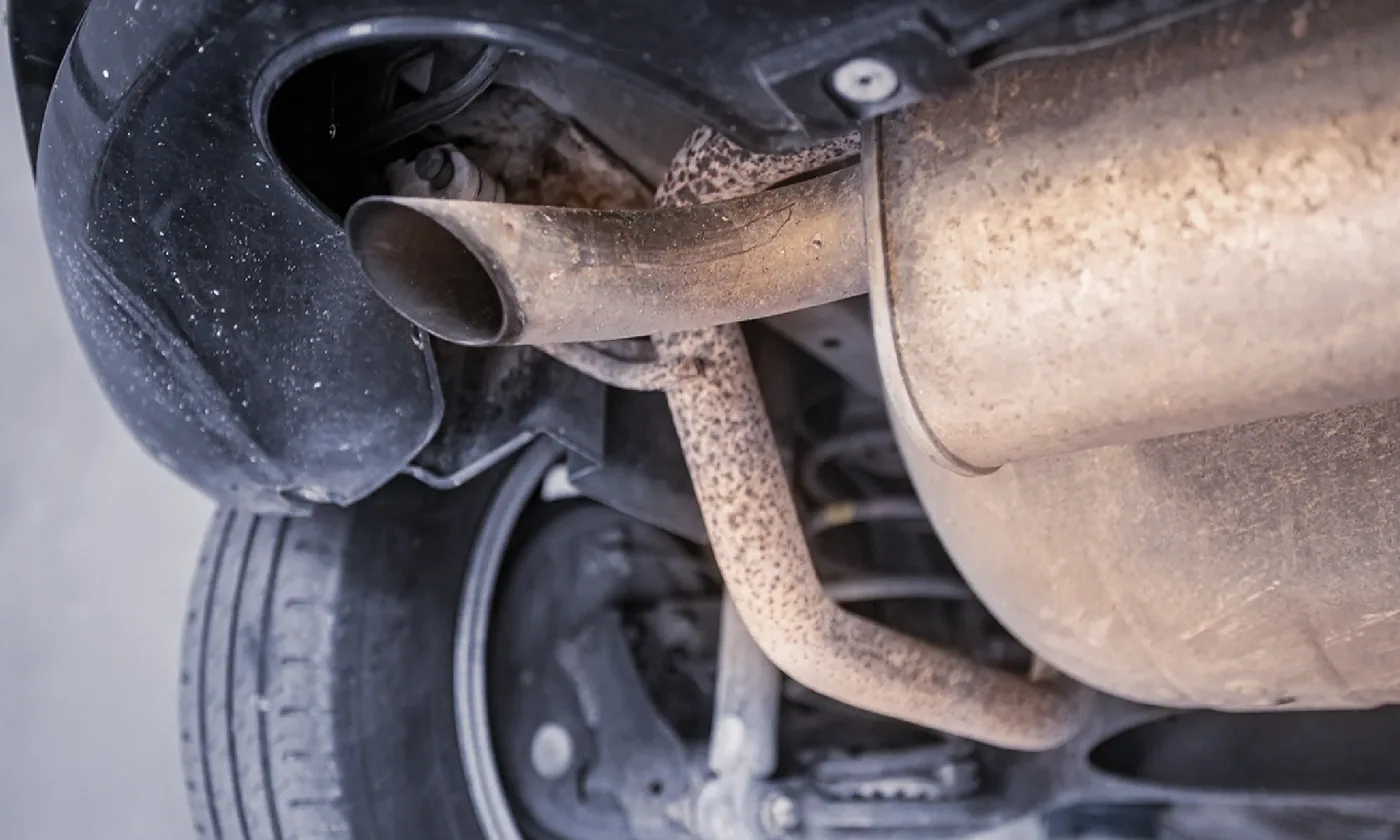 Parts and contaminants · 3 min readRemoving rust, scale and oxideUltrasound alone does not remove rust; the chemistry does, and the ultrasound makes it fast and complete. Which chemistries work on steel, aluminium, brass and copper, why they do not go in a standard tank, and how to protect the bare metal you have just exposed.
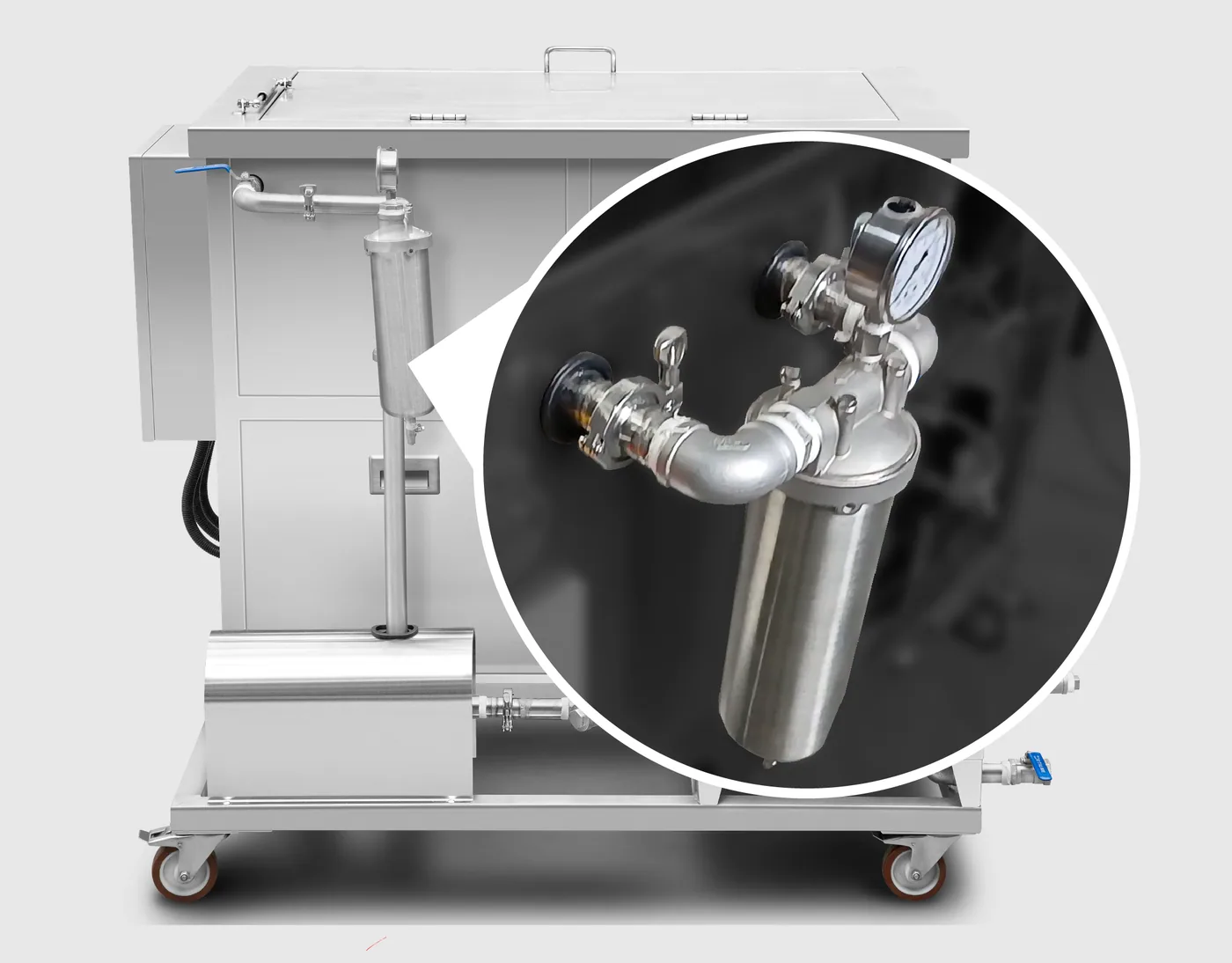 Process and parameters · 4 min readFiltration and bath lifeA cleaning bath fails in three ways: it fills with particles, it saturates with oil, or its chemistry is used up. Filtration handles the first two and stretches the third. What a filtration loop and an oil skimmer do, when a bath needs them, and how to tell when a bath is finished.
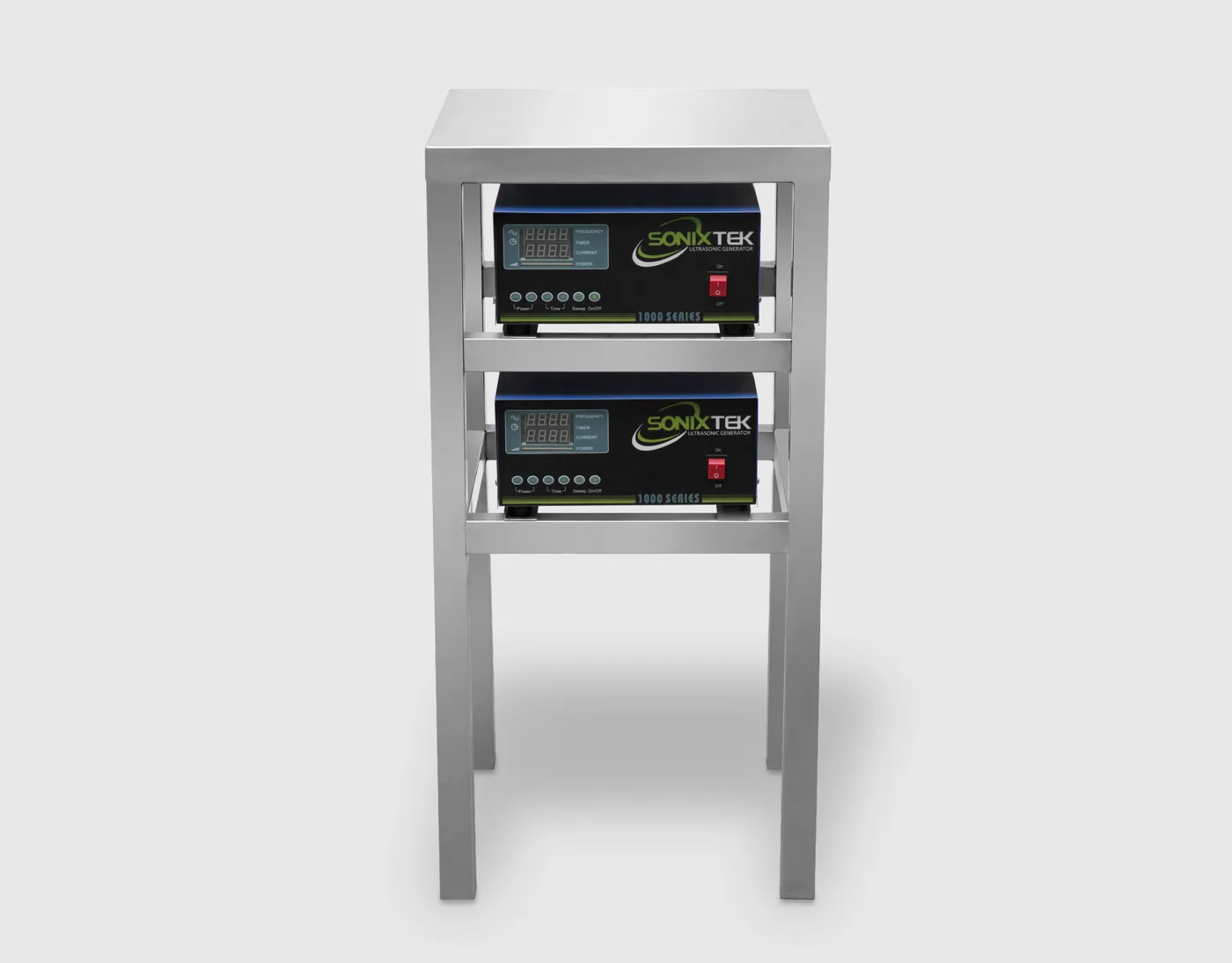 Operation and maintenance · 4 min readEnergy and running costs of an ultrasonic cleaning tankThe heater, not the ultrasound, is the cost. What a 96-litre and a 300-litre tank draw over a shift, where the kilowatt-hours go, and the four habits that cut the bill by a third: lid, timed heat-up, the right temperature, and a bath that lasts.
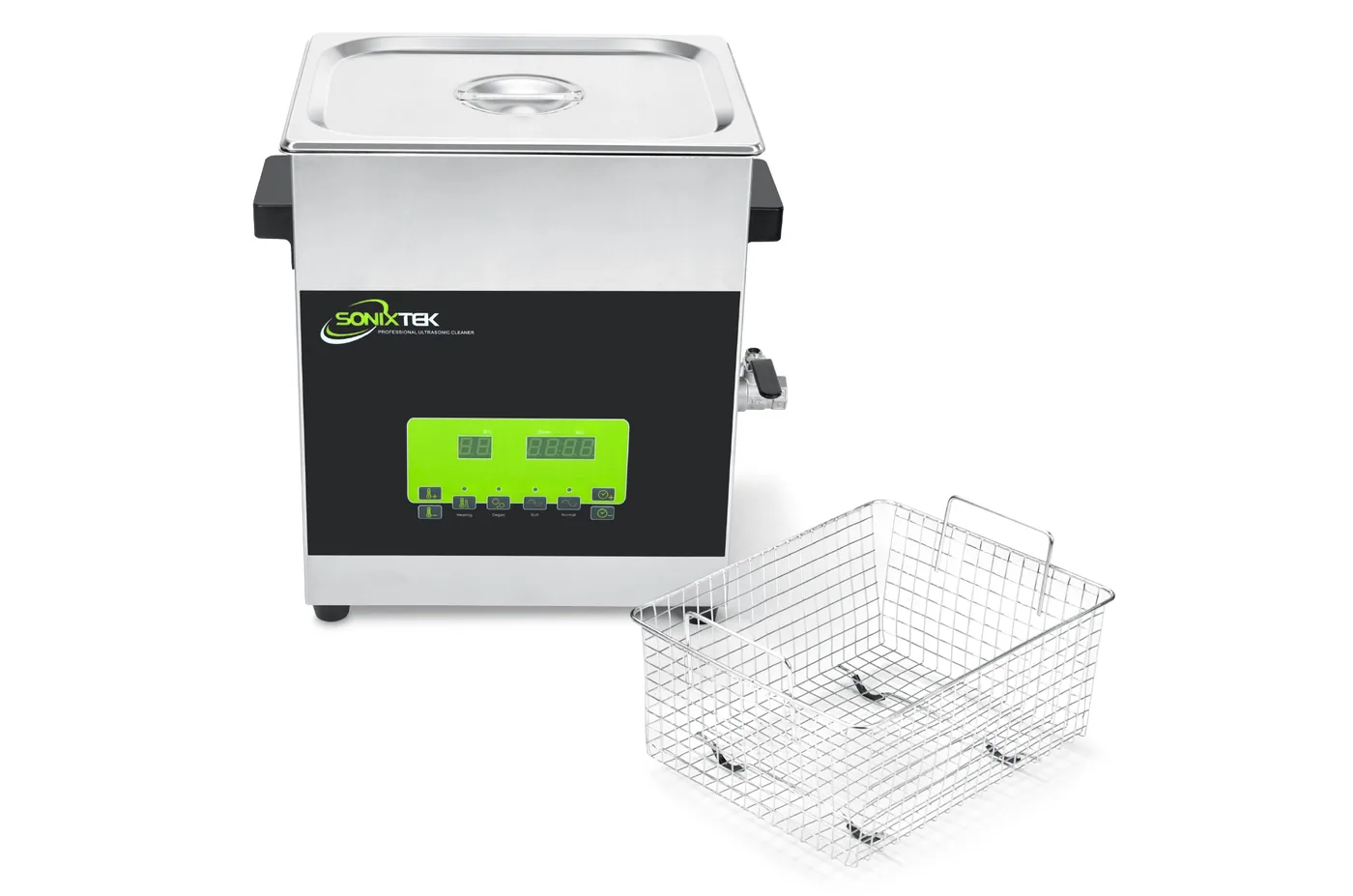 Ultrasonic cleaning basics · 3 min readDirect and indirect cleaning: parts in the bath, or in a beaker inside itDirect cleaning puts the part in the tank liquid; indirect cleaning puts it in a beaker or tray of its own liquid standing in the tank. Indirect keeps aggressive chemistry and small parts out of the main bath. When each makes sense.
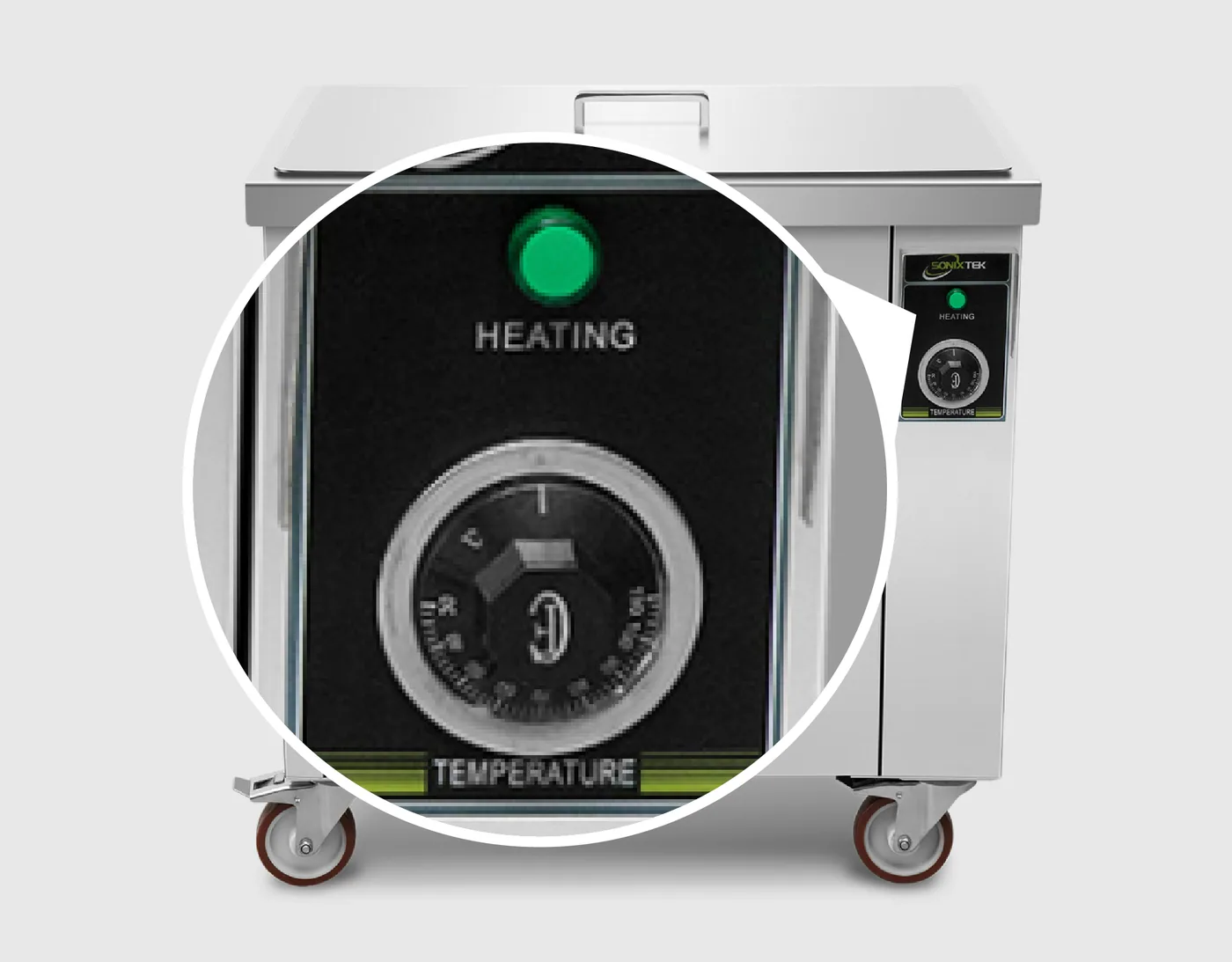 Process and parameters · 4 min readChoosing the cleaning temperatureHeat speeds up the chemistry and thins the oil, but above about 80 °C cavitation weakens. Where to set the bath for oil, carbon, machining residue, flux and biological soil, and why our tanks heat to 100 or 110 °C when most cleaning happens at 50 to 65.
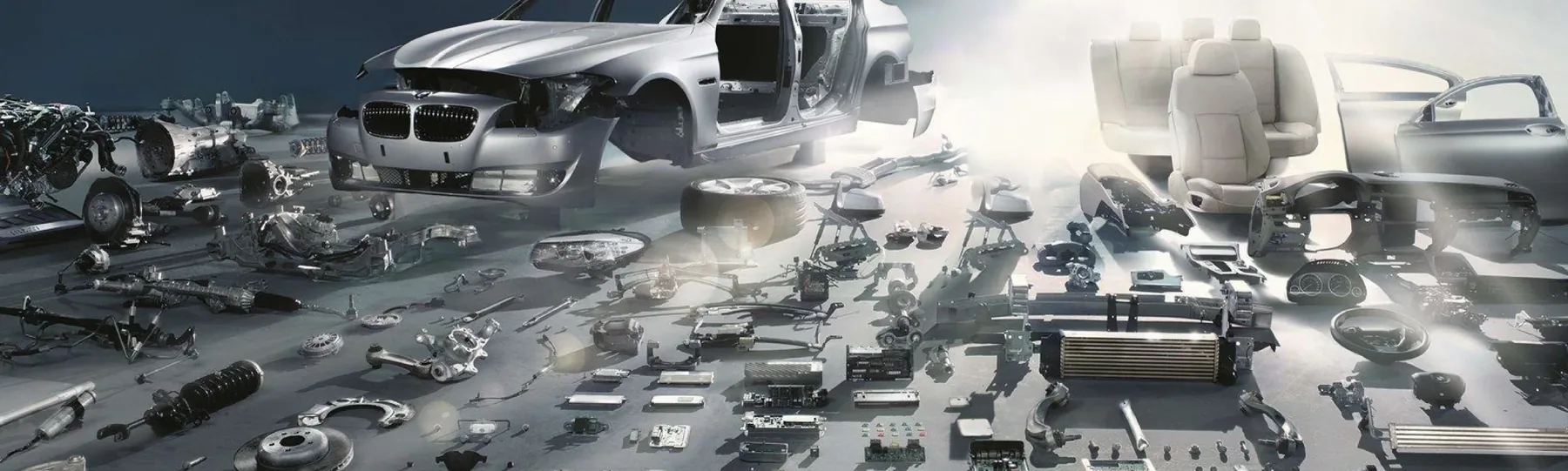 Ultrasonic cleaning basics · 2 min readWhat is ultrasonic cleaning?Sound above hearing range, a liquid, and millions of collapsing bubbles: the short version of how an ultrasonic cleaner works and what it is good at.
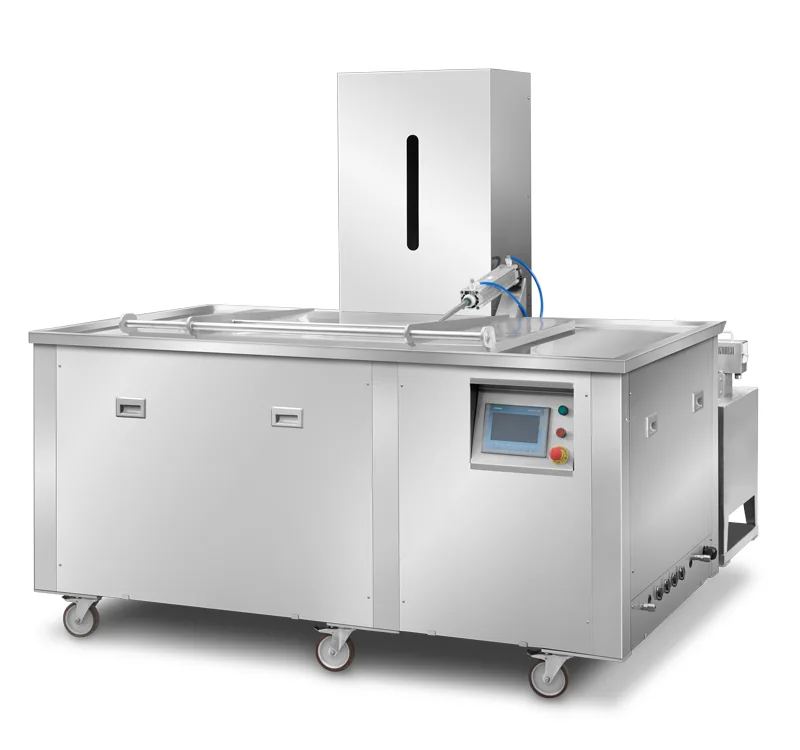 Ultrasonic cleaning basics · 17 min readUltrasonic cleaning explained: waves, cavitation, generators, tanks and featuresThe long version: how ultrasonic waves make cavitation, what frequency and temperature do, how generators and transducers are built, and which features matter in a tank.
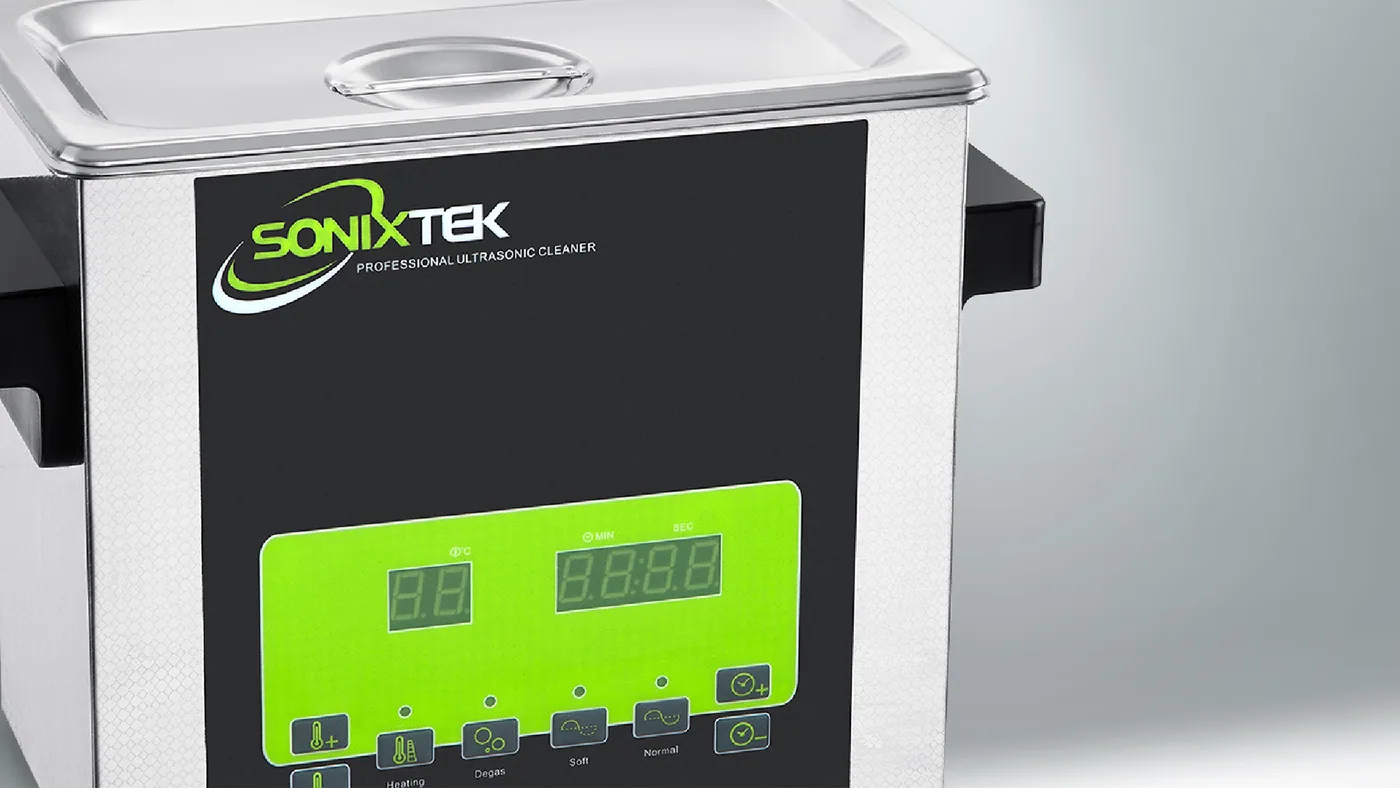 Process and parameters · 2 min readHow long should an ultrasonic cleaning cycle be?Three to thirty minutes covers most parts. What decides the time: contaminant, liquid, temperature, load, and when longer stops helping.Operation and maintenance · 2 min readAccessories for ultrasonic cleaningCooling systems and bubble tanks: two add-ons that bring the bath back to its set temperature and loosen remaining residue without manual rinsing.
Let's find the right fit
Not sure which size you need?
Send us the part, the quantity per hour and the soil you are removing. We will size the tank and the frequency with you.