
Ultrasonic cleaning basics · 7 min read · Updated 2026-11-18
Ultrasonic cleaning explained: cavitation, frequency, temperature and equipment
The long version. How a sound field makes cavitation, what frequency, power and temperature change, how the cleaner fits in, what the generator, transducers and tank do, which functions matter, and which type of machine suits which work.
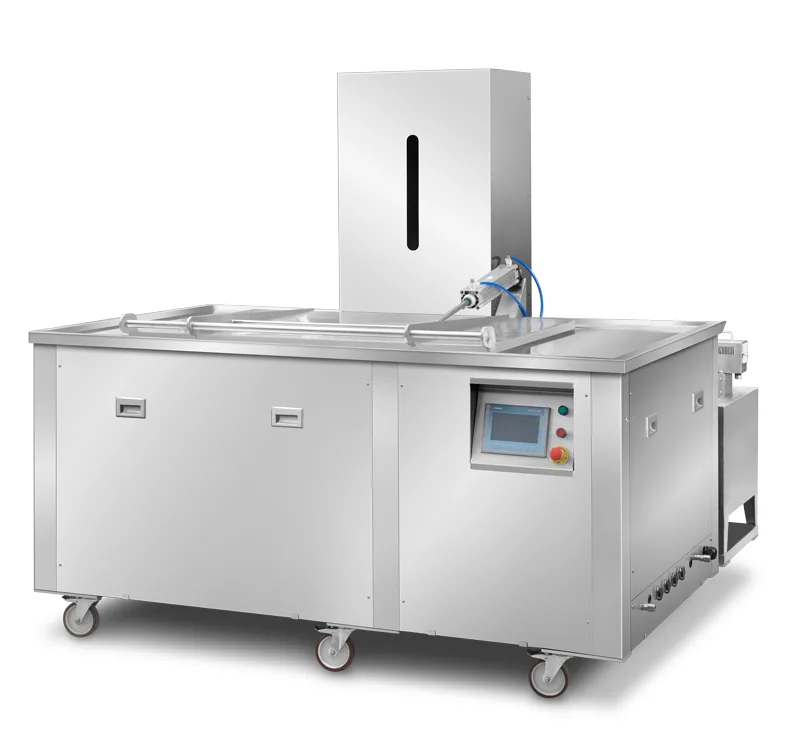
An ultrasonic cleaner is a tank of heated cleaning liquid with a sound field running through it. The sound itself is above human hearing, at 28 or 40 kHz on most of our machines. What cleans is what the sound does to the liquid: it forms microscopic bubbles and collapses them against every wetted surface of the part, thousands of times a second. Chemistry and heat loosen the soil; the collapsing bubbles carry it away, including from places a brush or a spray jet does not reach.
How cavitation works
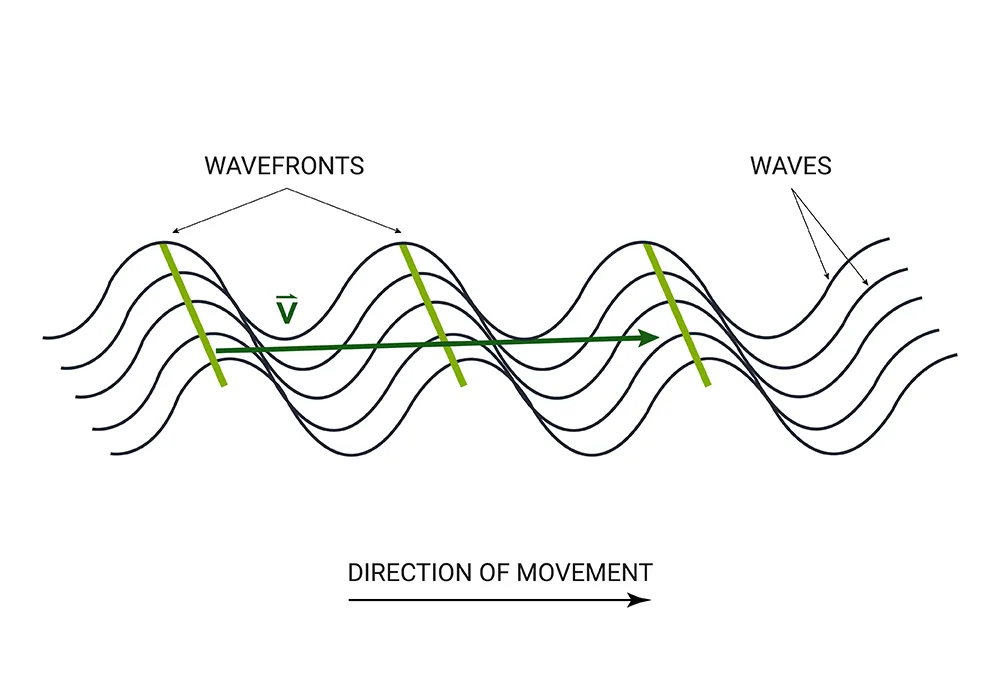
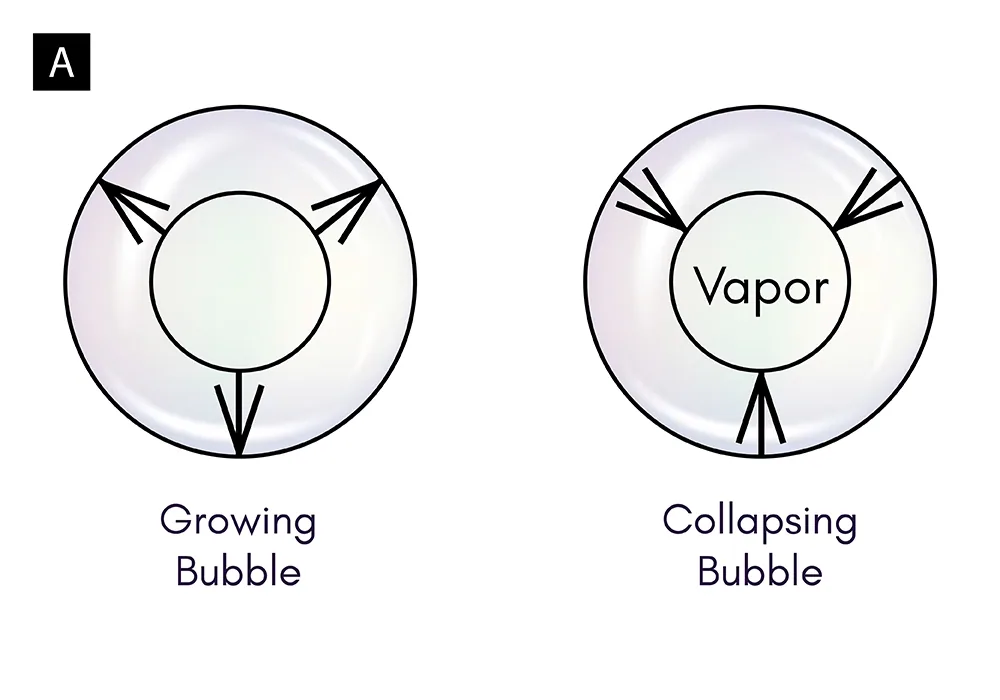
A sound wave in a liquid is a rapid alternation of low and high pressure. In the low-pressure phase, tiny cavities open in the liquid and grow. In the following high-pressure phase they are compressed and collapse. A bubble often grows over several cycles before it collapses, so at any moment the bath holds bubbles of many sizes.
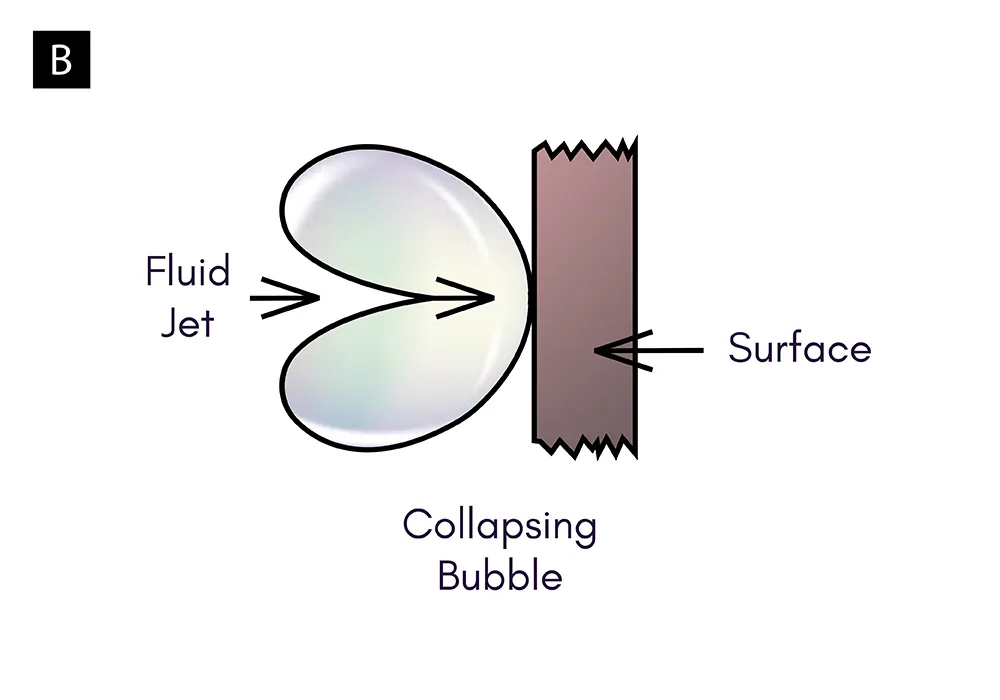
When a bubble collapses next to a surface, it does so unevenly and drives a micro-jet of liquid against it. Many such collapses, across the whole wetted surface, give the scrubbing action that lifts soil off the part. Each collapse creates a brief, local pressure and temperature peak at the surface; the bath as a whole stays at its set temperature.
Two practical consequences follow. First, the liquid must reach the soil: a thread or blind hole is cleaned only if the liquid gets in and trapped air gets out, so blind holes should point sideways or upward. A sealed cavity with no opening is not cleaned inside. Second, a running cleaner is audible even though the ultrasound is not: subharmonics and the hiss of cavitation are more noticeable at 28 kHz than at 40 kHz, so a lid helps.
Frequency
The frequency sets the bubble size.
- 28 kHz: fewer, larger bubbles with more energy per collapse. Stronger on heavy, adherent soil on robust parts: carbon, heavy grease, polishing paste, scale on castings. Harder on soft metals and polished surfaces.
- 40 kHz: more, smaller bubbles that reach narrower gaps and act more gently. Suited to threads, small bores, machined and polished faces, anodised aluminium, electronics and optics.
Our ST, UMX Pro, SF, AL and AU industrial machines are built for 28 or 40 kHz, chosen at order; the UMX Pro is available as a dual 28/40 kHz unit on request. The STS and STB benchtop units run at 40 kHz, the SX benchtops at 37 kHz. Much higher frequencies, in the megasonic range of several hundred kilohertz, are used for wafers, disc drives and optics; they lie outside our range.
Power
Frequency alone does not clean; the sound field also needs enough power for the volume. Our industrial tanks run around 15 W of ultrasonic power per litre: the ST-96 has 1440 W in 96 litres
Temperature
Heat pulls in two directions. Detergents work faster and oil and grease turn liquid as the bath warms. Cavitation weakens as the bath approaches boiling, because the bubbles fill with vapour and collapse softly. In water, cavitation is strongest around 50 to 60 °C
For most aqueous cleaning, set the bath between 50 and 65 °C
The industrial series heat from room temperature to 100 °C
The cleaning liquid
The cleaner matters as much as frequency and power. Most are water-based concentrates, diluted to a few per cent as the maker specifies. They fall into four groups:
- Neutral: light soil, sensitive materials, glassware.
- Mildly alkaline: general degreasing of steel and, in inhibited versions, of aluminium and other light alloys.
- Alkaline: heavy oil, grease, carbon and varnish on robust parts.
- Acidic: scale, mineral deposits, oxide and light rust.
Plain water cleans poorly. Water-based cleaners can leave steel prone to flash rust, so many contain a corrosion inhibitor, and bare steel is dried and protected straight after the rinse. Flammable solvents do not belong in a heated ultrasonic tank. Selection and dilution: cleaning liquids.
Generator, transducers and tank
The generator turns mains power into an electrical signal at the working frequency and holds that frequency and the set power under changing load.
The transducers convert that signal into mechanical vibration. They are bonded to the tank, usually on the bottom, or mounted in sealed boxes that sit in the bath on larger systems. Their number and power are matched to the tank volume, so the whole liquid carries the sound field.
The tank holds the liquid and carries the vibration. It is stainless steel, with heaters, a drain and, on the industrial series, a lid. Size the tank from the largest part plus clearance on all sides, not from the volume alone; the useful basket space is what counts.
The basket keeps parts off the tank floor and walls. Parts lying on the floor dampen the vibration, can be marked by it, and wear the tank surface. The ST and UMX Pro come with a stainless basket; small or delicate parts go in a fine-mesh basket or a rack.
Functions
Which functions a machine has depends on the series; the product page of each model lists them.
- Sweep varies the frequency slightly around the set value, so the sound field keeps moving. That reduces standing waves, with their hot spots of intense cavitation and dead zones with little, and gives a more even result across the basket. Sweep is standard on the ST, UMX Pro, AL and AU series and on the SX benchtops.
- Degas pulses the ultrasound to drive dissolved air out of fresh liquid. Air in a new bath cushions the bubble collapse until it is gone. Degas is a generator function on the UMX Pro and the AL series. Without it, run a fresh bath empty for about 10 minutes before the first load.
- Pulse and power control raise the peak intensity or lower the average power for delicate loads, where the generator offers them.
Types of machine
| Type | Sonixtek series | Typical use |
|---|---|---|
| Benchtop | STB and STS, 2 to 30 L |
small parts, laboratories, injectors, tooling, instruments |
| Single industrial tank | ST, 40 to 400 L |
workshop and production batches |
| Compact industrial tank with filtration option | UMX Pro, 50 to 255 L |
mixed work with oil and particles |
| Tank with built-in filtration | SF, 225 to 360 L |
steady volume of oily or particle-heavy parts |
| Tank with lift | AL, 75 to 2000 L |
heavy parts, agitation through bores and galleries |
| Large automatic system | AU, 400 to 8000 L |
large parts and high throughput |
| Spray washer | SPR, rotating basket | pre-wash of heavy loose dirt |
| Hot-air dryer | DT, 96 to 300 L |
drying after the rinse |
| Multi-tank line | MT, built to order | wash, rinse and dry stages side by side |
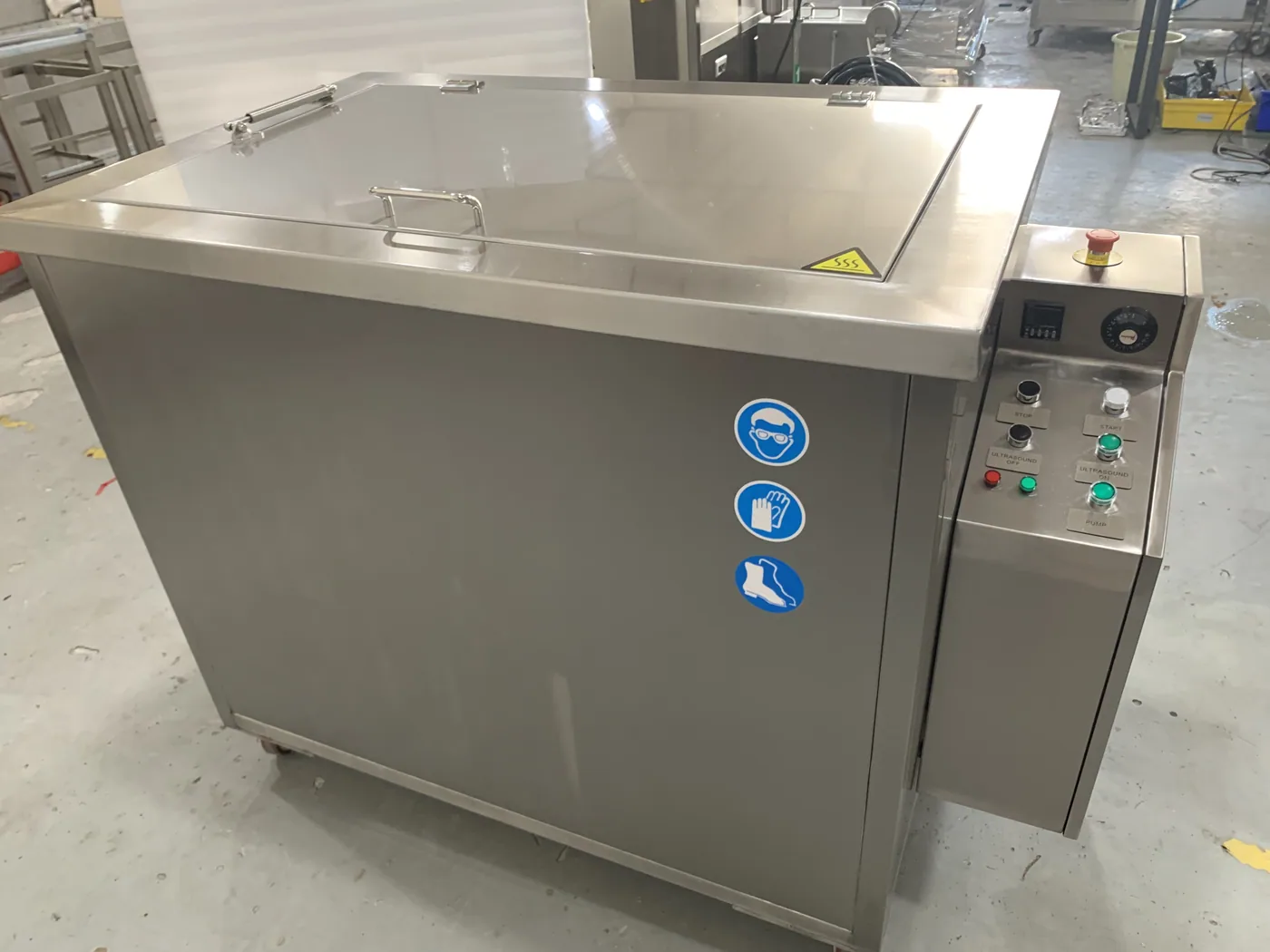
A simple job needs one tank. A production process often needs a sequence: pre-wash, ultrasonic clean, rinse, dry, sometimes with automatic transfer between stations. Where parts are long, narrow or oddly shaped, a tank built to their size uses less liquid and power than an oversized standard one.
Where it is used
- Machining and production: cutting oil, coolant and chips from machined parts, including blind holes and threads. See machining swarf and coolant.
- Automotive repair and remanufacturing: grease, sludge and carbon on engine and transmission parts. See heavy grease on engine parts.
- Electronics: flux and handling residue on circuit boards, typically at 40 kHz, 45 to 55 °C
(113 to 131 °F) and a few minutes in a flux remover, where the board maker allows immersion. See the circuit board articles. - Laboratories and tooling: glassware, pipettes, moulds and press tooling.
In every case the cleaning is one step in the user's procedure. The part maker's instructions on cleaners, temperatures and inspection still apply. Send us a sample and we will run it in a trial.