
Operation and maintenance · 4 min read · Updated 2026-09-25
Energy and running costs of an ultrasonic cleaning tank
The heater, not the ultrasound, is the cost. What a 96-litre and a 300-litre tank draw over a shift, where the kilowatt-hours go, and the four habits that cut the bill by a third: lid, timed heat-up, the right temperature, and a bath that lasts.
Technical guide. Figures are taken from our own spec tables; for your process we confirm the settings with a cleaning trial.
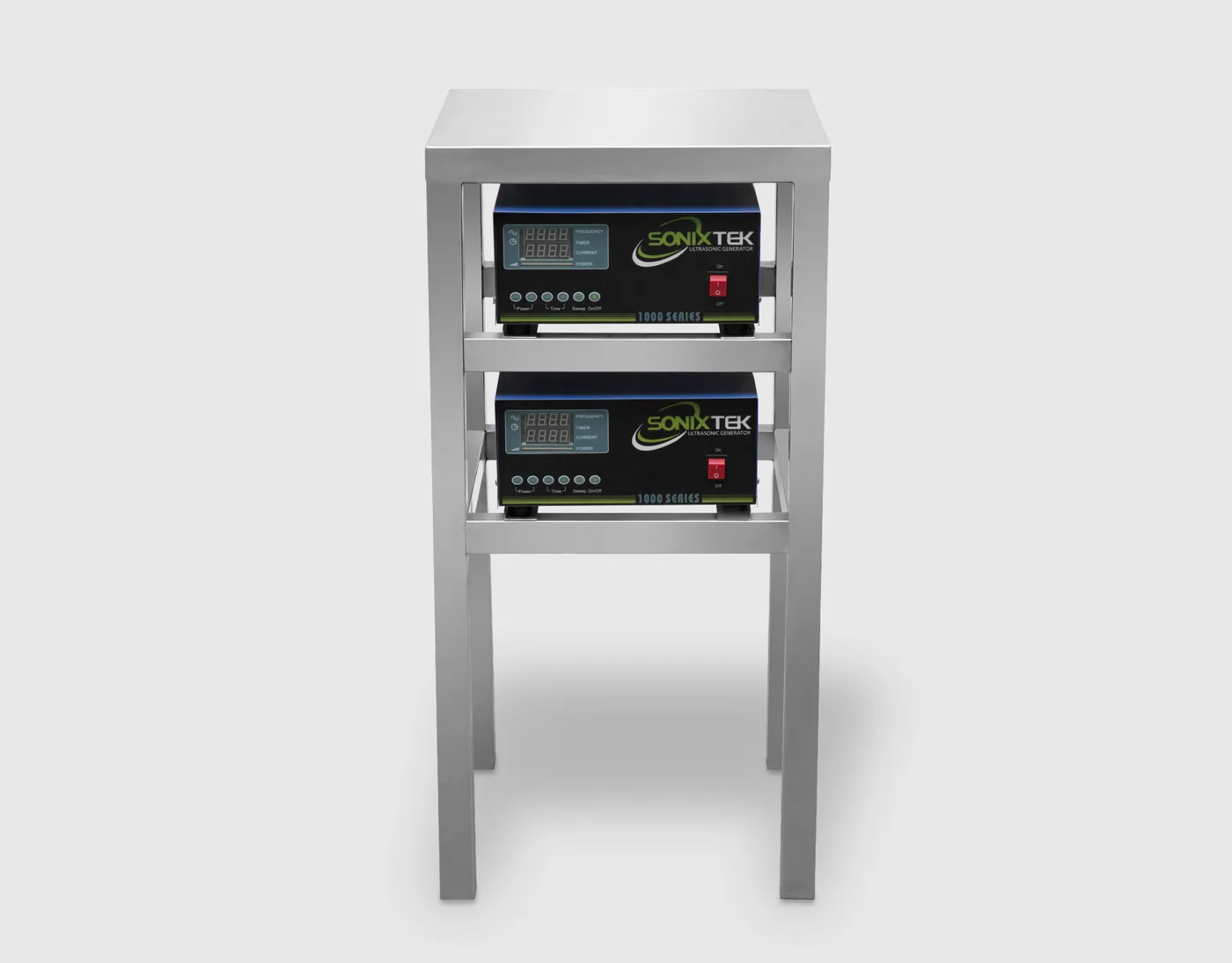
Buyers ask about the ultrasonic power and worry about the electricity. They should worry about the heater. On every industrial tank we build, the heating element is two to three times the ultrasonic power, and it runs for more of the shift.
Where the power goes
| Model | Ultrasonic | Heating | Rated total |
|---|---|---|---|
| ST-40 | 720 W | 2000 W | 2.7 kW |
| ST-96 | 1440 W | 4000 W | 5.4 kW |
| ST-206 | 2520 W | 6000 W | 8.5 kW |
| ST-300 | 3720 W | 8000 W | 11.7 kW |
| AL-300 | 3600 W | 9000 W | 13 kW |
| AL-1000 | 12 000 W | 18 000 W | 30.8 kW |
The rated total is what the supply must deliver, not what the machine draws over a day. The heater runs flat out from cold and then cycles on a thermostat; the ultrasound runs only during cycles.
A working day on an ST-96
Assume an eight-hour shift, a 60 °C bath, a lid on between batches, twelve cycles of ten minutes, and a room at 20 °C.
- Heating from cold: 96 litres from 15 to 60 °C is about 5 kWh of heat; at 4 kW and with losses, 75 to 90 minutes of heater time. If the bath was kept warm overnight this is zero, but the standing losses are not.
- Holding temperature, lid on: a 96-litre tank with a lid loses roughly 0.5 to 0.8 kW to the room and to the cold parts going in. Over eight hours: 4 to 6 kWh.
- Holding temperature, lid off: evaporation from a 60 °C surface of 0.24 m² takes several litres a day and carries about 1.5 to 2.5 kW with it. Over eight hours: 12 to 20 kWh. The lid is the single biggest saving on the machine.
- Ultrasound: twelve cycles of ten minutes at 1440 W is 2.9 kWh, and about half of that ends up as heat in the bath, which the heater does not then have to supply.
Total for the day: around 12 to 15 kWh with the lid, 20 to 30 kWh without it. At typical European industrial tariffs that is a few euros a day either way; what the numbers show is the ratio, not the absolute. The ultrasound is a fifth of the bill.
The four habits
- Lid on. Whenever the basket is not moving. On the larger series the diamond-shaped lid also drains condensate back into the tank, which saves water as well.
- Timer, not standby. Heat up an hour before the shift and switch the heater off at the end. Holding a bath at 60 °C overnight, lid on, costs 8 to 12 kWh on a 96-litre tank for no benefit; a morning heat-up costs 5.
- Set the temperature the process needs, not the maximum. Every 10 °C above the working point adds roughly 20 to 30 % to the standing loss and shortens bath life.
- Make the bath last. A bath change is 96 litres of heated water, a dose of cleaner and the disposal; filtration and skimming turn a weekly change into a monthly one.
Water and chemistry
A 96-litre bath at working concentration uses one to five litres of concentrate per fill depending on the cleaner. Evaporation replaces several litres of water a day without a lid, one or two with it. Disposal of a spent alkaline bath with emulsified oil is a hazardous-waste stream in most of the EU; volume is cost, and skimming reduces it.
Larger tanks
The ratio holds as tanks grow, and the lid matters more, because the surface area grows with the square and the volume with the cube. An AL-1000 with the lid off at 60 °C loses well over 5 kW to evaporation; the AL and AU series are built to run the cycle with the lid closed for that reason, and their PLC schedules the heater.
Comparing with what it replaces
A solvent spray booth, a hot-water pressure washer or a person with a brush and a bucket each have their own costs, mostly in labour and in the solvent or water they consume. The usual result of a proper comparison is that an ultrasonic tank costs more in electricity and less in everything else; the traditional methods article sets the two side by side.