
Process and parameters · 2 min read · Updated 2026-09-25
How long should an ultrasonic cleaning cycle be?
Three to thirty minutes covers most parts. What decides the time: contaminant, liquid, temperature, load, and when longer stops helping.
Technical guide. Figures are taken from our own spec tables; for your process we confirm the settings with a cleaning trial.
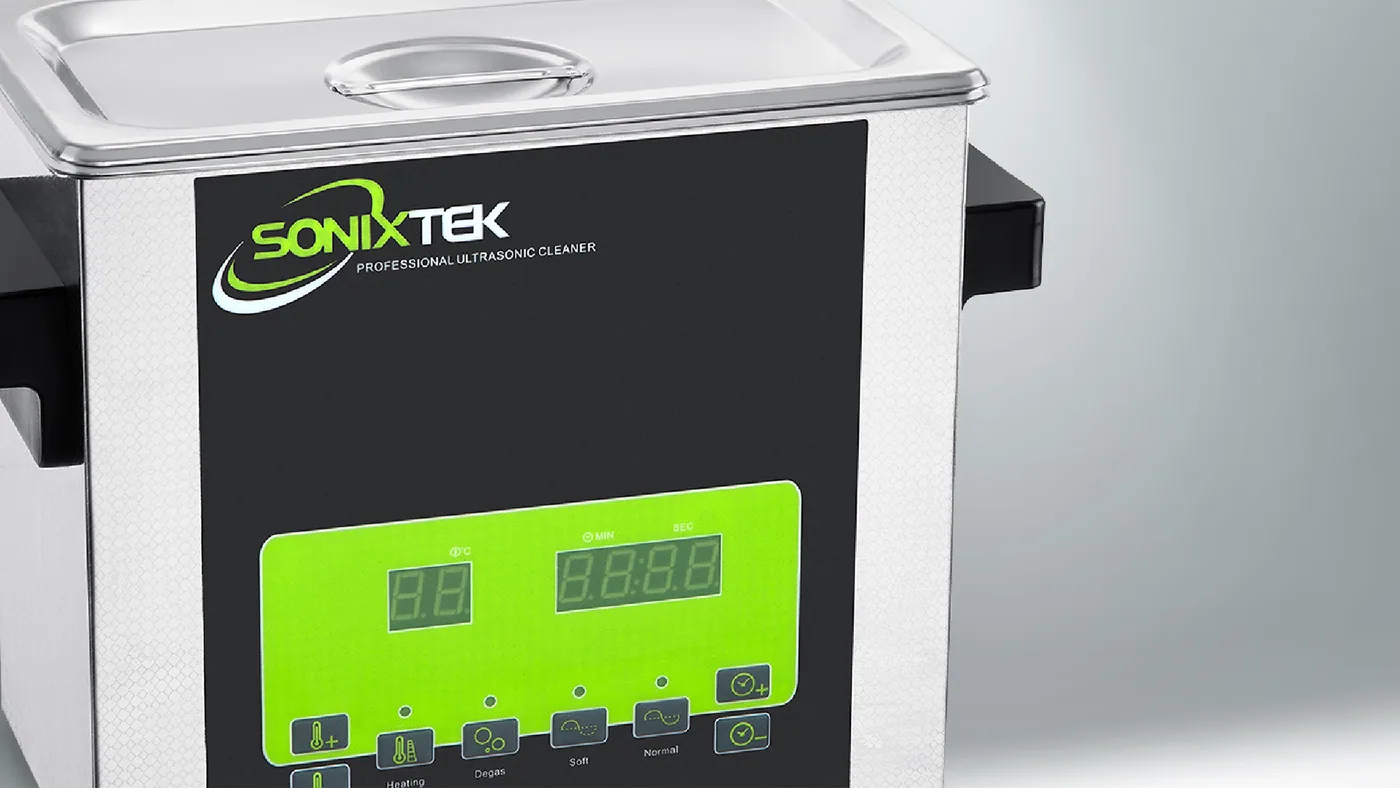
It has been previously discussed that there are four (4) key variables to consider when using an ultrasonic cleaner. Setting up your ultrasonic cleaners on these variables is important, and should be thoughtfully assessed, as these determine the overall result of the cleaning process for your parts. These key variables are chemistry, time, temperature and agitation.
The cleaning time for an ultrasonic cleaner vary with different types of cleaning requirement. There are materials that have limitations when you have it run for cleaning. For example, a part should only be cleaned in a chemical with a pH of 7, or the cleaning time should stay under 5 minutes. Or a part should only be cleaned below 90°C to protect the material from damage.
Most parts are clean within three to thirty minutes, and many need only the lower end of that range when the liquid and temperature are right. Setting a longer time is often overkill and may damage the material you are cleaning. The cavitation and implosion may adversely affect softer materials, like aluminum and brass, if ran through an ultrasonic cleaning longer than necessary. Different materials have different requirements when it comes to ultrasonic cleaning.
You can still achieve effective cleaning at shorter times by changing the other variables as mentioned above. A change in the chemistry through the cleaning liquids you use or the temperature may significantly reduce the required ultrasonic cleaning time. You may also pre-wash your parts before loading it up in your ultrasonic cleaner to shorten the cleaning time, as well.
It’s important to know how to efficiently clean your parts by finding the right mix of the variables for a shorter cleaning time. This increases productivity, especially when cleaning takes up a lot in production time. Having an ultrasonic cleaner with a time built in will ensure that your cleaning is processed at the precise time. You can also extend the life of your ultrasonic cleaner as running this machine for longer than necessary is detrimental.