Industries · 3 min read · Updated 2026-09-26
Ultrasonic cleaning in food processing
Knives and blades, moulds, conveyor parts, filters, nozzles and pump components carry fat, protein, sugar and starch into places a hose cannot reach. What ultrasonic cleaning removes in a food plant, the stainless steel and the chemistry that go with it, and where it fits next to CIP and sanitation.
Technical guide. Figures are taken from our own spec tables; for your process we confirm the settings with a cleaning trial.
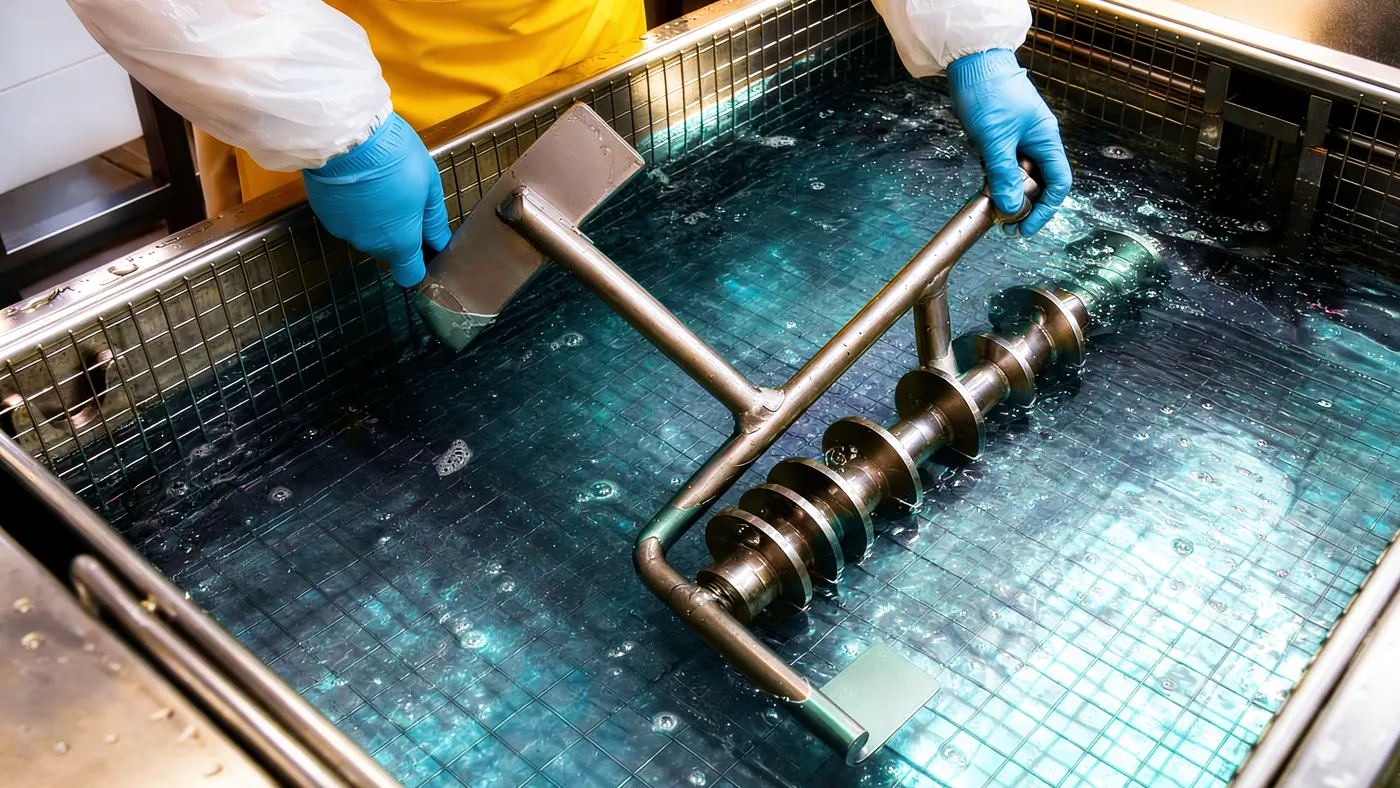
A food plant cleans everything, every day, and most of it is cleaned in place by spray and flow. What that leaves behind is the small, removable equipment with internal geometry: cutting blades and their holders, filling nozzles, pump rotors and valves, extruder and depositor moulds, conveyor links and sprockets, filter screens. Fat, protein, sugar and starch dry onto them and into their joints, and a brush does not get into a nozzle or under a blade guard. That is where an ultrasonic tank sits: between the disassembly bench and the sanitising step.
What comes off
- Fats and oils from meat, dairy and frying: liquid above 40 to 60 °C, emulsified by a mild alkaline cleaner, lifted by cavitation from surfaces and threads.
- Proteins: blood, milk protein, egg, meat residue. They denature and stick above about 45 °C, so the wash runs cooler, 35 to 45 °C, with an enzymatic or mild alkaline cleaner, and the rinse can be hot.
- Sugars and starches: syrups, doughs, chocolate. Water-soluble when warm; 50 to 60 °C water with a light detergent, and cavitation to get into the corners of a mould.
- Mineral scale from hard water and milk stone: an acidic descaler, in an insert or a 316 tank, see rust and scale.
- Biofilm: the thin, tenacious layer that forms where soil is left. Cavitation disrupts it mechanically, which is the argument for ultrasonic cleaning of small parts before sanitising.
Ultrasonic cleaning removes soil. It is not a sanitising or sterilising step; the disinfectant or the heat treatment that follows is a separate, validated step, and it works better on a surface that has been cleaned first.
The machine
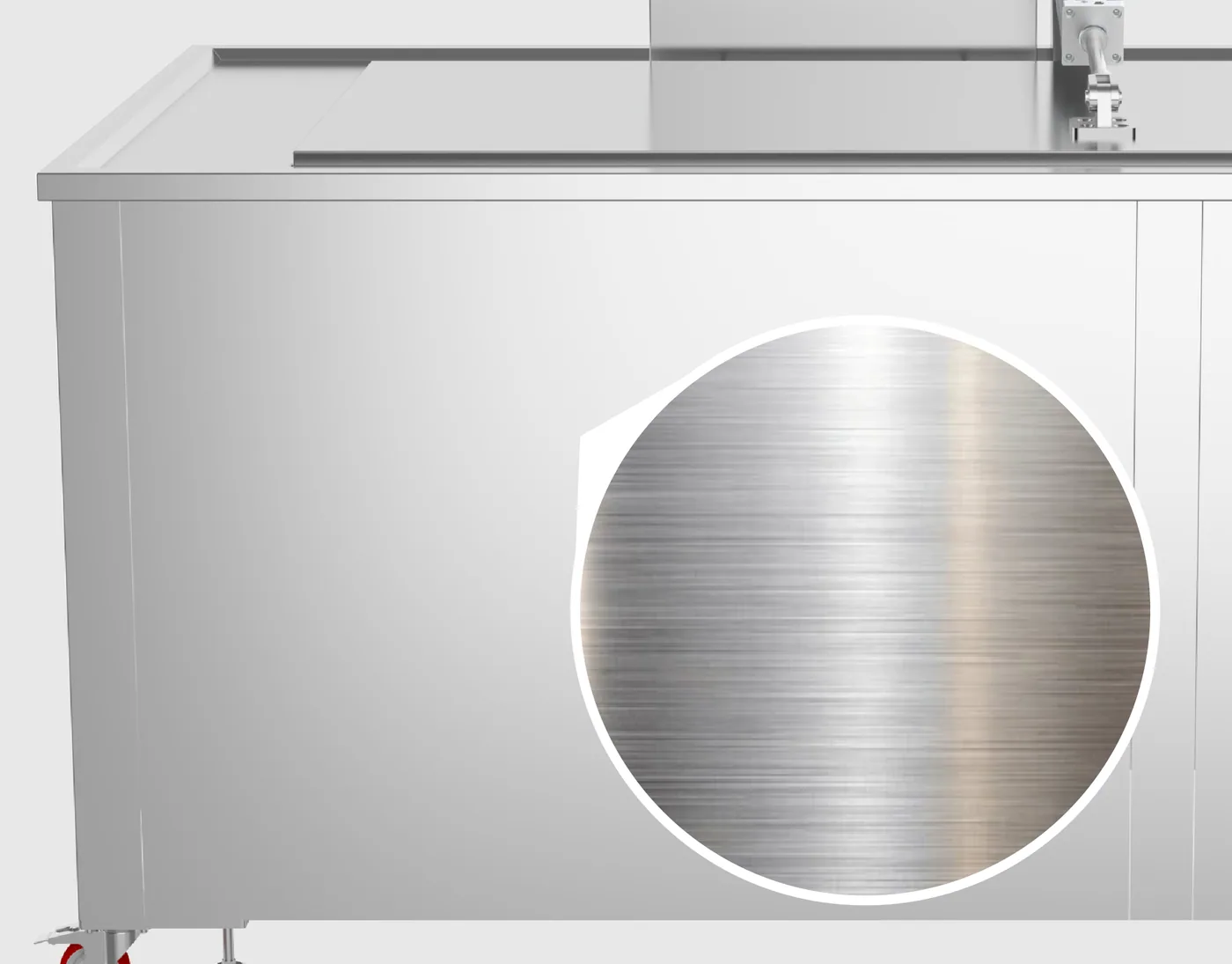
Material. AISI 304 stainless steel tanks as standard, with welds ground flush; AISI 316 where chlorinated sanitisers or acidic descalers are used in the tank. Baskets in stainless mesh, no coated wire. The frame and cabinet on castors for wash-down areas.
Chemistry. Food-safe cleaners, alkaline or enzymatic, approved for food contact surfaces in your jurisdiction, and the rinse that the cleaner's data sheet requires. No solvents.
Temperature. By soil, as above; the tanks heat to 100 or 110 °C for a hot rinse or a soak, and hold 35 to 60 °C for the wash.
Frequency. 40 kHz for blades, nozzles and fine parts; 28 kHz for heavy conveyor components and moulds.
Filtration. Fat and particles load a bath quickly in a food plant. A skimmer and a bag filter on the loop, or the SF series with its buffer tank, keep it working for a shift or a week instead of an hour.
Rinse and dry. A hot potable-water rinse, then drying, or straight to the sanitising step wet, as the plant's procedure says. The rinsing and drying article covers the stations.
Typical set-ups
| Task | Machine |
|---|---|
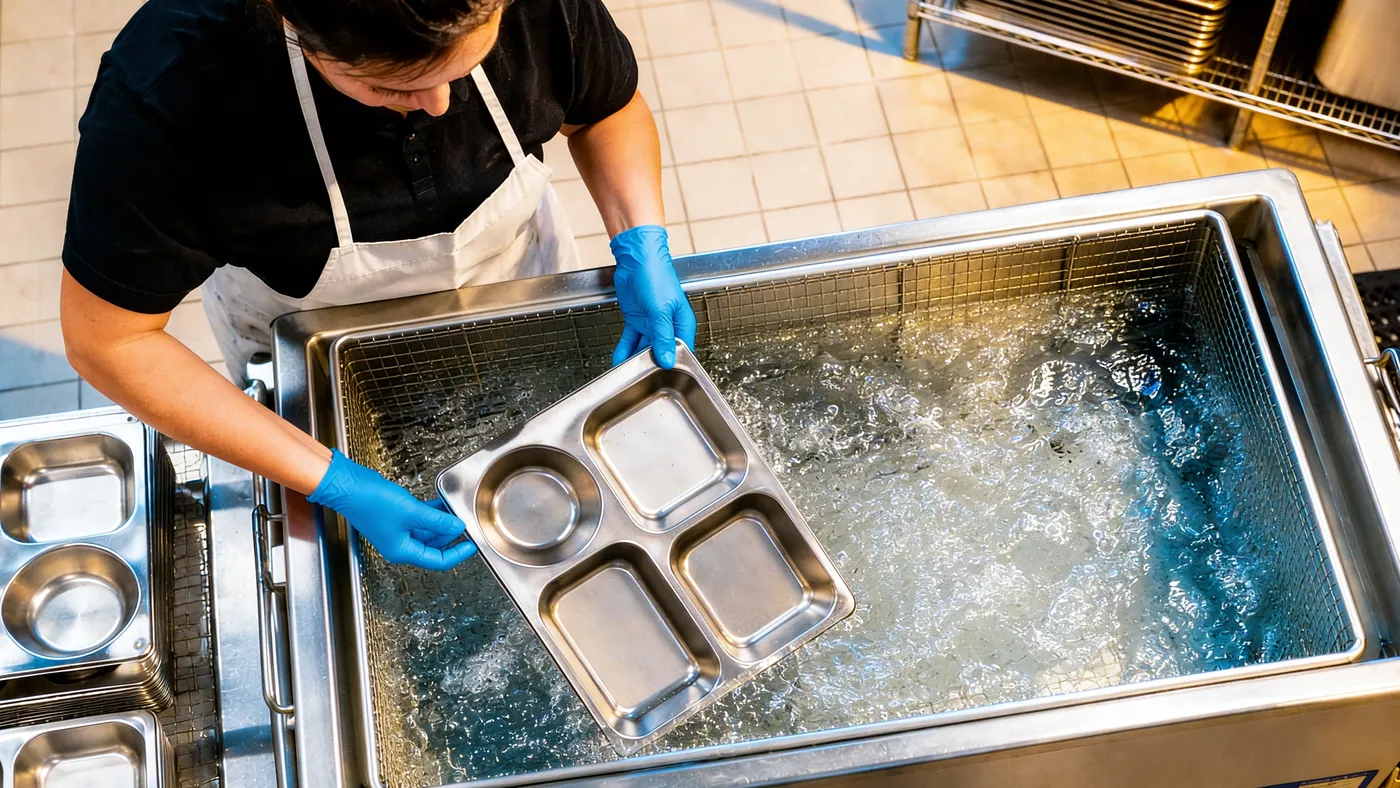
| Knives, machine blades, small parts at the end of shift | ST-40 to ST-96 at 40 kHz, basket with dividers, or a UMX Pro with programmes per part type |
| Filling nozzles, pump parts, valves (food contact parts, bottling, dairy) | UMX Pro 50L to 88L, 40 kHz, filtration module, demineralised rinse |
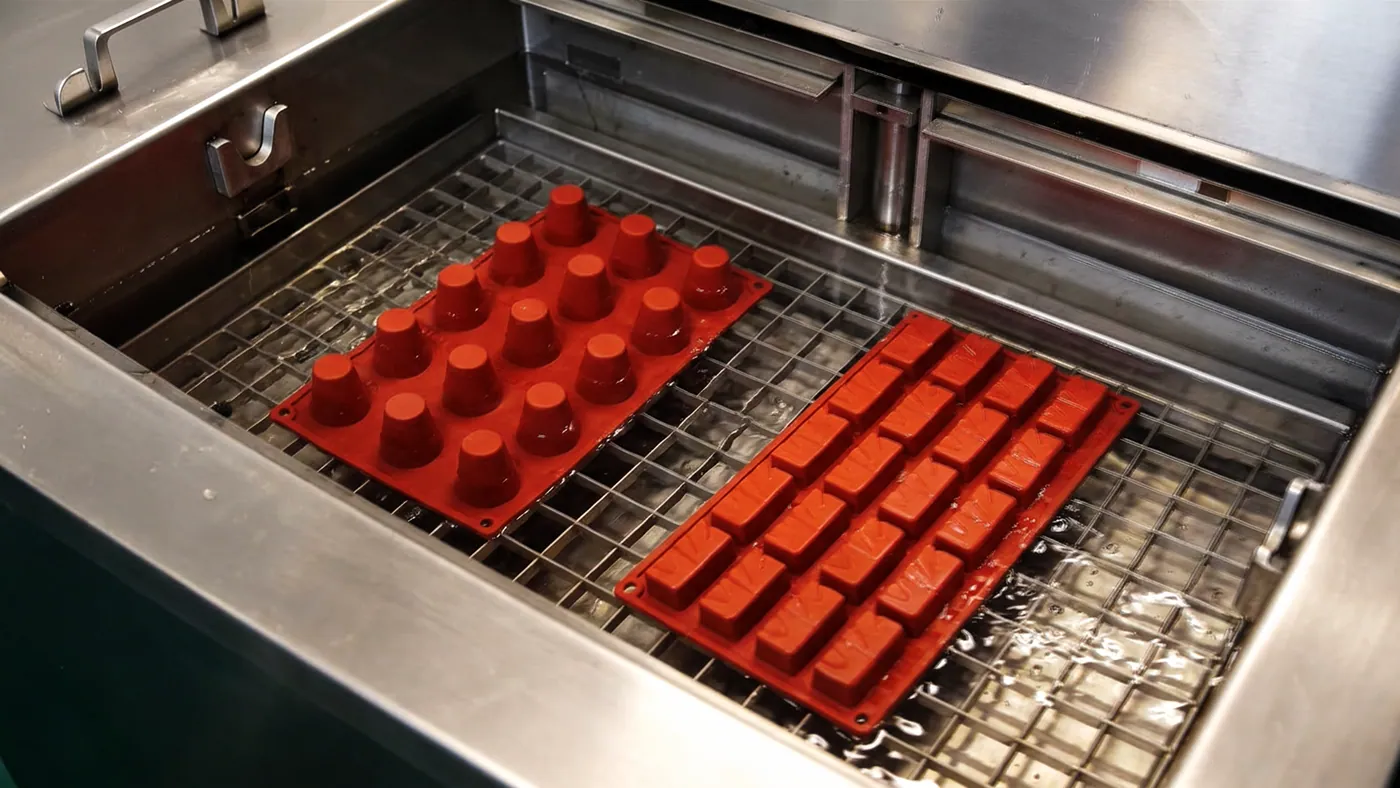
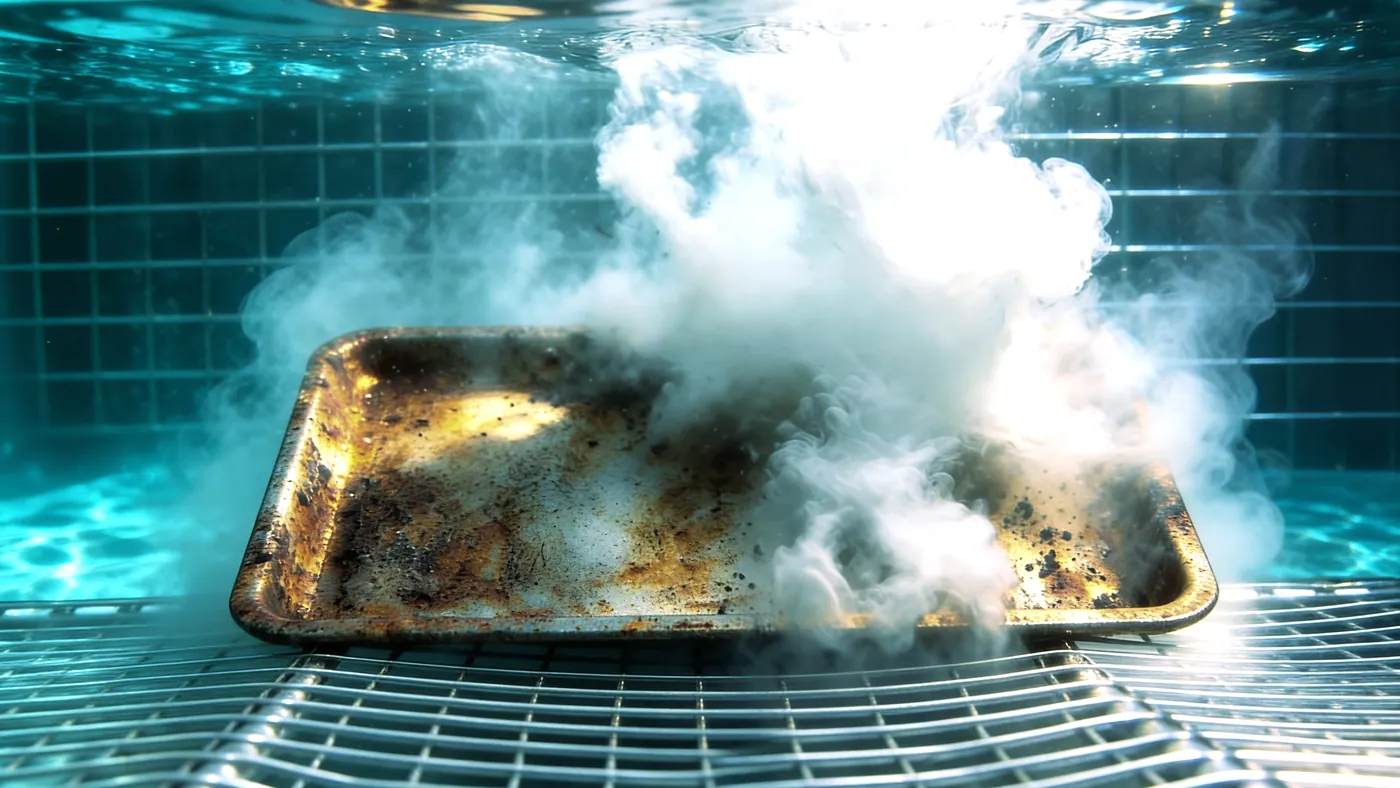
| Moulds, depositor plates, extruder dies, bakery tins and parts | ST-206 to ST-400 at 28 kHz, or an AL-300 with lift for heavy moulds |
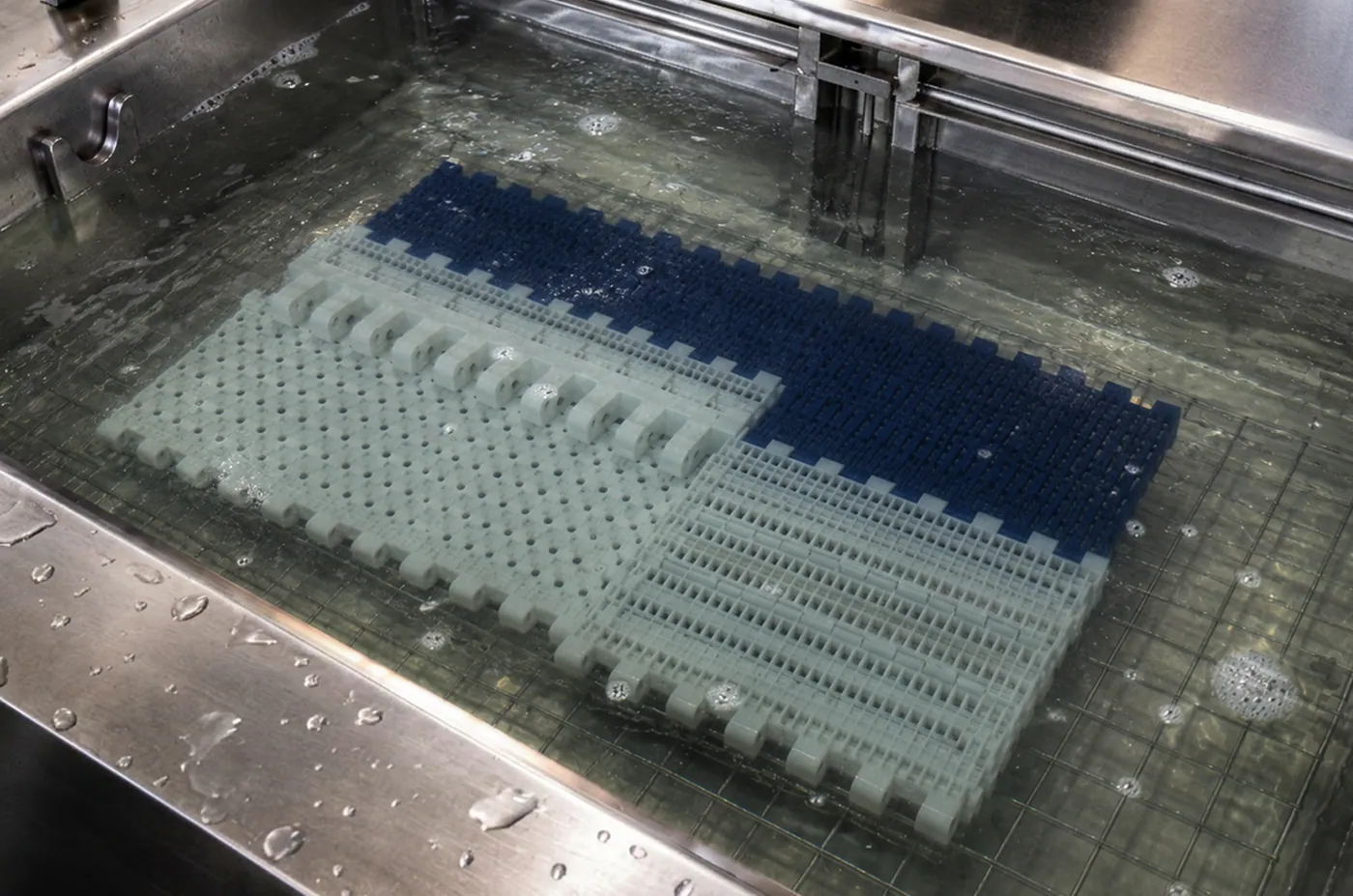
| Conveyor sections, sprockets, guides, packaging format parts | AL-600 or larger with agitation and filtration |
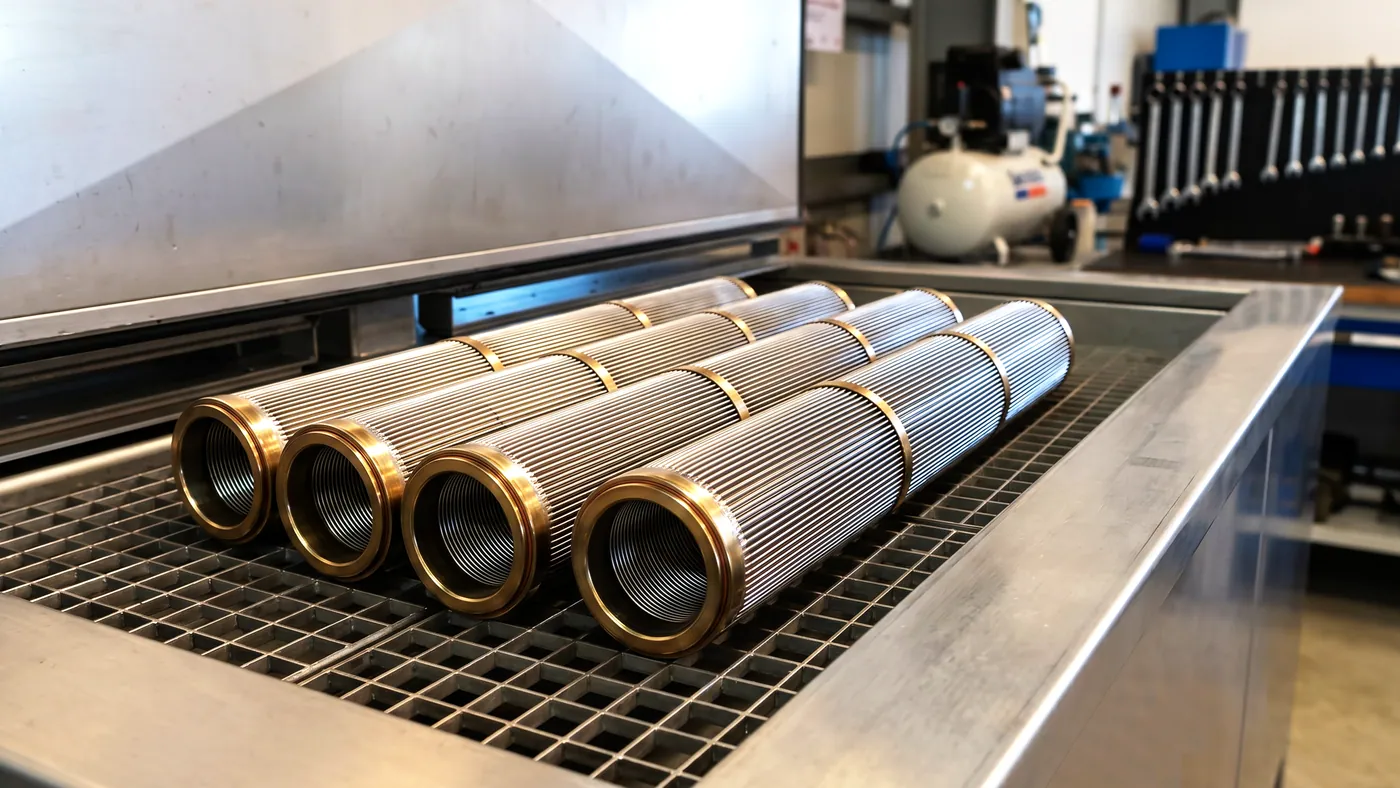
| Filters and screens | SF-225 with filtration, 40 kHz, back-flush rinse |
Where it does not fit
Large fixed equipment stays with CIP and foam cleaning. Parts that cannot be immersed, motors and sensors without an IP rating, are cleaned by hand. And the tank is a cleaning station, not a storage tank: parts come out, are rinsed and dried or sanitised, and go back to the line.
The articles below cover individual parts and processes as they are written. The quote article lists what we need to size a tank for a plant.
Applications in this industry
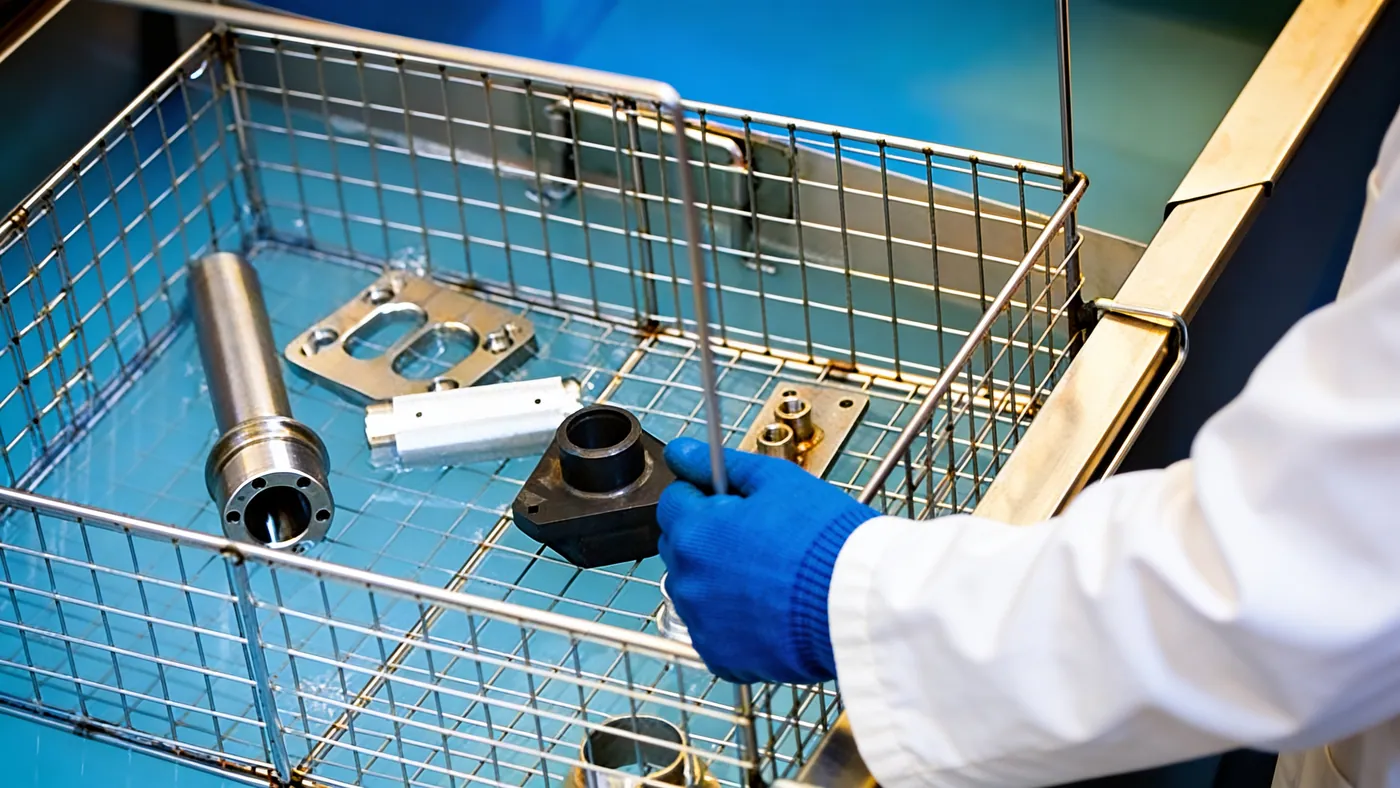
Cutting tools
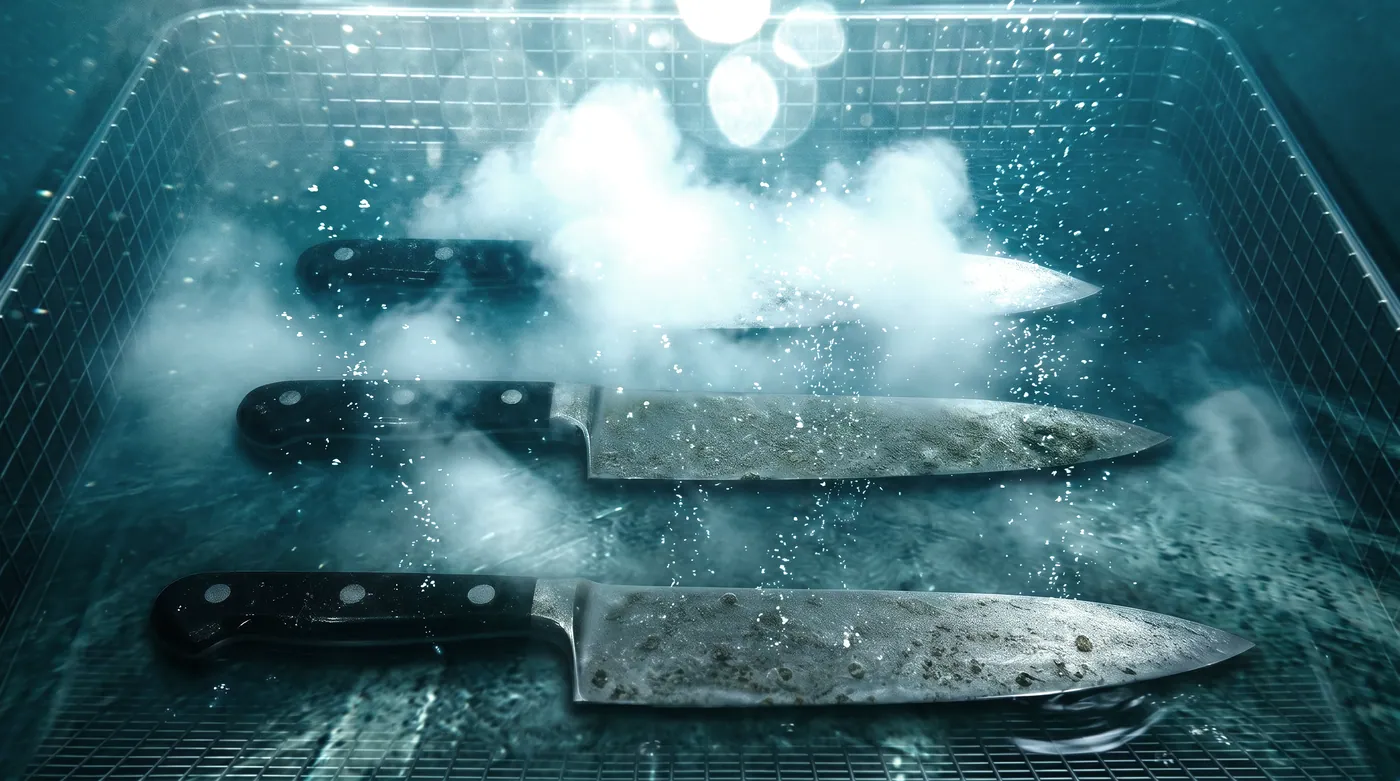 Parts and contaminants · 4 min readUltrasonic cleaning of knives in food processing plantsHand knives, steels, scabbards and knife baskets collect fat and protein in the handle joint and along the edge, where a quick rinse leaves them. How a knife-cleaning station with an ultrasonic tank fits the shift, the temperatures that keep protein from baking on, and the steps before disinfection.
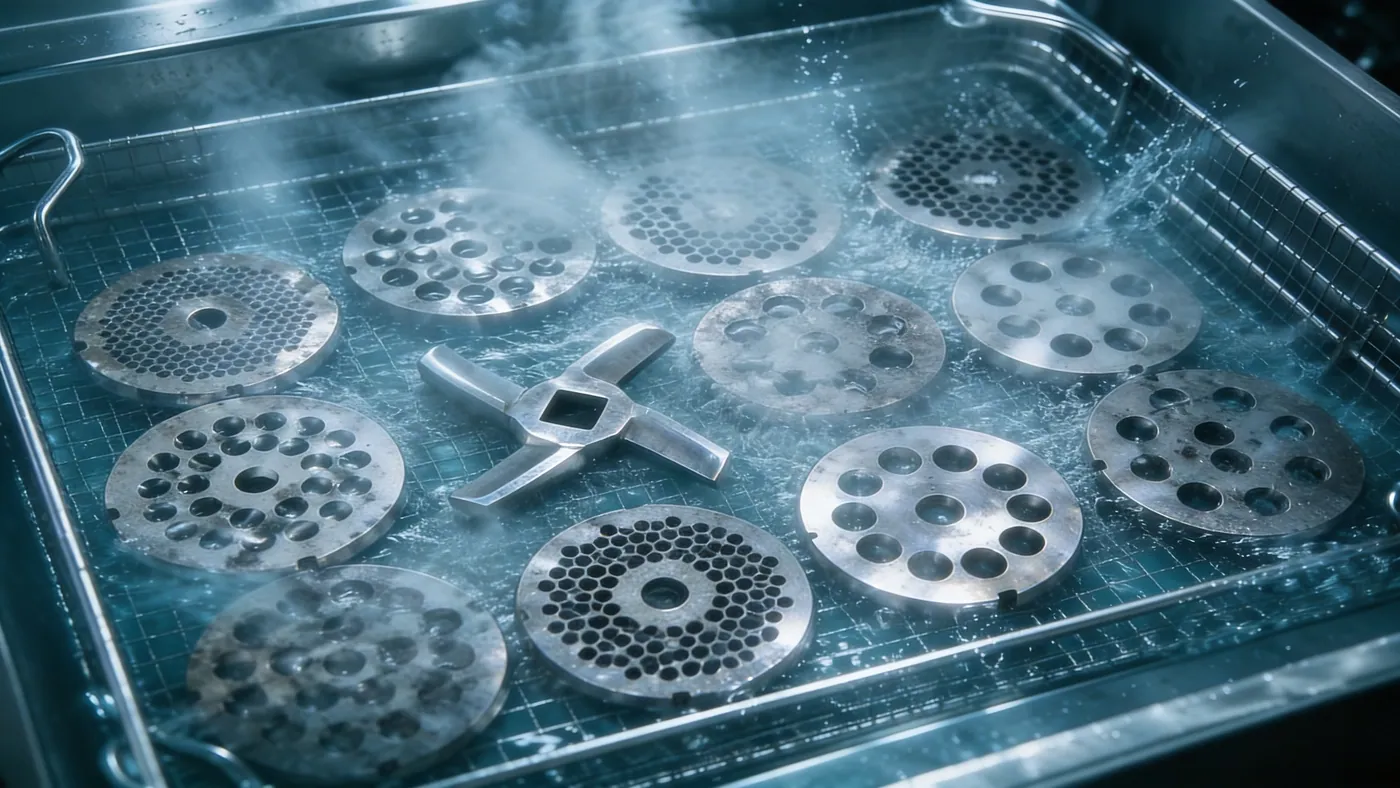 Parts and contaminants · 4 min readCleaning meat processing blades with ultrasoundMincer knives and hole plates, bowl-cutter knives, slicer blades and skinner blades carry fat and protein in their bores, holes and hubs. How to clean machine blades so they come out ready for disinfection, the temperatures for protein, and how to protect the edges and the matched sets.