

Topics
Articles about: Stainless steel
14 articles
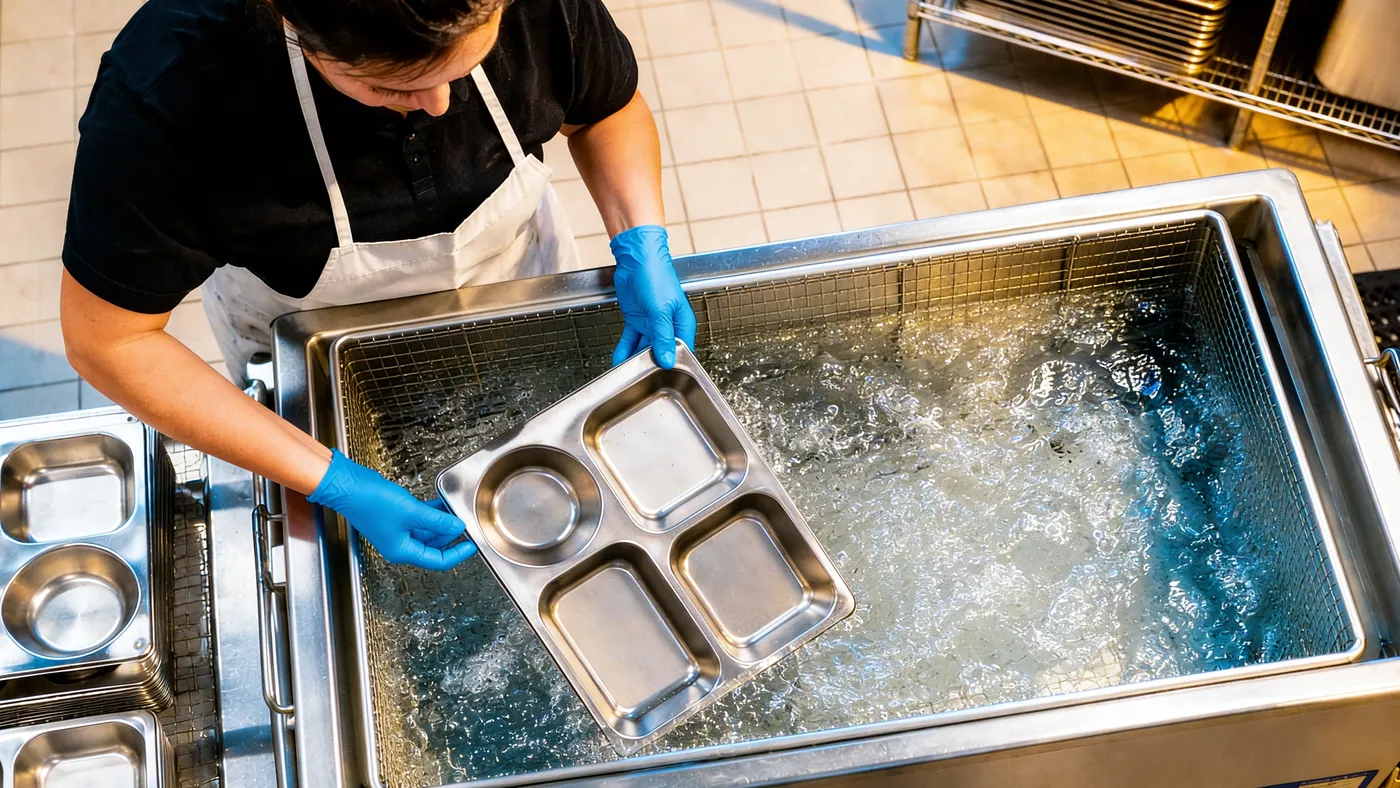 Parts and contaminants · 3 min readUltrasonic cleaning of stainless steel food contact partsValves, pump rotors, fittings, nozzles, sieves and change parts in AISI 304 and 316 stay hygienic only if their surface stays clean and passive. How ultrasonic cleaning fits between dismantling and disinfection, the chemistry that protects stainless, the mistakes that make it rust, and how the result is verified.
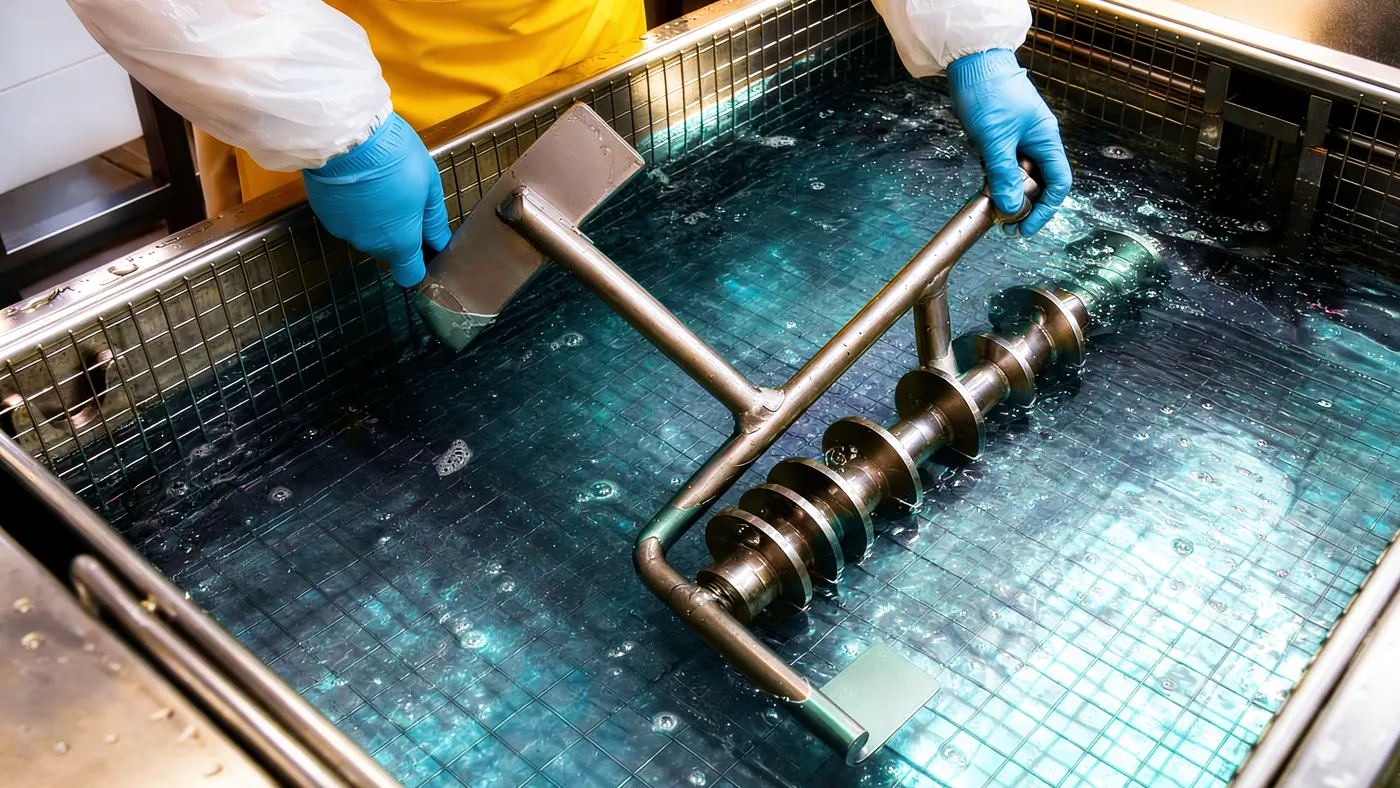 Parts and contaminants · 3 min readUltrasonic cleaning of packaging equipment componentsFilling nozzles, dosing pistons, forming sets, sealing jaws, cutting knives and vacuum cups collect product, film residue and dust between format changes. Which packaging parts are cleaned in an ultrasonic tank, how to treat heat-sealing jaws and coated parts, and how cleaning fits a format or allergen changeover.
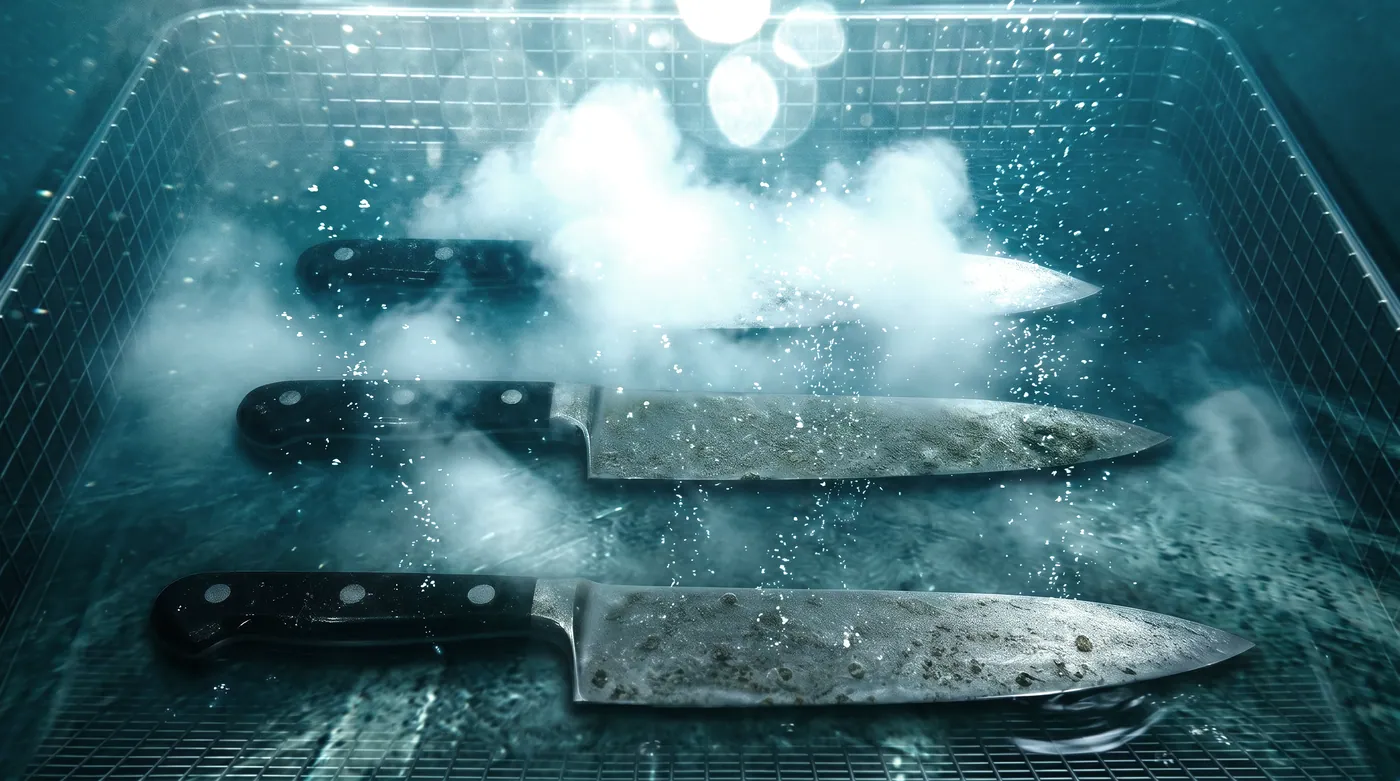 Parts and contaminants · 4 min readUltrasonic cleaning of knives in food processing plantsHand knives, steels, scabbards and knife baskets collect fat and protein in the handle joint and along the edge, where a quick rinse leaves them. How a knife-cleaning station with an ultrasonic tank fits the shift, the temperatures that keep protein from baking on, and the steps before disinfection.
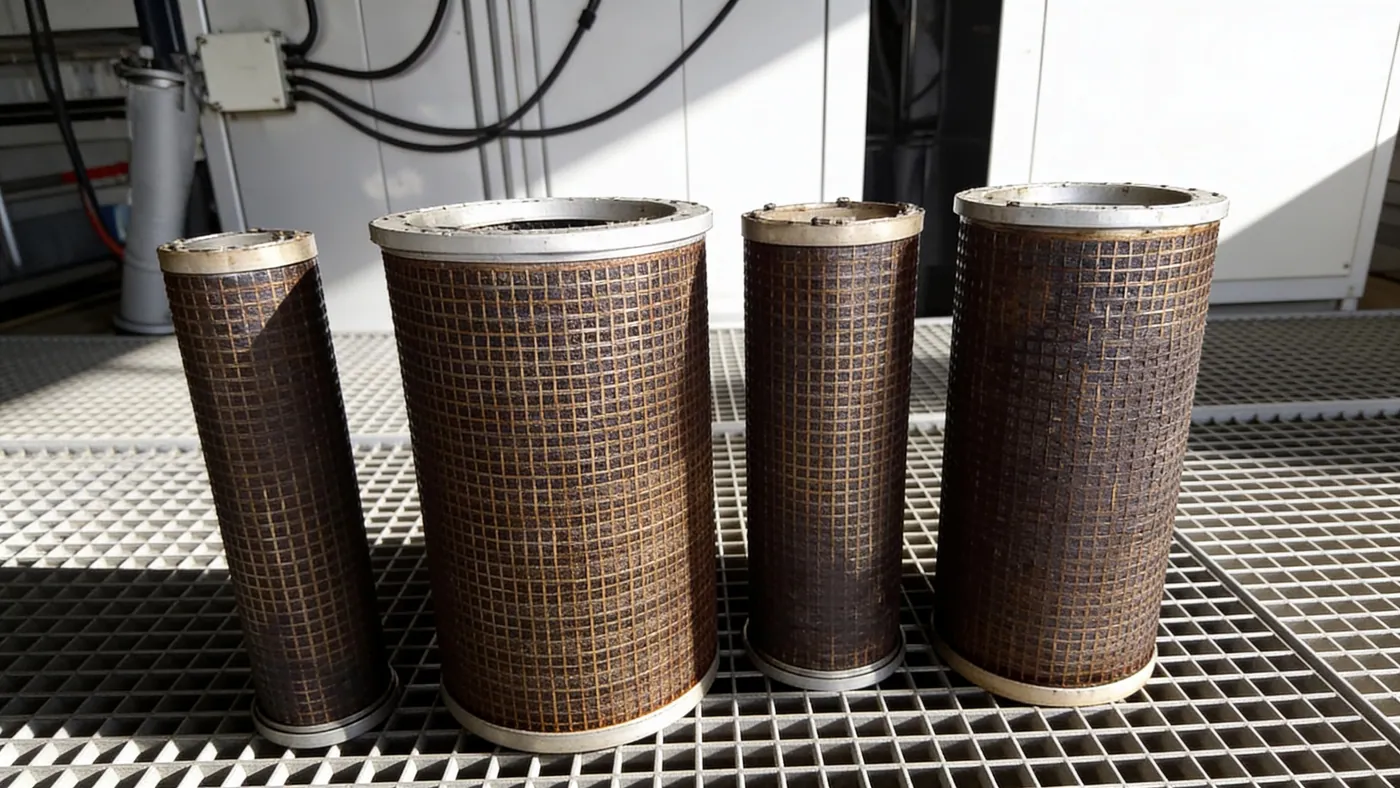 Parts and contaminants · 4 min readUltrasonic cleaning of industrial filters for reuseStainless mesh, sintered metal and wire-wound filters can be cleaned and reused many times; paper and felt cannot. Which filters are worth cleaning, how to get the dirt out of the depth of the medium rather than just its surface, and how to prove a cleaned filter is fit to go back into service.
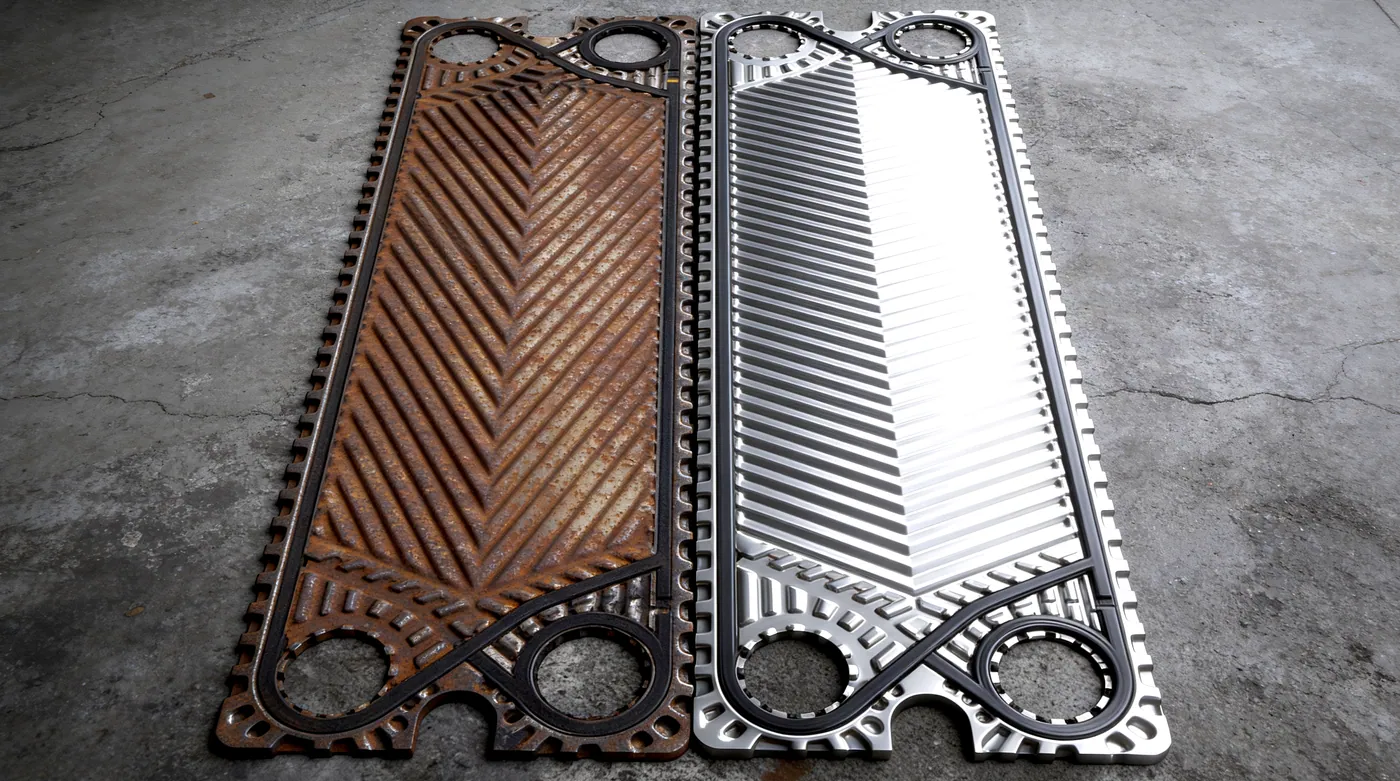 Parts and contaminants · 4 min readUltrasonic cleaning of heat exchangers in industryScale, oil, biofilm and deposits on plate packs, tube bundles and coolers cost heat transfer and pumping energy. Which heat exchangers can go into an ultrasonic tank and which cannot, the two-step chemistry for scale and oil, tank sizes for plates and bundles, and the checks before the exchanger goes back into service.
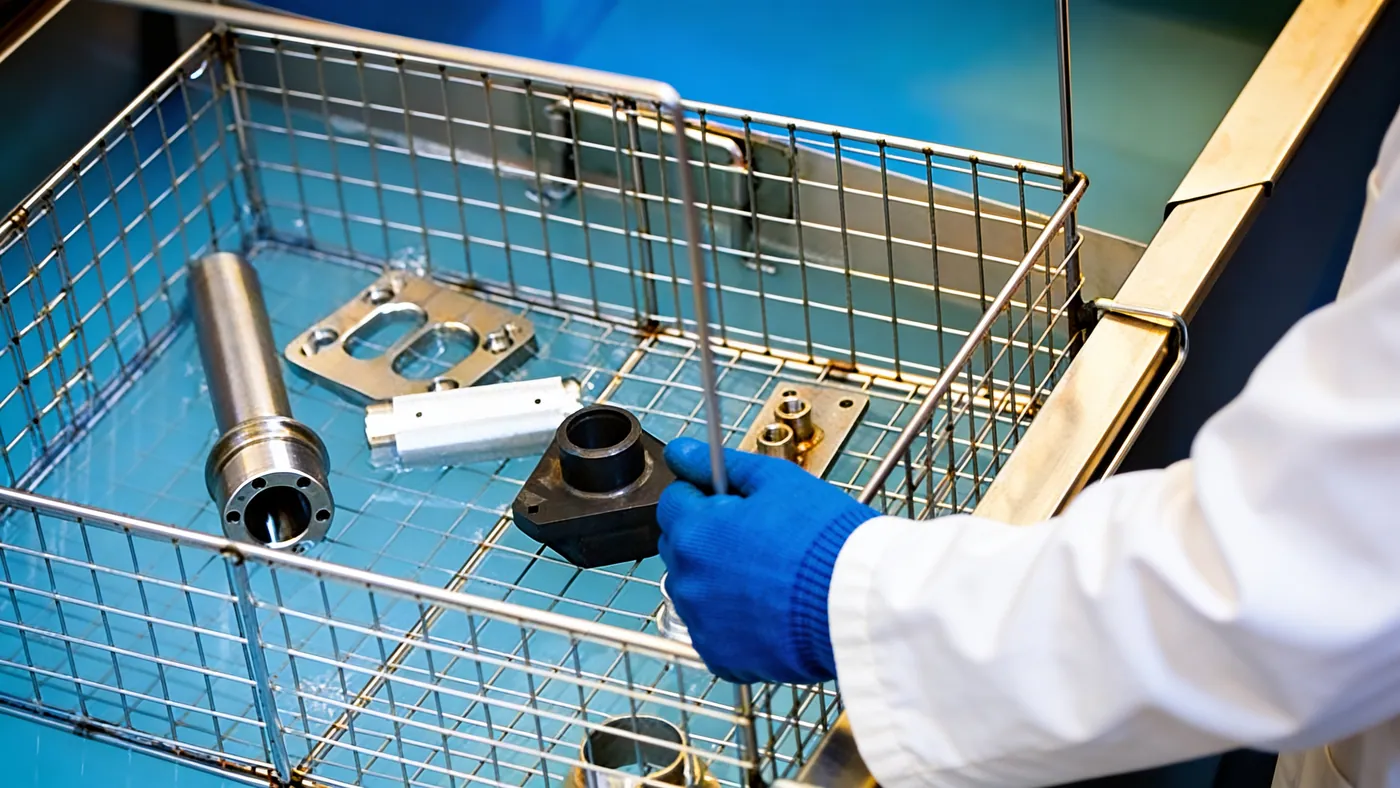 Parts and contaminants · 3 min readUltrasonic cleaning of bottling equipment partsFilling valves, vent tubes, capping and crowning heads, change parts and labeller parts collect sugar, fruit pulp, yeast, beer stone, tartrate and glue. How to clean them at an overhaul or a product change, the chemistry for each beverage soil, and how to keep valve sets and seals in order.
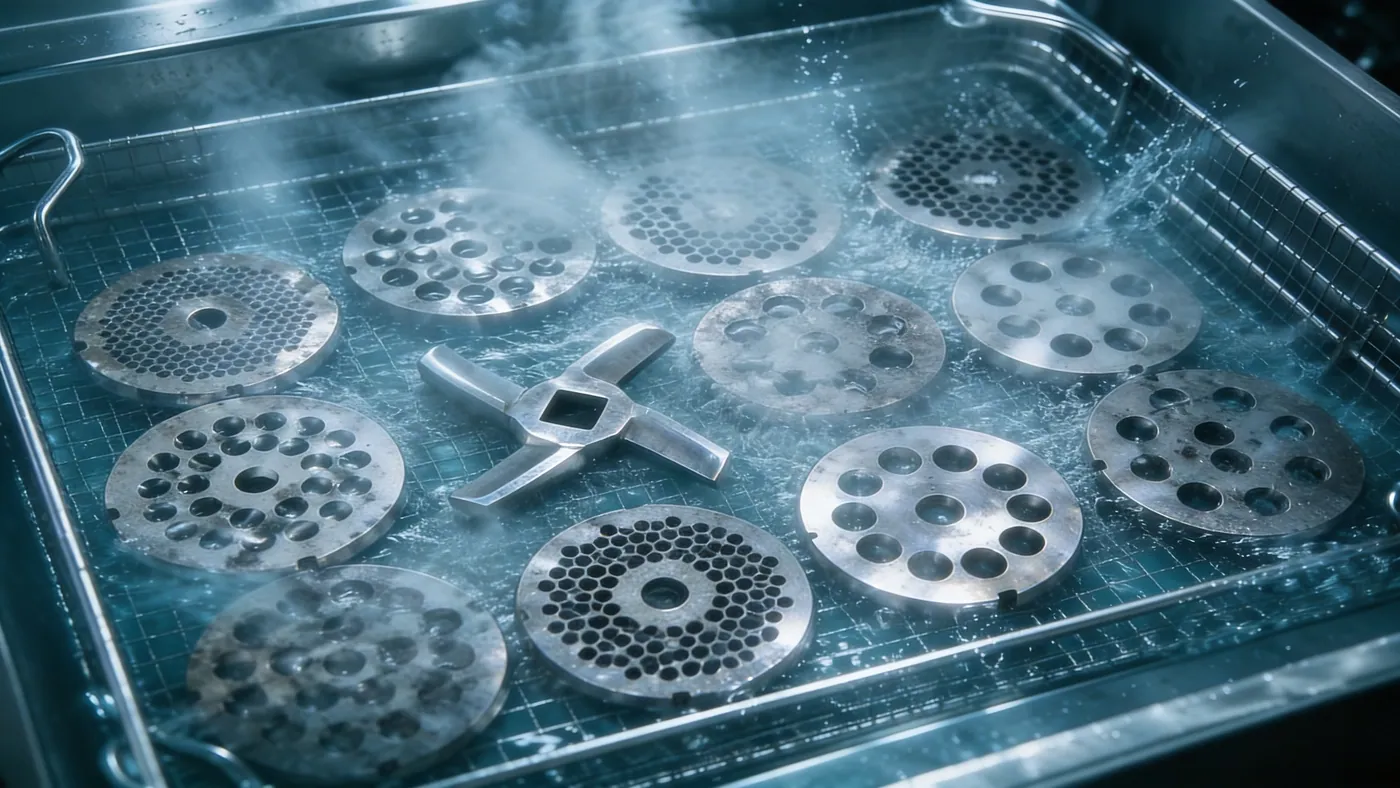 Parts and contaminants · 4 min readCleaning meat processing blades with ultrasoundMincer knives and hole plates, bowl-cutter knives, slicer blades and skinner blades carry fat and protein in their bores, holes and hubs. How to clean machine blades so they come out ready for disinfection, the temperatures for protein, and how to protect the edges and the matched sets.
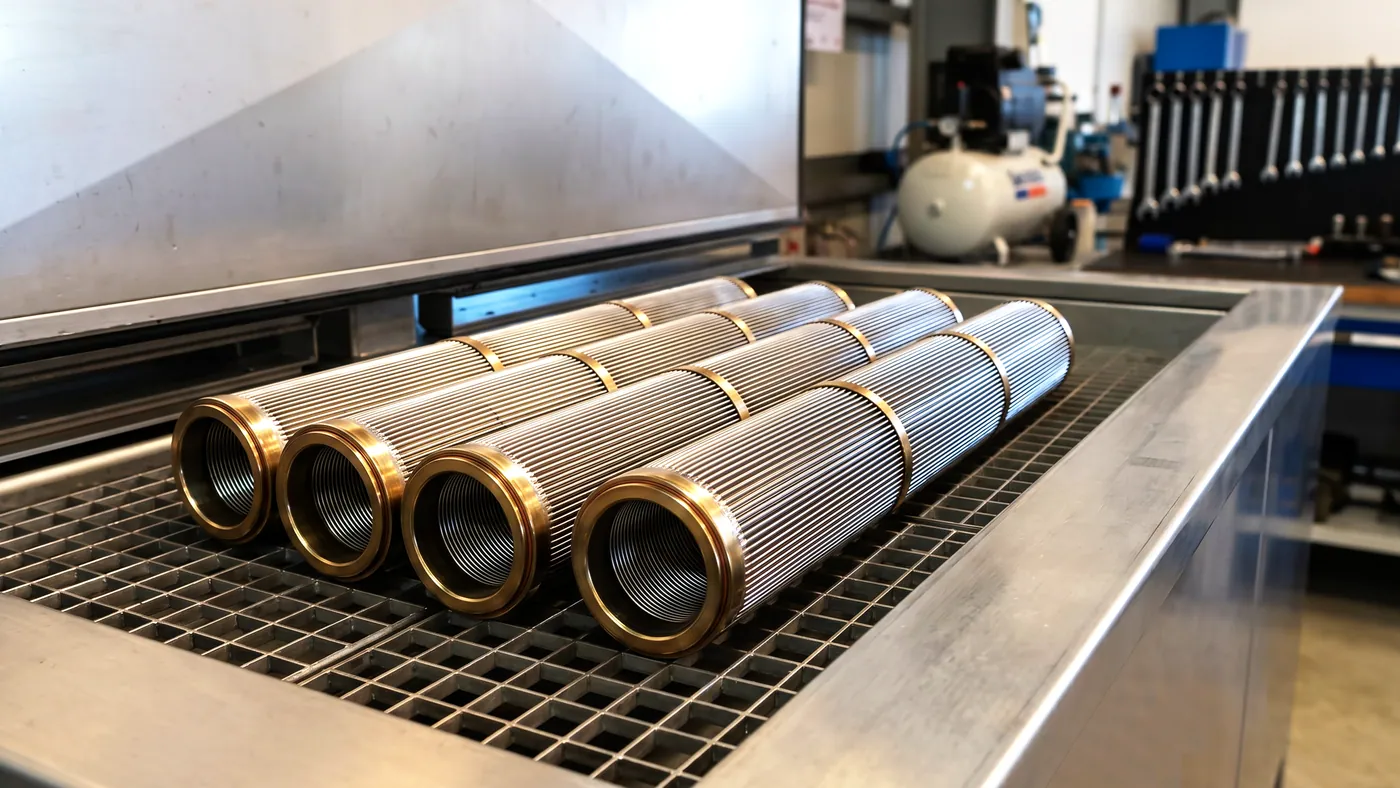 Parts and contaminants · 3 min readCleaning food industry filters with ultrasoundSieves, strainers, sifter screens, fryer filters, filter candles and centrifuge screens clog with fat, protein, pulp, starch and carbonised oil. Which food filters can be cleaned and reused, the chemistry for each soil, why the reverse flush matters, and the hygiene steps before a filter goes back into the line.
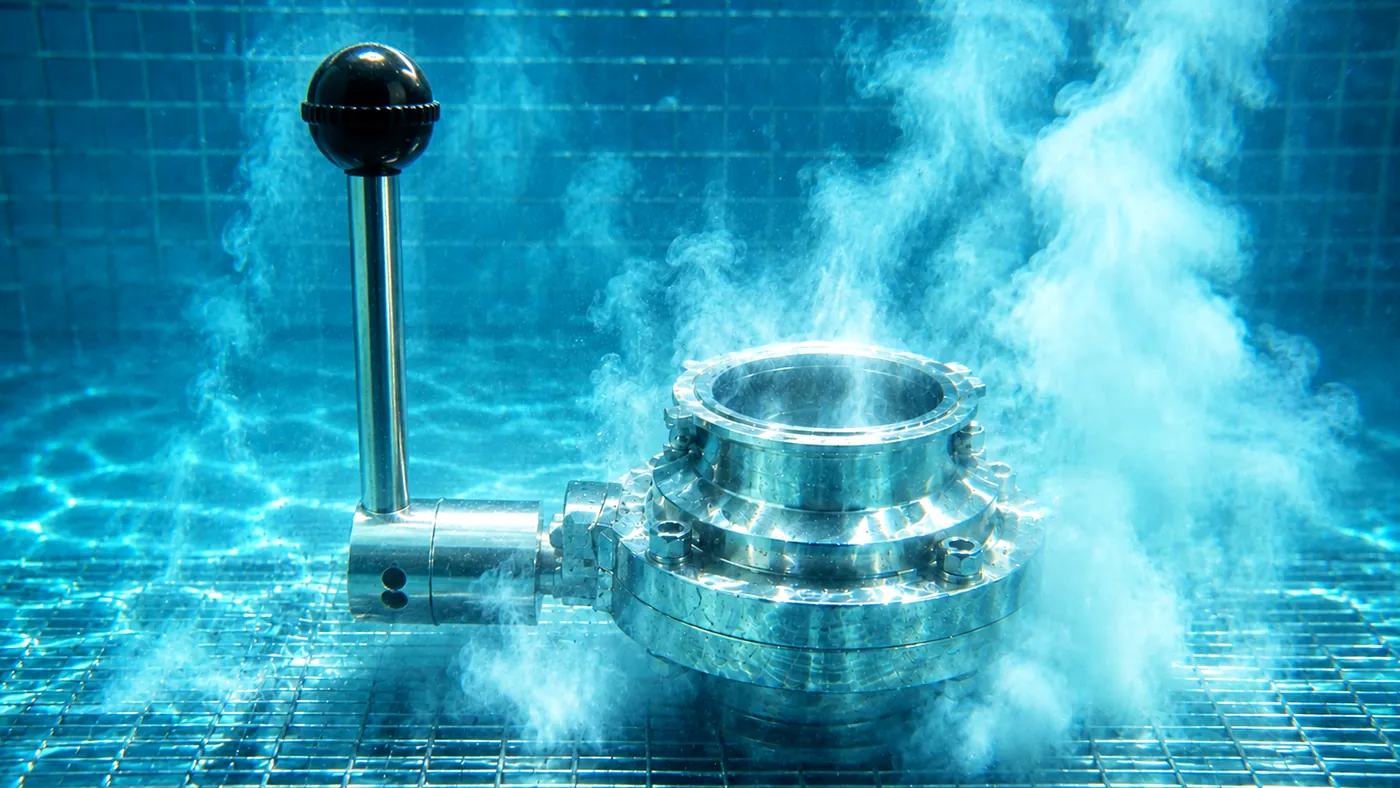 Parts and contaminants · 3 min readCleaning dairy equipment with ultrasonic systemsSeparator discs, homogeniser valves, pasteuriser plates, filling nozzles and cheese moulds carry milk fat, protein and milk stone that cleaning in place does not always remove. The two-step alkaline and acid wash, the temperatures for raw and heat-treated milk soil, and the dairy parts worth taking out for an ultrasonic tank.
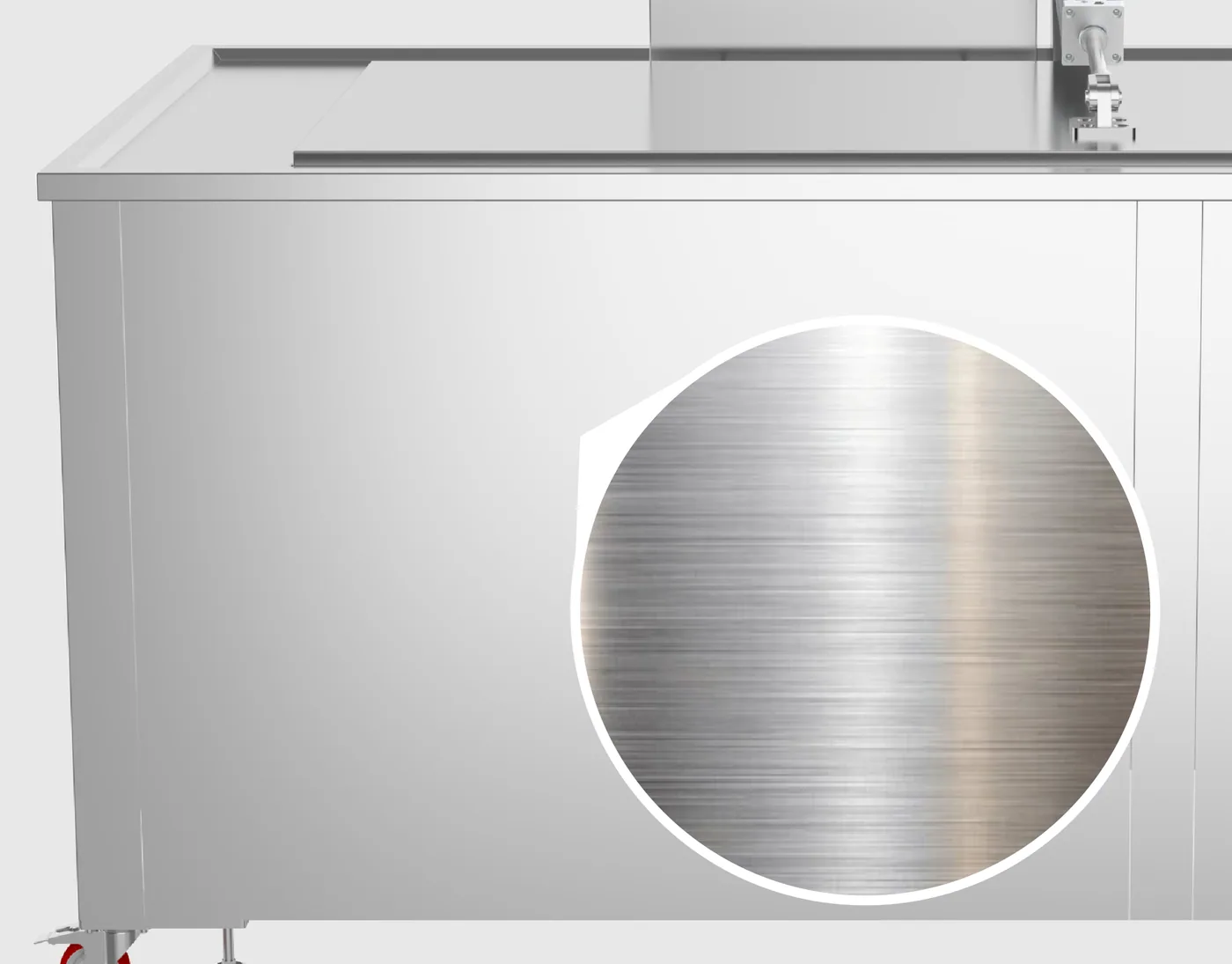 Industries · 3 min readUltrasonic cleaning in food processingKnives and blades, moulds, conveyor parts, filters, nozzles and pump components carry fat, protein, sugar and starch into places a hose cannot reach. What ultrasonic cleaning removes in a food plant, the stainless steel and the chemistry that go with it, and where it fits next to CIP and sanitation.
 Process and parameters · 4 min readCleaning liquids for ultrasonic cleaningWater with a detergent does most jobs. Which chemistry for oil, carbon, oxide and flux, what never goes in the tank, and why concentration and temperature matter as much as the product.
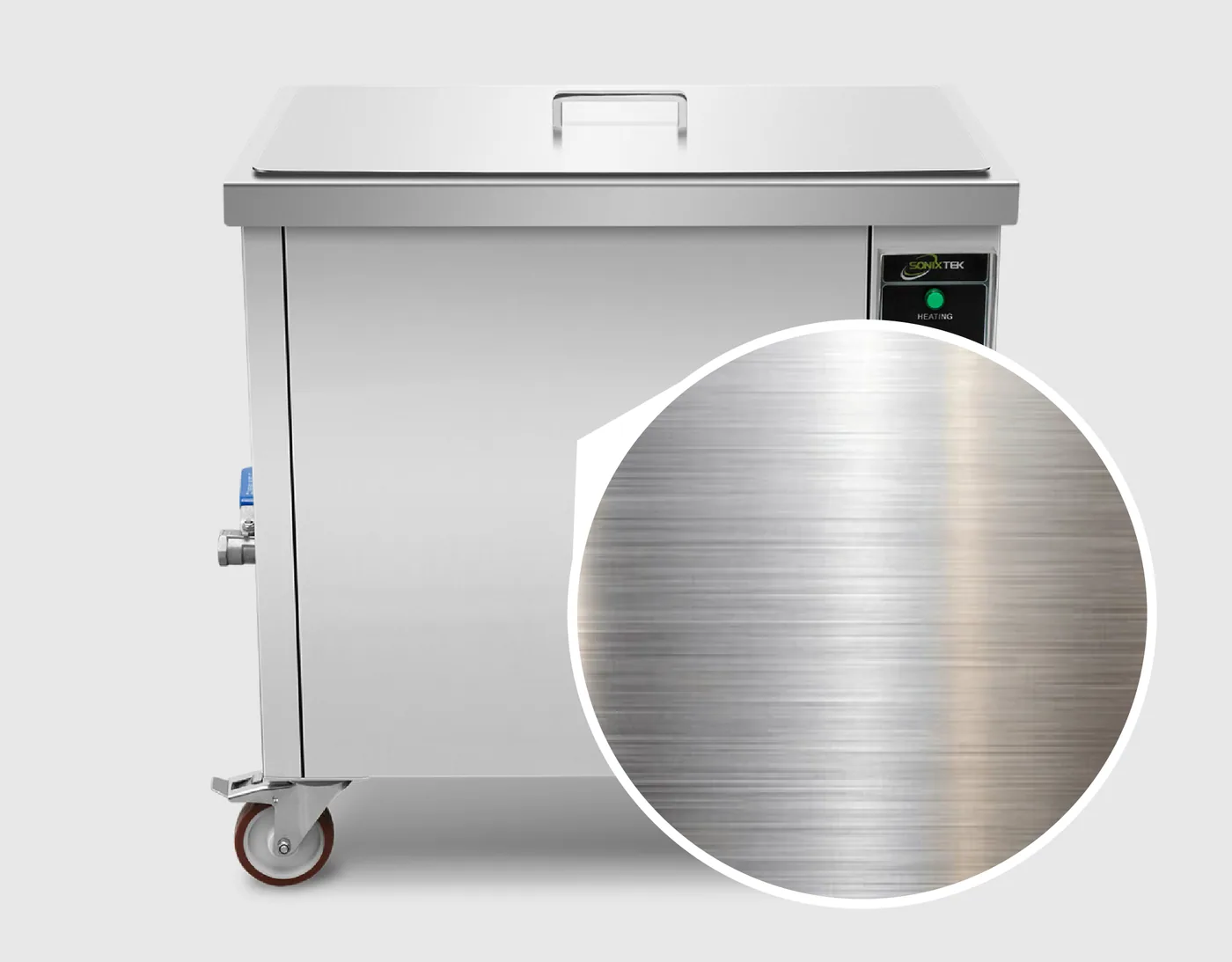 Choosing a machine · 3 min readTank material and wall thicknessOur tanks are AISI 304 stainless steel, 2 mm on the ST and SF series and 2.5 mm from the AL-600 upwards. Why that grade, why those thicknesses, what cavitation does to a tank floor over the years, and when AISI 316 is worth specifying.
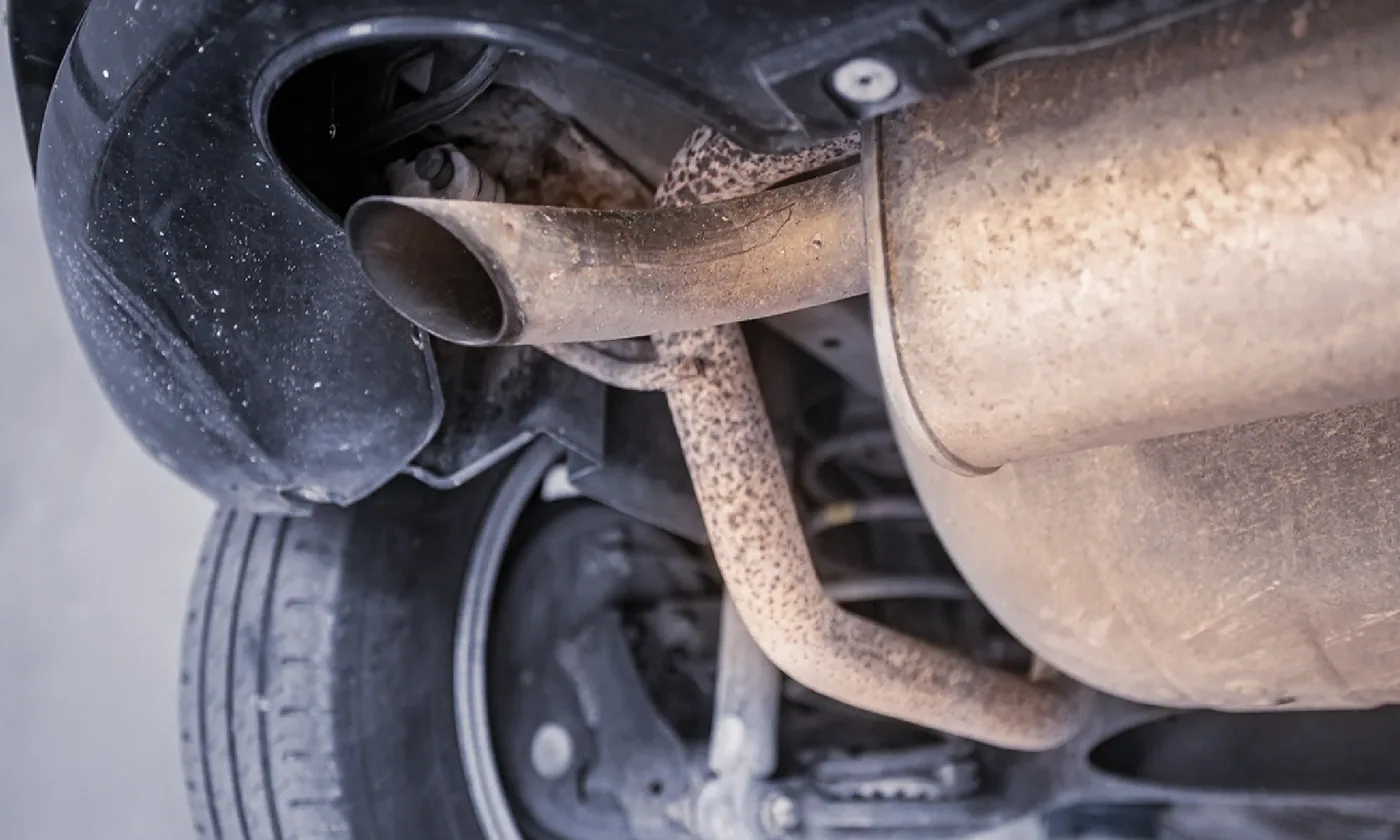 Parts and contaminants · 3 min readRemoving rust, scale and oxideUltrasound alone does not remove rust; the chemistry does, and the ultrasound makes it fast and complete. Which chemistries work on steel, aluminium, brass and copper, why they do not go in a standard tank, and how to protect the bare metal you have just exposed.
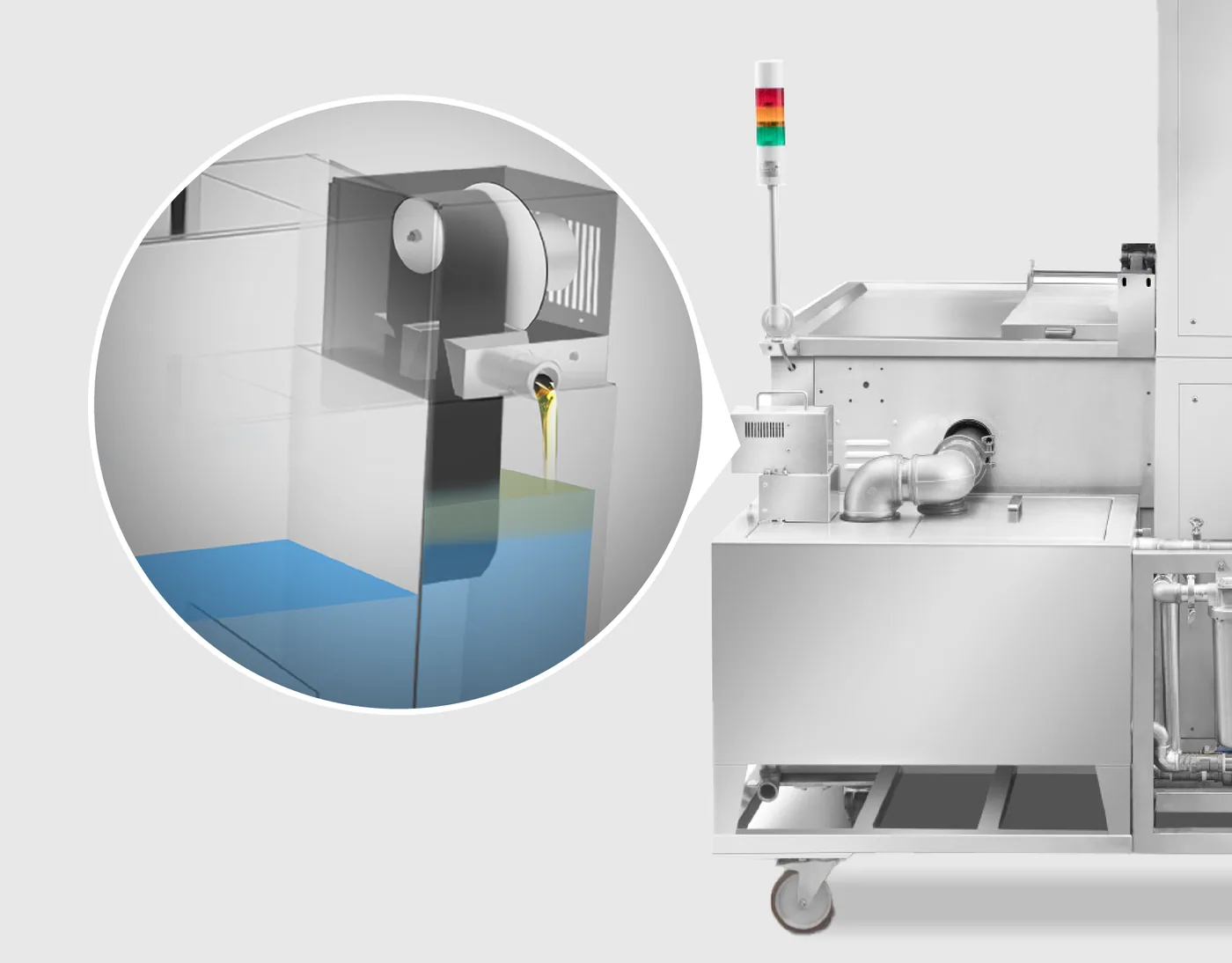 Operation and maintenance · 3 min readDaily and weekly maintenance of an ultrasonic cleanerAn ultrasonic tank has no wear parts in the liquid, so maintenance is about the bath, the floor, the filter and the heater. A routine that takes ten minutes a day and half an hour a week, and what to look at once a month.
Let's find the right fit
Not sure which size you need?
Send us the part, the quantity per hour and the soil you are removing. We will size the tank and the frequency with you.