

Knowledge
Ultrasonic cleaning basics
Cavitation, frequency, generators, transducers: how the process works and why it cleans where brushes cannot.
11 articles
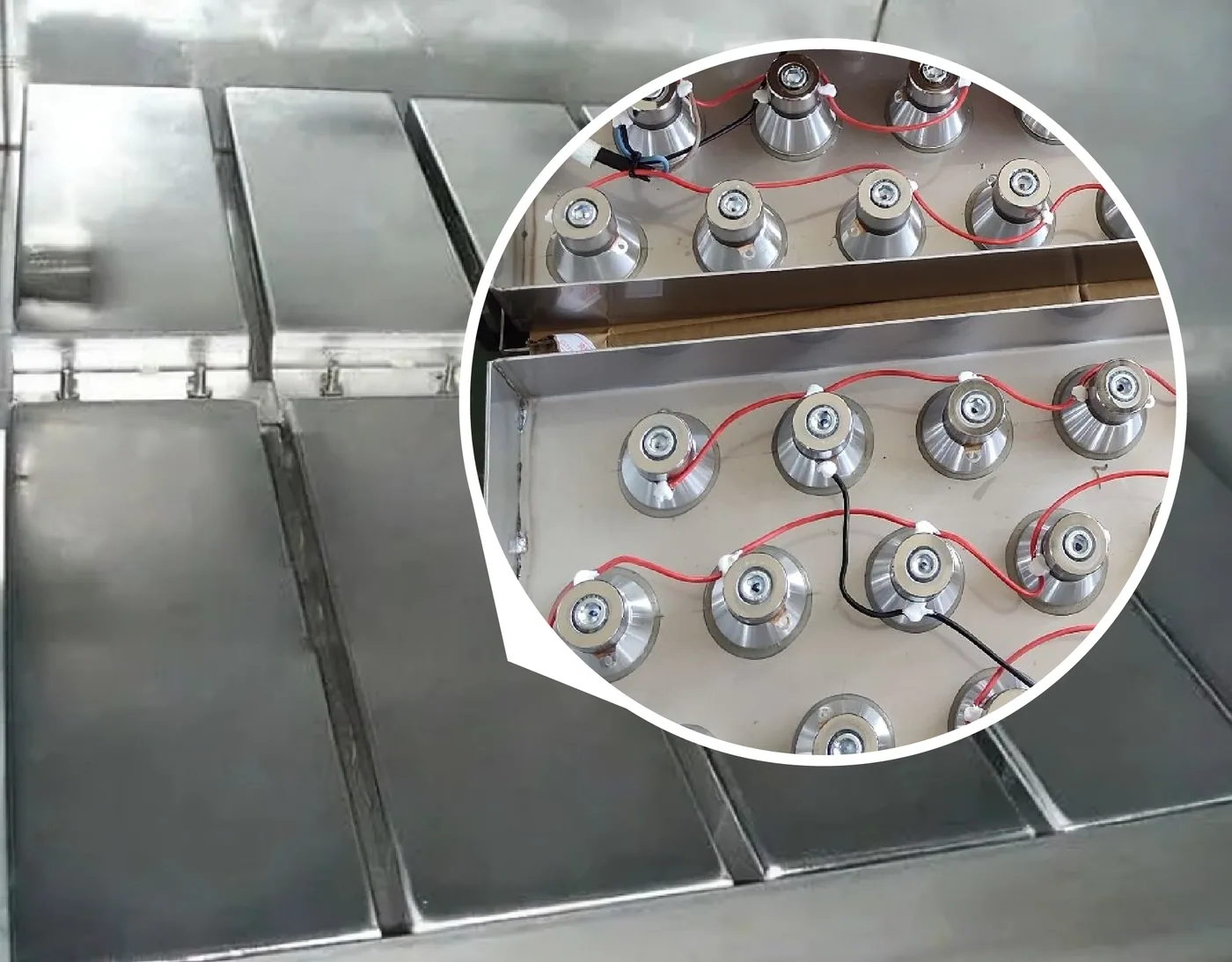 Ultrasonic cleaning basics · 3 min readCavitation: how a collapsing bubble cleans a surfaceUltrasound does not scrub. It makes millions of microscopic bubbles grow and collapse against the part every second, and the collapse does the work. What happens in the liquid, and what it means for the settings you choose.
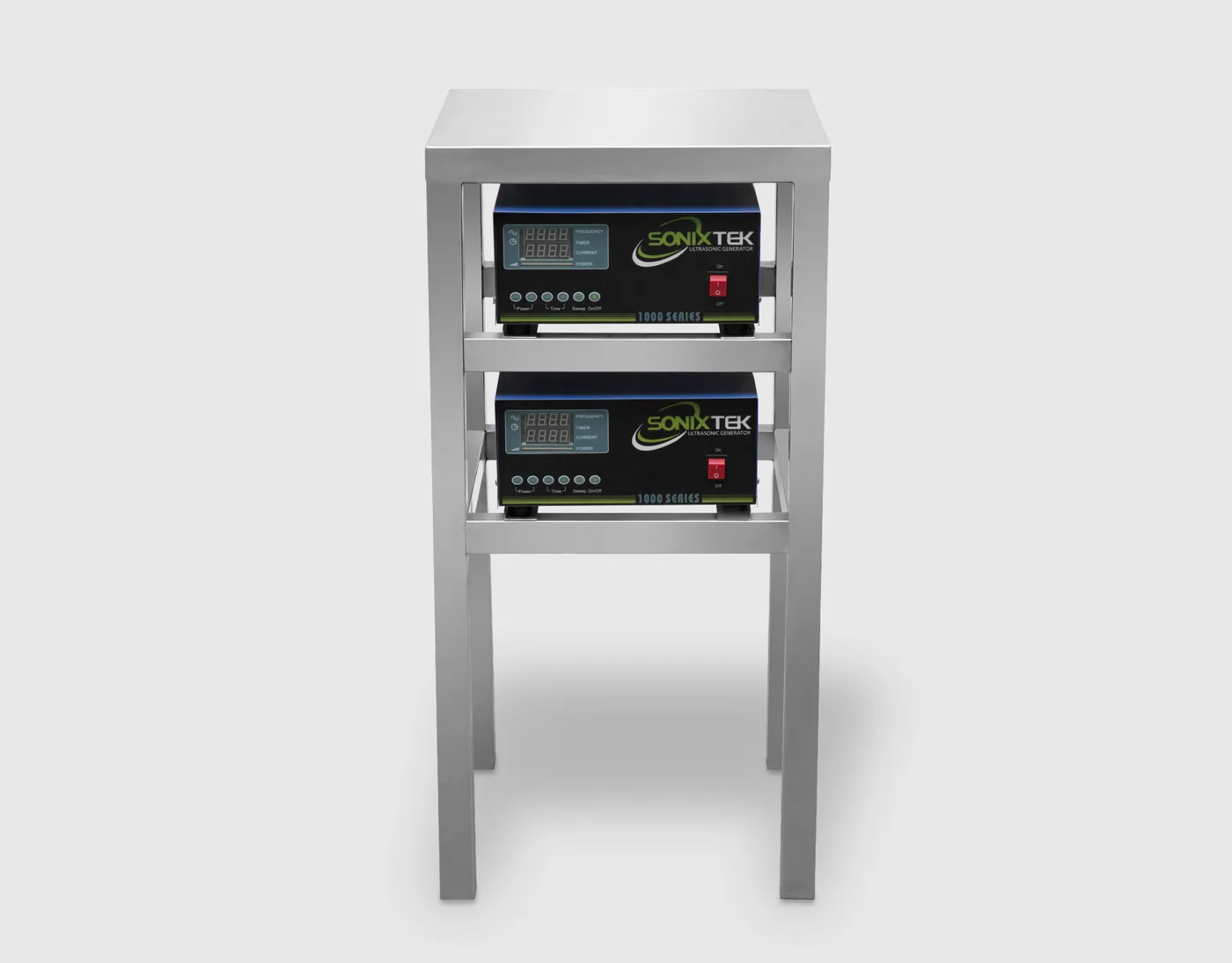 Ultrasonic cleaning basics · 3 min readUltrasonic power density: watts per litre, and why big tanks need fewerDivide the ultrasonic power by the tank volume and you get the figure that predicts how hard a tank cleans. Our range runs from about 9 to 40 W per litre, and the spread is deliberate. How to read the number when comparing machines.
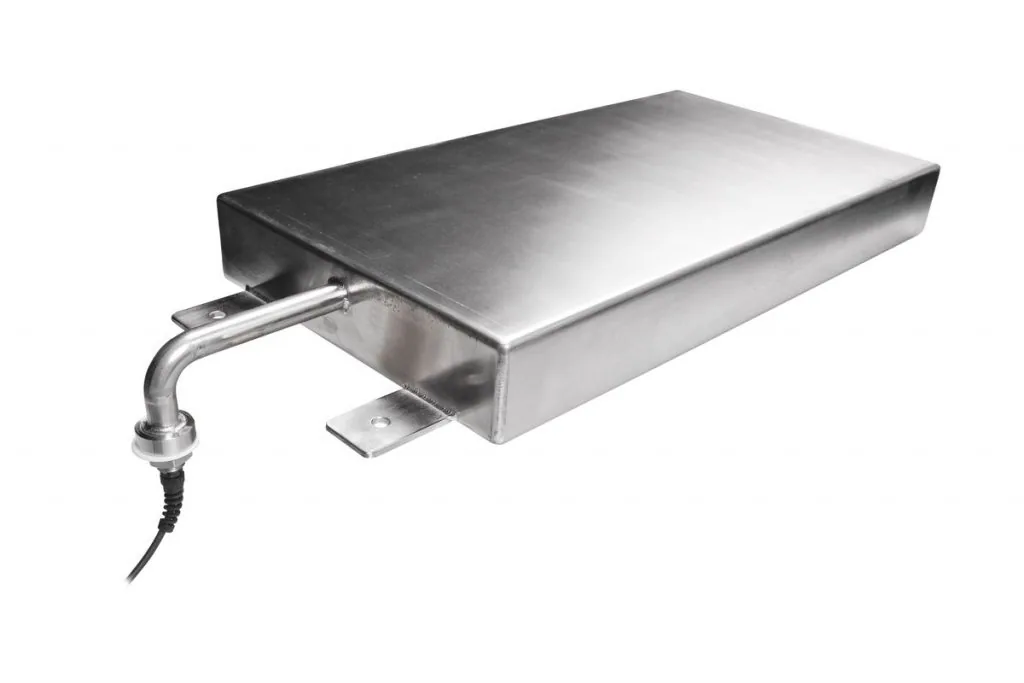 Ultrasonic cleaning basics · 3 min readTransducers and generators: what drives the tankThe generator makes the electrical signal, the transducers turn it into motion of the tank wall. How the two are matched, why the transducer count grows with tank size, and when an immersible box beats bonded transducers.
 Ultrasonic cleaning basics · 3 min readSweep and degas: what the two buttons on a digital generator doSweep moves the frequency a little either side of nominal so no part sits in a dead spot; degas drives dissolved air out of a fresh bath so cavitation can start. When to use each, and what happens if you do not.
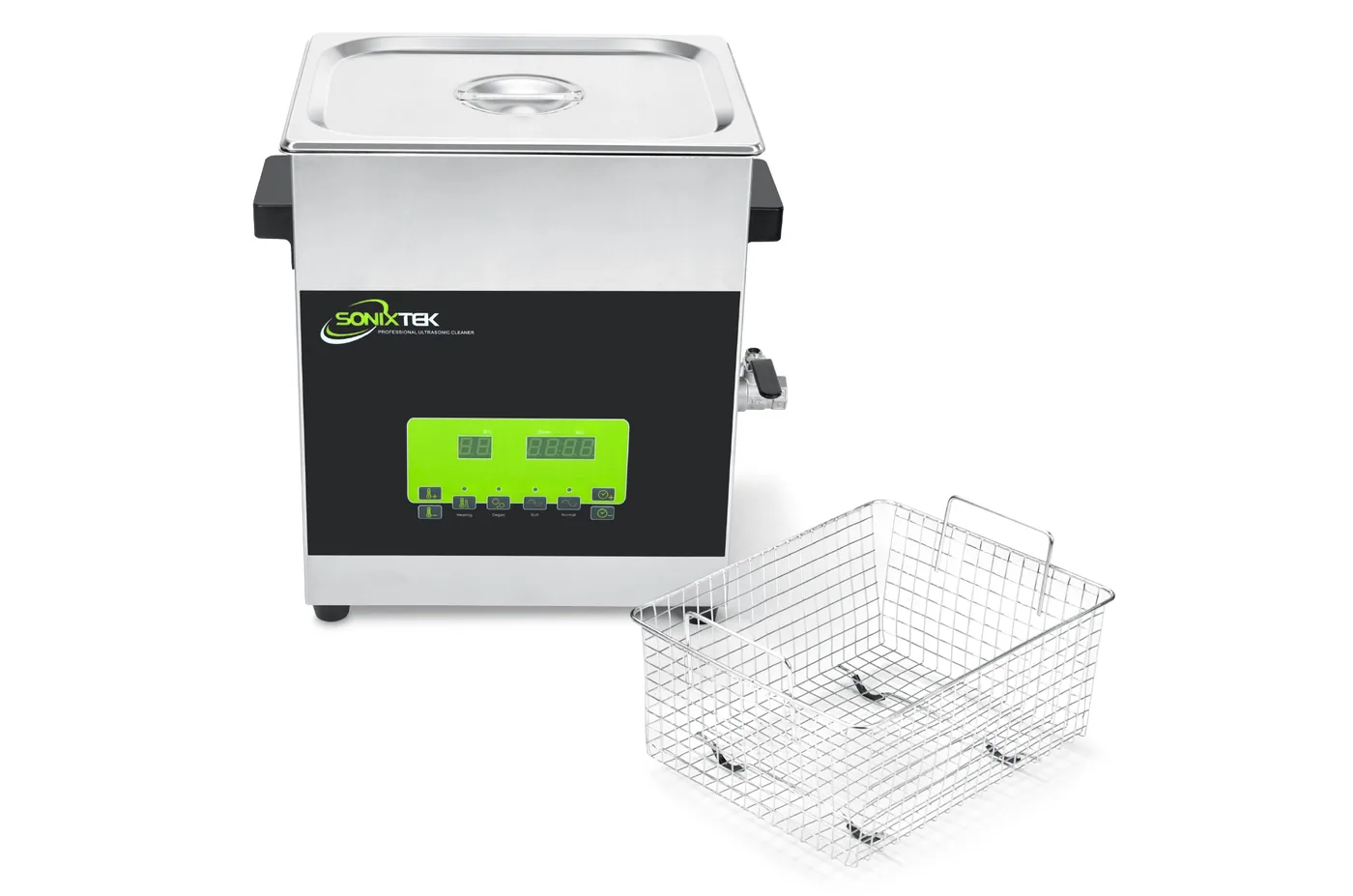 Ultrasonic cleaning basics · 3 min readDirect and indirect cleaning: parts in the bath, or in a beaker inside itDirect cleaning puts the part in the tank liquid; indirect cleaning puts it in a beaker or tray of its own liquid standing in the tank. Indirect keeps aggressive chemistry and small parts out of the main bath. When each makes sense.Ultrasonic cleaning basics · 2 min readAnalog or digital generator?The same transducers, driven two different ways. What changes in daily use, and which one to specify.
 Ultrasonic cleaning basics · 2 min readWhat is ultrasonic cleaning?Sound above hearing range, a liquid, and millions of collapsing bubbles: the short version of how an ultrasonic cleaner works and what it is good at.
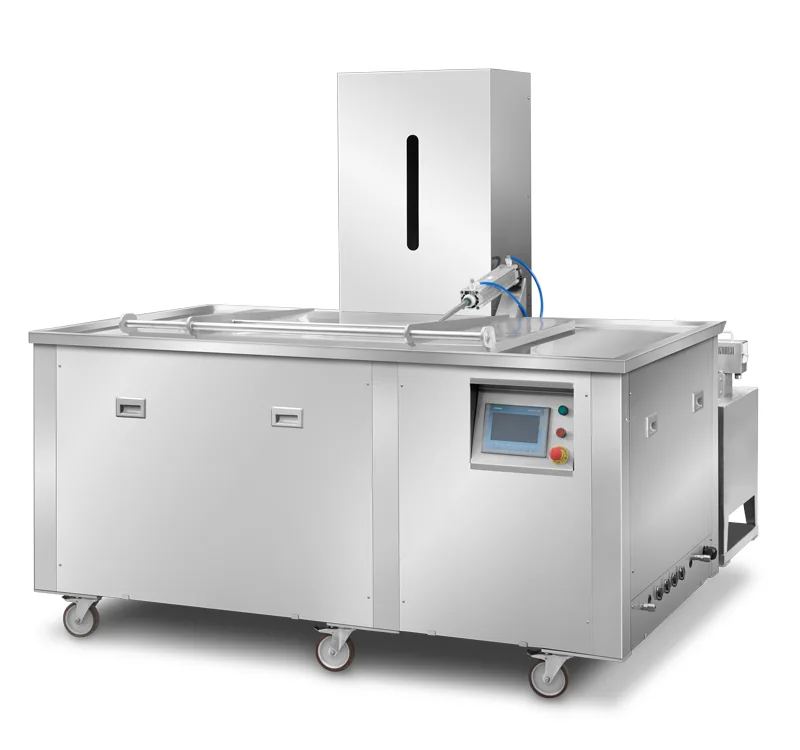 Ultrasonic cleaning basics · 17 min readUltrasonic cleaning explained: waves, cavitation, generators, tanks and featuresThe long version: how ultrasonic waves make cavitation, what frequency and temperature do, how generators and transducers are built, and which features matter in a tank.Ultrasonic cleaning basics · 2 min readHow ultrasonic cleaning actually worksTransducers turn electrical energy into pressure waves, the waves make cavitation bubbles, the bubbles collapse against the part. Step by step.
 Ultrasonic cleaning basics · 2 min readUltrasonic cleaning versus traditional cleaning methodsHand scrubbing and soaking compared with ultrasonic cleaning on effectiveness in hard-to-reach areas, speed, ease of use and environmental impact.Ultrasonic cleaning basics · 2 min readWhy ultrasonic cleaning reaches where brushes cannotCavitation cleans blind holes, threads and internal passages that scrubbing and soaking leave dirty. What the process is, where it is used and what to expect.
Let's find the right fit
Not sure which size you need?
Send us the part, the quantity per hour and the soil you are removing. We will size the tank and the frequency with you.