
Parts and contaminants · 4 min read · Updated 2026-09-25
Removing carbon deposits and baked-on oil
Carbon on pistons, valves, injectors, turbo housings and EGR valves is oil that has been cooked onto the metal. It needs the hot end of the bath, the strong end of the chemistry, 28 kHz, and time. What works, what does not, and how to avoid damaging aluminium in the process.
Technical guide. Figures are taken from our own spec tables; for your process we confirm the settings with a cleaning trial.
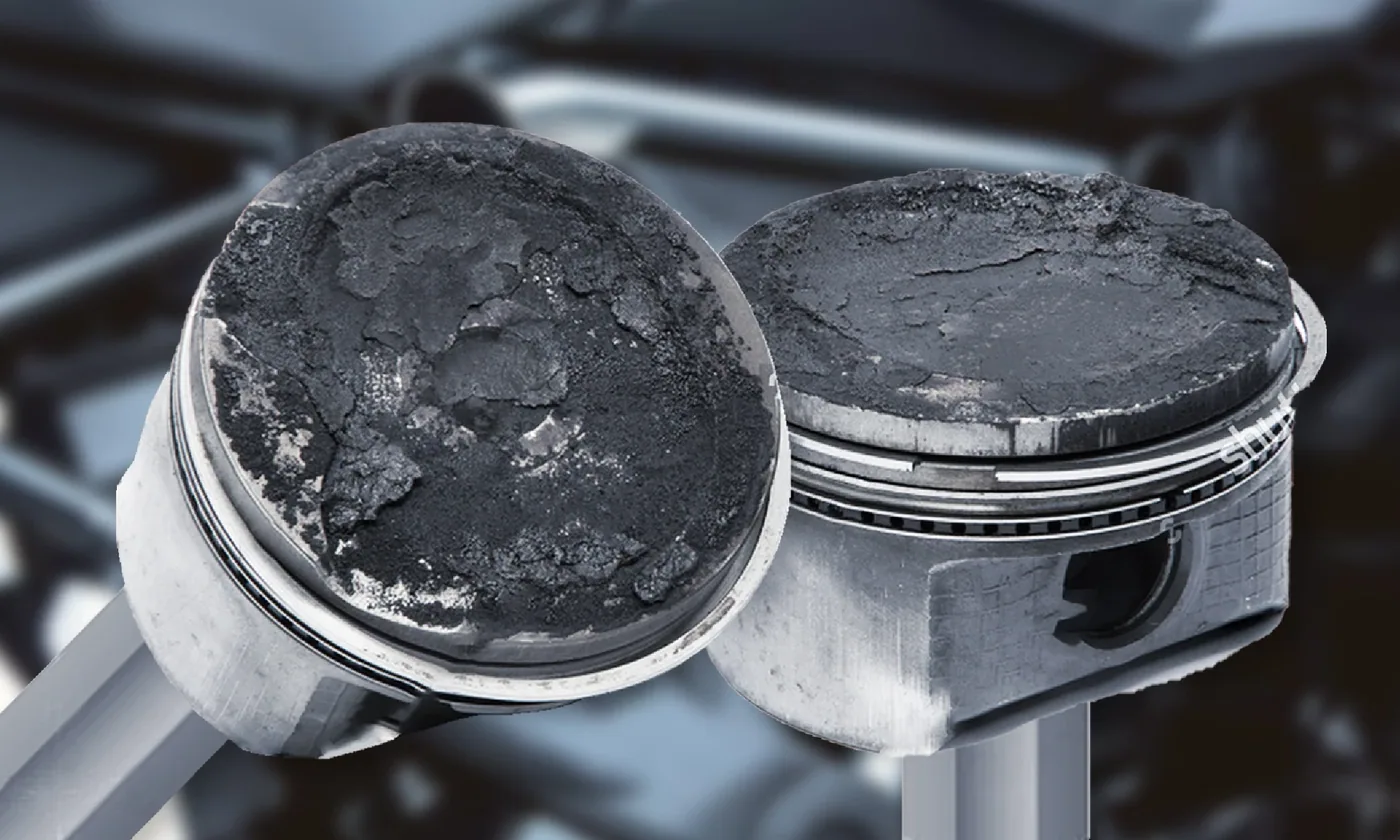
Carbon is the hardest common soil and the one that sells the most ultrasonic tanks, because nothing else removes it from the inside of an injector or the passages of a cylinder head without taking the part apart. It is oil and fuel that have been heated past their decomposition point and left a layer of coke, varnish and soot bonded to the metal.
Three kinds of deposit
- Varnish and lacquer: thin, brown, hard, on injector needles, valve stems, turbo shafts and inside carburettor passages. Oil that has oxidised at moderate temperature. Comes off in a strong alkaline bath at 65 to 75 °C in 15 to 30 minutes.
- Hard carbon (coke): black, thick, brittle, on piston crowns, valve heads, EGR valves and combustion-side surfaces. Needs the same chemistry, a soak stage, and cavitation to break it up mechanically. 30 to 60 minutes, sometimes two cycles.
- Soot: loose, black, greasy, on the exhaust side, in DPF housings and EGR coolers. The easiest to lift and the fastest to blacken a bath. 10 to 15 minutes, with filtration.
The process
Chemistry. A heavy-duty alkaline cleaner at 5 to 10 %, formulated for carbon: high pH, strong surfactants, often with solvents in emulsion to swell the varnish. The supplier's data sheet will say "engine parts" or "carbon". For aluminium pistons, heads and turbo housings, a carbon cleaner formulated for light alloys, with silicate inhibitors; a steel-only cleaner turns aluminium grey and etches machined faces in minutes.
Temperature. 65 to 75 °C for the ultrasonic stage. A soak at 85 to 95 °C beforehand, in the same tank with the ultrasound off, softens hard coke and can halve the ultrasonic time; the ST series heats to 110 °C for this. Back to 70 °C before the ultrasound goes on, or the cavitation is weak.
Frequency. 28 kHz. Carbon is a mechanical problem as much as a chemical one and the larger bubbles of 28 kHz hit harder. 40 kHz for delicate injector internals and for anodised or polished aluminium.
Time. Longer than anything else in the shop, and it is normal for a cylinder head to take 30 to 45 minutes. Check at intervals; when the carbon has gone, more time only etches the metal.
Agitation. Coke that has been broken loose settles back onto horizontal surfaces. The lift with agitation on the AL series, or turning the parts once, clears it. On an ST tank, lift the basket out and hose it down between two cycles.
Rinse and protect. The bath is strong and the parts are hot; rinse well, and steel parts get an inhibitor or a light oil at once.
Parts in practice
| Part | Typical soil | Bath | Time |
|---|---|---|---|
| Petrol injectors | varnish on needle and seat | 40 kHz, 60 °C, injector cleaner | 10 to 20 min |
| Diesel injectors | hard carbon on nozzle | 40 kHz, 65 to 70 °C, carbon cleaner | 20 to 30 min |
| Carburettor bodies | varnish in jets and passages | 40 kHz, 55 to 65 °C, light-alloy cleaner | 15 to 30 min |
| EGR valves and coolers | soot and coke | 28 kHz, 70 °C, carbon cleaner, filtration | 15 to 30 min |
| Turbocharger housings | baked oil, coke | 28 kHz, 70 °C, soak first | 30 to 45 min |
| Pistons, aluminium | coke on crown, varnish in grooves | 28 kHz, 65 °C, light-alloy carbon cleaner | 20 to 40 min |
| Cylinder heads, cast iron | coke in ports, oil in galleries | 28 kHz, 70 °C, soak first | 30 to 60 min |
| Cylinder heads, aluminium | as above | 28 kHz, 65 °C, light-alloy cleaner, watch the time | 30 to 45 min |
What does not work
- Cold bath. Carbon at 40 °C is a project for the afternoon.
- Mild degreaser. It cleans the oil around the carbon and leaves the carbon.
- Solvent in the tank. Not safe in an open heated bath, and not needed.
- Running until it is gone at any cost. Aluminium in a strong alkali at 70 °C loses measurable material after an hour; machined faces and bores go out of tolerance before the carbon is finished. Change the approach, not the timer.
Which machine
Injectors and small parts: an STS benchtop unit at 40 kHz with a fine basket, or the indirect method in a beaker of injector cleaner. Heads, turbos and EGR: an ST-96 to ST-206 at 28 kHz with a skimmer and a lid, because the bath is hot and the soot loads it. Engine rebuilders and remanufacturers: an AL lift system with filtration, so the heads go in and out on the lift and the coke settles into the filter instead of the parts. The automotive industry page lists the rest.