
Choosing a machine · 9 min read · Updated 2026-11-16
Tank size for engine reconditioning: heads, blocks, cranks
Engine parts cleaning tank size, worked through: baskets for car and truck heads, cranks and blocks, the height and load limits, and when a lift is needed.
Technical guide. Figures are taken from our own spec tables; for your process we confirm the settings with a cleaning trial.
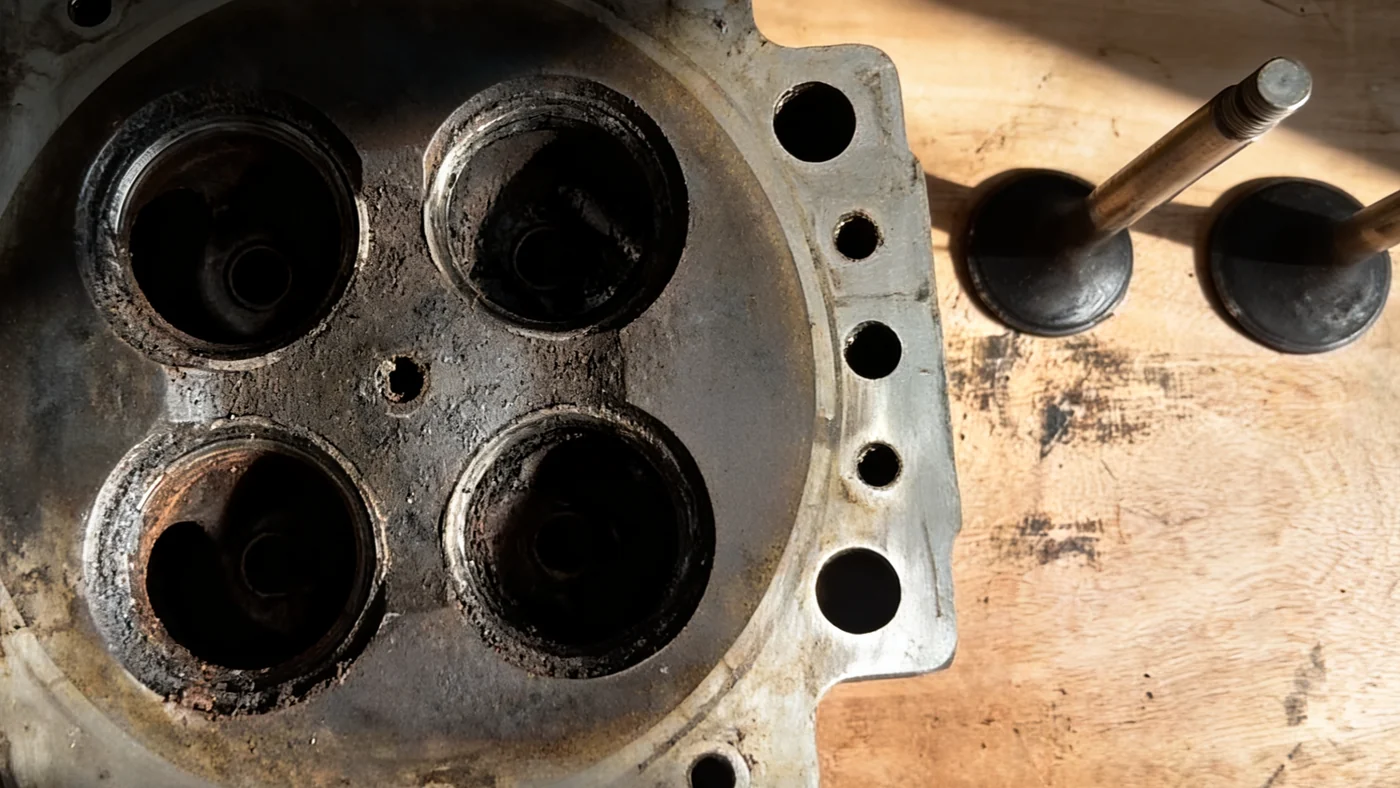
An engine shop cleans three kinds of large part, and each hits a different limit of a tank: a cylinder head the basket length, a crankshaft the length and, on trucks, the weight, a block the basket height. So which tank size does an engine shop need, and when does one tank stop being enough?
The method is the one in how to size an ultrasonic tank: take the part, add 20 mm
Size an engine-shop tank by the basket, not the litres. Heads and crankshafts fit the baskets of the ST series heated ultrasonic tanks; engine blocks are too tall for every ST basket and need a basket-lift system of the AL series.
How big are engine heads, crankshafts and blocks with clearance?
Engine parts need about 20 mm
| Part | Typical size (L × W × H) | Typical weight | Envelope with 20 mm |
|---|---|---|---|
| Car head, four-cylinder | 450 × |
10 to 20 kg |
490 × |
| Car head, inline six | 650 × |
weigh your own | 690 × |
| Truck head, one-piece | up to about 1000 mm |
100 kg |
up to about 1040 mm |
| Crankshaft, car or truck | measure length and swing diameter | weigh your own | length + 40 mm |
| Car block, four-cylinder, bare | 450 × |
30 to 50 kg |
490 × |
| Car block, V8, bare | 600 × |
70 to 90 kg |
640 × |
| Truck block, six-cylinder | over 1000 mm |
200 to 400 kg |
over 1040 mm |
Source: Sonixtek guides on cylinder heads and engine blocks, Nov 2026.
Measure your own largest parts before you rely on these figures; a shop that rebuilds one engine family can size much closer.
Which ST tank basket fits which engine part?
Heads and crankshafts fit the ST baskets; blocks are too tall for every one of them. The table gives each basket, its load rating and how long the tank takes to heat up.
| Model | Basket (L × W × H) | Basket load | Heating | Heat-up 20 → 60 °C |
|---|---|---|---|---|
| ST-96 | 580 × |
100 kg |
4 kW | about 1.1 h |
| ST-157 | 680 × |
100 kg |
5 kW | about 1.5 h |
| ST-206 | 730 × |
100 kg |
6 kW | about 1.6 h |
| ST-300 | 870 × |
125 kg |
8 kW | about 1.7 h |
| ST-400 | 1070 × |
150 kg |
10 kW | about 1.9 h |
Source: Sonixtek product data, Nov 2026.
Heat-up: 1.16 Wh per litre and kelvin, nominal volume, before losses.
The heat-up column shows why a larger tank is not free: it waits longer each morning and holds more cleaner.
What tank size does a cylinder head need?
A cylinder head is limited by basket length. Lying flat, with 20 mm
- Four-cylinder car head (490 mm
/ 19.3 in long): ST-96, basket 580 mm(22.8 in) long. - Inline-six car head (690 mm
/ 27.2 in long): ST-206, basket 730 mm(28.7 in) long, or larger. - Truck head (up to about 1040 mm
/ 40.9 in long, 100 kg/ 220 lb or more): an AL series lift system.
The inline-six head is 10 mm
Weight is rarely the limit for car heads. A four-cylinder head weighs 10 to 20 kg
What tank size does a crankshaft need?
A crankshaft is limited first by basket length, then by weight. Measure the crankshaft, add 20 mm
A crankshaft is long, slender and has polished journals. It lies along the long axis of the tank on supports, so the journals do not rest on the steel basket grid.
Crank sizes vary too much between engine families for typical figures, so measure your own.
Three process points apply to every crank: after the bath, rinse it and clean the oil drillings with a brush and compressed air; dry it with hot air straight away; then oil the journals, because clean steel starts to rust within hours in a humid shop.
Why do engine blocks need a lift system instead of a tank?
Engine blocks are limited by basket height. A bare four-cylinder block needs about 390 mm
The ST tanks themselves are 400 to 600 mm
The AL series lowers and raises the basket on a pneumatic lift and moves it up and down during the cycle, which pumps liquid through the oil galleries and the water jacket. The usable space is smaller than the tank, most of all in height: the lift platform and the clearances take 80 to 95 mm
| Model | Tank inside (L × W × D) | Usable space (L × W × H) | Load | Heating | Fits (part + 20 mm |
|---|---|---|---|---|---|
| AL-300 | 900 × |
820 × |
200 kg |
9 kW | four-cylinder car blocks lying on their side (340 mm |
| AL-400 | 1100 × |
1020 × |
200 kg |
9 kW | four-cylinder car blocks upright; truck heads and crankshafts up to about 980 mm |
| AL-600 | 1250 × |
1170 × |
300 kg |
12 kW | car blocks and truck heads; a bare V8 block fits the width, but 470 mm |
| AL-1000 | 1500 × |
1420 × |
750 kg |
18 kW | V8 and truck blocks, truck heads, crankshafts up to about 1380 mm |
Source: Sonixtek product data, Nov 2026.
This agrees with the engine-block guide, which recommends the AL-1000 or AL-2000 for V8 and truck blocks. The extra space also leaves room to turn the block and load fixtures.
Should an engine shop use one tank or two?
An engine shop is usually better served by two units than one: an ST tank (ST-157 to ST-300) for heads, crankshafts and small parts, and an AL basket-lift system for blocks. Two baths keep the dirty first clean apart from the final clean after machining, and the small tank heats faster than one 600 to 1000-litre AL for every job.
- Head and crank shop, car engines. An ST-157 for four-cylinder heads and cranks up to 640 mm
(25.2 in) long. An ST-300 if inline-six heads and cranks up to 830 mm(32.7 in) long are regular work. - Full car-engine rebuilder. An ST-206 or ST-300 for heads, cranks and small parts, plus an AL-400 for car blocks, or an AL-1000 if V8 blocks are regular work.
- Truck and industrial engines. An AL-1000 for blocks, heads and cranks, with an ST tank beside it for rods, pistons and small parts.
- Daily head volume with heavy oil and carbon. The SF-360 ultrasonic cleaner with filtration (940 ×
540 × 200 mm / 37.0 × basket, 200 kg21.3 × 7.9 in / 441 lb ) takes inline-six heads lying flat, and its filtration and oil skimmer keep the bath working for weeks instead of days. A laminar flow across the surface carries the floating oil to the overflow, so it does not settle back onto the next head.
Whatever the set-up, run the parts clean, rinse, dry: rinse off the cleaner, then dry heads and cranks at once in a DT series hot-air dryer (the DT-96 and DT-206 have the same basket size as the ST-96 and ST-206), so cast iron and steel do not flash-rust before oiling or assembly.
More engine and vehicle topics are on the automotive industry page.
Frequently asked questions
Can the litre volume tell me if a part fits?
No. Compare the part plus 20 mm
How long does an ST tank take to heat up?
Before losses, heating from 20 to 60 °C
Does the SF-360 suit daily cylinder-head cleaning?
Yes, for heads up to inline-six length. The SF-360 has a 940 ×
How should crankshaft journals and oil drillings be treated?
Lay the crankshaft on supports so the polished journals do not rest on the steel basket grid. After the bath, rinse the crank, clean the oil drillings with a brush and compressed air, dry it with hot air and oil the journals at once: clean steel starts to rust within hours in a humid workshop.
What to send us for a quote
- The engines you rebuild: car, van, truck or industrial, and the share of aluminium and cast-iron heads.
- The largest head, block and crankshaft you clean regularly: length, width, height and weight.
- How many heads, blocks and cranks per week, and whether you clean before and after machining.
- Floor space, crane access and the mains supply at the planned spot.
Send this through the quote form. Our technical team checks the usable space of each candidate model against your parts and proposes one tank or a pair.