
Parts and contaminants · 4 min read · Updated 2026-09-26
Cleaning EGR valves in an ultrasonic tank
Soot and oil mist bake into a hard cake in the EGR valve and its passages. How to remove the bulk, protect the actuator, which liquid and temperature break the rest, and how to tell a cleaned valve from one that needs replacing.
Technical guide. Figures are taken from our own spec tables; for your process we confirm the settings with a cleaning trial.
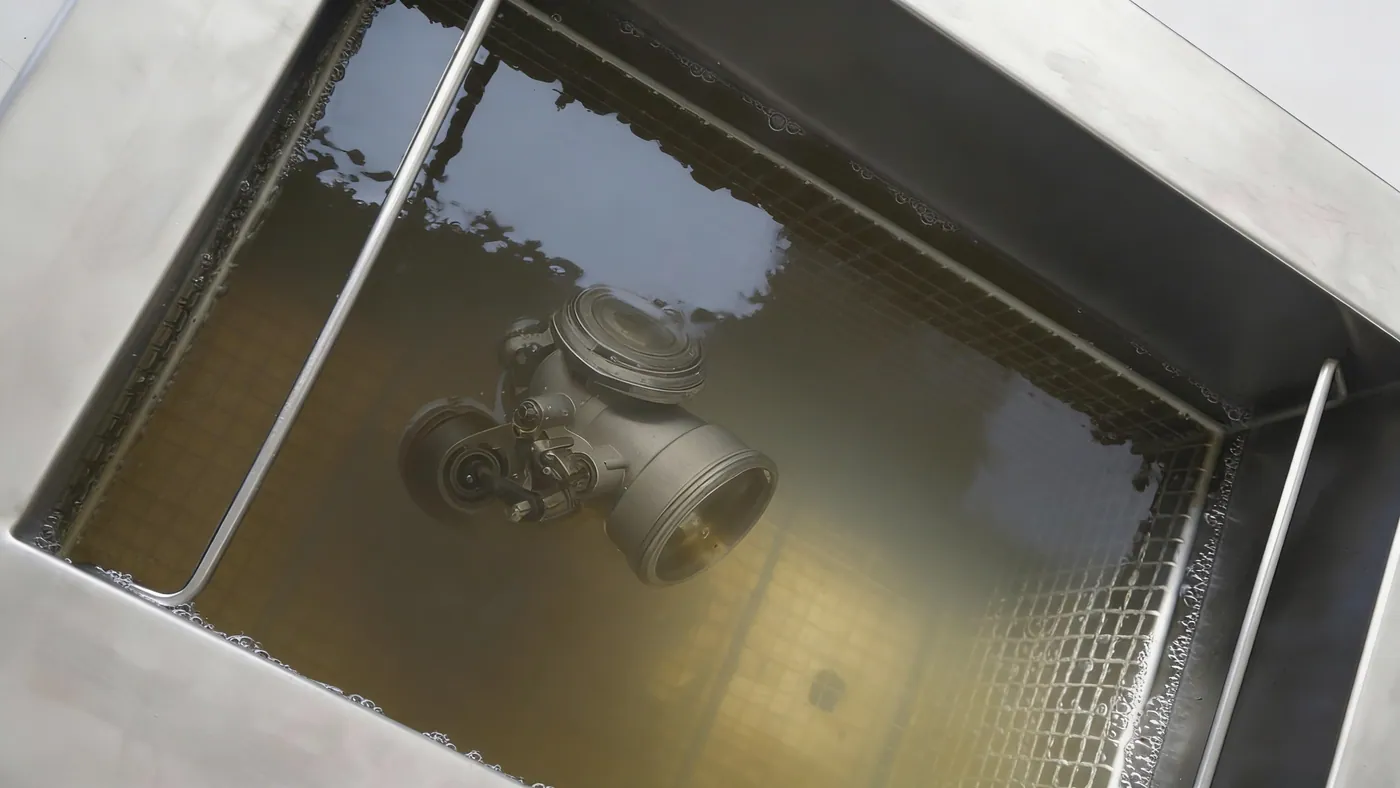
The exhaust gas recirculation valve feeds a metered share of exhaust back into the intake to lower combustion temperature. On a diesel it sees soot; on any engine with crankcase ventilation it also sees oil mist. The two meet in the valve and bake into a black cake, hard at the surface and oily inside. The valve sticks open or shut, the engine logs a flow fault, and the next step is either a new valve or a cleaned one.
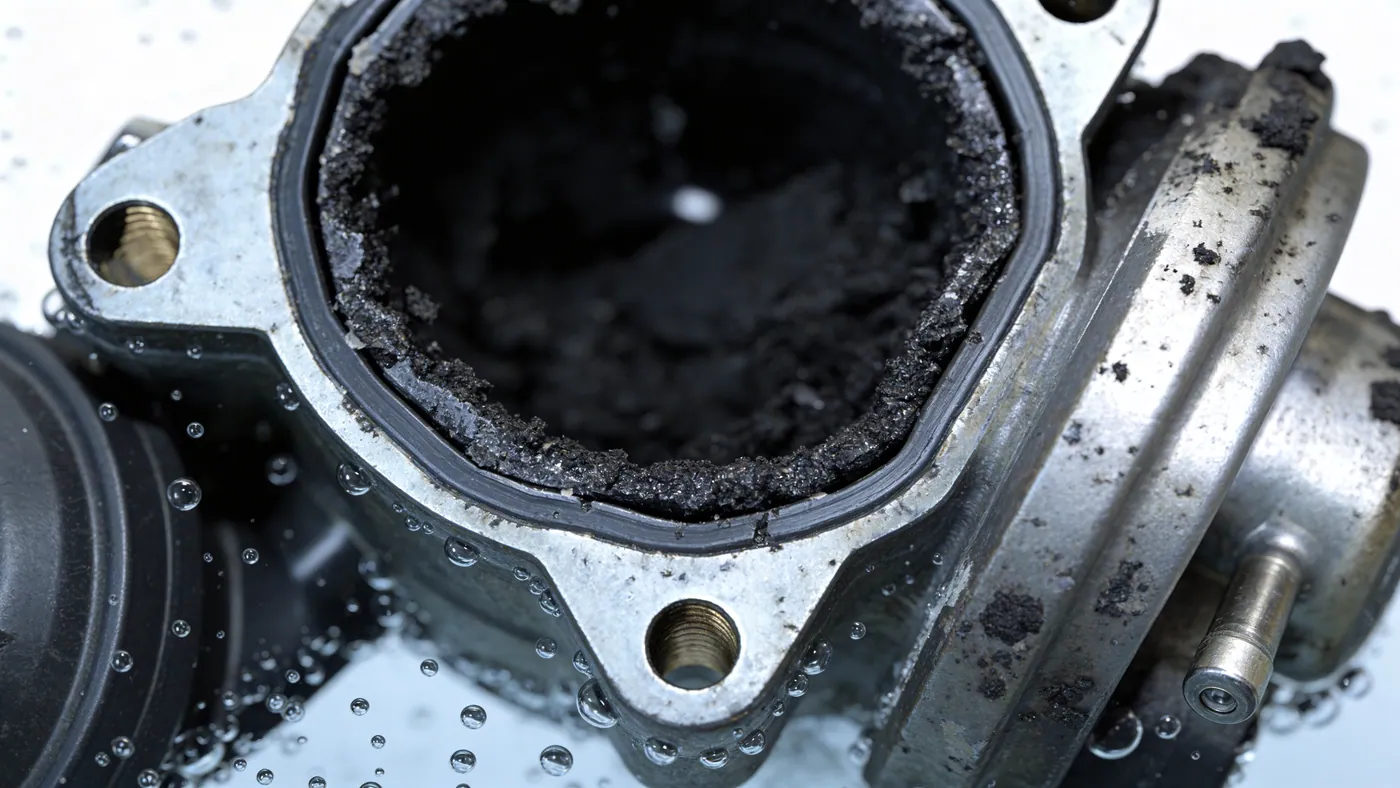
Why a bath works where a brush does not
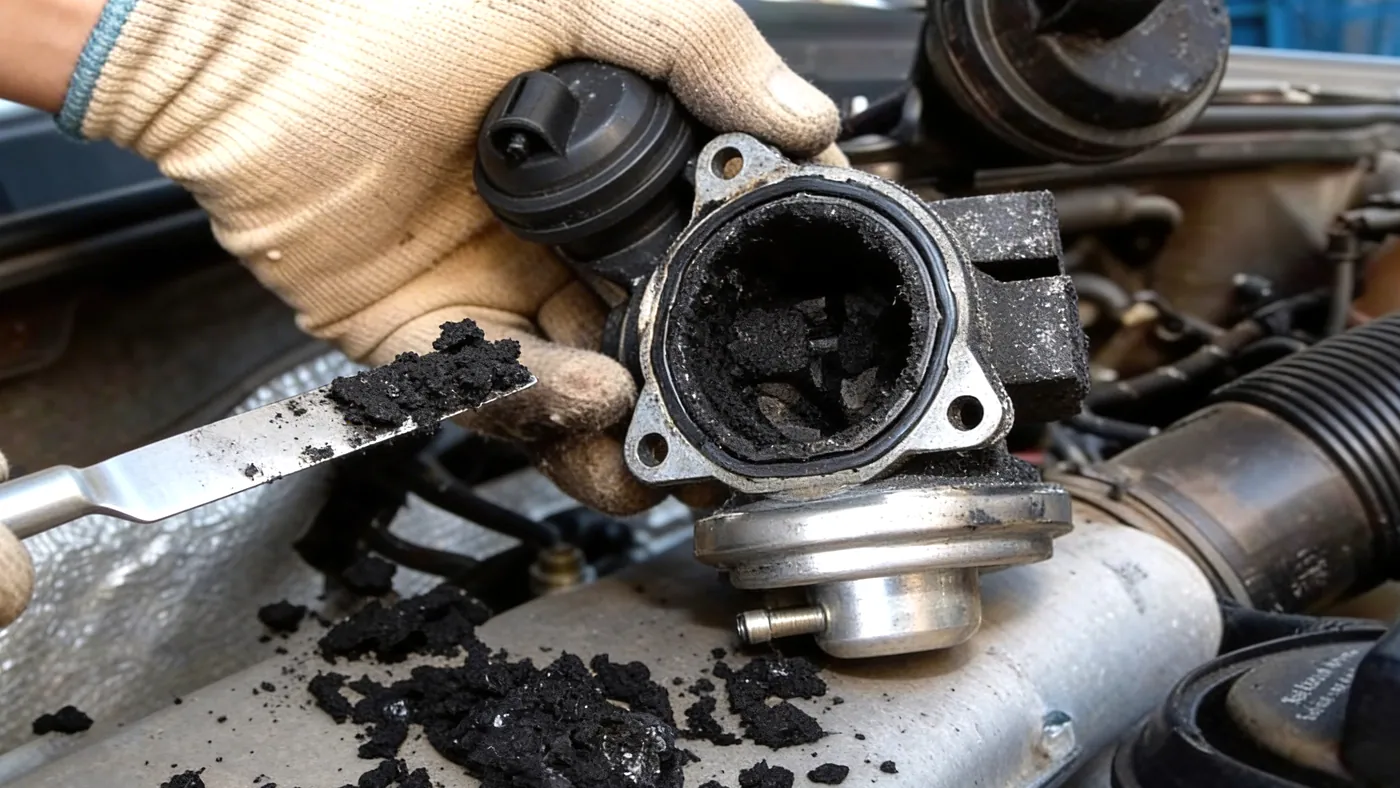
The cake sits around the valve head, in the seat, in the port and in the passage to the intake. A screwdriver and a can of carbon cleaner get the bulk off the port. They do not reach the stem guide, the back of the valve head or the drillings of a cooled valve body, and scraping the seat damages it. Cavitation reaches all of these at once and does not scratch the seat.
Step by step
- Remove the actuator where it separates from the valve body: many electric EGR valves have a motor and position sensor held by screws. Where it does not separate, the valve is cleaned with the actuator above the liquid, and only the gas side is submerged. Electronics never go in the bath.
- Knock off the bulk. Scrape the loose cake out of the port with a plastic or wooden scraper. Every gram removed here is a gram that does not blacken the bath.
- Soak. 15 minutes in the heated bath with the ultrasound off softens the oily binder.
- Ultrasonic cycle. 20 to 40 minutes, see the table below. Move or turn the valve halfway through so the underside of the valve head sees the field.
- Rinse in warm water, blow the passages through with compressed air, dry at 60 to 80 °C.
- Check that the valve opens and closes freely over its full stroke and seats cleanly, then refit with a new gasket.
The bath
| Valve body | Liquid | Temperature | Frequency | Time |
|---|---|---|---|---|
| Aluminium (most petrol and many diesel valves) | alkaline carbon remover for light alloys | 60 to 65 °C | 28 kHz | 20 to 30 min |
| Cast iron or steel | heavy-duty alkaline carbon remover | 65 to 75 °C | 28 kHz | 30 to 40 min |
Stay with a light-alloy cleaner for aluminium bodies even when the cake is heavy: a strong caustic cleaner removes the carbon and etches the machined seat face at the same time. See removing carbon deposits for the chemistry and choosing the temperature for why the bath stays below 75 °C during the ultrasonic stage.
The bath takes a beating
A single EGR valve puts more soot into a bath than a dozen machined parts. Soot stays in suspension, scatters the sound and turns the liquid black within a few valves. For a workshop that cleans EGR valves weekly, a filtration loop with a bag filter of 10 to 25 µm and an oil skimmer is the difference between one bath a week and one a day. The SF series has both built in; the ST or SF article explains the choice.
EGR coolers
The cooler is a bundle of thin tubes or plates carrying exhaust past engine coolant. Its passages soot up in the same way. A cooler can be soaked and cleaned ultrasonically to loosen the deposit, but it must also be flushed through, because the loosened soot has nowhere to go inside a long tube. A cooler that leaks coolant into the exhaust, visible as white smoke or coolant loss, is cracked and cleaning does not help.
Which machine
| Workload | Machine |
|---|---|
| Occasional valves, garage | ST-40 (40 L, 400 × 300 × 330 mm), 28 kHz |
| Valves weekly, plus other engine parts | ST-65 or ST-96 with a filtration loop, or an SF-225 |
| Remanufacturing EGR valves and coolers in batches | SF-310 or SF-360 with skimmer and laminar flow, rinse tank and dryer |
When cleaning is not the answer
A failed actuator motor or position sensor, a bent stem, a cracked body, or a seat eroded so the valve no longer closes. Test the actuator before cleaning; if it is faulty the valve is replaced, and the cleaning time is saved.