
Parts and contaminants · 4 min read · Updated 2026-09-26
Cleaning meat processing blades with ultrasound
Mincer knives and hole plates, bowl-cutter knives, slicer blades and skinner blades carry fat and protein in their bores, holes and hubs. How to clean machine blades so they come out ready for disinfection, the temperatures for protein, and how to protect the edges and the matched sets.
Technical guide. Figures are taken from our own spec tables; for your process we confirm the settings with a cleaning trial.
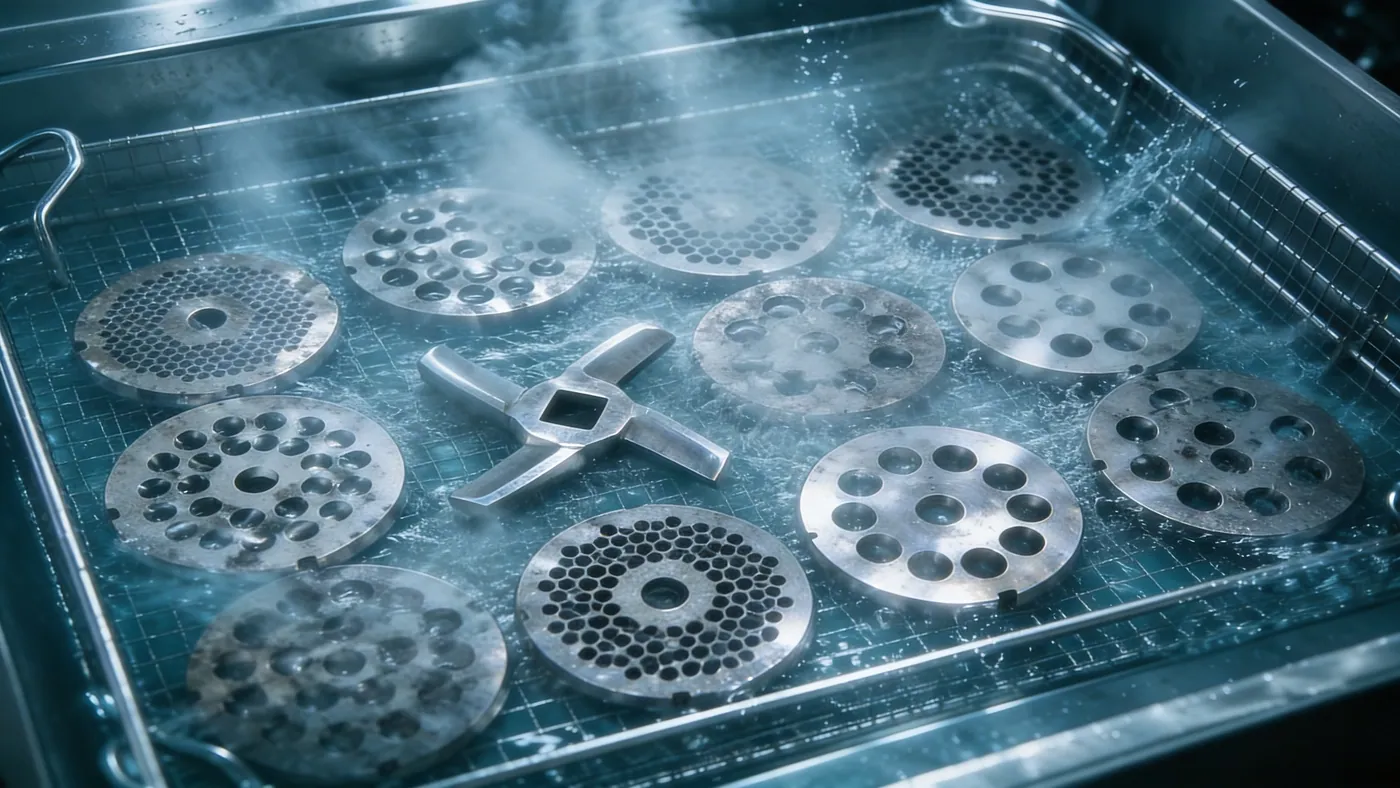
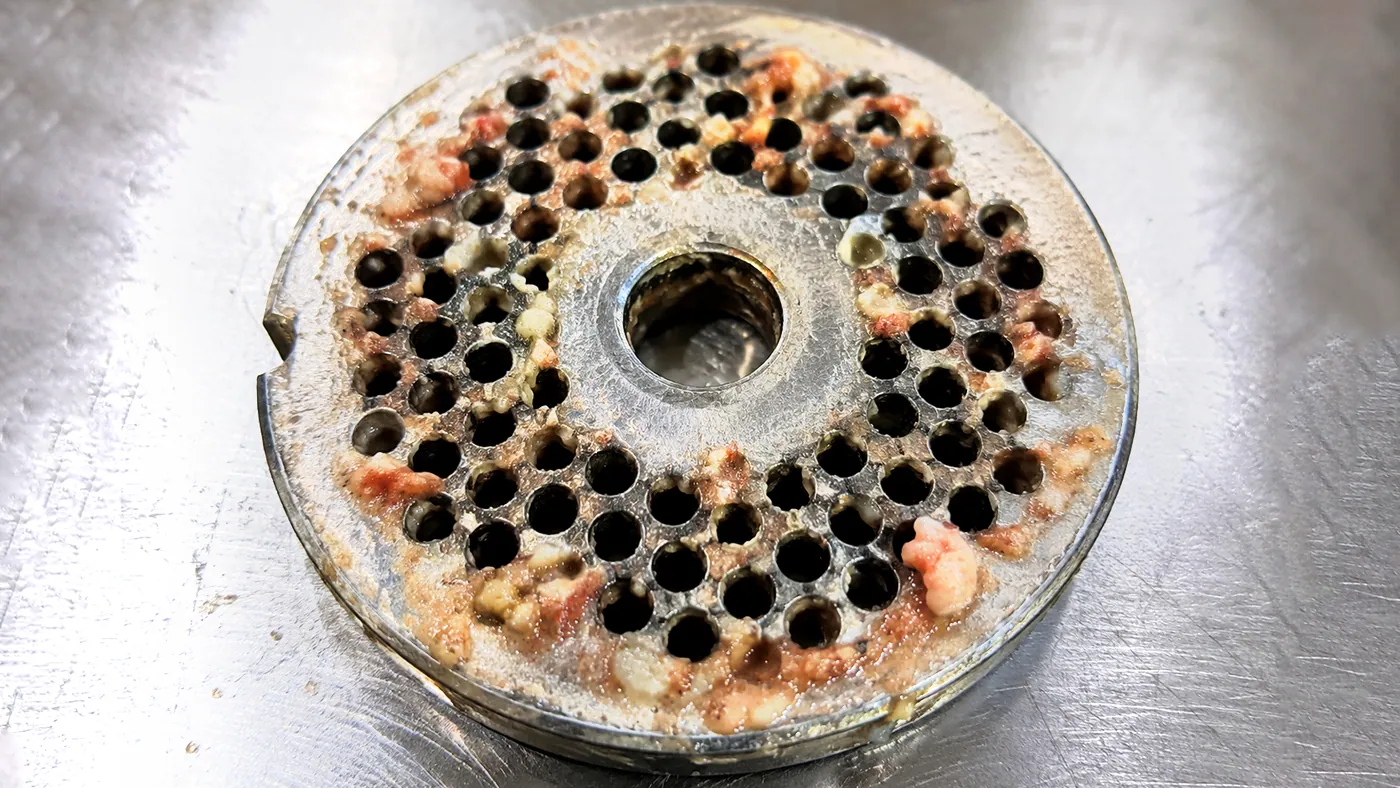
The blades of meat processing machines are harder to clean than hand knives. A mincer hole plate has dozens or hundreds of holes packed with meat and fat. A bowl-cutter knife head has a hub and spacers where fat hides. Slicer blades have a centre bore and a guard. Skinner and derinder blades are thin, long and awkward to handle. All of them are dismantled daily, washed, disinfected and reassembled, and the wash is where time is lost and soil is left behind. An ultrasonic tank cleans every hole of a hole plate in one cycle.
Parts and what makes them hard
| Part | Problem spot |
|---|---|
| Mincer (grinder) hole plates | Every hole packed with meat, fat and sinew |
| Mincer knives, star knives | Hub bore and blade roots |
| Bowl-cutter knives and knife heads | Hub, spacers, mounting bores |
| Slicer and portioning blades | Centre bore, hub, edge guard |
| Skinner, derinder and membrane blades | Long thin blades, tooth roll grooves |
| Band-saw blades, dicer grids, cutting sets | Teeth, grid crossings |
The cycle
- Dismantle and pre-rinse cold. Remove the bulk of meat and fat with cold water. Hot water now would bake protein onto the steel.
- Ultrasonic wash in a food-safe alkaline or enzymatic cleaner:
| Soil | Temperature | Frequency | Time |
|---|---|---|---|
| Fresh meat, blood, fish protein | 35 to 45 °C | 40 kHz | 5 to 10 min |
| Fat-heavy product: sausage meat, fat trimmings | 45 to 55 °C, after a cooler protein step if both are present | 28 or 40 kHz | 5 to 10 min |
| Dried or aged soil, after a weekend | 40 °C enzymatic soak, then 50 °C wash | 28 kHz | 15 to 20 min |
- Rinse in warm potable water.
- Disinfect by the plant's validated method, then dry and store, or reassemble.
Hole plates go in upright in a rack so each hole is open on both sides and the liquid can flow through. Laid flat on a basket floor, the lower side of the holes is shielded. Lifting and lowering the rack a few times during the cycle flushes the holes; see agitation.
Protecting edges and matched sets
Machine blades are expensive and many are matched: a mincer knife is ground together with its plate, and a bowl-cutter knife set is balanced as a set.
- Keep sets together in a divided basket or on a labelled rack, so they come back to the machine they came from.
- No metal-to-metal contact in the bath. Separators or a rack with plastic-coated positions keep edges from knocking together while the bath vibrates.
- Dry at once. Many blades are hardened carbon or tool steel rather than fully stainless, and they rust within hours if left wet. Dry with warm air and, where the plant allows it, apply a food-grade protective oil.
- Do not grind wet blades that still carry cleaner. Clean, rinse and dry, then sharpen, then clean again to remove grinding swarf before the blade returns to production.
Keeping the bath working
Meat and fat load a bath fast. An oil skimmer takes the fat off the surface when the bath rests, and a filter loop takes out meat particles before they settle on the tank floor. Change the bath daily and whenever it smells or looks cloudy after resting. The SF series is built for this; see filtration and bath life.
Which machine
| Plant | Set-up |
|---|---|
| Butchery, small sausage kitchen | UMX Pro 50L or 62L at 40 kHz with a rack for hole plates and knives |
| Meat plant, blades from several machines daily | ST-96 to ST-157 at 28 or 40 kHz, racks per machine, rinse tank |
| Large plant, blades and cutting sets in volume | SF-225 to SF-360 with filtration and skimmer, rinse tank, drying rack |
| Heavy cutting sets, dicer grids, band-saw frames | AL-150 or AL-300 with lift and racks |
For hand knives, steels and mesh gloves, see knives in food processing plants.
Checking the result
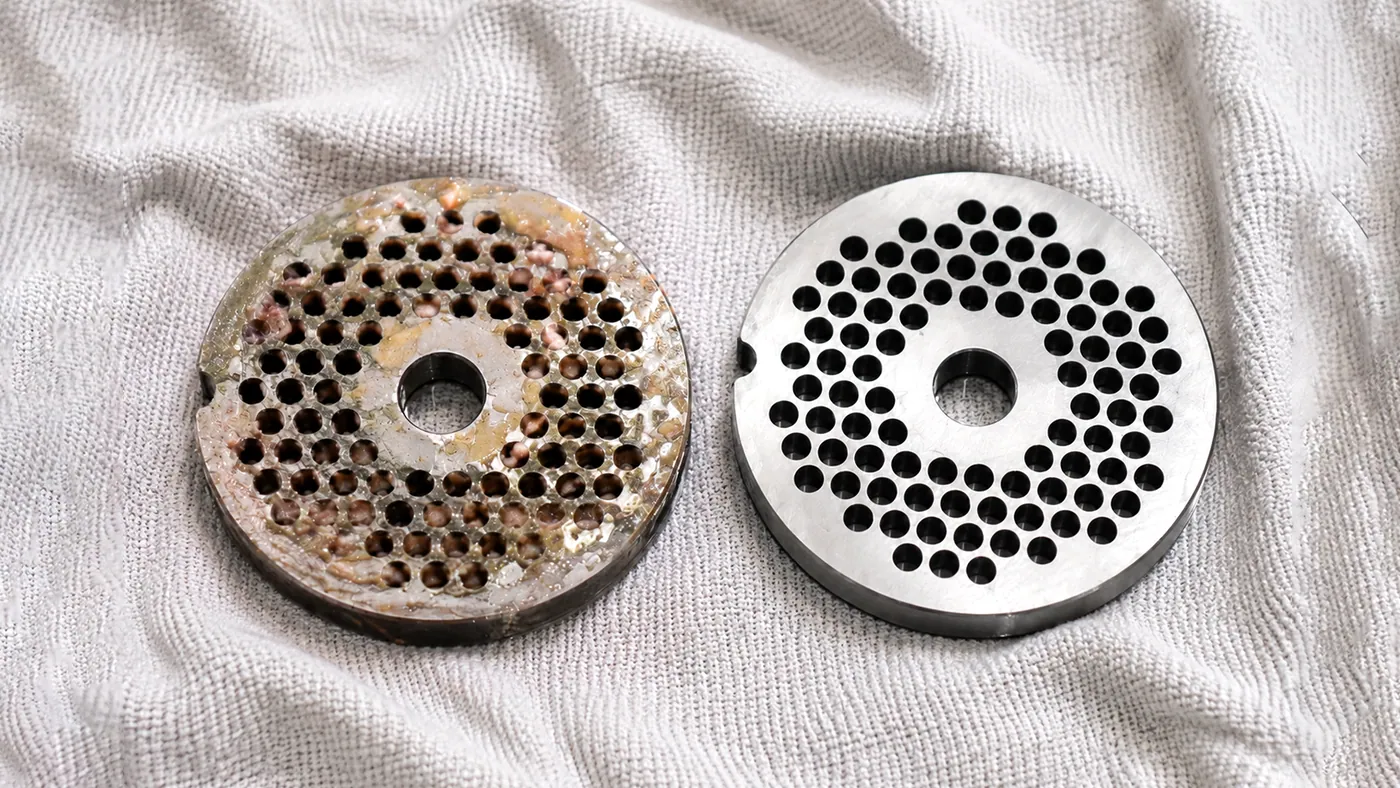
After cleaning and before disinfection, hold a hole plate up to the light: every hole should be open and bright. ATP swabs on a sample of blades and the inside of a few holes check the cleaning step objectively, and a trend of the results shows when the bath or the procedure starts to slip.