
Parts and contaminants · 6 min read · Updated 2026-11-16
Cleaning valves and pumps during a plant shutdown
Plan valve and pump cleaning during a shutdown: remove process media first, separate parts by material, check loaded fit and inspect before reassembly.
Technical guide. Figures are taken from our own spec tables; for your process we confirm the settings with a cleaning trial.
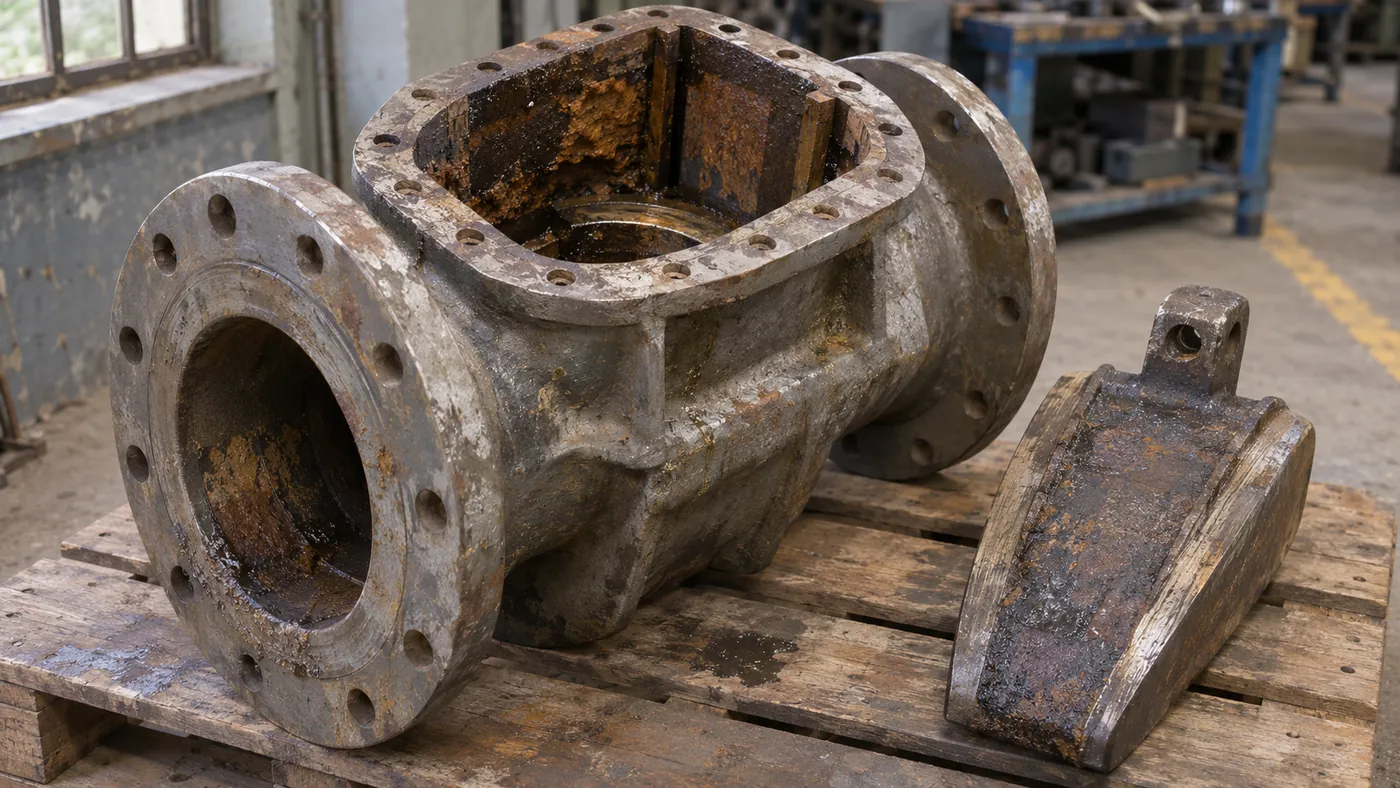
During a shutdown, the cleaning queue often holds valve bodies, pump casings, covers, impellers and small trim parts. They share a deadline but seldom a material, a deposit or an acceptance check. One mixed load can send a dirty cavity into assembly, or expose a sensitive seat to a cleaner chosen for a heavy casting.
How should process valves and pumps be cleaned during a plant shutdown? Take equipment the plant has isolated, drained and released. Dismantle it, group parts by material and deposit, and check each loaded fixture against the machine's load rating and basket size. Then rinse, dry and inspect before reassembly. The ultrasonic bath is one stage of the overhaul.
How should the load rating be checked?
Start from the published rating and the real load. The AL-1000 basket-lift ultrasonic system (1,000 L
Get the mass and centre of gravity of each large casting before the shutdown starts, from the drawing or by weighing it at dismantling. Take lifting points from the component documentation; a flange bolt hole or a pipe connection is not a lifting eye unless that documentation says so. Plan how the part is set down on the fixture so nobody has to reach under a suspended load.
The heavy-basket option covers reinforced stainless-steel baskets with thicker frames, welded cross-bars and lifting eyes or fork pockets, rated above the standard basket. It is combined with a stronger lift, a crane or a forklift loading position, so basket, lift and tank bottom are specified as one arrangement. A stronger basket alone does not raise the lift rating. Leave open space under the casting: a solid plate shields the whole lower face from the liquid.
Which dimensions decide whether a casing fits?
The loading area decides, not the tank volume. The SF-360 ultrasonic cleaner with filtration (360 L
Larger bodies go on a lift platform. Besides the AL-1000, the AU-2000 automatic ultrasonic cleaning system (2,000 L
| Model | Capacity (L) | Load (kg) | Loading area (mm) |
|---|---|---|---|
| SF-360 | 360 |
200 |
940 × |
| AL-1000 | 1,000 |
750 |
1,420 × |
| AU-2000 | 2,000 |
1,000 |
1,650 × |
Source: Sonixtek product data and archived product pages; loading area = basket (SF-360) or lift platform (AL-1000, AU-2000), length × width.
The usable height above a lift platform is not part of these figures. When a tall valve body comes close, ask for it with the part drawing rather than estimating it from the tank depth.
Then turn the casing drawing into the planned cleaning position and look for air pockets. The heat-exchanger maintenance guide explains why: liquid inside a cavity cavitates only when the cavity is completely filled and holds no trapped air. Pump passages and valve pockets also need a route for loosened deposit to leave. Lift agitation helps exchange the liquid, but it does not replace dismantling and orientation.
What should happen after the wash?
Rinse, dry and protect straight away. For compatible metal parts the rinsing guide gives a warm rinse at 40 to 60 °C
Agree the protection before the first batch: an inhibitor dip followed by hot-air drying, or immediate re-oiling. The inhibitor or oil must suit the next assembly step and the medium the valve will carry in service. Keep every temperature within the limits of the component's materials, seals and coatings.
The rinsing and drying guide covers the transfer between stages. Size rinsing and drying for the same batch rate as the wash; a tank that cleans faster than the next station only moves the queue. Keep cleaned parts covered and tagged until inspection, apart from the incoming dirty stock.
Remove process media before workshop cleaning
Plant personnel isolate, drain and release the equipment under the plant's own procedures before it reaches the cleaning station. Residual process liquid can react with the cleaner or contaminate the bath. A part with unknown media goes back to the plant for review; the ultrasonic tank is not the first drain step.
Send the medium, the cleaner's data sheet and the component materials with each job. Remove seals, elastomers, coated trim and sensitive assemblies as the equipment maker directs. A steel body, an aluminium casing and a coated seat seldom belong in one chemistry group. Keep new spare parts apart from the dirty dismantled parts.
Time, temperature and cleaner depend on the deposit; test on your part. Oil, scale and corrosion products often need separate steps with a rinse between them. An acidic stage needs a container suited to it, not the standard tank by assumption.
Inspect and schedule by component family
Clean surfaces show the pitting, erosion and wear that deposits hid. Record those findings before new seals go in. Check seats, shafts, bores and clearances against the overhaul documentation. Washing does not repair a damaged seat or an eroded impeller, and it does not release a pressure boundary for service.
Group jobs by material and deposit, but keep each part's identity through basket, rinse and inspection. Tag small trim to its parent valve, and never let similar seats from different valves share one untagged tray. Keep a separate place for rejected or incomplete parts so they cannot drift back into assembly.
For plant-scale planning, the heavy-industry page and chemical-industry page describe related maintenance applications. Compare SF filtration systems, AL basket-lift systems and AU automatic systems by the measured load and the handling route, not by the shutdown deadline alone.
Frequently asked questions
Can an intact valve go straight into the bath?
Only after the plant has released it and the component procedure allows it. Dismantling is usually needed so that liquid reaches the pockets, media can drain and materials can be separated. A clean outside says nothing about the inside.
Does a reinforced basket increase the lift rating?
No. A reinforced basket carries concentrated loads better within its own frame, but the lift keeps its published rating, for example 750 kg
Is the valve ready for service after washing?
Washing prepares the surfaces for inspection. Check wear, sealing faces, clearances and reassembly against the overhaul documentation, then follow the plant's return-to-service procedure. A visually clean component can still have corrosion or damage that rules out reuse.
What to send us for a quote
Send the shutdown component list, dimensions and weights, material groups, deposit and medium information, the approved lifting method and the daily loads you need to clean. Include the rinse, drying and inspection arrangements. Our technical team can assess the station from your quote enquiry before the shutdown plan depends on it.